In this article
What you’ll learn
- Always check the manufacturer cleaning code (W, S, WS, or X) before applying liquids.
- Sectionals act as "dust reservoirs"; regular HEPA vacuuming can reduce indoor pollutants by up to 79%.
- Use a modular approach, cleaning one section at a time to ensure no hidden crevices are missed.
Your sectional sofa is the heart of the home. It is where you binge-watch your favorite series, host game nights, and perhaps even steal a quick afternoon nap. However, because it is the centerpiece of daily life, it also becomes a magnet for crumbs, pet hair, and the occasional spill. Learning how to clean sectional sofa surfaces effectively is not just about aesthetics—it is about maintaining a healthy indoor environment. With households becoming more focused on wellness-led hygiene in 2025, keeping your large-scale upholstery clean has never been more important.
Understanding Your Sectional: The Preparation Phase
Before you grab a bucket of soapy water, you must understand that sectionals are different from standard couches. Their modular nature means more surface area, more hidden "crumb-catching" crevices, and often, diverse fabric types that require specific care.
The first step in the best way clean sectional sofa routines is identifying the cleaning code. Look for a tag located under the cushions or on the bottom of the frame.
| Code | Meaning | Cleaning Method |
|---|---|---|
| W | Water-based | Mild soap and water are safe to use. |
| S | Solvent-based | Dry-clean only; water will cause rings or damage. |
| WS | Both | Safe for water-based or solvent-based cleaners. |
| X | Vacuum Only | No liquids at all; professional cleaning recommended. |
Warning: Ignoring the "S" or "X" label and using water anyway is the leading cause of permanent water rings and fabric shrinkage in home furniture.
The Modular Strategy: A Step-by-Step Guide
Because sectionals are large, the most efficient way to clean sectional sofa at home is to break the job down into modules. Instead of trying to clean the entire "L" or "U" shape at once, treat the chaise, the corner unit, and the main seats as separate projects.
Step 1: Deep Vacuuming and Debris Removal
Start by moving the sectional away from the wall. You would be surprised how much dust accumulates behind the frame. Use a high-suction vacuum with a HEPA filter to capture fine particulates.
Experts suggest that regular vacuuming isn't just for looks—sofas act as "dust reservoirs." By using a HEPA vacuum, you can reduce indoor particulate matter by 49–79%, significantly improving air quality. Pay special attention to the "connection zones" where the sectional pieces latch together; these are prime spots for organic debris.
Step 2: The Baking Soda Treatment
For general odor control, sprinkle a thin, even layer of baking soda over the entire surface. Let it sit for 20–30 minutes. This 2025-favored "dry" method neutralizes odors from pets and food without the risk of over-wetting the internal foam.
Step 3: Spot Cleaning and Stain Removal
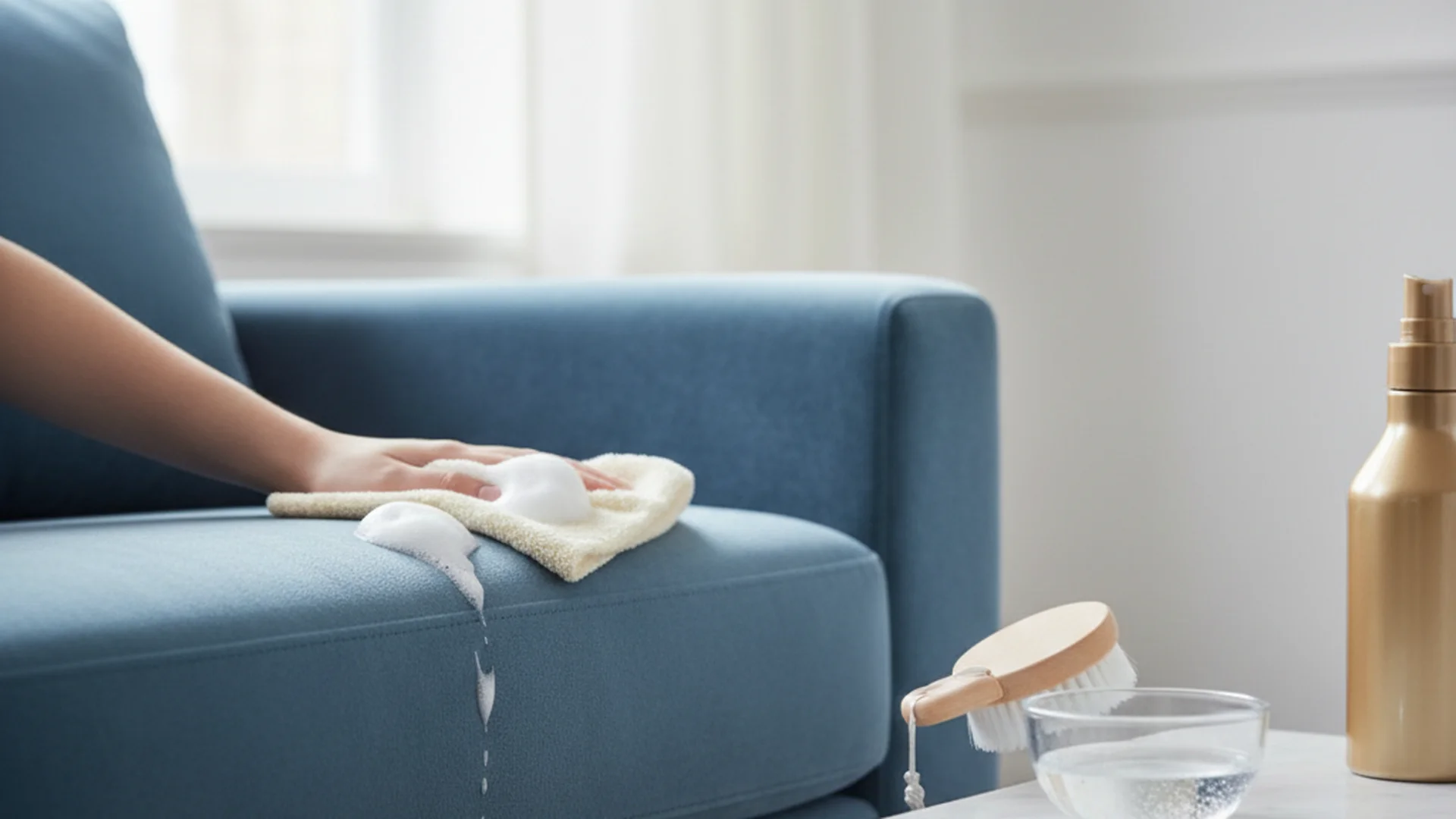
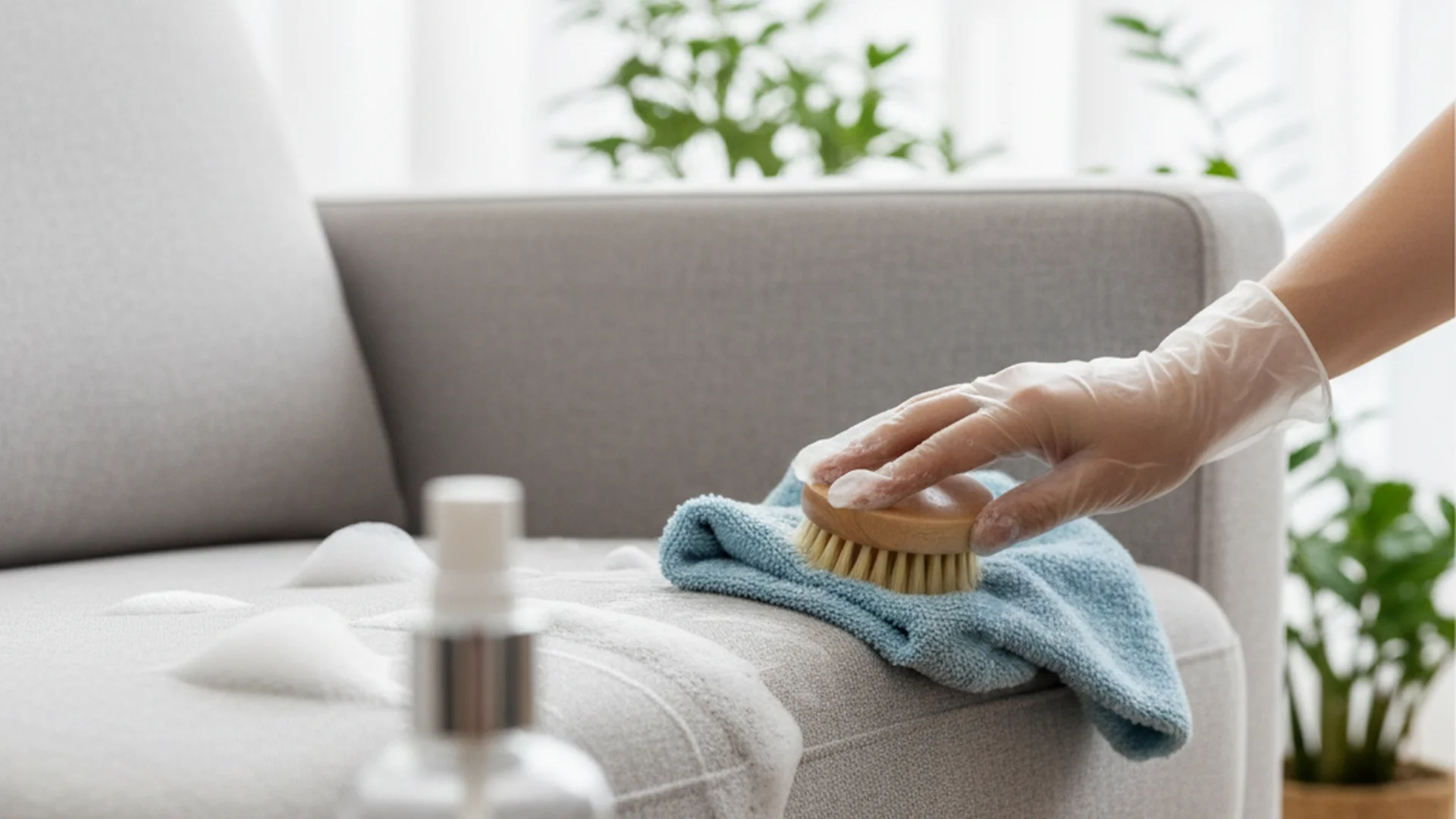
If you have a "W" or "WS" code, you can tackle stains using a mild detergent mixed with distilled water.
Tip: Never rub a stain. Always use a white microfiber cloth to blot from the outside of the stain inward. Rubbing can lead to "pilling" or damage the fabric's nap.
Step 4: Full Surface Cleaning
For a deeper clean, many homeowners are now using advanced tools like the Bissell Little Green HydroSteam. This technology uses high-temperature steam to "melt" grease and grime without saturating the padding, which is a major trend for 2025 as it minimizes drying time.
Note: Even if a fabric is "W" coded, over-wetting can lead to mold and mildew inside the cushions. Aim for a "damp-to-the-touch" finish, never a "soaked" one.
Real-World Cleaning Examples
To understand how to clean sectional sofa issues in the real world, let’s look at three common scenarios homeowners face today.
Example 1: The Pet Owner’s Dilemma
Sarah has a large velvet sectional and a Golden Retriever. Despite daily vacuuming, hair becomes embedded in the fibers.
- The Solution: Sarah uses a rubber squeegee to "rake" the fabric before vacuuming. The friction of the rubber pulls the hair out of the weave, making it easy to suction away. She follows up with a UV-C sanitization wand to kill bacteria brought in from outside.
Example 2: The Red Wine Emergency
During a dinner party, a glass of Cabernet falls onto Mark’s light gray "WS" coded sectional.
- The Solution: Mark immediately blots (not rubs) the spill with a clean white cloth. He then applies a mixture of dish soap and cold water, continuing to blot until the pigment is lifted. Because he acted fast and avoided heat, the stain didn't set into the fibers.
Example 3: The "Mystery" Kids' Stain
In a busy playroom, a sectional often ends up with sticky, unidentifiable spots.
- The Solution: For organic odors and sticky residues (like juice or chocolate), a 2025 trend is using enzymatic cleaners. These cleaners use "good" bacteria to eat away the organic matter causing the stain and odor, providing a deep clean that standard soap can't match.
Common Mistakes to Avoid
Even with the best intentions, it is easy to damage a large investment like a sectional. Avoid these pitfalls:
- Skipping the Spot Test: Always test your cleaner on a hidden area (like the back of the sofa) to ensure the dye doesn't bleed.
- Using Harsh Chemicals: Avoid bleach or ammonia. These can cause "fiber rot" in synthetic blends or cause leather to crack prematurely.
- Vigorous Scrubbing: Scrubbing ruins the sheen of fabrics like velvet and can create permanent "fuzzy" patches.
- Ignoring the Professional Option: If your sectional cost several thousand dollars and is "S" coded, spending the average $200–$350 for professional cleaning every 18 months is a wise investment in longevity.
Success: By rotating your loose cushions weekly and cleaning in modules, you extend the life of your sectional by up to 30%, ensuring it remains comfortable and supportive for years.
2025-2026 Trends in Upholstery Care
The world of furniture maintenance is shifting toward sustainability and high-tech solutions. One of the biggest trends for 2026 is the rise of "Performance Fabrics." Brands like Crypton and Sunbrella are now standard in high-end sectionals, offering antimicrobial and liquid-repellent coatings that make cleaning as simple as a quick wipe with a damp cloth.
Furthermore, eco-friendly "green" cleaning is no longer a niche. Most homeowners now prefer plant-based, biodegradable detergents and refillable cleaning systems to reduce plastic waste. The move toward "dry steam" cleaners also aligns with global water-saving initiatives, using 80% less water than traditional hot water extraction.
Frequently Asked Questions
What do the cleaning codes mean?
Can I use a carpet cleaner on my sectional?
How do I remove pet hair efficiently?
Is steam cleaning safe for all sectionals?
Conclusion
Knowing how to clean sectional sofa modules is an essential skill for any modern homeowner. By following the "Sectional Strategy"—cleaning in pieces, respecting the codes, and utilizing modern tools like HEPA vacuums and enzymatic cleaners—you can keep your living room looking brand new. Remember that consistency is key; a quick weekly vacuum and immediate spot treatment will save you from the high cost of professional restoration later.
Cleaning that keeps score
Every task earns points, every streak multiplies them, and Premium adds a household leaderboard plus a monthly Dustagorgon to beat.
- Free forever
- 30 badges to earn
- Up to 6 in a household
No card needed. Set up your rooms in a couple of minutes.