In this article
What you’ll learn
- Always check the manufacturer cleaning codes (W, S, WS, X) before applying any liquid.
- Blotting—never scrubbing—is the gold standard for preventing fiber damage.
- Use distilled water to avoid mineral rings and utilize enzymatic cleaners for organic stains.
Your sofa is the heart of your living room, but it is also a magnet for dust, allergens, and bacteria. Left unmaintained, soft surfaces like upholstery can harbour far more bacteria than the hard surfaces we scrub obsessively. Learning how to clean fabric sofa surfaces properly isn't just about aesthetics; it’s about maintaining your home’s indoor air quality and your family's health. Whether you are dealing with a red wine spill or just general wear and tear, knowing the best way clean fabric sofa fibers can extend the life of your furniture by years.
Understanding the Foundation: Fabric Cleaning Codes
Before you grab a bucket of soapy water to clean fabric sofa at home, you must look under the cushions for the manufacturer's tag. This tag contains a universal code that dictates what chemicals or liquids your sofa can handle. Ignoring this is the fastest way to ruin your furniture.
| Code | Meaning | Cleaning Method |
|---|---|---|
| W | Water-based | Can be cleaned with water and mild detergent. |
| S | Solvent-based | Requires dry-cleaning solvents; water will damage fibers. |
| WS | Water or Solvent | Most versatile; can handle water or chemical cleaners. |
| X | Vacuum Only | Extremely delicate; professional cleaning recommended. |
Warning: Using a water-based "hack" on an S or X coded sofa can cause permanent shrinking, color bleeding, or "crocking," where the dye transfers to your clothes.
The 3-Step Professional Foundation
As a cleaning consultant, I always advise homeowners to follow a systematic approach. Most people jump straight to the liquid cleaner, but the secret to a professional-grade finish is the preparation.
1. The Power of the Vacuum
Weekly vacuuming is the most underrated maintenance task. Use an upholstery attachment to remove "dry soil"—the dust and skin cells that act as an abrasive against the fabric. If you apply liquid to a dusty sofa, you turn that dust into "wet soil" (mud), which sinks deeper into the weave.
2. Blot, Never Scrub
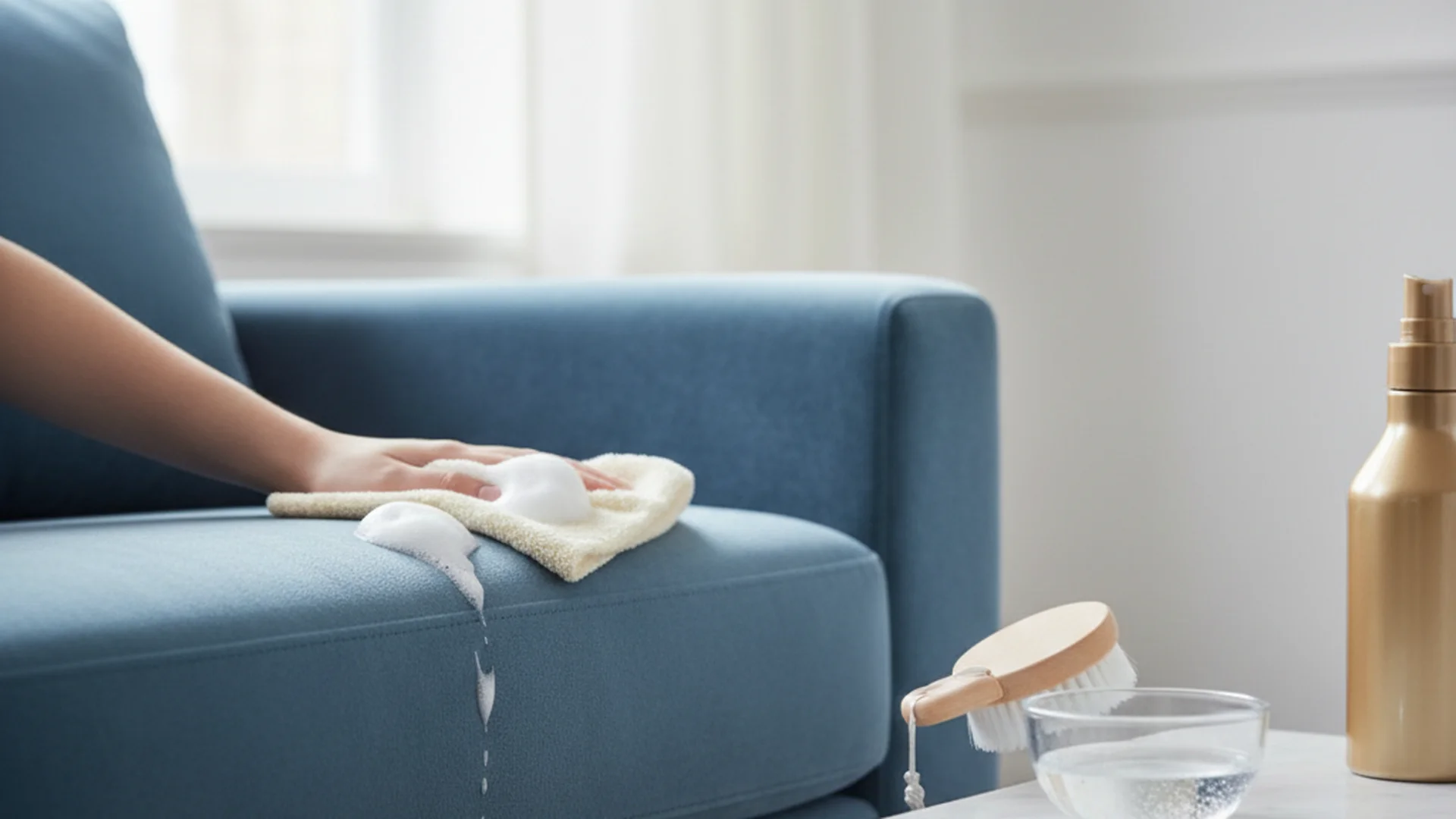
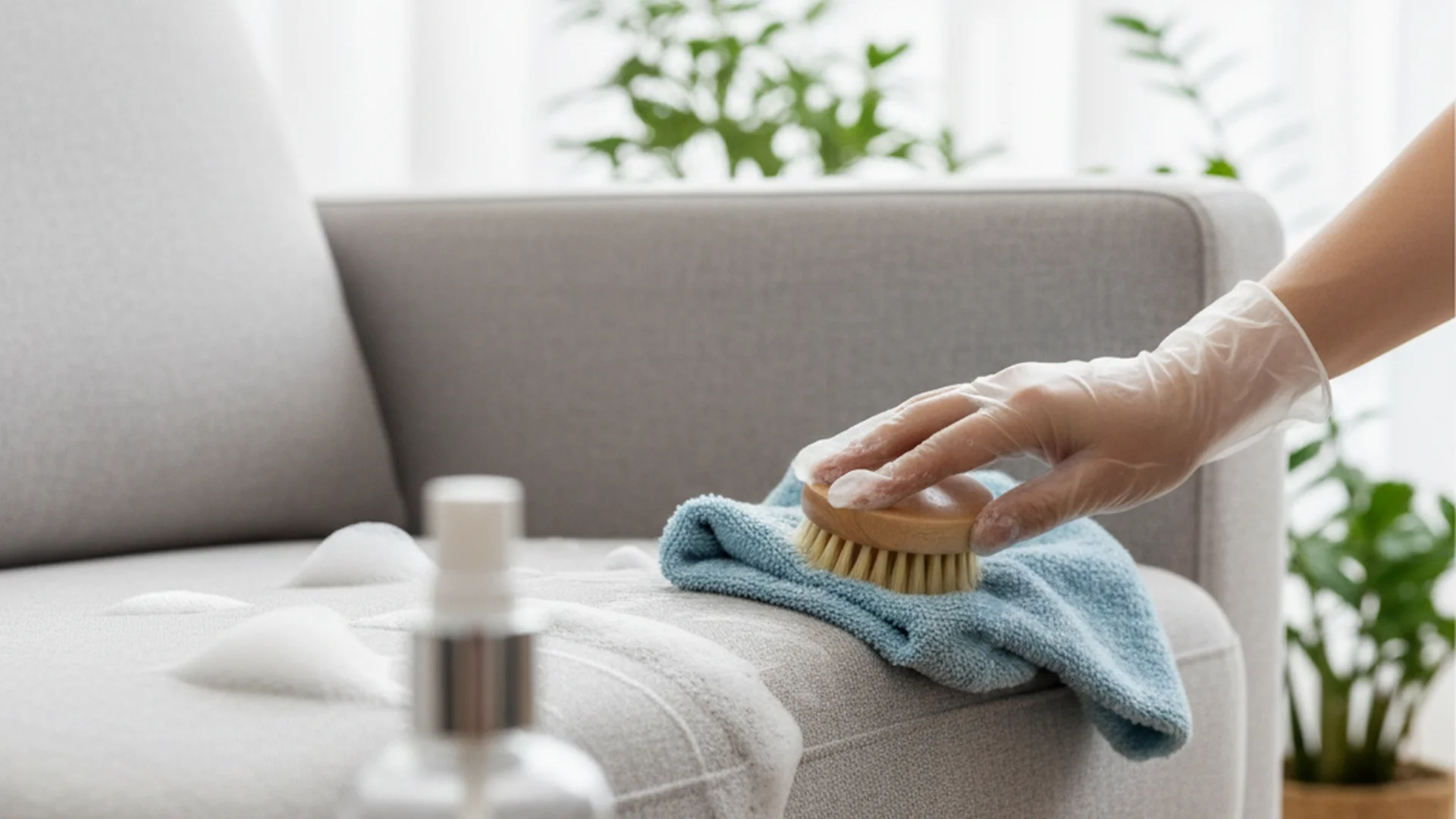
When a spill occurs, the instinct is to rub vigorously. This is a mistake. Rubbing pushes the stain deeper into the internal foam and distorts the fabric fibers, leading to "pilling." Always use a white microfiber cloth to blot from the outside of the stain toward the center.
3. The Distilled Water Secret
If your sofa has a W or WS code, avoid tap water. Tap water contains minerals like calcium and magnesium that leave unsightly "water rings" once the fabric dries. Using distilled water ensures a streak-free finish.
Tip: If you are cleaning a large area, use a fan or dehumidifier to speed up the drying process. If foam stays damp for over 24 hours, you risk mold growth inside the cushions.
Real-World Examples: Handling Common Disasters
Example 1: The Red Wine Rescue
During a dinner party, a guest knocks over a glass of Cabernet on a light grey polyester sofa (Code W). Instead of panicking, the host immediately blots the liquid with a dry cloth. They then apply a paste made of baking soda and a tiny amount of water. Once dry, they vacuum it up. The alkalinity of the baking soda helps lift the pigment without damaging the fabric.
Example 2: The New Puppy Problem
A homeowner discovers a pet urine spot on their chenille sofa. Instead of using a standard detergent, which only masks odors, they use an enzymatic cleaner. These cleaners contain "living" bacteria that consume the proteins in the urine, removing the smell at a molecular level so the pet isn't tempted to return to the same spot.
Example 3: The Thrift Store Velvet Find
A vintage enthusiast buys a 1970s mohair velvet sofa. Because it is a natural fiber (Code S), they avoid water entirely. They use a professional solvent and a soft-bristled brush to "groom" the pile, ensuring the luxury texture remains soft rather than becoming stiff or matted—a key trend as we head into 2026.
2025-2026 Trends in Sofa Maintenance
The world of furniture is changing. By 2026, we are seeing a significant shift toward Tactile Luxury, with mohair, alpaca, and heavily textured velvets dominating high-end interior design. These fabrics require more specialized care than the easy-clean polyesters of previous years.
Additionally, Probiotic Cleaners are becoming the gold standard. Unlike traditional harsh chemicals, these cleaners use beneficial bacteria to keep cleaning your sofa for days after the initial application. They are particularly effective for households with pets or children, as they are non-toxic and environmentally friendly.
Note: Be cautious of the viral "Pot Lid Hack" (wrapping a cloth over a lid and scrubbing). While it looks satisfying on video, it often leaves high amounts of detergent residue behind, which actually acts as a magnet for new dirt.
Common Mistakes to Avoid
- Over-wetting the Fabric: Soaking the sofa can cause the wooden frame underneath to warp or the internal metal springs to rust.
- Skipping the Spot Test: Always test your cleaning solution on a hidden area (like the back of the sofa) to check for colorfastness.
- Using 100% Bleach: Even "bleach-cleanable" performance fabrics like Crypton usually require a 1:10 bleach-to-water ratio. Pure bleach will eat through the protective barrier over time.
- Ignoring Indoor Air Quality: Neglecting your sofa contributes to dust mite populations. Since most of us feel better in a home that is genuinely clean, a fresh sofa is a mental health win as well as a hygiene one.
Frequently Asked Questions
Is vinegar safe for cleaning fabric sofas?
How do I get the smell of pet urine out of a sofa?
Can I use a steam cleaner on any sofa?
How often should I professionally clean my sofa?
Conclusion
Understanding how to clean fabric sofa upholstery is a vital skill for any homeowner. By respecting the cleaning codes, utilizing the 3-step foundation of vacuuming, blotting, and using distilled water, you can keep your living space looking brand new. Remember, a clean home is more than just a chore—it is a significant contributor to your personal happiness and well-being.
Success: By following these professional steps, you've not only saved money on professional cleaning but also created a healthier, more inviting environment for your family.
Cleaning that keeps score
Every task earns points, every streak multiplies them, and Premium adds a household leaderboard plus a monthly Dustagorgon to beat.
- Free forever
- 30 badges to earn
- Up to 6 in a household
No card needed. Set up your rooms in a couple of minutes.