In this article
What you’ll learn
- Bedside tables are high-touch zones that require weekly dusting and monthly deep cleaning.
- Material-specific care is essential to prevent permanent damage to wood, marble, or glass.
- Nightstand cleaning should include sanitizing electronics and lamp shades to reduce allergens.
When you think about the dirtiest places in your home, your mind likely goes straight to the bathroom floor or the kitchen sink. However, recent hygiene studies suggest you might be sleeping right next to a bacterial hotspot. Because they are frequently touched but rarely disinfected, nightstands can harbor more bacteria than a toilet seat if left uncleaned for a month.
Knowing how to clean nightstand surfaces isn't just about aesthetics; it is a vital part of maintaining your respiratory health. Since these tables sit at "breathing level" while you sleep, they act as primary collection points for settleable dust, which can trigger nighttime allergies and morning congestion. In this guide, we will explore the best way clean nightstand surfaces and drawers to ensure your sanctuary stays truly restful.
Why Nightstand Maintenance Matters
Before diving into the "how," it is important to understand the "why." Research from the American Academy of Allergy, Asthma & Immunology highlights that dust accumulation near the head of the bed is a leading cause of sleep-disrupting allergies. Furthermore, viruses like the common cold or flu can survive on hard surfaces like metal or wood for up to 48 hours.
The most common reason homeowners seek advice on how to clean nightstand at home is actually damage control. Approximately 70% of wood furniture damage is caused by "blooming"—those dreaded white water rings left by drinking glasses. By establishing a routine, you can prevent permanent damage and keep your bedroom air clean.
The Essential Cleaning Toolkit
Before you start, gather the following supplies to avoid the "mistake of convenience" (using whatever is nearby, like a rough paper towel).
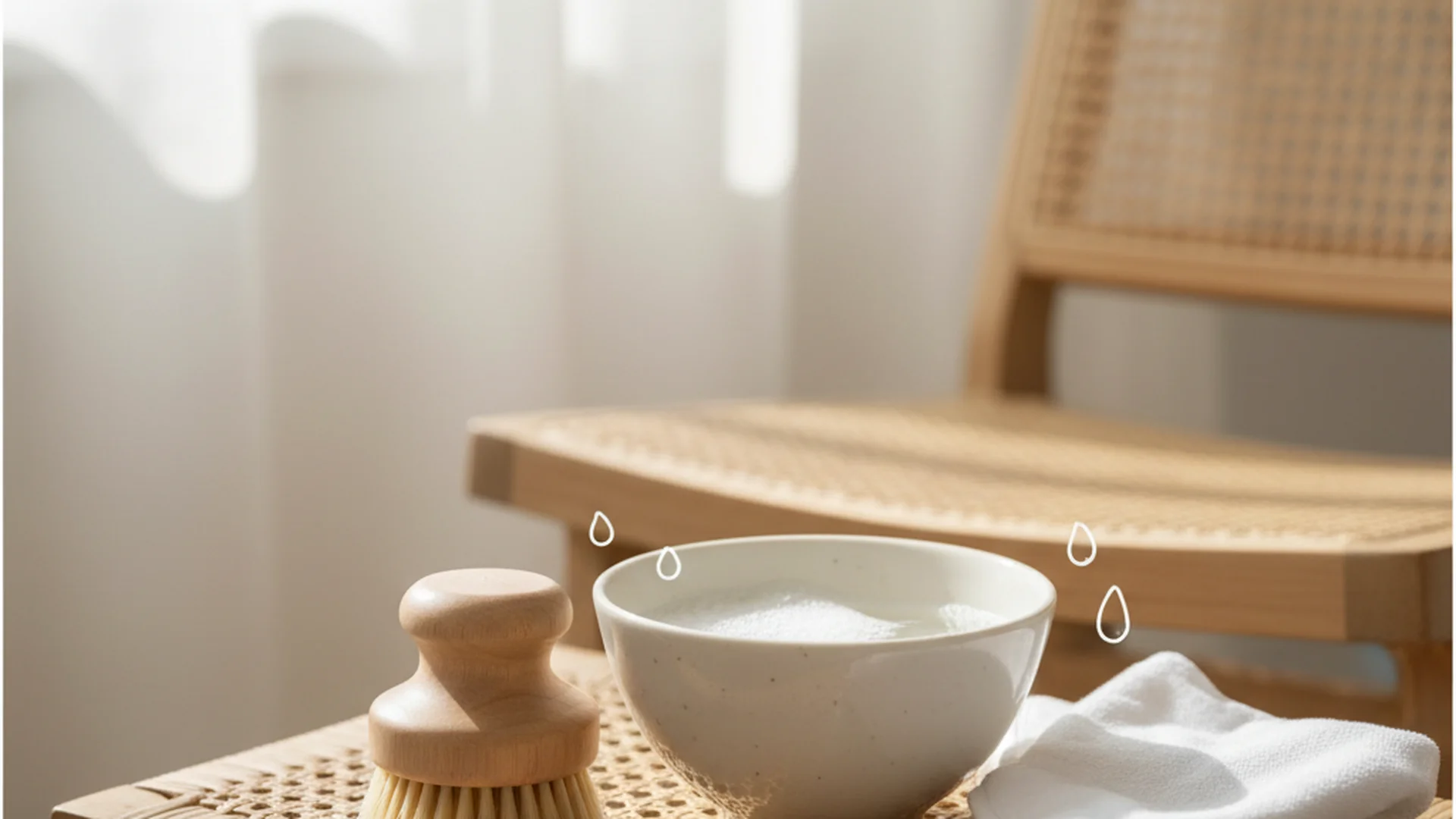
- Microfiber Cloths: The gold standard for furniture care.
- pH-Neutral Wood Cleaner: For solid wood surfaces.
- White Vinegar & Water: For glass and mirrors.
- 70% Isopropyl Alcohol: For electronics.
- Lint Roller or Packing Tape: For drawer corners.
- Handheld Vacuum: With a brush attachment.
Tip: Always use a fresh microfiber cloth for your nightstand. Using the same cloth you used in the bathroom can cross-contaminate your sleeping area with unwanted pathogens.
Step-by-Step: How to Clean Nightstand Surfaces
Experts recommend a "Top-Down, Inside-Out" approach. This ensures that any dust disturbed at the top doesn't settle on a surface you have already cleaned.
Step 1: The Empty First Rule
Never attempt to clean around your belongings. Remove everything—lamps, books, charging cables, and coasters. This ensures you reach the corners where dust mites and skin cells congregate.
Step 2: Dusting the Framework
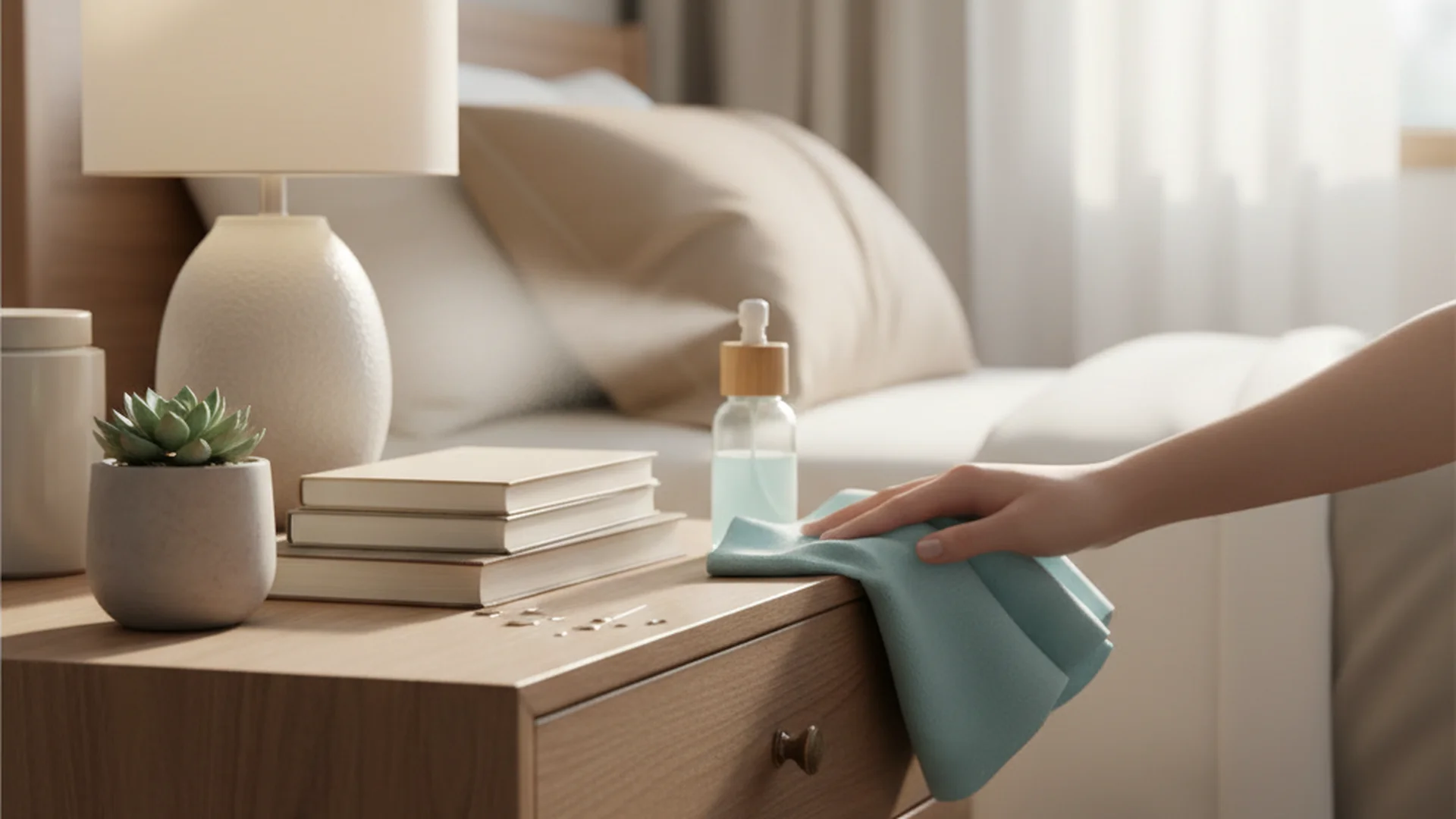
Use a dry microfiber cloth to wipe down the entire exterior. Pay close attention to the back of the nightstand and the underside of the bottom shelf. These are prime locations for spider webs and heavy dust buildup that often go unnoticed for years.
Warning: Never use a dripping wet cloth on wood or MDF (particle board). Excess moisture can cause the material to swell or "bubble," causing permanent structural damage.
Step 3: Material-Specific Deep Cleaning
Different materials require different chemistry. Here is how to handle the most common nightstand types:
| Material | Cleaning Agent | Technique |
|---|---|---|
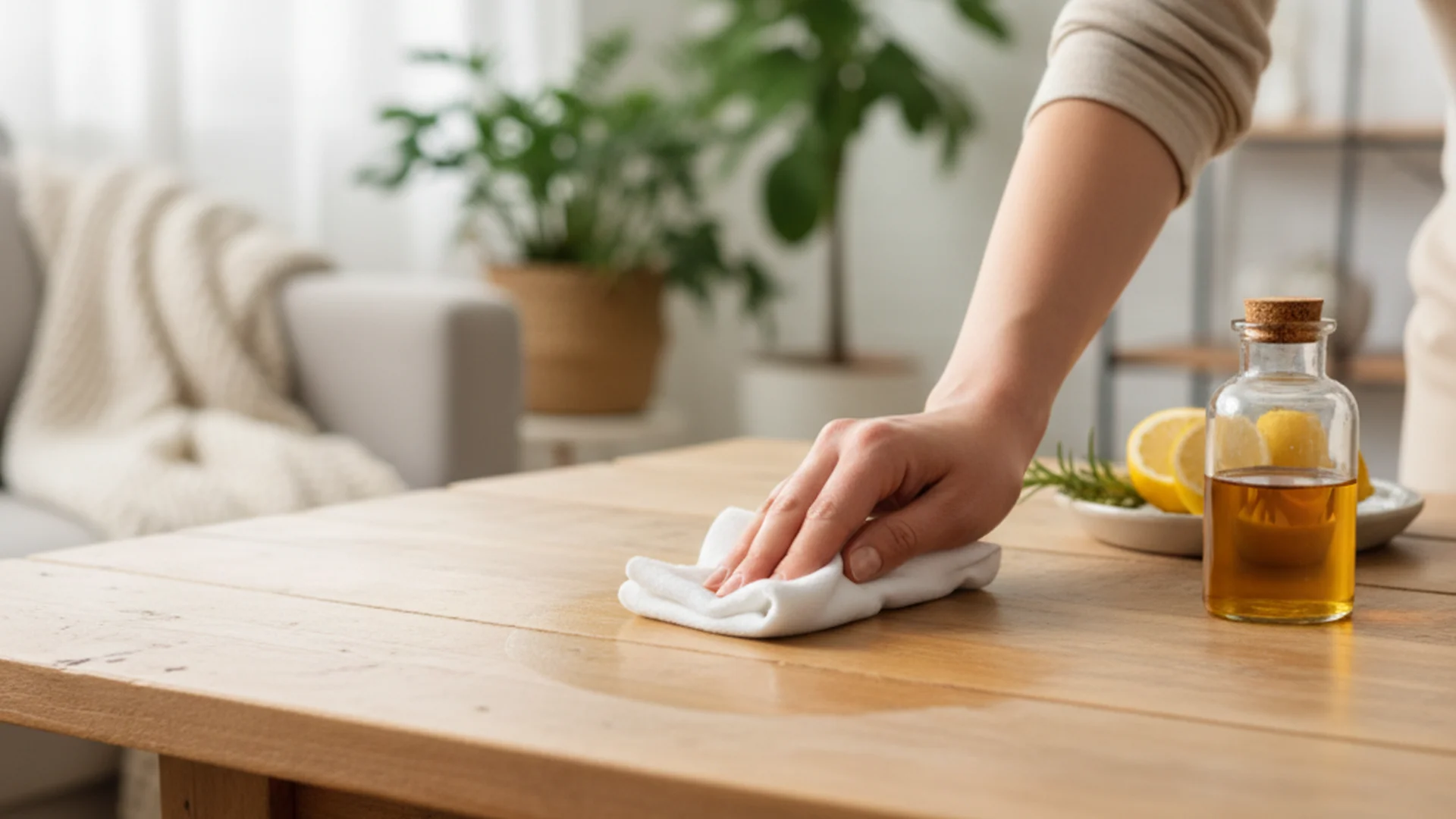
| Solid Wood | pH-neutral cleaner | Wipe with the grain to prevent streaks. |
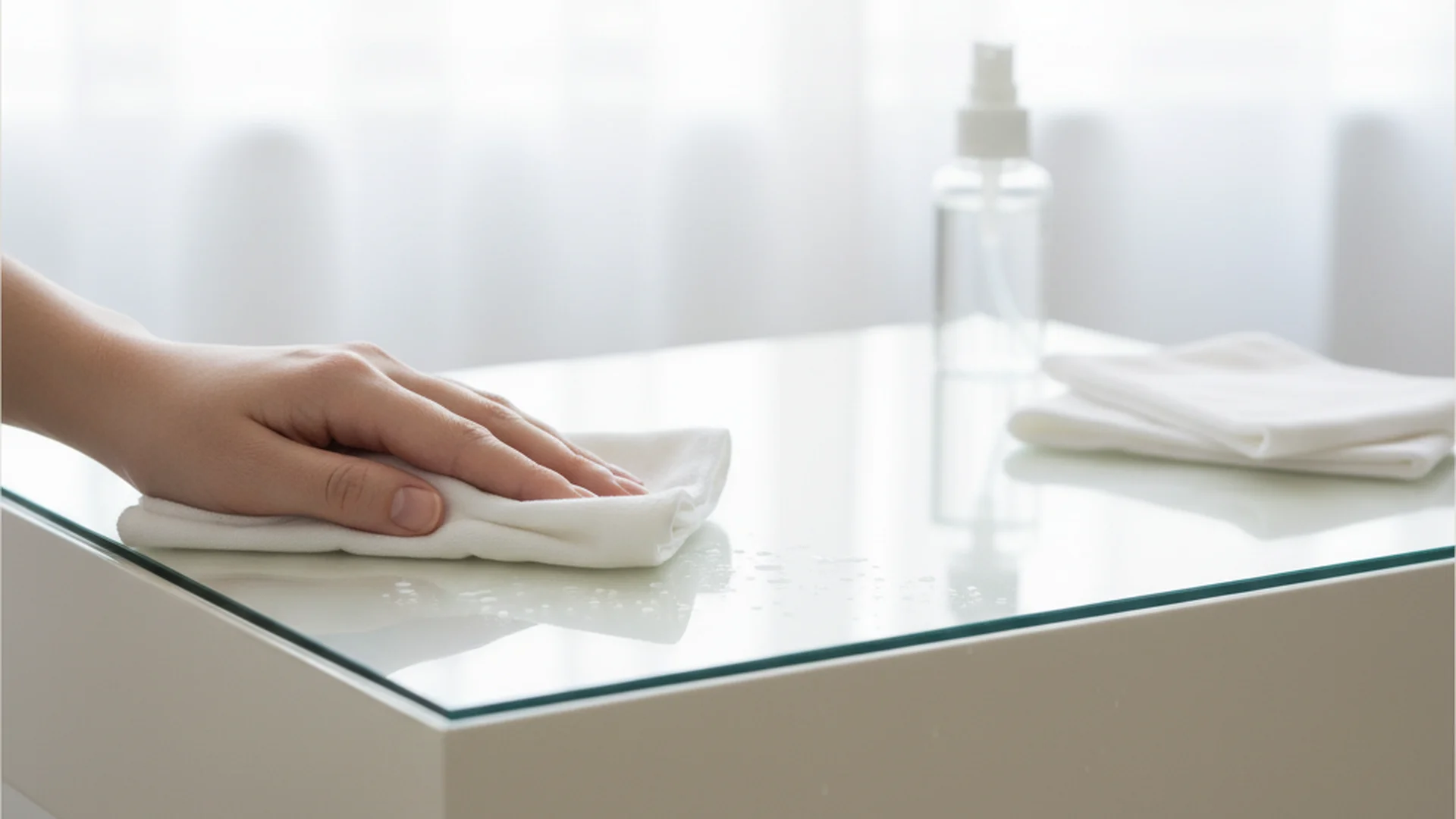
| Glass/Mirror | 50/50 Vinegar/Water | Spray the cloth, not the glass, to prevent seepage. |
| Marble/Stone | Mild dish soap/Warm water | Avoid vinegar; the acid will etch the stone surface. |
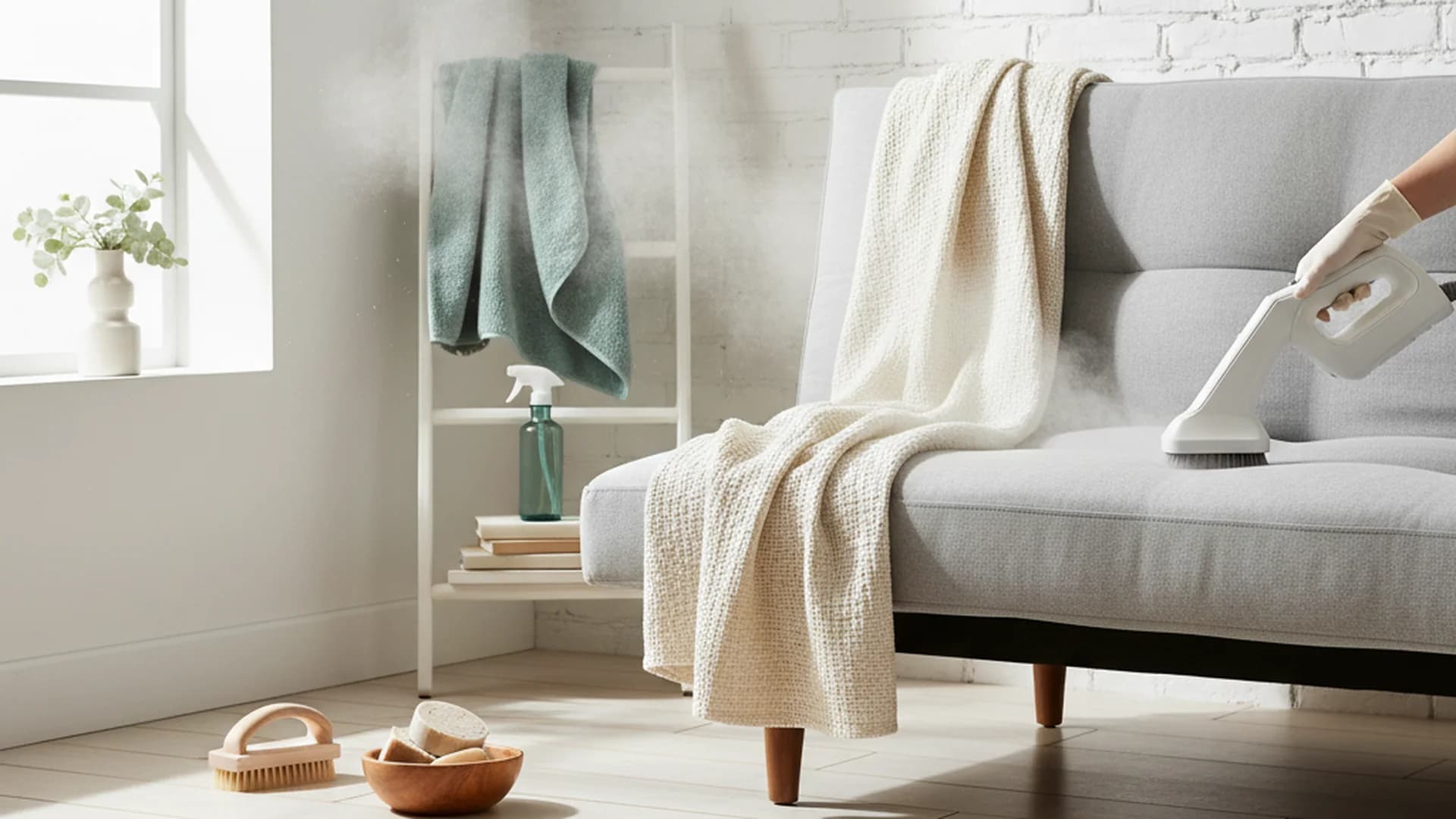
| Upholstered | Fabric Steamer | Use steam to kill bacteria without soaking the foam. |
Step 4: Sanitizing Tech and High-Touch Items
Your phone, TV remote, and lamp switch are the most handled items on your nightstand. Use a 70% isopropyl alcohol wipe to sanitize these specifically. This prevents the transfer of germs from your hands back onto your freshly cleaned tabletop.
Removing Stubborn Stains and Water Rings
If you have discovered a white "bloom" or water ring, don't panic. These occur when moisture is trapped in the finish.
Real-World Example: The Vintage Oak Rescue A homeowner noticed a white ring on her vintage oak nightstand after leaving a glass of ice water overnight. Instead of sanding it down, she used a hair dryer on a low-heat setting, moving it back and forth over the spot. The heat released the trapped moisture, and the ring vanished within minutes.
For more stubborn rings, a paste of non-gel toothpaste and baking soda rubbed gently with the grain can often lift the stain.
Note: If you are dealing with "black" rings, this indicates the moisture has reached the wood itself. This usually requires professional refinishing.
Deep Cleaning Nightstand Drawers
The interior of your drawers can become a graveyard for receipts, hair ties, and lint.
- Empty and Sort: Discard expired medications or old receipts.
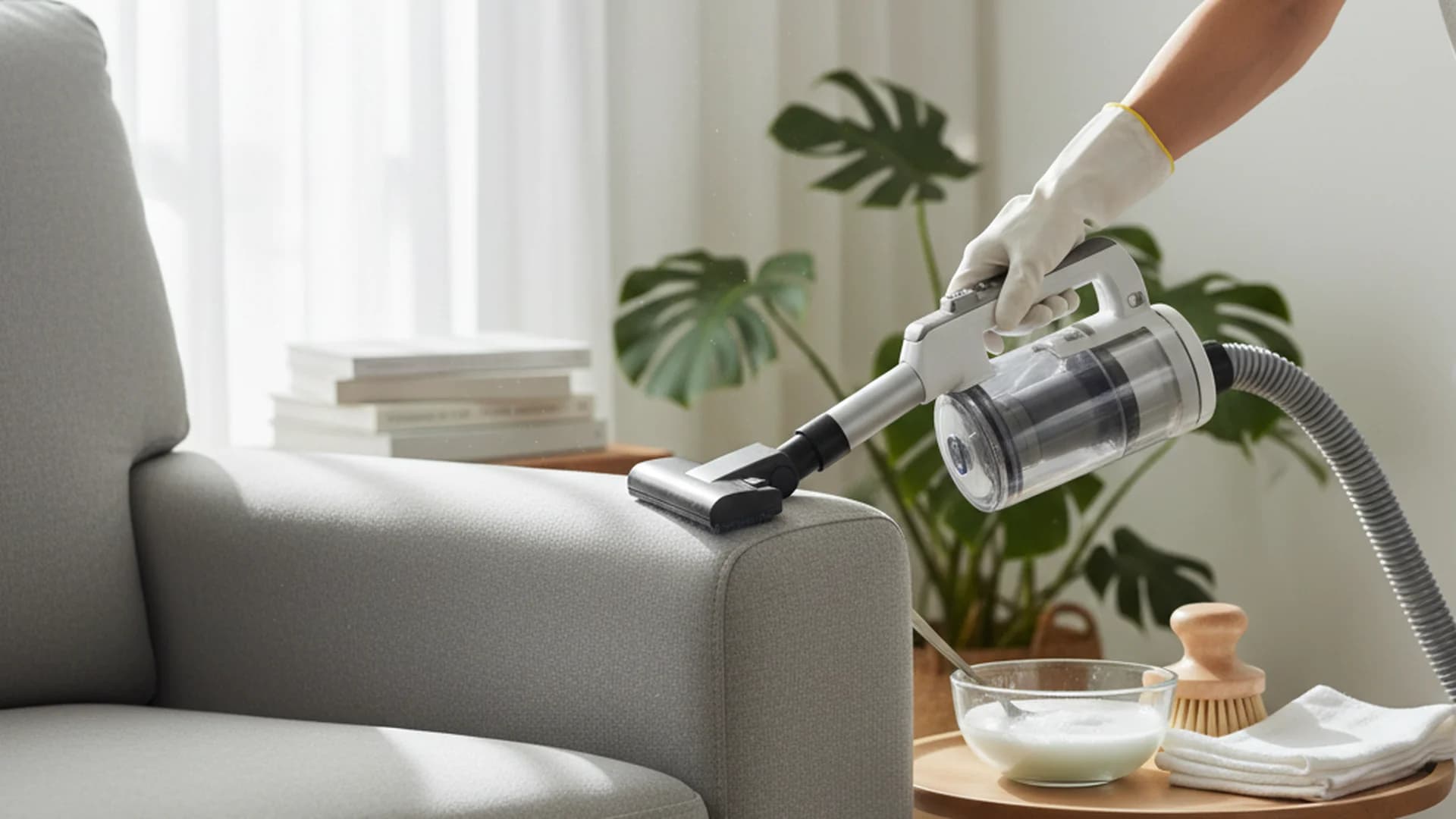
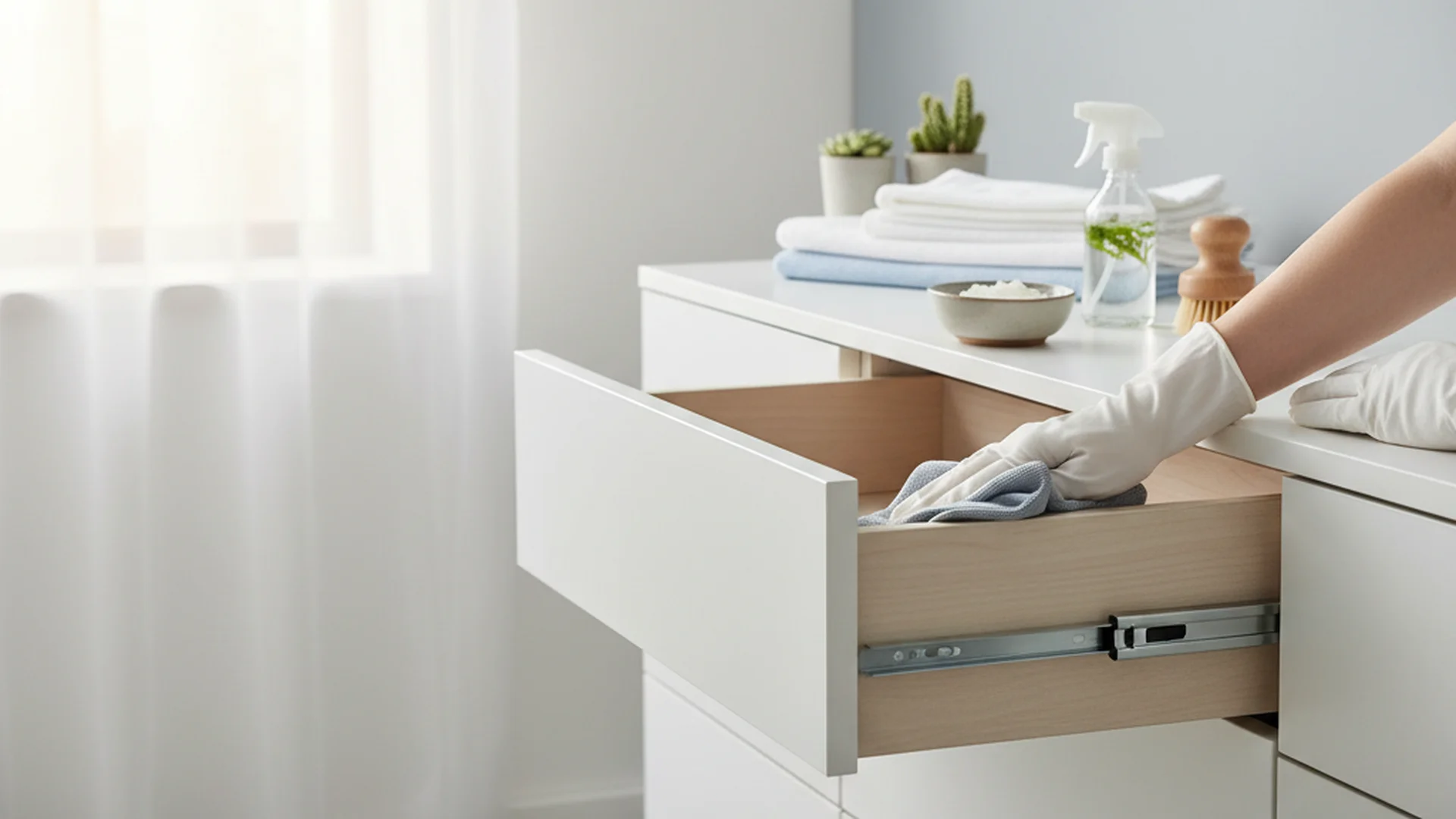
- Vacuum: Use a brush attachment to get into the corners.
- The Tape Trick: If you don't have a vacuum handy, use a piece of packing tape or a lint roller to pick up fine debris and hair in the tight corners.
- Track Maintenance: If the drawer is sticking, wipe the tracks with a damp cloth to remove dust.
Success: Applying a bit of wax paper or a dry silicone spray to the drawer glides will keep them sliding smoothly for months.
2025-2026 Cleaning Trends
The world of home care is moving toward "Low-Tox" and "Tech-Integrated" solutions.
- Probiotic Cleaning: A major trend in 2025 is the use of probiotic sprays. These leave "good bacteria" on your nightstand that continue to eat away organic matter (like skin cells) for days after you finish cleaning.
- UV-C Sanitizing Wands: For high-end nightstands with delicate finishes, many people are now using handheld UV-C lights to kill 99.9% of pathogens without using liquid chemicals.
- The Clutter-Free Aesthetic: The "Underconsumption Core" trend encourages keeping only the essentials (one book, one lamp) on the nightstand, significantly reducing dust-trapping surfaces and making weekly cleaning faster.
Common Mistakes to Avoid
Avoid these frequent pitfalls to protect your furniture and your health:
- Over-Polishing: Using products like Pledge too often creates a waxy buildup. This residue actually attracts more dust over time. Clean first, and only polish once every few months.
- Neglecting the Lamp Shade: If you clean the table but leave a dusty lamp shade, the heat from the bulb will circulate dust back onto the table as soon as you turn it on. Always vacuum the shade first.
- Using Abrasive Pads: Even the "soft" side of a kitchen sponge can leave micro-scratches on high-gloss or painted nightstands. Stick exclusively to microfiber.
- Forgetting the Tracks: Dust in the drawer glides is the #1 cause of "stuck" drawers. Include this in your monthly deep clean.
Frequently Asked Questions
How do I remove white water rings from a wood nightstand?
How often should I deep clean my nightstand?
Is it safe to use disinfecting wipes on wood?
How do I clean the sticky residue left by electronics or coasters?
How do I clean the inside of nightstand drawers without a vacuum?
Conclusion
Mastering the best way clean nightstand surfaces is about more than just a tidy room—it's about creating a hygienic environment for rest. By removing the clutter, choosing the right cleaners for your specific materials, and not forgetting the "hidden" spots like drawer tracks and lamp shades, you can significantly improve your bedroom's air quality and longevity of your furniture.
Success: Regular maintenance prevents the buildup of "blooming" stains and allergens, ensuring your nightstand remains a beautiful and healthy part of your bedroom for years to come.
Cleaning that keeps score
Every task earns points, every streak multiplies them, and Premium adds a household leaderboard plus a monthly Dustagorgon to beat.
- Free forever
- 30 badges to earn
- Up to 6 in a household
No card needed. Set up your rooms in a couple of minutes.