In this article
What you’ll learn
- Avoid over-wetting the mattress to prevent internal mold growth.
- Use baking soda and UV light as natural, effective deodorizers.
- Rotate or flip your futon every 30 days to maintain its shape and hygiene.
A futon is one of the most versatile pieces of furniture in any modern home, serving as a cozy sofa by day and a guest bed by night. However, because they often sit closer to the floor or on solid frames, they are magnets for dust, moisture, and allergens. If you have been wondering how to clean futon mattress surfaces effectively without ruining the integrity of the fill, you are in the right place. Maintaining a clean sleeping surface isn't just about aesthetics; it is a vital part of home hygiene that can significantly impact your sleep quality and respiratory health.
A typical mattress can house an enormous population of dust mites. When you combine that with the amount of moisture we lose every night through sweat, it becomes clear that your futon needs more than just a decorative cover to stay fresh. In this guide, we will explore the best way to clean a futon mattress at home using 2025’s most effective techniques and eco-friendly solutions.
Understanding Your Futon Material
Before you reach for the scrub brush, you must understand what is inside your mattress. Unlike traditional innerspring mattresses, futons are usually packed with dense layers of cotton, foam, or polyester. This density makes them excellent for support but also means they hold onto moisture like a sponge.
Warning: Check the care tag before applying any liquids. "S" means solvent-based cleaners only, "W" means water-based is okay, and "X" means vacuum only.
Why Futons Require Special Care
Traditional mattresses benefit from the airflow provided by box springs. Futons, however, often sit on wooden slats or metal frames that offer less ventilation. This lack of airflow, combined with the dense cotton batting found in traditional Japanese-style futons, makes them particularly susceptible to "musty" smells if they aren't cleaned and aired out regularly.
The 5-Step Deep Clean Process
To achieve a professional-grade clean without the professional price tag, follow this structured methodology. This process ensures you address both surface-level dirt and deep-seated allergens.
Step 1: The HEPA Vacuum Method
Start by removing the cover. Use a vacuum equipped with a HEPA filter and an upholstery attachment. Focus heavily on the seams and tufts, as these are the primary gathering spots for skin cells and dust mites.
Note: For 2025, it is worth running a high-CADR air purifier in the room while you vacuum. This captures the microscopic particles kicked up during the cleaning process, preventing them from settling back onto your furniture.
Step 2: Deodorizing with Baking Soda
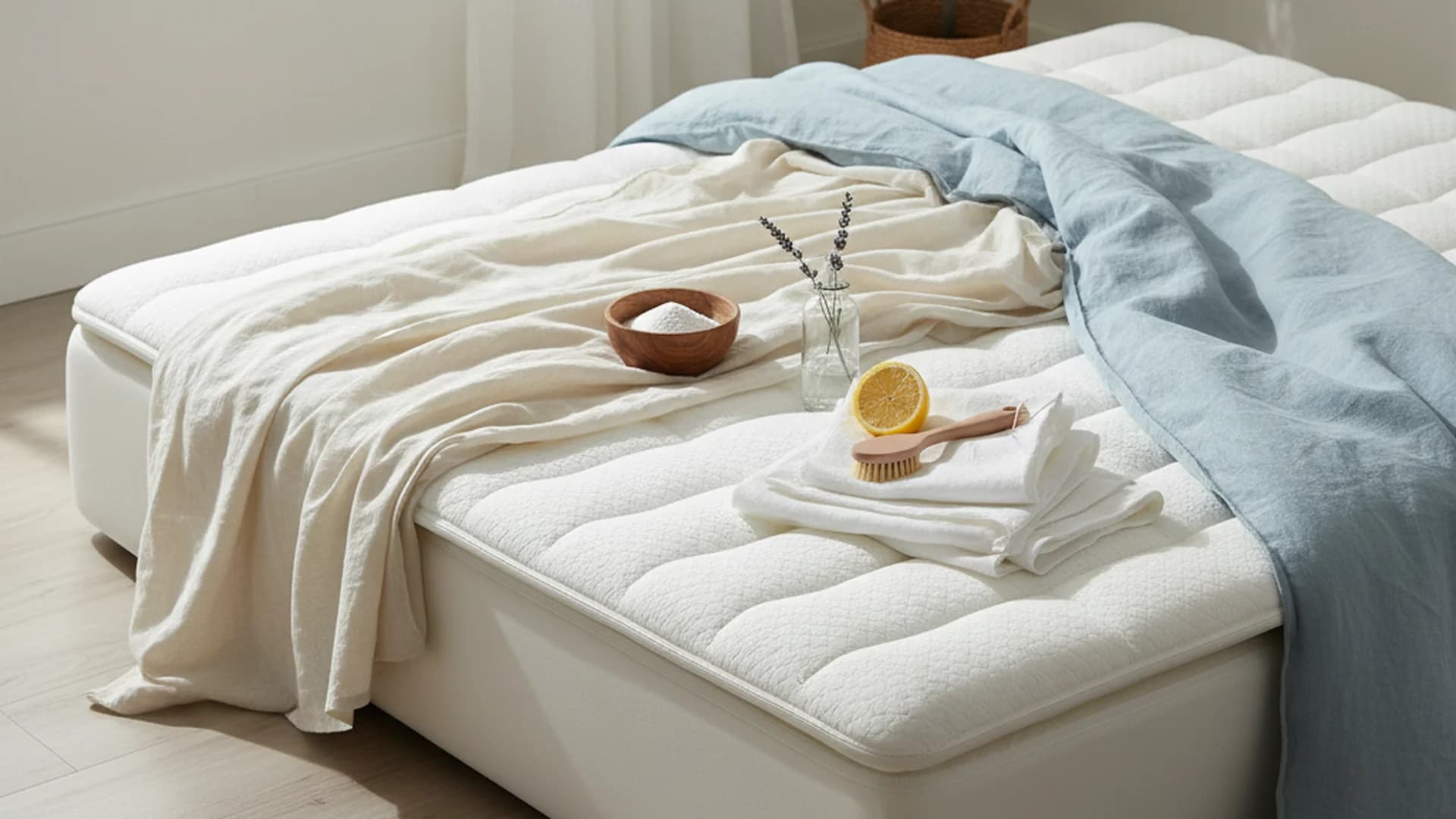
If your futon has developed a "lived-in" scent, baking soda is your best friend. Sprinkle a generous, even layer over the entire surface of the mattress. Baking soda works by neutralizing pH levels and absorbing moisture-based odors.
- Standard Clean: Let sit for 2 hours.
- Deep Deodorizing: Let sit for 6–8 hours (ideally overnight).
Step 3: The "Dry-Suds" Spot Clean
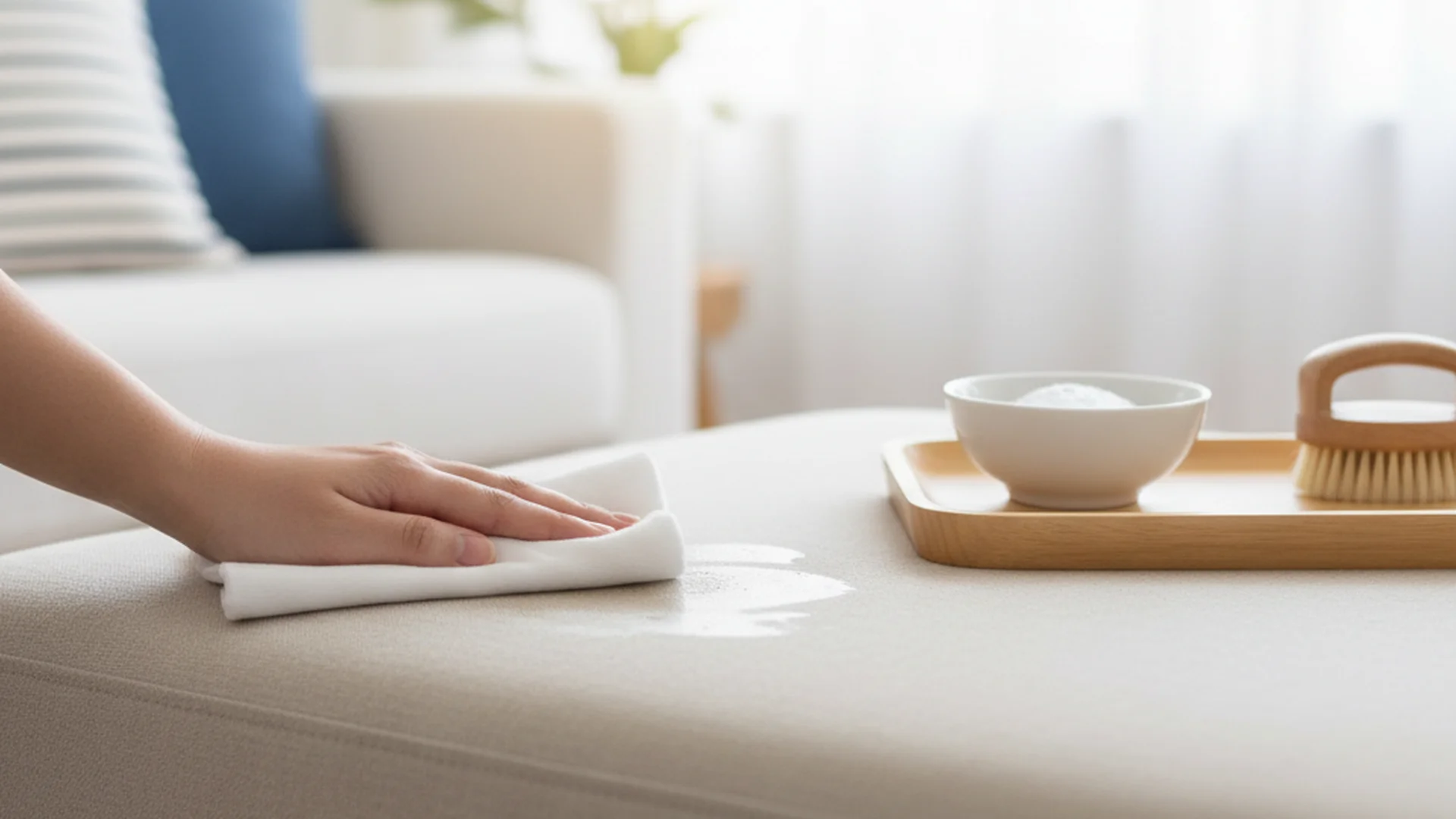
The biggest mistake people make when learning how to clean futon mattress stains is using too much water. To avoid this, use the "dry suds" method. Mix a small amount of mild detergent with warm water and whisk it until a thick, shaving-cream-like foam forms. Use a microfiber cloth to scoop up only the foam and gently blot the stain.
Success: Using only the foam ensures that the moisture stays on the surface fabric and doesn't seep into the core, where it could cause mold.
Step 4: Sanitize with UV Therapy
In 2025, UV-C sanitizing wands have become a household staple. If you have one, slow-pass the wand over the mattress to kill 99.9% of bacteria and viruses. Alternatively, the "old-school" method is still highly effective: if the weather is clear, take the mattress outside. Direct sunlight is a natural disinfectant that kills mold spores and refreshes the fibers.
Step 5: The Final Air Dry
Never put a cover back on a damp mattress. Use a floor fan or a dehumidifier to ensure the mattress is bone-dry. This usually takes 4 to 6 hours, depending on your local humidity.
| Task | Tool Needed | Purpose |
|---|---|---|
| Dust Removal | HEPA Vacuum | Removes allergens & skin cells |
| Odor Removal | Baking Soda | Neutralizes organic smells |
| Stain Removal | Mild Detergent | Lifts surface discoloration |
| Sanitization | UV-C Light/Sun | Kills bacteria & mold |
Pro-Tips for Specific Stains
Real-world accidents happen. Here is how to handle the most common issues you'll face when you clean a futon mattress at home.
1. The Coffee or Tea Spill
Example: You’re enjoying a morning brew on your futon, and a spill occurs. Solution: Immediately blot (don't rub) with a paper towel. Mix a solution of 1 part white vinegar to 2 parts water. Lightly mist the area and blot again. The acid in the vinegar breaks down the tannins in the coffee.
2. Biological Stains (Sweat and Urine)
Example: A pet has an accident or a guest leaves sweat stains after a long stay. Solution: Use an enzymatic bio-cleaner. These plant-based cleaners contain enzymes that "eat" organic matter. Spray the area lightly, let it sit for 10 minutes, and blot. This is the only way to truly eliminate the uric acid that causes lingering odors.
3. The "Musty" Closet Smell
Example: You pull a stored futon out of the guest room closet and it smells like mildew. Solution: This requires "Sunlight Therapy." Place the mattress in direct sun for 4 hours, flipping it halfway through. The UV rays are the best way clean futon mattress odors caused by stagnant air.
2025 Cleaning Trends and Technology
The world of home maintenance has evolved. Here are the latest updates for 2025–2026 that can make your cleaning routine more efficient:
- Modular Ticking: Many newer futon models now feature 360-degree zippers. If you are in the market for a new one, look for "removable ticking," which allows the entire outer shell to be machine-washed.
- Plant-Based Enzymes: Move away from harsh chemicals like bleach. Modern enzymatic cleaners are safer for your skin and more effective at breaking down the proteins in household stains.
- Handheld UV-C Wands: These devices provide a chemical-free way to sanitize soft surfaces, making them perfect for those with sensitive skin or chemical allergies.
Common Mistakes to Avoid
Even with the best intentions, it's easy to damage a futon if you aren't careful. Avoid these common pitfalls:
- Over-wetting the Core: If water reaches the center of a cotton-filled futon, it may never dry completely, leading to internal rot and "sour" smells.
- Using Bleach: Bleach is too harsh for the natural cotton fibers and synthetic foams used in futons. It can lead to yellowing and the eventual "shredding" of the internal material.
- Cleaning on Humid Days: If the humidity is above 60%, your mattress won't dry fast enough. Always check the weather forecast or use a dehumidifier indoors.
- Ignoring the Frame: Dust and pet hair often collect on the slats of the futon frame. If you clean the mattress but skip the frame, the dust will transfer right back.
Tip: Always wipe down your wood or metal slats with a damp cloth while the mattress is airing out.
Frequently Asked Questions
Can I put my futon mattress in the washing machine?
How do I get a "musty" smell out of a futon?
How often should I flip my futon?
Is steam cleaning safe for a futon?
How long does it take for a futon to dry after spot cleaning?
Conclusion
Cleaning a futon doesn't have to be a daunting task. By following the "dry suds" method, utilizing the power of baking soda, and incorporating 2025 technologies like UV-C light, you can keep your sleeping surface pristine for years to come. Remember, the secret to a long-lasting futon is consistent maintenance—vacuuming monthly and deep cleaning twice a year will prevent the accumulation of those millions of dust mites and keep your home a healthy haven.
Success: Regular cleaning and monthly rotation can extend the lifespan of your futon mattress from the average 5 years to nearly a full decade!
Cleaning that keeps score
Every task earns points, every streak multiplies them, and Premium adds a household leaderboard plus a monthly Dustagorgon to beat.
- Free forever
- 30 badges to earn
- Up to 6 in a household
No card needed. Set up your rooms in a couple of minutes.