In this article
What you’ll learn
- Always vacuum before applying liquids to avoid creating 'dust mud.'
- Use pH-neutral cleaners and avoid furniture polish inside drawer boxes.
- Implement 2026 trends like probiotic cleaners for long-term freshness.
There is a unique sense of satisfaction that comes with sliding open a dresser drawer to find perfectly folded, fresh-smelling clothes. However, most of us treat the interiors of our furniture as "out of sight, out of mind." Over time, these enclosed spaces become magnets for dust, allergens, and stagnant odors. If you have ever wondered how to clean dresser drawers effectively, you aren't just looking for aesthetic tidiness—you are improving your home’s hygiene.
According to the Asthma and Allergy Foundation of America (AAFA), bedroom furniture is a primary breeding ground for dust mites, with a single gram of dust potentially harboring up to 1,000 mites. Furthermore, the EPA warns that indoor air can be significantly more polluted than outdoor air, often due to trapped VOCs and "stale" air within storage units. Whether you are refreshing your daily wardrobe or sanitizing a recent vintage find, learning the best way clean dresser drawers is essential for fabric longevity and respiratory health.
Phase 1: The Purge and Preparation
The first rule of professional furniture maintenance is the "Empty-to-Base" rule. You cannot effectively clean dresser drawers at home if you are simply moving piles of clothes from one side to the other.
Clear Everything Out
Remove every item from the drawers. This is the perfect time to declutter. As the secondhand furniture market continues to grow—rising by 12% annually as of 2025—many of us are dealing with older pieces that require a deeper level of care. If you are cleaning a thrifted dresser, check the joints and corners for any signs of "factory dust" or previous owner residue.
Remove the Drawers
If your dresser allows, remove the drawers entirely from the frame. This gives you access to the "dust bunnies" that accumulate behind the drawers and on the tracks.
Tip: Before you start cleaning, place a clean sheet or tarp on the floor to hold your clothes. This prevents items from picking up floor dust while they wait to be re-homed.
Phase 2: The Deep Cleaning Process
When it comes to the actual cleaning, the order of operations matters. Wiping a dusty drawer with a wet cloth is a common mistake that creates a "muddy" residue, pushing allergens deeper into the wood grain.
The Vacuum-First Approach
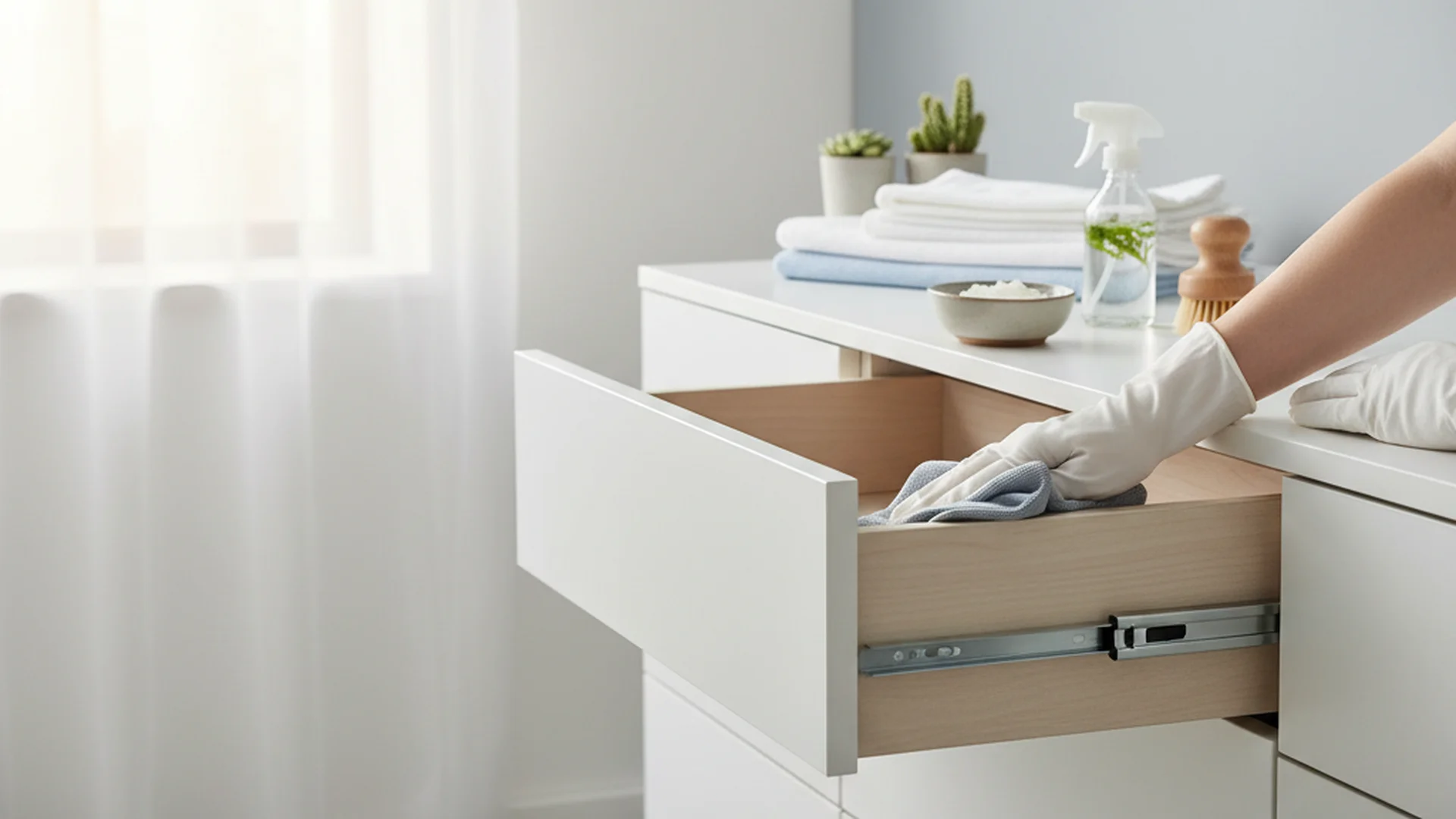
Start with a vacuum equipped with a HEPA filter and a soft-brush attachment. Vacuum the interior corners, the drawer bottoms, and the underside of the drawer. For velvet or felt-lined jewelry drawers, the soft brush is essential to lift dust without pilling the fabric. Follow up with a lint roller to catch any stubborn fibers or pet hair.
pH-Neutral Sanitization
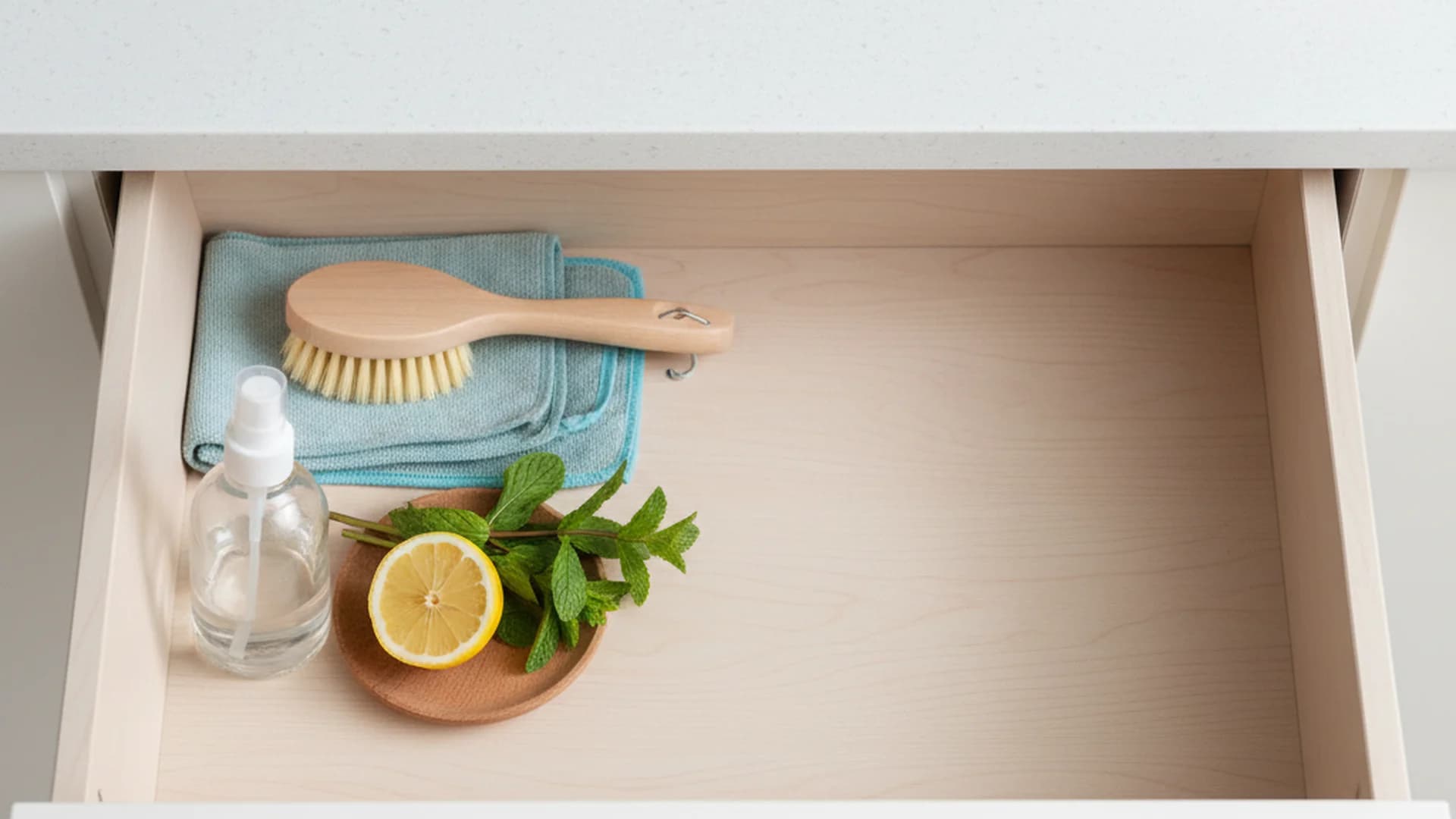
For finished wood, use a solution of mild dish soap and warm water, or a dedicated wood soap like Murphy’s.
- Dampen, Don't Soak: Wring out your microfiber cloth until it is barely damp.
- Wipe with the Grain: Follow the natural lines of the wood to avoid streaks.
- Vinegar Solution: If you prefer natural cleaners, a 1:4 ratio of white vinegar to water is safe for finished surfaces, but avoid using this on unfinished wood as it can be too acidic.
Warning: Never use harsh "all-purpose" sprays containing ammonia inside a drawer. These chemicals can strip finishes and leave behind toxic fumes that saturate your clothing.
Cleaning the Tracks
The tracks (or slides) are often the most neglected part. Use a dry microfiber cloth to wipe away old lubricant mixed with hair and dust. If the drawers are sticking, apply a tiny amount of clear silicone lubricant or rub a bit of paraffin wax along the wooden runners.
Phase 3: Odor Eradication and Modern Tech
Old furniture often carries a "musty" smell caused by mold spores or trapped moisture. In 2025, we have moved beyond simply masking these smells with heavy perfumes.
Dealing with Vintage Stink
If you've just brought home a beautiful vintage mahogany chest, you might notice a persistent "thrift store" odor. Sunlight is your best friend. If possible, place the empty drawers in direct sunlight for two hours. The UV rays act as a natural disinfectant. For indoor solutions, place a bowl of activated charcoal or a baking soda sachet inside the closed drawer for 48 hours to neutralize odors at the molecular level.
The 2026 Tech Upgrade: Probiotics and UV-C
The latest trend in home maintenance is the use of probiotic-based sprays. These cleaners leave behind "good bacteria" that continue to consume organic odors and dust mite waste for days after you’ve finished cleaning. Additionally, handheld UV-C sanitization wands have become a staple for homeowners who want to kill bacteria in the corners of delicate drawers without using water.
| Cleaning Method | Best For | Benefit |
|---|---|---|
| Vacuuming | All surfaces | Removes 90% of allergens |
| UV-C Wand | Vintage/Delicate | Kills mold without moisture |
| Probiotic Spray | High-use drawers | Long-term odor control |
| Activated Charcoal | Musty smells | Absorbs VOCs and moisture |
Phase 4: Common Mistakes to Avoid
Even the most well-intentioned cleaning can damage your furniture if done incorrectly.
Mistake 1: Using Furniture Polish Inside
Products like Pledge are designed for the exterior of furniture. When used inside a closed drawer, the oils never fully dry. This creates a sticky residue that attracts more dust and can leave permanent oil spots on silk or linen clothing.
Mistake 2: Over-wetting Unfinished Wood
The bottoms and sides of many drawers are made of unfinished cedar or plywood. This material acts like a sponge. Excess water causes the wood to swell, which can lead to warped bottoms or drawers that no longer slide shut.
Mistake 3: Putting Damp Clothes Away
This is the primary cause of mildew in dressers. Even a 5% residual moisture level from a dryer can lead to mold growth in the dark, unventilated environment of a drawer. Always ensure laundry is 100% dry before storage.
Note: New furniture isn't necessarily "clean." It often contains factory dust and formaldehyde off-gassing. Always wipe down new pieces and air them out for 24 hours before use.
Phase 5: Preventative Care and Liners
Once your drawers are spotless, the goal is to keep them that way. Textile conservation experts note that clothes stored in pH-neutral environments last 30% longer than those in contact with acidic wood or dust.
Choosing the Right Liner
In 2026, we are seeing a shift away from traditional scented paper toward Eco-Liners.
- Cork Liners: Naturally antimicrobial and sustainable.
- Copper-Infused Fabric: These liners naturally repel silverfish and moths without the need for toxic mothballs.
- Clear-Bottom Trend: Many minimalists are now choosing to remove liners entirely, allowing the wood to "breathe" and making it easier to see and wipe away dust during weekly cleans.
Real-World Example: The Nursery Refresh
Consider a nursery dresser. Because infants are more sensitive to VOCs and dust mites, a deep clean should be performed every 3 months. Using a probiotic cleaner ensures that the environment remains hygienic without exposing the child to harsh chemical residues.
Real-World Example: The Seasonal Rotation
When swapping winter wools for summer linens, use the transition period to vacuum the drawers. Wool is particularly attractive to moths; keeping the environment dust-free is your first line of defense against infestations.
Frequently Asked Questions
How do I get the "musty" smell out of old wood drawers?
Is it safe to use vinegar on wood drawers?
How often should I clean my dresser drawers?
Can I use a steam cleaner inside a dresser?
What is the best way to clean velvet or felt-lined drawers?
Conclusion
Maintaining clean dresser drawers is about more than just organization; it’s about preserving your clothing and ensuring the air in your bedroom remains healthy. By following the "vacuum-first" rule, choosing pH-neutral cleaners, and embracing modern solutions like probiotic sprays, you can create a storage environment that feels as fresh as your laundry.
Success: Regular drawer maintenance can extend the life of your favorite garments by 30% and significantly reduce the presence of bedroom allergens.
Cleaning that keeps score
Every task earns points, every streak multiplies them, and Premium adds a household leaderboard plus a monthly Dustagorgon to beat.
- Free forever
- 30 badges to earn
- Up to 6 in a household
No card needed. Set up your rooms in a couple of minutes.