In this article
What you’ll learn
- Always check the cleaning code (W, S, WS, X) before applying liquids.
- The "Golden Hour" for stain removal is the first 60 minutes after a spill.
- Use distilled water to avoid mineral rings and "halos" on delicate pile.
Velvet has officially reclaimed its throne as the "it" fabric for 2025 and 2026. Once reserved for formal parlors, modern velvet sofas now anchor busy family living rooms, offering a unique blend of tactile luxury and surprising durability. However, the most common question I hear from homeowners is: "Is it actually practical?" Learning how to clean velvet sofa surfaces doesn't have to be a source of anxiety. Whether you are dealing with a vintage silk piece or a modern performance polyester blend, the secret lies in understanding the science of the pile and acting with precision.
In this guide, we will break down the best way to clean velvet sofa cushions, how to handle emergency spills, and how to maintain that signature sheen for years to come.
The Pre-Clean Checklist: Decoding Your Velvet
Before you grab a cloth, you must identify what kind of velvet you are sitting on. Not all velvet is created equal, and using the wrong solution can lead to permanent fiber damage.
Identifying Fabric Composition
In 2025, the market is split into two main categories:
- Natural Velvet: Made from silk or cotton. These are luxurious but highly sensitive to water and heat. They often require professional dry cleaning.
- Synthetic Velvet: Made from polyester or nylon. This is the gold standard for modern homes. It is durable, often stain-resistant, and significantly easier to clean velvet sofa at home setups.
Understanding the Care Tag
Flip over your cushions or check the underside of the frame for the industry-standard cleaning codes:
| Code | Meaning | Cleaning Method |
|---|---|---|
| W | Water-based | Use water-based cleaning agents or foam. |
| S | Solvents | Dry clean only; use water-free solvents. |
| WS | Both | Safe for water or solvent cleaners. |
| X | Vacuum Only | No liquids; professional cleaning required. |
Warning: Using harsh chemicals like bleach or ammonia on velvet can cause up to 25% discoloration or irreversible "balding" of the fibers.
The Weekly Refresh: Prevention is Better Than Cure
Many owners only think about cleaning when they see a visible stain. However, the "best way clean velvet sofa" strategy is actually regular vacuuming. Dust particles act like microscopic sandpaper; as you sit and move, that dust grinds against the fibers, eventually wearing them down.
Step 1: The Soft Brush Vacuum
Use your vacuum’s soft brush attachment. High-suction upholstery tools without brushes can sometimes "bruise" the pile if used too aggressively. Vacuum in the direction of the nap (the way the fibers naturally lay).
Step 2: The Directional Brush
After vacuuming, use a specialized velvet brush or a soft-bristled baby brush to comb the fibers. This lifts the pile and prevents "crushing," which is when the fabric looks flat or shiny in high-traffic spots.
Note: Routine vacuuming can remove up to 90% of surface dust and allergens before they have a chance to settle into the base weave.
The Emergency Protocol: Handling Spills in the "Golden Hour"
When a spill happens, the first 60 minutes are critical. We call this the "Golden Hour." If you act immediately, you can prevent the liquid from sinking into the base cloth, where it becomes 30% more challenging to remove.
The "Blot, Don't Rub" Rule
This is the most important rule in velvet care. Rubbing a stain pushes the liquid deeper into the weave and crushes the delicate pile.
Example 1: The Red Wine Incident Imagine a guest spills red wine on your synthetic velvet sofa. If you rub it with a paper towel, you'll create a permanent pink smear. Instead, take a clean, white microfiber cloth and press it firmly onto the spill. Let the cloth absorb the liquid. Repeat with dry sections of the cloth until no more moisture transfers.
Success: Acting within the first 5 minutes of a spill significantly increases the likelihood of 100% stain removal without needing professional help.
How to Clean Velvet Sofa Stains: Safe Home Remedies
If the blot method leaves a mark, you may need a mild cleaning solution. Always test your solution on a hidden area (like the back of the sofa or under a cushion) first.
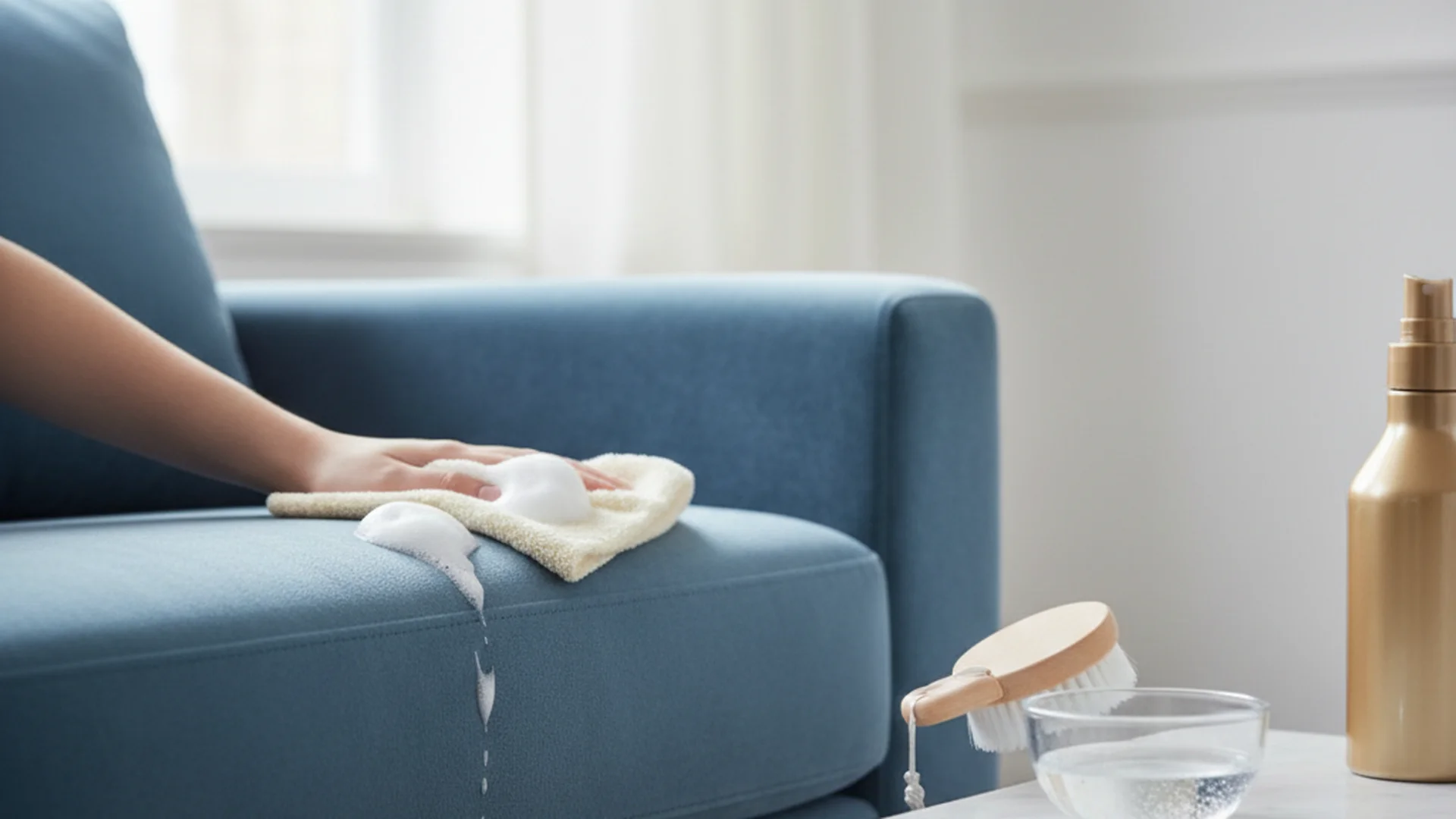
Method 1: The "Suds" Technique (Best for W/WS Codes)
This is an expert-recommended way to minimize moisture.
- Fill a bowl with lukewarm distilled water.
- Add one drop of mild dish soap.
- Whisk the water until a thick layer of foam (suds) forms on top.
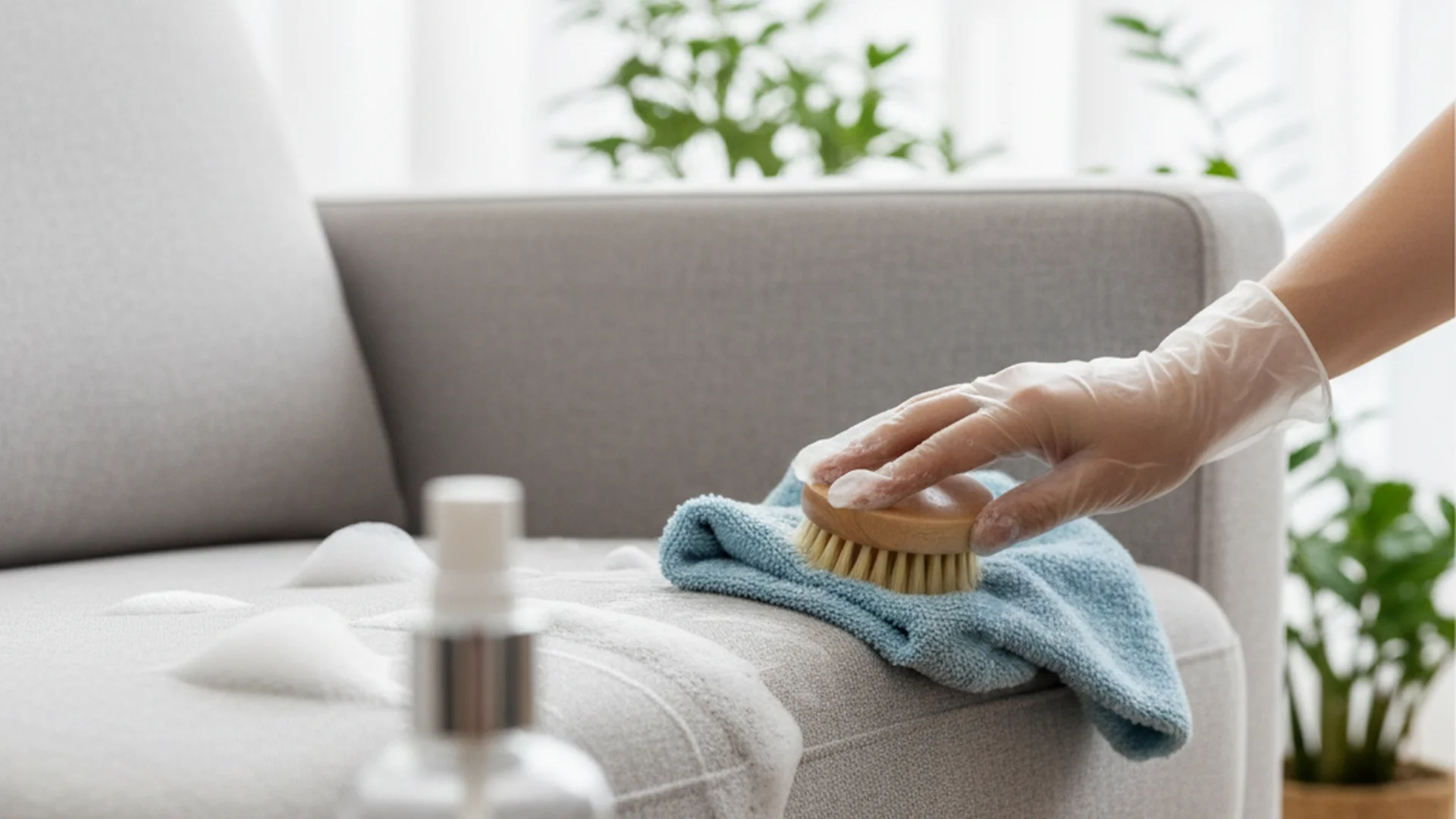
- Dip a microfiber cloth into only the foam.
- Gently blot the stain with the foam and let it air dry.
Method 2: The Vinegar and Distilled Water Mix
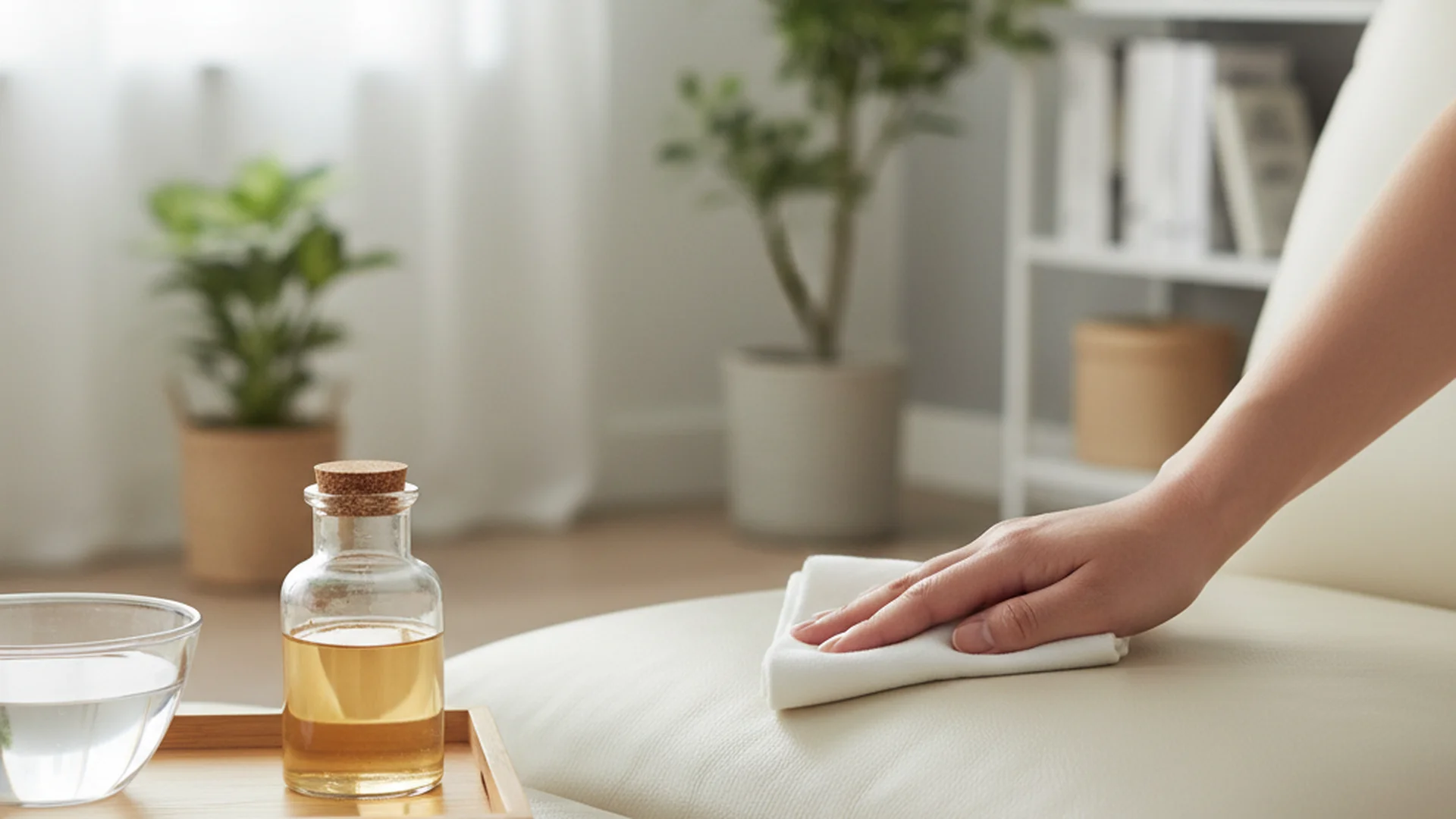
For lingering odors or tougher spots, a 50/50 mix of distilled water and white vinegar is highly effective.
Tip: Always use distilled water. Tap water contains minerals that can leave "halos" or white ring marks on velvet once the fabric dries.
Example 2: The Coffee Spill on Performance Velvet Many 2025 sofa models use "performance velvet" with nano-coatings. In this case, you'll notice the coffee beads up on the surface. You can simply "wick" the beads away with a dry cloth. If a shadow remains, the vinegar-distilled water mist is usually enough to lift it.
Advanced Care: Steam and Professional Maintenance
Using a Steam Cleaner
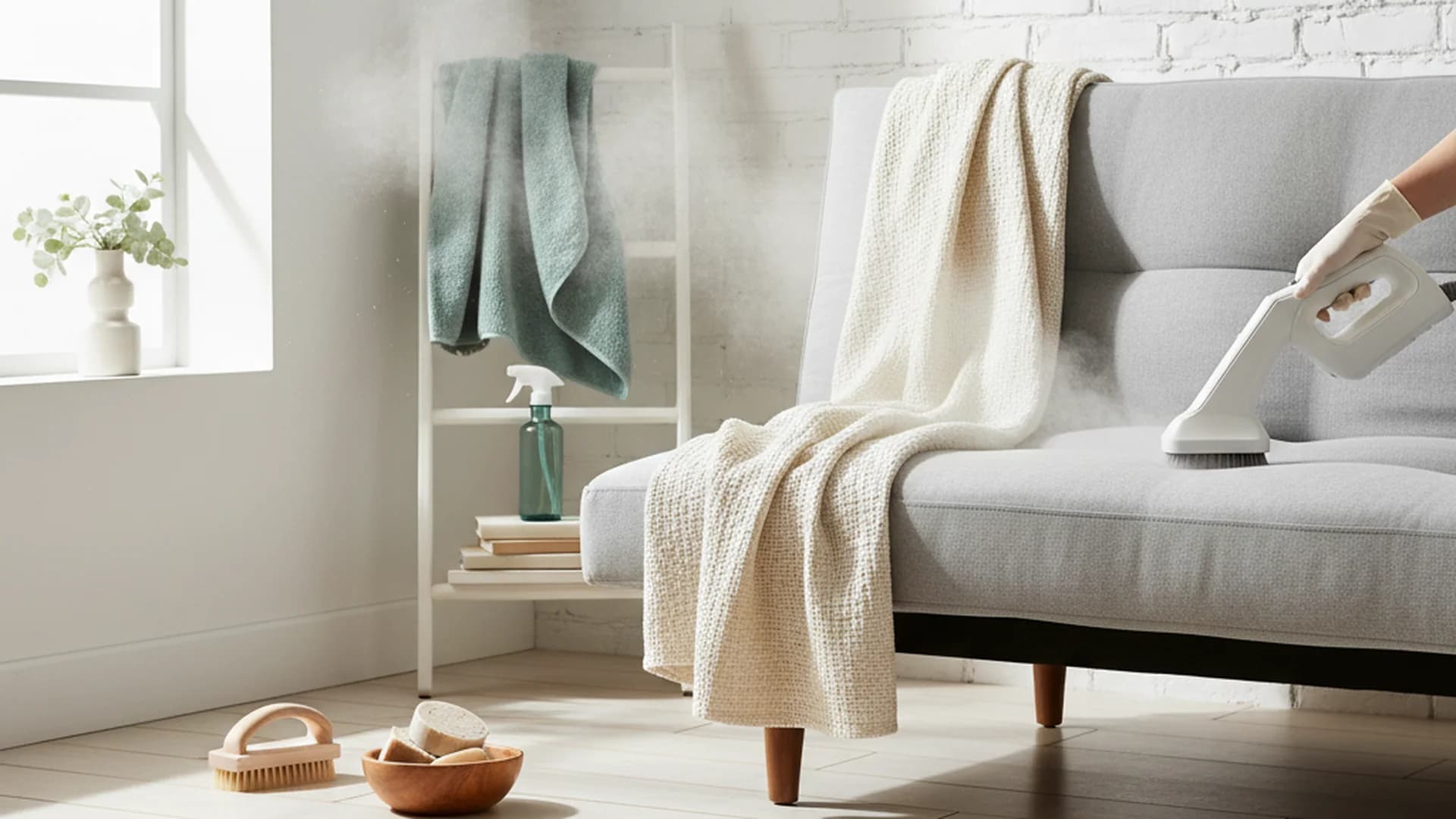
Can you steam velvet? Yes, but with extreme caution. Steam is excellent for "reviving the nap" (lifting flattened fibers), but excessive heat is dangerous.
- Synthetic Velvet: Can handle low-to-medium steam.
- Natural Velvet: Very sensitive; high heat can shrink the fabric.
- Recycled Velvet (rPET): This 2026 trend fabric is made from ocean-bound plastics; it is resilient but can melt if the steamer touches the fabric directly.
Warning: Use only the coolest setting on a hairdryer if you need to speed up drying. High heat can create a permanent "bruised" look in the pile.
When to Call a Professional
Even with perfect home maintenance, I recommend a professional deep clean every 12–18 months. Professionals use specialized "dry" extraction methods that remove deep-seated body oils and odors without over-wetting the internal padding, which can cause mold.
Common Mistakes to Avoid
- Over-Wetting the Fabric: Velvet is highly absorbent. If the internal foam padding gets soaked, it can lead to permanent water rings and musty odors.
- Direct Sunlight Exposure: Velvet fibers, especially natural ones, become brittle and fade dramatically when placed in direct sunlight. Use UV-filtering curtains to protect your investment.
- Using Lint Rollers: Standard sticky lint rollers can leave a residue that actually attracts more hair over time. Use a damp rubber glove or a dedicated velvet brush instead.
Example 3: The Pet Hair Struggle A client of mine struggled with golden retriever hair on a navy velvet sofa. Using a lint roller was a daily chore. I suggested a damp rubber glove; by running the glove over the fabric, the hair clumps together and lifts easily from the deep pile without leaving sticky adhesives behind.
Frequently Asked Questions
Can I use a steam cleaner on velvet?
Is soap and water safe for velvet?
How do I remove pet hair from velvet?
Can I use a hairdryer to dry a wet spot?
Conclusion
Owning a velvet sofa in 2025 is a statement of style and comfort. While the fabric has a reputation for being high-maintenance, knowing how to clean velvet sofa surfaces properly makes it a very manageable centerpiece for any home. By sticking to the "Blot, Don't Rub" rule, using distilled water, and performing regular vacuuming, you can ensure your sofa remains as vibrant and plush as the day it arrived.
Success: Consistent, gentle maintenance is the key to making velvet look brand new for over a decade.
Cleaning that keeps score
Every task earns points, every streak multiplies them, and Premium adds a household leaderboard plus a monthly Dustagorgon to beat.
- Free forever
- 30 badges to earn
- Up to 6 in a household
No card needed. Set up your rooms in a couple of minutes.