In this article
What you’ll learn
- Natural rattan requires moisture-controlled cleaning, while synthetic (PE) rattan is more durable.
- Never saturate natural rattan; use suds only to prevent warping and mold.
- Annual conditioning with boiled linseed oil is the secret to preventing brittle fibers.
In the landscape of 2026 home design, rattan remains a dominant force for its sustainability and organic warmth. Whether you have a vintage natural palm set in your sunroom or a modern synthetic weave on your patio, knowing how to clean rattan furniture is the difference between a piece that lasts five years and one that lasts twenty. As we lean further into eco-conscious living, maintaining these natural materials through proper "domestic efficiency" protocols has become a vital skill for every homeowner.
Understanding the nuances of the weave is essential. Rattan is not just "one material"; it is a complex structure of fibers that can trap dust, harbor allergens, and—if treated incorrectly—succumb to mold or structural failure. In this guide, we will break down the professional-grade methods to clean rattan furniture at home, ensuring your investment remains as stunning as the day you bought it.
Understanding Your Material: Natural vs. Synthetic
Before you grab a bucket, you must identify what your furniture is made of. The "best way clean rattan furniture" depends entirely on its composition.
| Feature | Natural Rattan | Synthetic (PE) Rattan |
|---|---|---|
| Material | Southeast Asian Palm Vine | High-Density Polyethylene |
| Best Use | Indoors / Covered Porch | Outdoors / All-Weather |
| Sensitivity | High (Moisture/UV) | Low (Weather Resistant) |
| Cleaning Method | Damp cloth/Suds only | Hose / Mild Soap |
| Lifespan | 10–15 Years | 20+ Years |
Natural rattan is a porous, organic material. It breathes, it reacts to humidity, and it can become brittle if it dries out. Synthetic rattan, often called "resin wicker" or PE rattan, is designed to mimic the look of natural fibers but is chemically engineered to withstand the elements.
Note: Most modern outdoor sets are synthetic, while high-end interior design pieces are typically natural. If you aren't sure, feel the weave; natural rattan has a slight "woody" texture and visible grain, whereas synthetic rattan feels like smooth or textured plastic.
The Three-Tier Cleaning Protocol
To maximize domestic efficiency, I recommend a tiered approach to maintenance. This prevents "cleaning fatigue" and ensures the furniture is never neglected long enough to require a full restoration.
Tier 1: Weekly Maintenance (Dusting)
The intricate over-under weave of rattan is a magnet for dust and pet dander. In 2026, we see a rise in modular rattan designs with even tighter weaves, making vacuuming essential.
- Vacuum: Use a vacuum cleaner with a soft-brush attachment. Move the brush in the direction of the weave to pull dust out of the crevices.
- Detailing: For stubborn dust in tight corners, use a clean, dry paintbrush or a soft-bristled toothbrush.
- Wipe: Finish with a dry microfiber cloth to pick up any remaining surface particles.
Tip: If you live in a high-pollen area, increase your dusting frequency to twice a week during spring to prevent yellowing of the fibers.
Tier 2: Monthly Deep Cleaning
When you need to clean rattan furniture at home to remove oils, light stains, or outdoor grime, the "suds-only" method is the gold standard for natural pieces.
- Prepare the Solution: Mix one gallon of warm water with two tablespoons of a mild, plant-based dish soap.
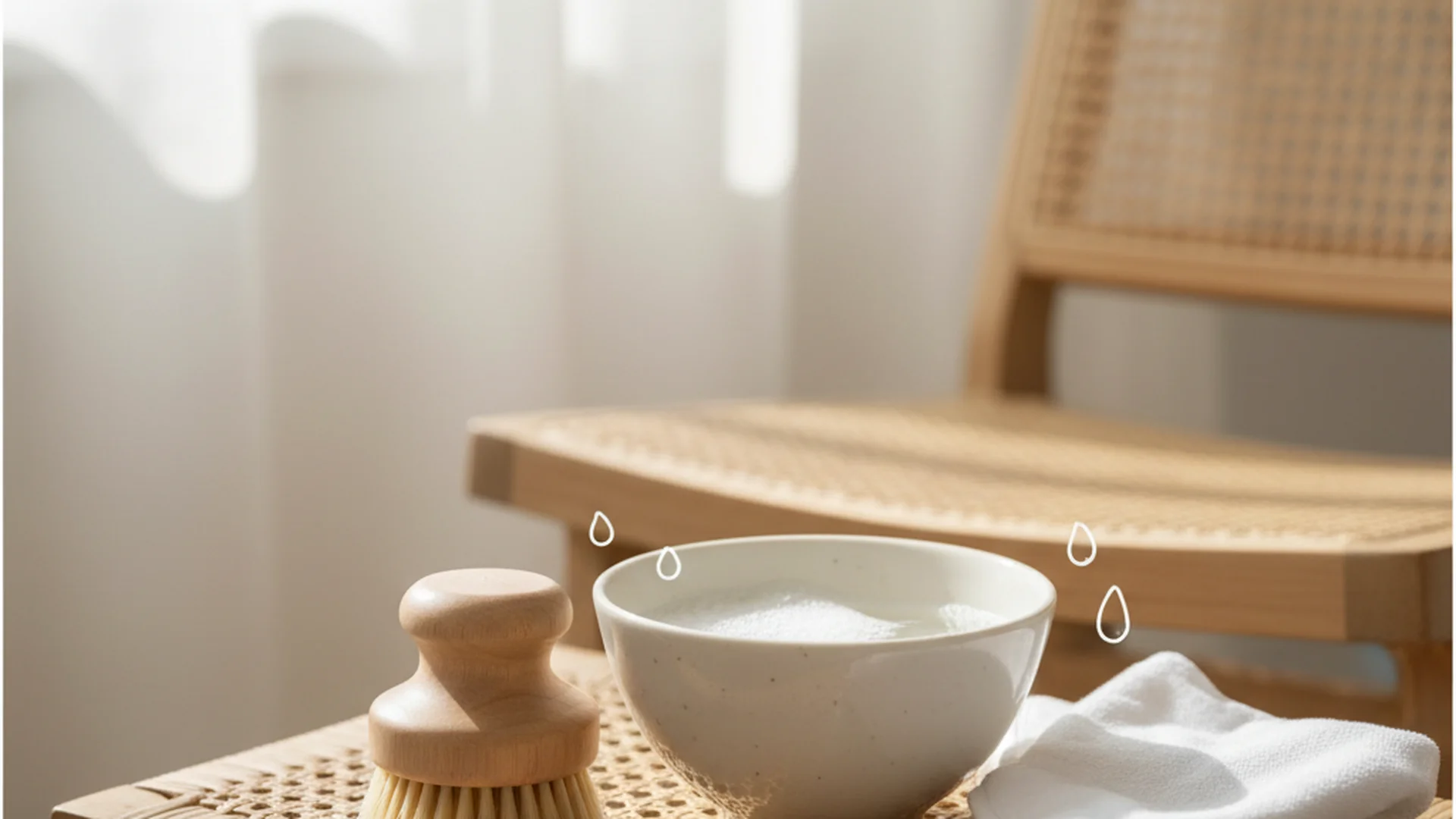
- Agitate for Suds: Stir the water vigorously until a thick layer of suds forms on top.
- Apply Suds Only: Dip a microfiber cloth into the suds only, not the water. You want the cloth to be damp with bubbles, not dripping wet.
- Wipe Gently: Wipe down the entire piece, paying attention to the arms and headrests where body oils accumulate.
- Dry Immediately: For natural rattan, use a clean towel to buff it dry. If the weave feels damp, use a hairdryer on a cool setting to circulate air through the fibers.
Warning: Never sit on natural rattan furniture while it is damp. The fibers soften when wet and will stretch under your weight, leading to permanent sagging.
Tier 3: Annual Conditioning (The Secret Weapon)
Natural rattan needs to stay "supple." Without moisture, the fibers snap. In 2026, we recommend a move away from petroleum-based sprays toward traditional, effective oils.
- Boiled Linseed Oil: Apply a thin coat once a year using a soft cloth. Let it sit for 15 minutes, then buff away the excess. This restores the "skin" of the rattan and provides a protective barrier against humidity.
Real-World Examples: Rattan Rescue Scenarios
Example 1: The Spilled Red Wine
A client recently had a red wine spill on a natural rattan dining chair. The instinct was to scrub with water. Instead, we used a dry cloth to blot, then applied a paste of baking soda and a tiny drop of water. After 10 minutes, we brushed the dry paste away and used the "suds-only" method. The result? Zero staining and no fiber damage.
Example 2: The "Green" Patio Set
Outdoor synthetic rattan often develops green algae in damp climates. A homeowner used a solution of 1 part white vinegar to 3 parts water with an eco-friendly cleaner like Biokleen. By spraying and letting it sit for 5 minutes before a light scrub, the algae disappeared without the need for a damaging pressure washer.
Example 3: The Brittle Indoor Rocker
An antique rattan rocker was "cracking" every time someone sat in it. We applied three light coats of boiled linseed oil over the course of a week. The fibers absorbed the oil, regained their elasticity, and the snapping sound vanished entirely.
Common Mistakes to Avoid
Even the most well-intentioned cleaning can ruin rattan if you aren't careful. Here are the pitfalls I see most often in my practice:
- The Pressure Washer Trap: It is tempting to blast outdoor furniture with a pressure washer. Do not do this. Even on synthetic rattan, high pressure can cause the weave to unravel or snap the plastic strands.
- The "Soaking" Mistake: Never submerge natural rattan in water or leave it out in a heavy rainstorm. If it becomes saturated, the internal core can rot, creating a structural hazard.
- Direct Sunlight Drying: While UV rays kill mold, drying natural rattan in the scorching mid-day sun makes it brittle. Always dry your furniture in a shaded, well-ventilated area.
- Using Bleach: Bleach is a harsh chemical that strips the natural protective oils from rattan fibers. Use white vinegar or oxygen-based cleaners for mold issues instead.
Success: By avoiding high-pressure water and harsh chemicals, you can extend the life of your rattan by up to 40%.
Recent Trends in Rattan Care (2025-2026)
The 2026 market has seen a massive shift toward "Zonal Cleaning." As furniture designers mix materials—pairing rattan weaves with teak frames or aluminum legs—the cleaning process must adapt.
- Hybrid Care: When cleaning hybrid furniture, treat the rattan with suds and the teak with specialized wood oil. Avoid getting wood oil on the rattan weave, as it can attract dust and cause the weave to become "gummy."
- Plant-Based Power: Consumers are moving away from traditional detergents. Brands like ZolaTerra are now the preferred choice for rattan because they break down organic grime (like bird droppings or tree sap) without leaving a chemical residue that could degrade natural fibers.
Frequently Asked Questions
Can I use a garden hose to clean my rattan?
How do I get mold off rattan furniture?
What is the best oil for natural rattan?
How do I prevent the legs of my rattan furniture from rotting?
Conclusion
Mastering how to clean rattan furniture is an essential part of modern home maintenance. By distinguishing between natural and synthetic materials and following a disciplined "Three-Tier" cleaning approach, you ensure your pieces remain both functional and beautiful for decades. Remember: natural rattan thrives on minimal water and annual oiling, while synthetic rattan appreciates a gentle monthly wash to remove environmental pollutants.
Success: Consistent, gentle care is always more effective than an aggressive "once-a-year" deep clean. Your furniture is a living part of your home's ecosystem—treat it with the efficiency it deserves!
Cleaning that keeps score
Every task earns points, every streak multiplies them, and Premium adds a household leaderboard plus a monthly Dustagorgon to beat.
- Free forever
- 30 badges to earn
- Up to 6 in a household
No card needed. Set up your rooms in a couple of minutes.