In this article
What you’ll learn
- Use pH-neutral cleaners to preserve tile integrity and sealers.
- The two-bucket method is essential to prevent spreading grime into pores.
- Avoid wax and oil-based products which create a slippery, dirt-trapping film.
Quarry tile is a staple in both high-traffic commercial kitchens and rustic residential spaces for a reason: it is incredibly durable, slip-resistant, and aesthetically timeless. However, because these tiles are made from natural clays and shales fired at temperatures reaching 2,000°F, they possess a unique texture and porosity that requires specific care. Learning how to clean quarry tile properly is the difference between a floor that looks aged and dingy and one that maintains its rich, earthy glow for decades.
In this guide, we will explore the most effective techniques for daily maintenance, deep cleaning, and long-term protection. Whether you are dealing with grease in a professional setting or mud in a home entryway, we have the expert-backed solutions for you.
Understanding Your Quarry Tile
Before reaching for the mop, it is vital to understand what makes quarry tile different from standard ceramic or porcelain. While it is as hard as porcelain, quarry tile is unglazed and typically has a water absorption rate of 0.5% to 3.0%. This classifies it as "vitreous," meaning it is resistant to moisture but not entirely waterproof.
Because of its textured surface, quarry tile provides a Dynamic Coefficient of Friction (DCOF) rating of ≥ 0.42, and sometimes as high as 0.60. This makes it incredibly safe for wet areas, but that same texture can act like a magnet for dirt, grease, and cleaning residue if not handled correctly.
The Science of the Surface
The "ruggedness" of quarry tile comes from its extrusion process. Unlike pressed tiles, quarry tiles are squeezed out like pasta dough before being fired. This creates a dense body but leaves microscopic "nooks and crannies" on the surface. If you use the wrong cleaning tools—like a cheap string mop—you might actually leave more debris behind than you remove.
The Best Way Clean Quarry Tile: Daily Maintenance
For everyday upkeep, the goal is to remove surface grit before it has a chance to be ground into the tile's pores.
Step 1: Dry Soil Removal
Never skip the sweep. Use a soft-bristled broom or a vacuum set to the "hard floor" setting.
Warning: Avoid using a vacuum with a rotating beater bar. The stiff bristles can trap grit against the tile and cause micro-scratches, which eventually allow dirt to penetrate deeper into the unglazed surface.
Step 2: The Two-Bucket Method
This is the gold standard for professional cleaners. Use one bucket for your cleaning solution (water and a pH-neutral cleaner) and a second bucket with clean, plain water.
- Dip your mop into the cleaning solution.
- Mop a small section of the floor.
- Rinse the dirty mop in the clean water bucket before dipping it back into the cleaning solution.
This prevents you from simply spreading dirty water back into the porous tile body.
Step 3: Mop Selection
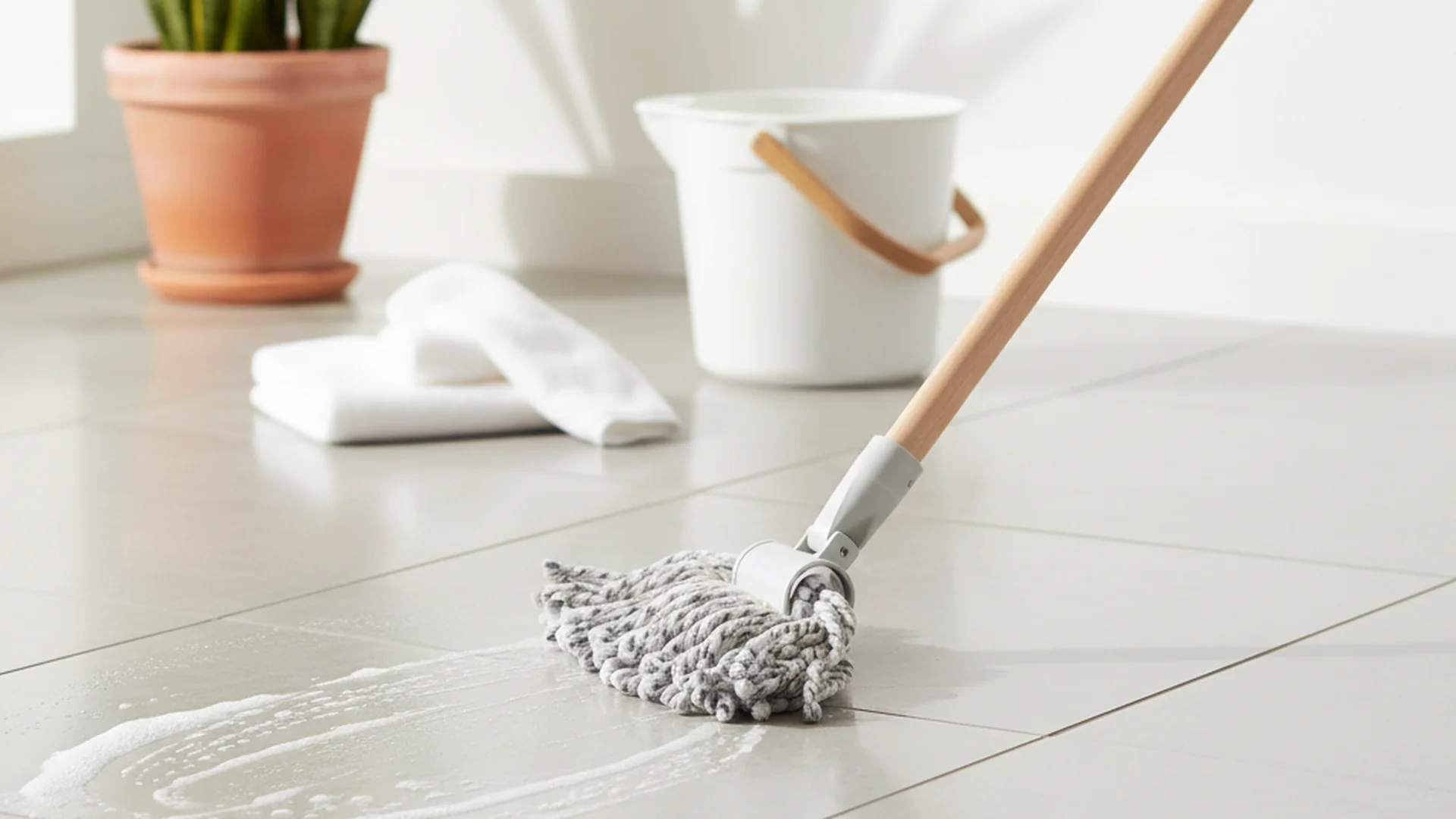
A traditional string mop is often the enemy of quarry tile. The textured surface can "shred" cotton strings, leaving behind fibers that trap grease.
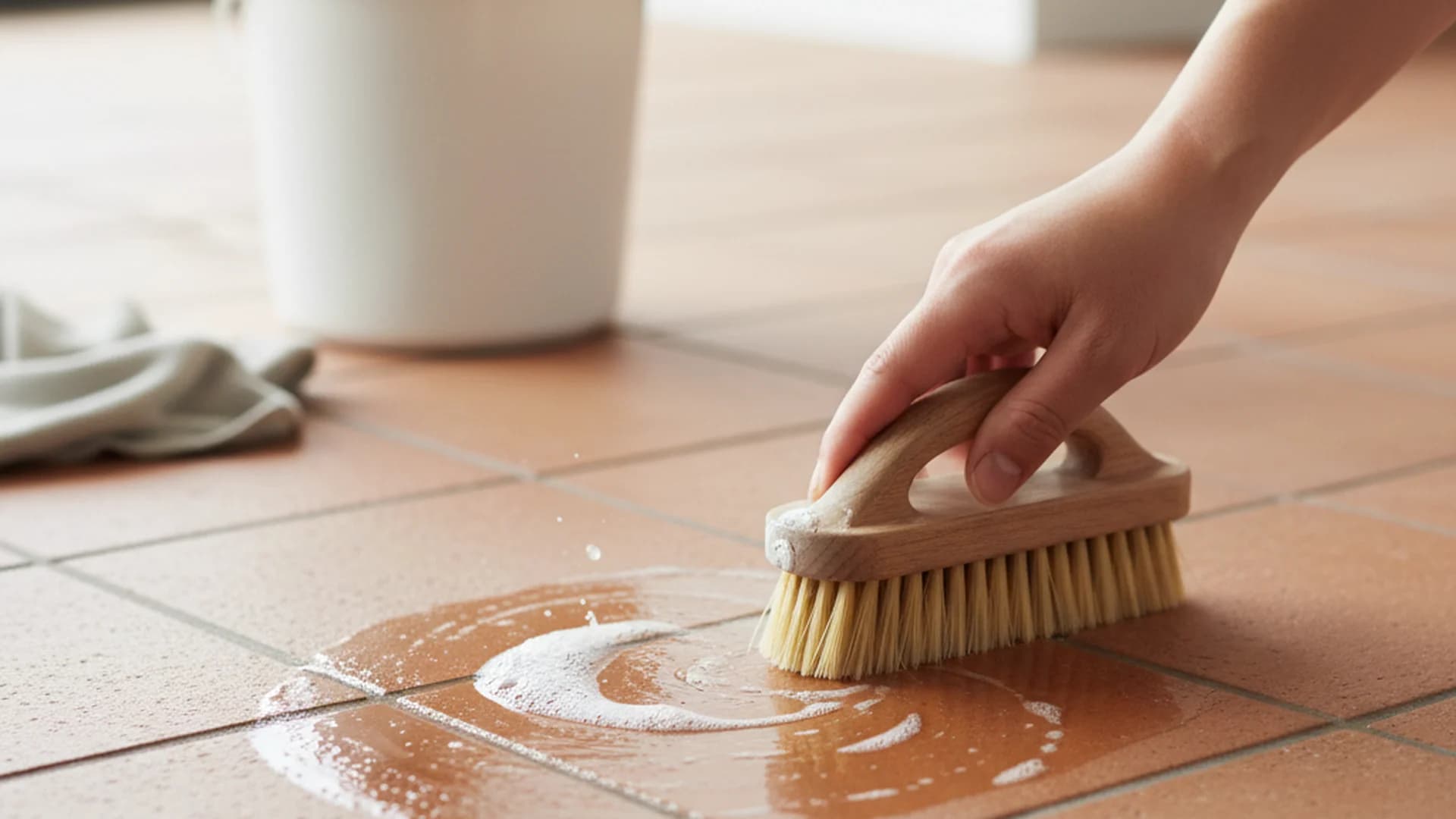
Tip: Use a looped-end microfiber mop or a stiff-bristled deck brush. Microfiber is more effective at lifting dirt out of the tile's texture without shedding.
How to Clean Quarry Tile Naturally
If you prefer to avoid harsh chemicals, you can effectively clean quarry tile naturally using common household items. This is especially popular for residential kitchens where food safety and eco-friendliness are priorities.
The Vinegar Solution (For Occasional Use)
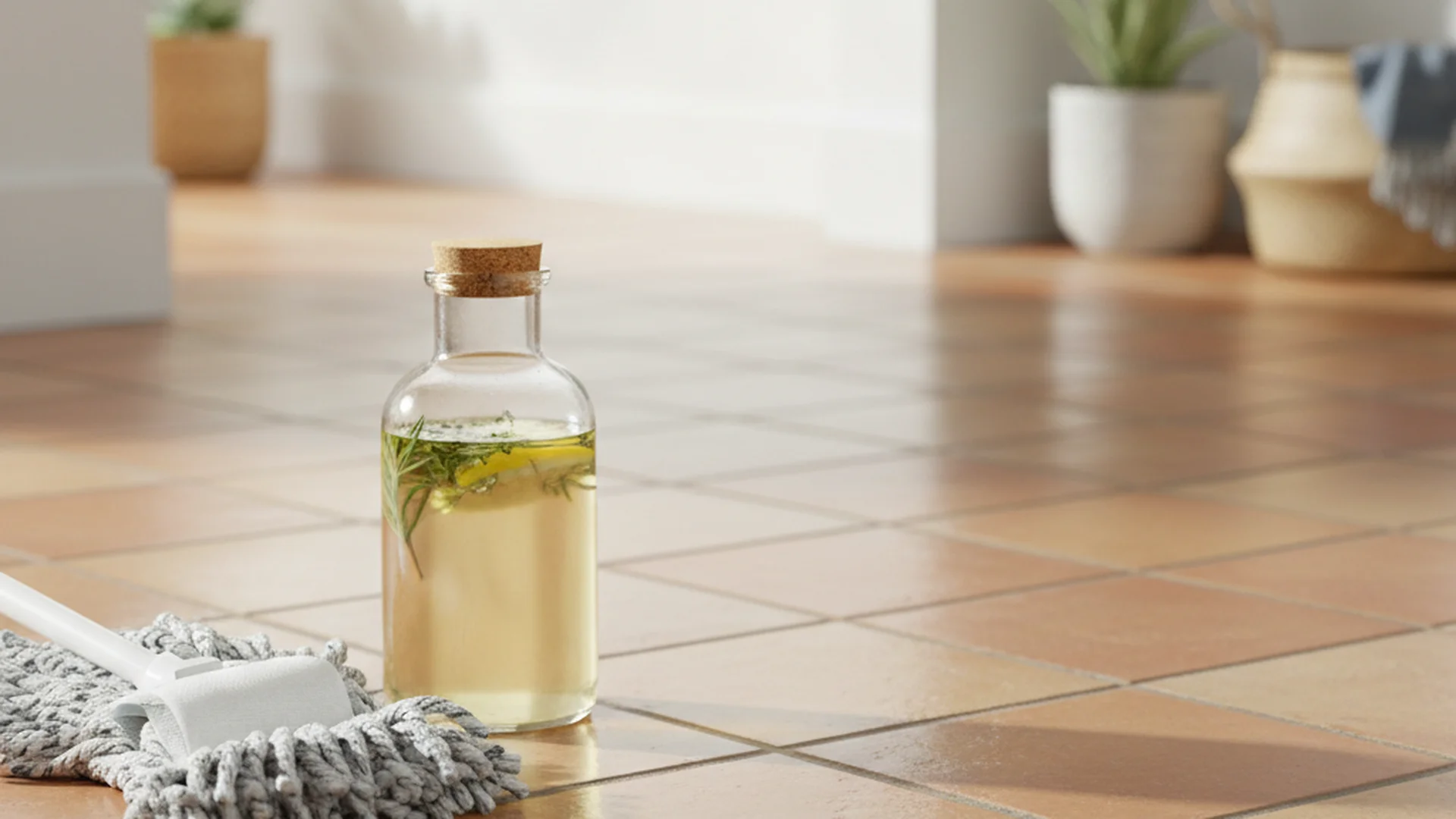
Mix 1 cup of white distilled vinegar with 1 gallon of hot water. The mild acidity of the vinegar helps break down mineral deposits and light grease.
Note: Use vinegar sparingly. Frequent use of acidic cleaners can eventually weaken cement-based grout, making it brittle and prone to cracking.
The Baking Soda Power Paste
For localized stains or particularly dirty grout lines, create a paste of baking soda and a small amount of water. Apply the paste to the area, let it sit for 10 minutes, and scrub with a soft brush before rinsing.
Eco-Centric Trends for 2025
A growing trend in 2025 is the use of "dissolvable strip" cleaners. These are pre-measured, plastic-free sheets that dissolve in water. They are typically pH-neutral and excellent for maintaining the "natural" look of quarry tile without leaving a chemical residue.
| Method | Ingredients | Best For |
|---|---|---|
| Daily Clean | Warm water + 2 drops dish soap | Light dust and spills |
| Natural Deep Clean | 1 cup vinegar + 1 gallon water | Mineral buildup/Hard water |
| Spot Treatment | Baking soda + water paste | Grease spots and grout stains |
Deep Cleaning and Stain Removal
Sometimes, standard mopping isn't enough—especially in high-traffic areas. Here is how to handle a deep clean.
Using Enzymatic Cleaners
In 2025-2026, enzymatic cleaners have become the preferred choice for commercial quarry tile floors. These cleaners contain "good" bacteria that literally eat grease and organic matter. Unlike traditional surfactants that just move grease around, enzymes digest it, making it much easier to lift from the tile's pores.
The Role of Steam
Steam mops are highly effective for quarry tile. The high-temperature vapor loosens deep-set grime within the tile's texture without requiring heavy chemicals.
Success: Using a steam mop once a month can significantly reduce the need for professional deep cleaning, saving you hundreds of dollars in maintenance costs.
Real-World Example: The Commercial Kitchen
In a busy bistro, grease is the primary enemy. The staff switched from a standard floor cleaner to an enzymatic "no-rinse" solution. Within two weeks, the tiles returned to their original red hue, and the "slippery when dry" feeling caused by grease buildup disappeared entirely.
Common Mistakes to Avoid
Even well-intentioned cleaning can damage your floor if you use the wrong products.
1. The "Shine" Trap
Many homeowners try to make quarry tile shine by applying linseed oil or floor wax. Do not do this. Because quarry tile is minimally porous, these products cannot soak in. Instead, they sit on top, creating a sticky film that attracts hair and dirt. It also ruins the tile's natural slip resistance, making it dangerously slick.
2. Skipping the Rinse
If you use a soap-based cleaner, you must perform a final rinse with clean water. If not, the soap residue will dry in the micro-pores of the tile, creating a "tacky" surface that will look dirty again within hours.
3. Using "Brick Acid"
Hydrochloric or "brick acid" is sometimes used by contractors to clean grout haze after installation. However, it should never be used for regular maintenance. It will dull the tile's natural finish and eat away your grout lines.
Sealing and Long-Term Care
Should you seal your quarry tile? The answer depends on the location. In a dry hallway, it may not be necessary. However, in a kitchen or on an outdoor patio, a sealer is a must.
Modern Sealing Technology
For 2026, we are seeing the rise of "graphene-infused" penetrating sealers. Unlike old-fashioned surface sealers that peel, these penetrate the tile's pores and offer up to 5 years of protection against oil and water-based stains.
Tip: Always use a water-based penetrating sealer (also known as an impregnator). This allows the tile to "breathe" while preventing liquids from soaking into the body of the clay.
Real-World Example: The Outdoor Patio
A homeowner in a rainy climate noticed their quarry tile patio was growing moss in the grout. After a deep clean and the application of a high-quality penetrating sealer, the water began to bead on the surface, and the moss was unable to take root, reducing maintenance time by 80%.
Frequently Asked Questions
Do I need to seal my quarry tiles?
Will deep cleaning change the color of the tiles?
Can I use a steam mop on quarry tile?
Are quarry tiles the same as terracotta?
How much does professional cleaning cost?
Conclusion
Quarry tile is one of the most resilient flooring options available, but it demands respect for its unique physical properties. By avoiding waxes, using the two-bucket method, and opting for pH-neutral or enzymatic cleaners, you can keep your floors looking beautiful for a lifetime. Remember that the best way clean quarry tile is often the simplest: consistent debris removal and careful rinsing.
Real-World Example: The Mudroom Success
A family with three dogs struggled with muddy paw prints on their 12x12 quarry tile mudroom floor. By switching to a microfiber loop mop and a pH-neutral cleaner, they found that they could clean the entire room in 10 minutes without the "streaking" they experienced with cotton mops.
Success: Consistent maintenance not only keeps your floors looking great but also preserves the slip-resistant qualities that make quarry tile a safety-first choice for any home or business.
Cleaning that keeps score
Every task earns points, every streak multiplies them, and Premium adds a household leaderboard plus a monthly Dustagorgon to beat.
- Free forever
- 30 badges to earn
- Up to 6 in a household
No card needed. Set up your rooms in a couple of minutes.