In this article
What you’ll learn
- Use pH-neutral cleaners to preserve the sealer and color.
- Microfiber dust mops are superior to traditional brooms for daily grit removal.
- Avoid acidic substances like vinegar and high-heat tools like steam mops.
Stained concrete has evolved from a humble industrial basement staple into the "eco-luxury" flooring choice of the decade. However, because concrete is naturally porous, many owners are left wondering how to clean stained concrete without stripping the finish or dulling the vibrant hues.
Maintaining these floors requires more than just a bucket of soapy water; it requires an understanding of the chemistry behind the sealers and the "sacrificial" layers that keep the surface looking pristine. Whether you are dealing with a matte-finish living room floor or a textured outdoor patio, the following guide outlines the most efficient, professional-grade methods to keep your concrete shining for over 25 years.
The Fundamentals of Concrete Care
Before reaching for your cleaning supplies, it is vital to understand that you aren't just cleaning "rock." You are cleaning a treated surface. Concrete is a sponge-like material that, without a high-quality sealer, can absorb liquids in seconds, leading to permanent subsurface staining. In 2025, the industry saw a significant shift toward matte and satin sealers, which are more breathable but require specific care to avoid "etching."
Why pH Neutrality Matters
The most important rule in concrete maintenance is maintaining a neutral pH. Most "all-purpose" cleaners found in big-box stores are either too acidic or too alkaline. Over time, these chemicals break down the molecular bond of the sealer, leaving the raw concrete exposed to moisture and oil.
Note: Professional cleaning in 2025 typically costs between $0.29 and $0.53 per square foot. By mastering a DIY pH-neutral routine, you can reduce this cost to less than $0.05 per square foot.
Step-by-Step: The Best Way to Clean Stained Concrete
To achieve a professional-grade finish, you should adopt a "layered" maintenance approach. This prevents the buildup of abrasive grit that acts like sandpaper on your floor's finish.
Step 1: Daily Dusting with Microfiber
The biggest enemy of stained concrete isn't liquid—it’s dirt. Micro-debris acts as an abrasive that grinds away the sealer.
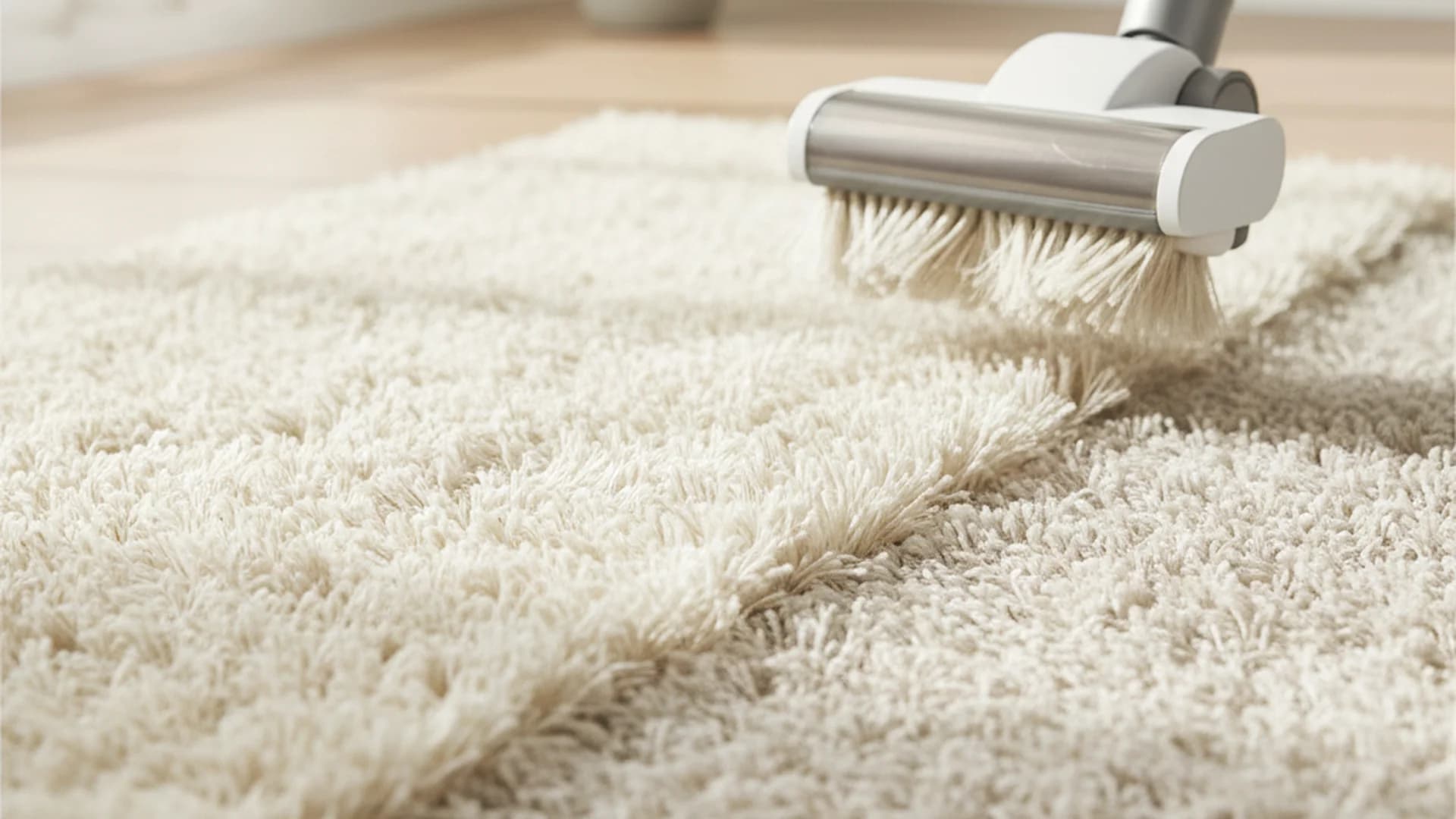
Tip: Use a microfiber dust mop instead of a traditional broom. Microfiber uses static electricity to capture fine "grit" that standard bristles simply push around.
Step 2: Weekly Damp Mopping
For your weekly routine, skip the harsh chemicals. The best way clean stained concrete is with a simple mixture of warm water and a pH-neutral cleaner.
- Clear the Area: Remove all rugs and furniture.
- Mix Your Solution: Add two tablespoons of pH-neutral dish soap or specialized stone soap to a gallon of warm water.
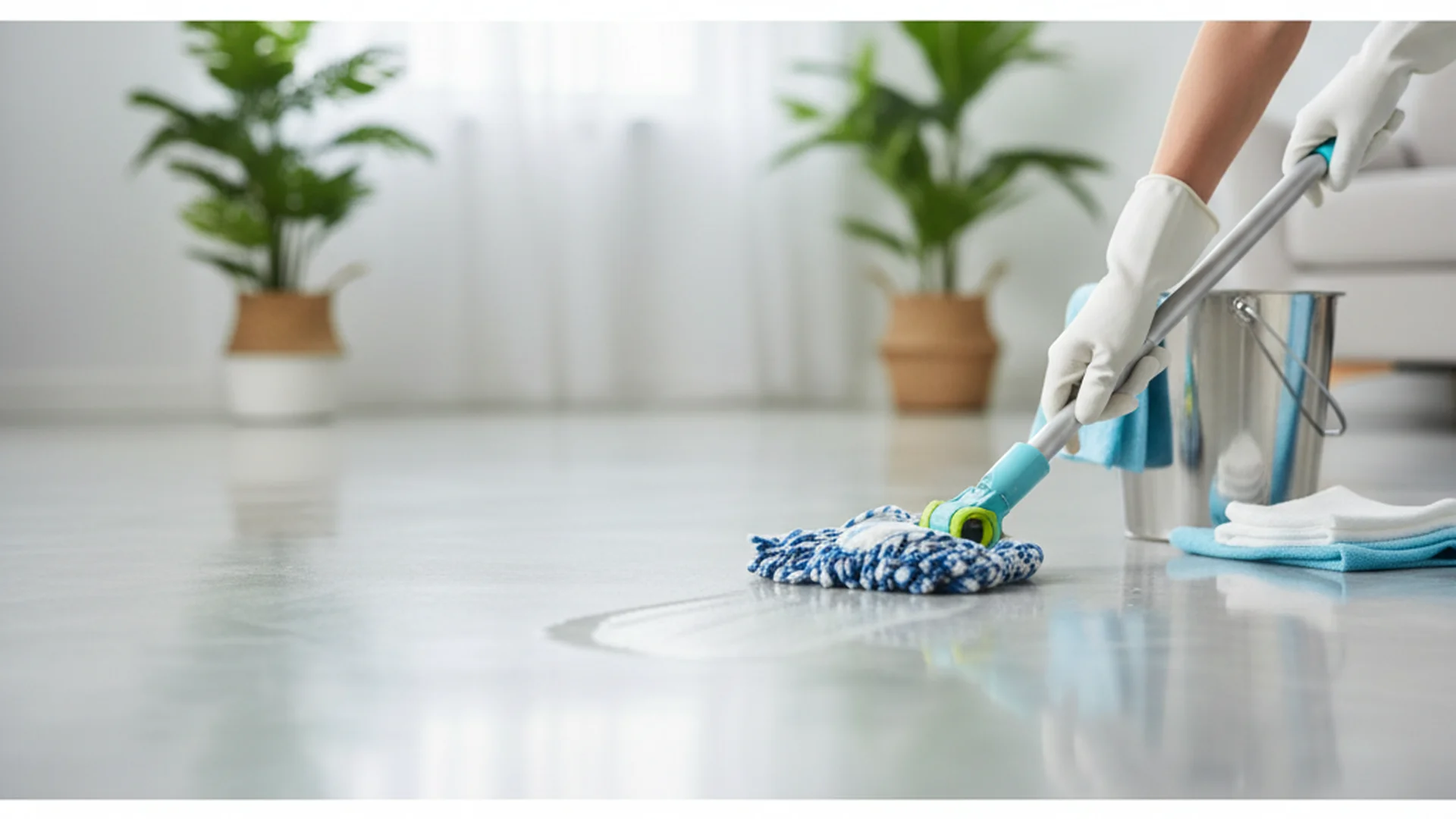
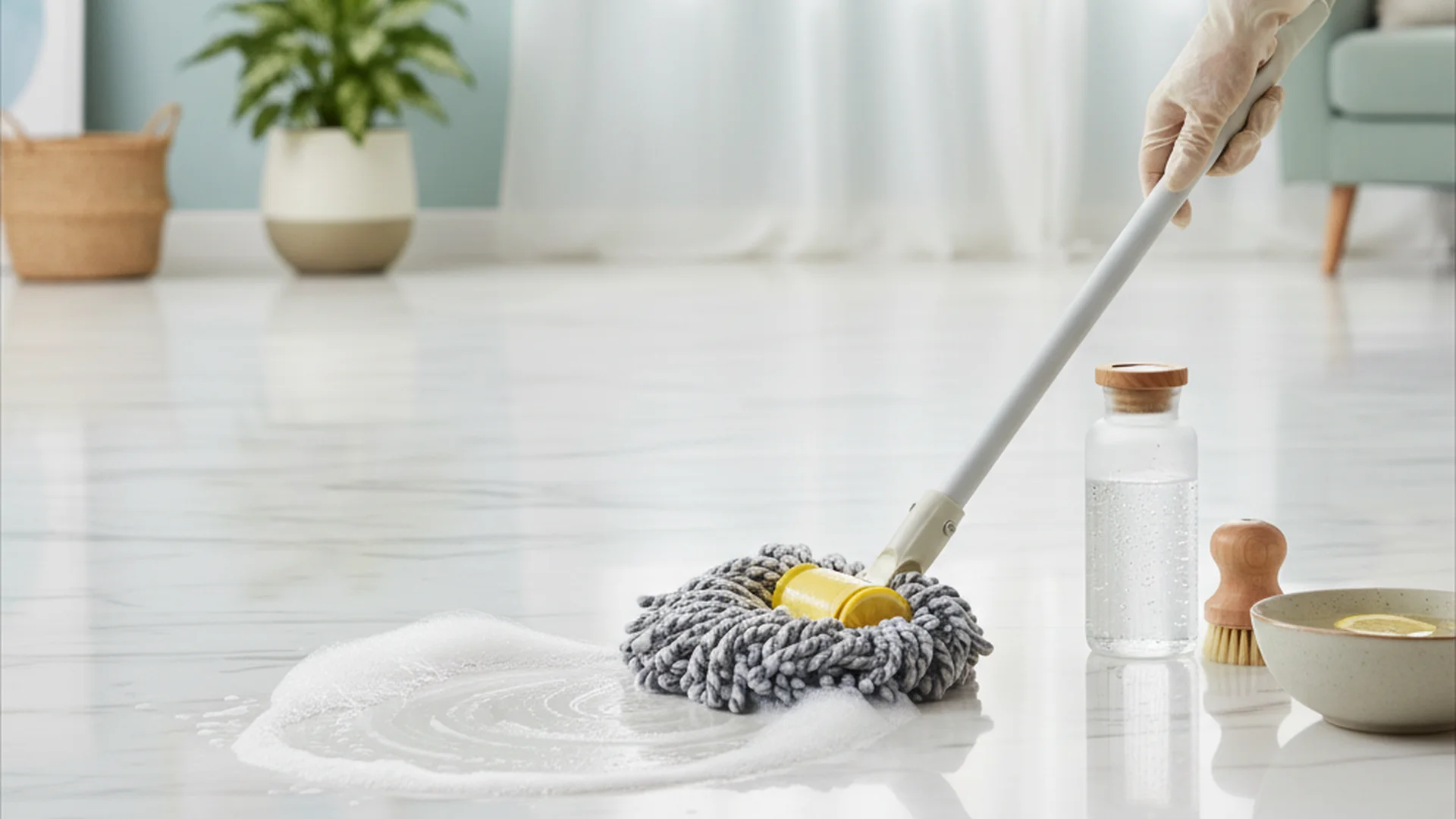
- Mop in Sections: Use a microfiber mop head. Ensure the mop is damp, not dripping wet.
- Dry Immediately: Use a clean, dry microfiber cloth to buff away any remaining moisture to prevent water spots.
Step 3: Clean Stained Concrete Naturally
If you prefer to avoid synthetic detergents entirely, you can clean stained concrete naturally using Castile soap.
- Natural Recipe: Mix 1/4 cup of liquid Castile soap with 2 gallons of warm water. Add 5 drops of lemon essential oil for a fresh scent without the acidity of actual citrus juice.
Warning: Never use vinegar or lemon juice to clean stained concrete. These are highly acidic (pH ~3) and will eat through the protective sealer, causing the concrete to look "cloudy" or dull.
Troubleshooting Tough Stains: Real-World Examples
Sometimes, standard mopping isn't enough. Here is how to handle specific scenarios using the "Poultice Method" and other expert techniques.
Example 1: The Red Wine Spill (Living Room)
A guest drops a glass of Cabernet on your sealed concrete floor. If the sealer is intact, it will bead. If it begins to soak in:
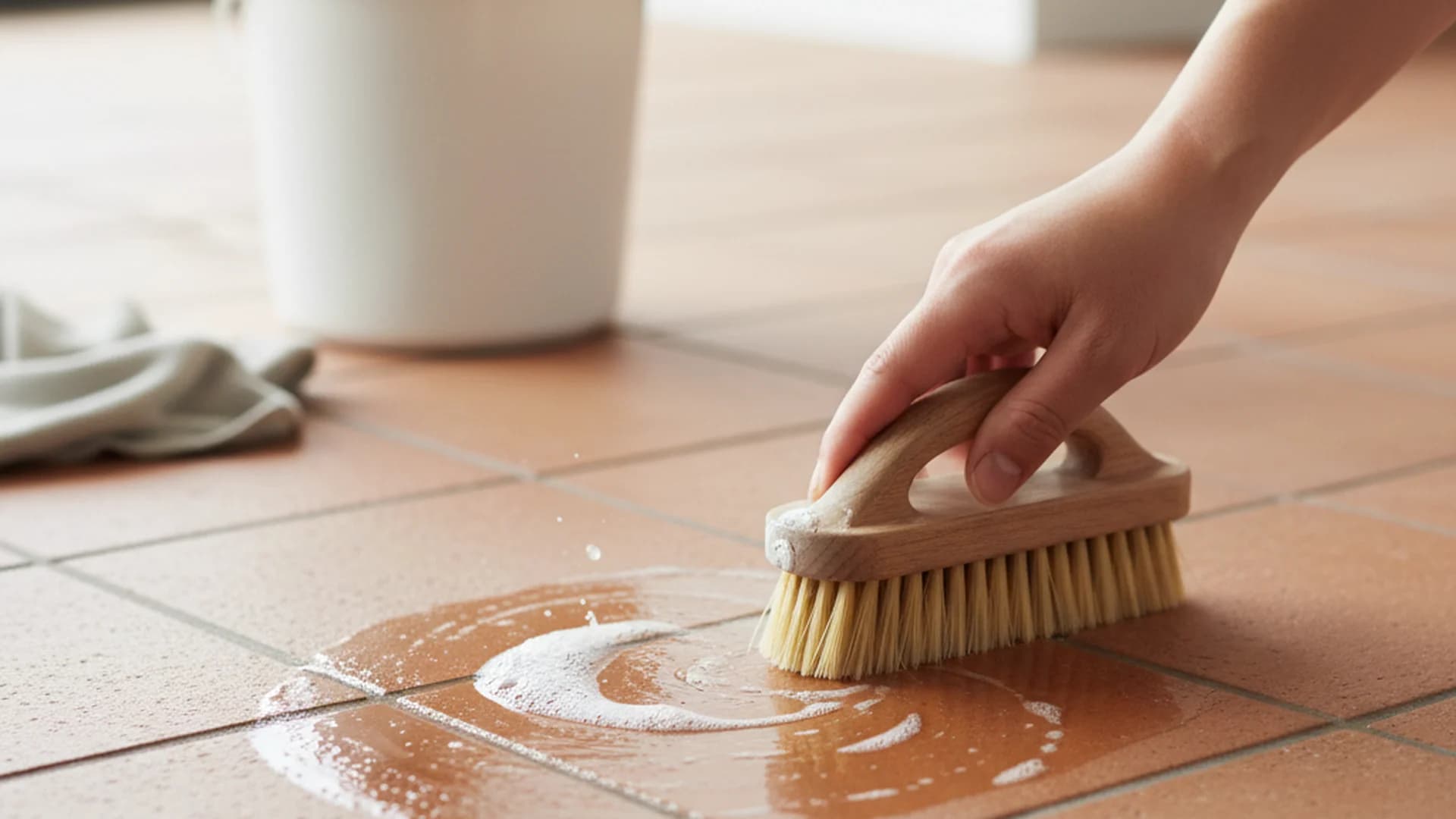
- Action: Blot (don't rub) the liquid. Apply a paste of baking soda and water. Cover with plastic wrap for 24 hours. As the paste dries, it "wicks" the pigment out of the concrete pores.
Example 2: The Oil Leak (Garage or Driveway)
Oil is the most difficult substance to remove because of its molecular weight.
- Action: Cover the spot immediately with cornmeal or cat litter. Leave it for a full day to absorb the bulk of the oil. Afterward, use an enzymatic cleaner—a 2026 trend that uses "good bacteria" to digest the organic oil molecules.
Example 3: Exterior Algae and Mold (Patio)
Outdoor concrete faces UV rays and moisture.
- Action: While we generally avoid acids, for unsealed outdoor concrete with organic growth, a diluted vinegar solution can be used only if it is neutralized immediately after with a baking soda and water rinse.
| Stain Type | Recommended Treatment | Wait Time |
|---|---|---|
| Grease/Oil | Baking Soda / Cornmeal | 24 Hours |
| Wine/Food | pH-Neutral Soap | Immediate |
| Rust | Commercial Rust Remover | 15 Mins |
| Pet Urine | Enzymatic Cleaner | 30 Mins |
2026 Trends in Concrete Maintenance
The world of decorative flooring is changing. If you are cleaning a floor installed or refinished in 2025–2026, keep these trends in mind:
- The "Satin" Shift: High-gloss finishes are being replaced by matte sealers. These require even gentler cleaning as they show "swirl marks" from improper mopping more easily.
- Smart Concrete Integration: Some modern sealers now contain nanotechnology that changes color slightly when the sealer has worn thin, acting as a visual cue that it is time to reseal.
- Enzymatic Supremacy: Probiotic cleaners are becoming the gold standard. They continue to "work" for 48 hours after application, eating away microscopic organic matter in the concrete pores.
Success: Properly maintained stained concrete can last 25+ years, whereas neglected surfaces may require expensive resurfacing within just 5 years.
Common Mistakes to Avoid
Even with the best intentions, it is easy to damage the delicate chemical bond of a decorative stain.
1. Using Bleach or Ammonia
These high-pH chemicals are too aggressive. They can cause a chemical reaction with the metallic salts used in the original staining process, leading to permanent discoloration or "blotching."
2. Over-Wetting the Floor
Using a soaking wet mop allows water to seep into joints or micro-cracks. This leads to efflorescence—that white, powdery salt deposit that rises to the surface and is incredibly difficult to remove.
3. Steam Cleaning
The intense heat of a steam mop (often exceeding 200°F) causes the concrete to expand and contract rapidly. This can lead to "spalling," where tiny chips of the decorative finish pop off the surface.
4. Neglecting the "Sacrificial" Wax Layer
For indoor floors, experts recommend applying a "floor finish" or wax over the sealer.
Tip: Think of the wax as a sacrificial layer. It takes the scratches and foot traffic, so the permanent sealer underneath remains untouched. Buff and reapplying this wax every 6 months is much cheaper than resealing the floor.
Frequently Asked Questions
Can I use vinegar to clean stained concrete?
How often should I reseal my stained concrete?
Will a pressure washer damage the stain?
What is the best way to handle pet accidents?
Conclusion
Cleaning stained concrete is a masterclass in "less is more." By ditching harsh chemicals and steam mops in favor of microfiber and pH-neutral solutions, you protect the artistic integrity of your home’s foundation. Remember the golden rule of concrete care: Seal early, clean gently. With the rise of matte finishes and enzymatic cleaners in 2026, maintaining that "just-installed" look is easier—and more eco-friendly—than ever before.
Success: By following this layered maintenance approach, you ensure your floors remain a highlight of your home for decades to come.
Cleaning that keeps score
Every task earns points, every streak multiplies them, and Premium adds a household leaderboard plus a monthly Dustagorgon to beat.
- Free forever
- 30 badges to earn
- Up to 6 in a household
No card needed. Set up your rooms in a couple of minutes.