In this article
What you’ll learn
- Always clean your grinder immediately after use to prevent bacterial growth.
- Never air-dry metal parts; towel-dry and oil them to prevent flash rust.
- Use the "bread trick" to clear out excess fat and debris before disassembly.
As we move into 2025 and 2026, the culinary landscape is shifting back toward authentic, whole-muscle processing. With the "anti-fake meat" movement gaining momentum, more home cooks are investing in high-quality grinding equipment to avoid ultra-processed substitutes. However, mastering the art of the perfect burger blend is only half the battle; knowing how to clean meat grinder components properly is essential for your family's safety.
Food safety is no small matter. Contaminated meat and poultry are among the most common causes of serious foodborne illness. Improperly cleaned grinding equipment is a leading culprit, as it allows pathogens to spread across multiple batches of meat. Whether you are a seasoned hunter or a weekend kitchen enthusiast, maintaining a sterile environment is the most critical step in your food preparation process.
Why Meat Grinder Hygiene Matters
The meat grinder is a complex tool with many internal crevices where raw meat juices and proteins can hide. If left uncleaned, these areas become breeding grounds for Salmonella and E. coli. Follow the "4-Hour Rule": if you are using a grinder in a continuous setting, disassemble, clean, and sanitize it at least every four hours to prevent bacterial "biofilm" buildup.
For the home cook, this means a total breakdown of the machine is required every time you finish a batch. Beyond safety, regular maintenance has a massive impact on your wallet. Proper care and lubrication with food-grade oil can extend the lifespan of a meat grinder by up to 50%, ensuring your investment lasts for decades rather than years.
The Pre-Wash Secret: The Bread Trick
Before you even touch a screwdriver or unscrew a locking ring, there is a professional secret that makes the entire cleaning process 70% easier.
The Bread Trick Explained
Run 2–3 slices of dry, stale bread through the grinder once you have finished processing your meat. As the bread passes through the auger and the grinding plate, it acts like a sponge. It absorbs excess fats and oils that are otherwise difficult to scrub away. More importantly, it pushes out those final, stubborn meat scraps that often get stuck behind the blade.
Tip: If you are making sausages, using the bread trick not only cleans the machine but also ensures you don't waste any of your expensive meat blend left in the "dead space" of the grinder.
Step-by-Step: How to Clean Meat Grinder Components
Once you have run the bread through, it is time for a deep clean. If you want to clean meat grinder without chemicals, follow this natural but effective workflow.
1. Disassembly
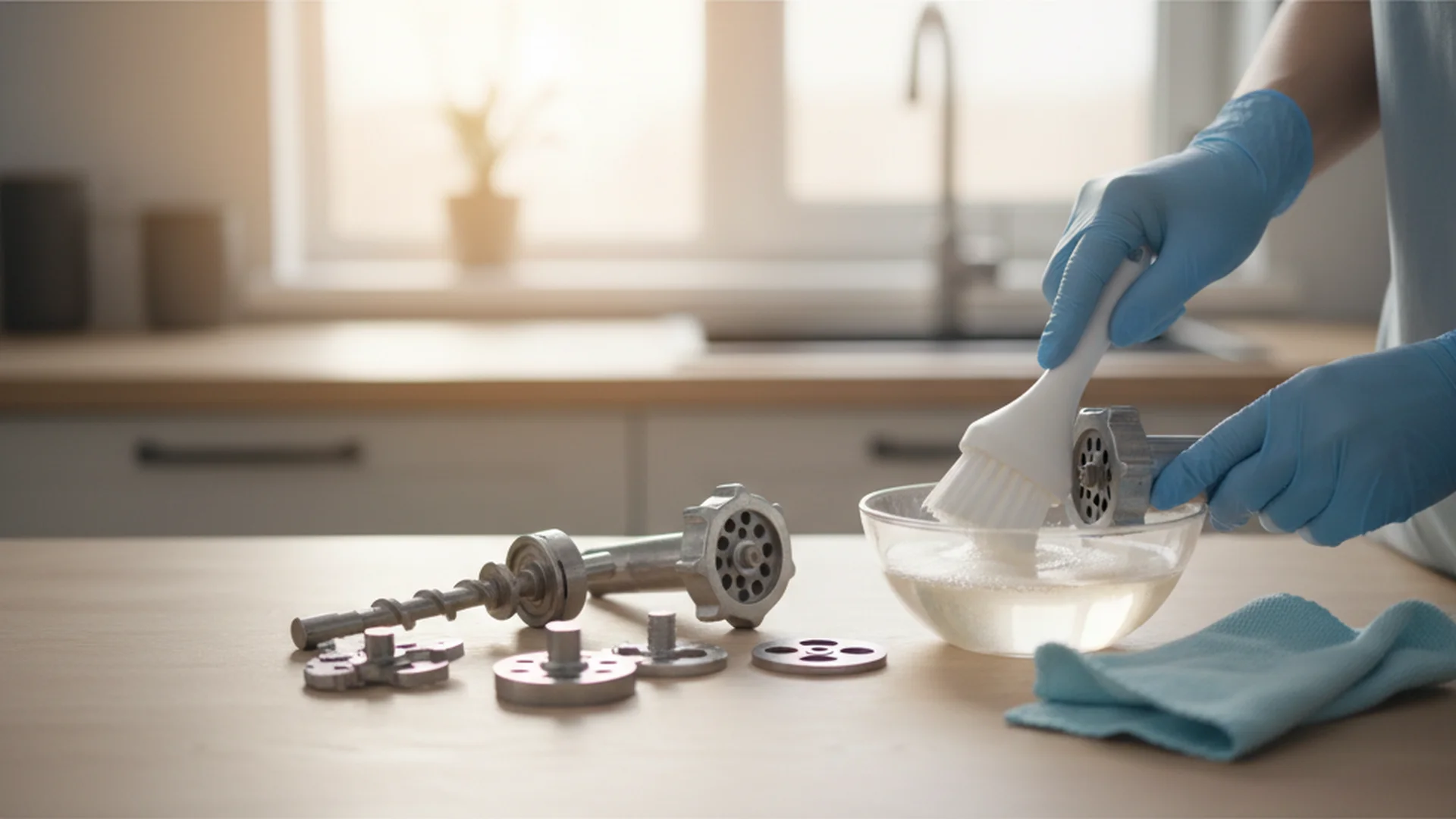
Unplug the unit immediately. Carefully remove the hopper, the feeding tube, the auger (the screw-like part), the cutting blade, and the grinding plate.
Warning: Handle the cutting blades with extreme caution. Even a dull-looking meat grinder blade can cause deep lacerations during the cleaning process.
2. The Soaking Phase
Fill a sink with hot, soapy water. However, for a truly deep clean, reach for a vinegar solution. You can clean meat grinder vinegar mixtures by soaking the metal parts in a 50/50 ratio of white vinegar and hot water for about 30 minutes. The acetic acid in the vinegar is a powerhouse at breaking down stubborn animal fats and neutralizing lingering odors.
3. Scrubbing Manual Parts
Use a stiff nylon bottle brush to clean the inside of the grinding feed tube and the auger.
- For the plates: Use a toothpick or a dedicated cleaning pin to poke out any meat fibers stuck in the small holes.
- For stubborn residue: Create a paste of baking soda and water. Baking soda acts as a mild abrasive that clears away "gunk" without scratching the metal surfaces.
Note: Avoid using steel wool or abrasive green scouring pads. These create micro-scratches in the metal, which become "safe havens" for bacteria to hide and grow in the future.
The Battle Against Flash Rust
The most common frustration with meat grinders is "flash rust." Because many traditional grinders are made of cast aluminum or carbon steel, they can begin to oxidize within minutes of touching water.
Immediate Drying is Mandatory
Never, under any circumstances, let your meat grinder parts air-dry in a rack. As soon as you finish rinsing a part in hot water, dry it immediately with a clean lint-free towel.
The Oil Barrier
Once the parts are bone-dry, apply a thin layer of food-grade mineral oil or coconut oil to the blades, plates, and auger. This creates a protective barrier against moisture in the air.
Success: Storing your parts in a container filled with dry rice is a 2026 pro-tip. The rice draws out microscopic moisture from internal crevices that a towel cannot reach, effectively "vacuum-sealing" the metal against rust.
2026 Tech: How Smart Grinders are Changing Cleanup
If you are in the market for a new model, look for these emerging 2026 features that simplify the cleaning process:
- Smart Sensors: High-end models now feature sensors that detect clogs and automatically trigger a "Reverse Function." This prevents meat from being compressed into "hard-to-clean" blocks.
- Slower Grind Settings: A notable 2026 trend is the "Slow-Grind" mode. This produces less friction and heat. Because the fat doesn't melt during the grind, it doesn't smear into the metal pores, making the cleanup significantly faster.
- Anti-Microbial Coatings: Some industrial-crossover models are beginning to incorporate superhydrophobic (water-repelling) coatings on the internal housing, which minimize meat adhesion.
Common Mistakes to Avoid
- The Dishwasher Disaster: Unless your manual explicitly states your parts are "304-grade stainless steel," keep them out of the dishwasher. The harsh detergents and high heat will cause cast aluminum to turn black and pit permanently.
- The Freezer Myth: Many users believe freezing the grinder parts before use "kills" bacteria. While chilling is essential for a clean cut (it keeps fat from smearing), it does not sanitize the machine. Only heat and proper cleaning agents can do that.
- Neglecting the Motor Housing: While the internal parts get the most attention, the motor housing accumulates "fat mist" and dust. Wipe the exterior with a damp cloth and a dash of vinegar after every use to prevent the motor from overheating or developing rancid smells.
- Using the Wrong Tools: Scrubbing with steel wool creates microscopic grooves that actually make the machine harder to clean over time. Stick to nylon brushes.
| Material Type | Dishwasher Safe? | Maintenance Level | Rust Risk |
|---|---|---|---|
| Cast Aluminum | No | High | Moderate |
| Carbon Steel | No | High | Very High |
| 304 Stainless | Yes (Usually) | Low | Low |
| Plastic/BPA-Free | Yes (Top Rack) | Low | None |
Frequently Asked Questions
Can I put meat grinder parts in the dishwasher?
How do I prevent the grinder from rusting immediately after washing?
How often should I clean my grinder?
Is vinegar enough to sanitize a meat grinder?
Conclusion
Mastering how to clean meat grinder equipment is just as important as the grind itself. By using the bread trick, opting for natural cleaners like vinegar and baking soda, and being vigilant about immediate drying, you can ensure your home-processed meats are safe, delicious, and free from contaminants. As we embrace the 2026 trend of whole-food processing, keeping your tools in peak condition will help you get the most out of your culinary adventures.
Success: Following this routine will not only keep your family safe from foodborne illness but will also keep your grinder running smoothly for a lifetime of perfect grinds.
Cleaning that keeps score
Every task earns points, every streak multiplies them, and Premium adds a household leaderboard plus a monthly Dustagorgon to beat.
- Free forever
- 30 badges to earn
- Up to 6 in a household
No card needed. Set up your rooms in a couple of minutes.