In this article
What you’ll learn
- Never use metal scrapers on non-stick or ceramic panini plates.
- The "Steam Method" is the safest way to clean fixed plates without submersion.
- Natural cleaners like vinegar and baking soda are more effective than harsh chemicals.
Nothing beats the perfect crunch of a golden-brown panini, but the cleanup that follows can often feel like a chore. Whether you are dealing with melted mozzarella or stubborn pesto stains, learning how to clean panini press equipment properly is essential for maintaining both food quality and appliance safety. In 2025, with modern coatings and smart technology becoming the norm, the way we maintain our kitchen gadgets has evolved toward more sustainable, chemical-free methods that protect the integrity of the cooking surface.
Why Proper Maintenance Matters in 2025
Neglecting your panini press does more than just ruin your next sandwich. A high-quality press typically lasts 3 to 4 years in high-volume settings, but home users can easily double that lifespan with the right care. Conversely, a single cleaning session with the wrong tool can destroy the non-stick coating found on almost every modern unit.
Beyond longevity, hygiene is a primary concern. Neglected crumbs and old grease are not just unsightly—they are legitimate fire hazards and breeding grounds for bacteria. By mastering the right cleaning techniques, you ensure your kitchen remains safe and your food tastes exactly as intended.
Tools and Supplies You’ll Need
Before you start, gather the right materials. Avoid anything abrasive, as modern coatings (especially the newer diamond-infused or ceramic versions) are sensitive to scratches.
- Microfiber cloths: Ideal for wiping surfaces without leaving lint.
- Silicone spatula or wooden chopsticks: Perfect for scraping grooves without scratching.
- White vinegar: Your best friend for a chemical-free deep clean.
- Baking soda: For those "oops" moments with burnt cheese.
- Food-grade mineral oil: To keep hinges moving smoothly.
Warning: Never use steel wool, metal scrapers, or harsh scouring pads. These will strip the non-stick surface in seconds, rendering the press unusable for sandwiches.
How to Clean Panini Press With Fixed Plates (The Steam Method)
If your panini press doesn't have removable plates, you cannot submerge it in water. The "Steam Method" is widely considered the gold standard for these models.
- Unplug the unit: Always prioritize safety. Wait until the press is unplugged but still slightly warm to the touch.
- The Damp Towel Trick: Take a heavy-duty paper towel or a clean cotton cloth and dampen it thoroughly with water. It should be wet but not dripping.
- Steam it out: Place the damp cloth over the bottom plate and close the lid. The residual heat will turn the moisture into steam, loosening burnt-on food.
- The Wait: Let it sit for 1–2 minutes.
- Wipe Clean: Open the press and use the cloth to wipe away the loosened debris. Use a wooden chopstick wrapped in a cloth to get into the deep grooves.
Tip: If the plates have cooled down too much, briefly plug the unit back in for 30 seconds to regenerate heat, then unplug it again before continuing.
Cleaning Removable Plates
Many newer 2025 models feature plates that pop out with the click of a button. While this makes life easier, there are still rules to follow.
Hand-Washing vs. Dishwasher
Even if your manufacturer claims the plates are dishwasher-safe, hand-washing is still the better choice. The high heat and harsh detergents in a dishwasher can cause the non-stick coating to degrade faster over time.
The Soaking Technique
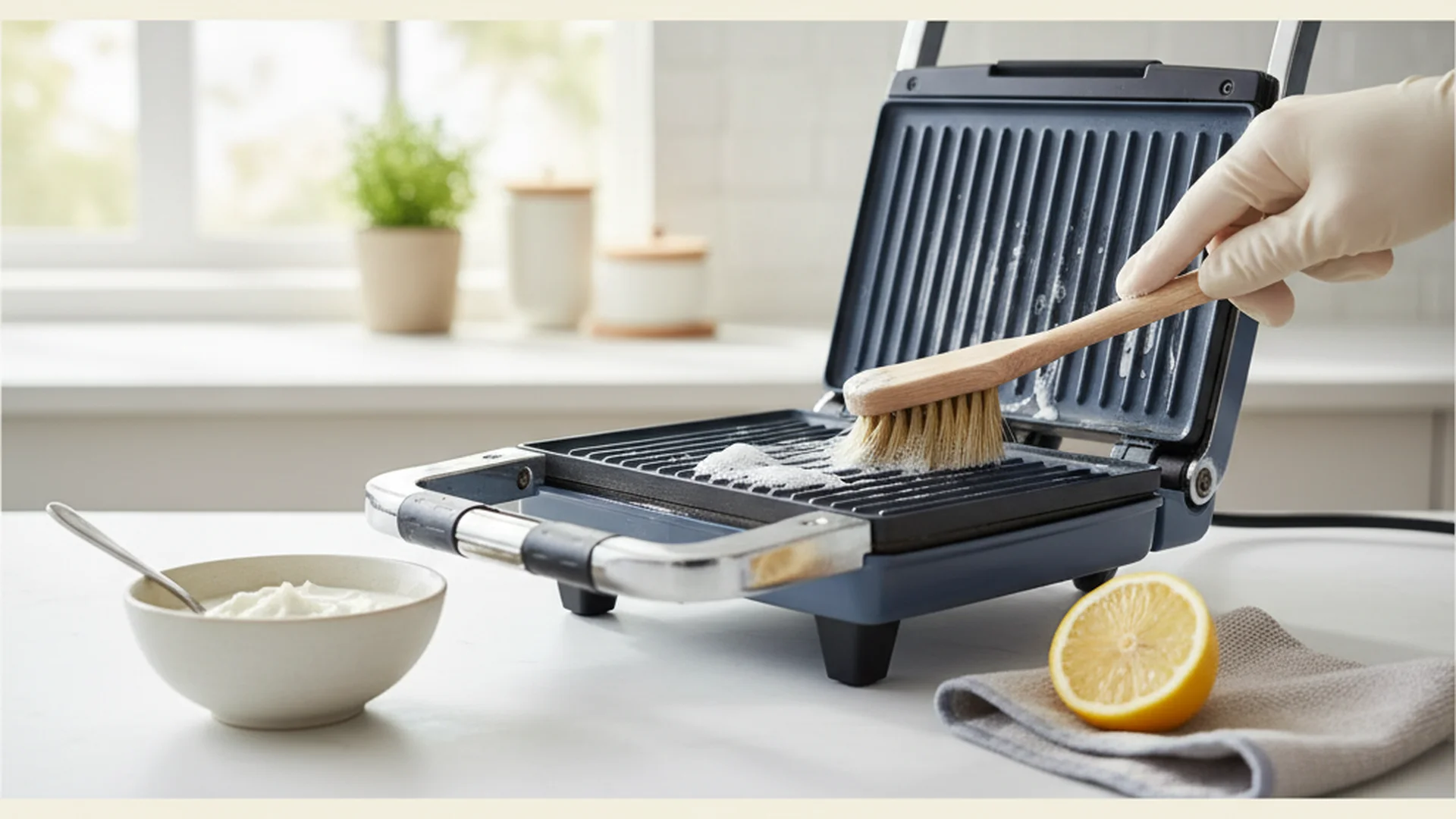
For removable plates with stubborn residue, soak them in warm, soapy water for 10 minutes. Use a soft sponge to gently lift the grease. Rinse thoroughly and, most importantly, ensure they are 100% dry before clicking them back into the electrical base.
How to Clean Panini Press Without Chemicals
As we move through 2026, more and more people prefer sustainable, eco-friendly cleaning methods. You don't need industrial degreasers to get a professional result.
Using Vinegar for Grease Cutting
If you want to clean panini press vinegar style, mix a 50/50 solution of white vinegar and water in a spray bottle. This acidity breaks down stubborn grease without leaving toxic residues behind. Spray the solution onto cool plates, let it sit for five minutes, and wipe it away with a microfiber cloth.
The Baking Soda Paste for Burnt Cheese
Burnt cheese is the nemesis of the panini lover. When steam isn't enough, create a paste:
- 2 tablespoons of baking soda
- 1/2 cup of warm water
Apply the paste to the affected areas and let it sit for 10 minutes. The alkaline nature of the baking soda will lift the carbonized food. Wipe it away with a damp cloth, and you'll see the shine return.
Success: Natural cleaning isn't just better for the environment; it also ensures no "soapy" aftertaste lingers in your next grilled cheese.
Maintenance Trends and Updates (2025–2026)
The latest generation of panini presses, such as those from GreenPan or high-end Breville units, often feature PFAS-free ceramic or diamond-infused coatings. These materials are more scratch-resistant than traditional Teflon but still require specific care.
| Feature | Care Requirement | Why? |
|---|---|---|
| Ceramic Coating | Dry wipe only when possible | Maintains the "easy-release" properties longer. |
| Smart Sensors | Clean the sensor area weekly | Prevents false "cleaning required" alerts. |
| 180-Degree Designs | Check the drainage path | Grease often traps in the hinge gap when used as a flat griddle. |
| Diamond Infusion | Use non-metal tools | While durable, metal can still micro-scratch the surface. |
Common Mistakes to Avoid
In my years as a home organization expert, I’ve seen many well-intentioned owners ruin their appliances. Avoid these four major pitfalls:
- Cleaning While Plugged In: This is a major safety risk. Even a damp cloth can conduct electricity or cause a short circuit if the unit is powered.
- The "Scraper Myth": You do not need a metal scraper to get perfect grill marks. That’s the job of the plate's shape, not the cleaning tool.
- Using Vegetable Oil for Maintenance: Some people try to "season" their press with vegetable oil. This is a mistake. Vegetable oil turns into a sticky, gummy residue when heated repeatedly. If your hinges are stiff, use a tiny drop of food-grade mineral oil instead.
- Neglecting the Exterior: Grease often travels. Wipe down the handle, hinges, and cord weekly. Grease buildup in the hinges is a leading cause of mechanical failure in 180-degree folding models.
Note: If you have a cast iron model (rare for modern homes but common in professional kitchens), you should season it with oil, but ensure it is the correct type of food-grade oil recommended by the manufacturer.
Frequently Asked Questions
Should I oil my panini press before use?
How do I clean the drip tray properly?
Can I use Windex or glass cleaner on the exterior?
My panini press has a "cleanliness sensor." How does that work?
Conclusion
Taking the time to learn how to clean panini press surfaces correctly will save you money and improve the quality of your meals. By moving away from harsh chemicals and opting for the "Steam Method" or natural vinegar solutions, you protect both your health and your appliance's lifespan. Remember, a clean press is a safe press!
Success: Regular maintenance ensures your panini press remains a centerpiece of your kitchen for years to come.
Cleaning that keeps score
Every task earns points, every streak multiplies them, and Premium adds a household leaderboard plus a monthly Dustagorgon to beat.
- Free forever
- 30 badges to earn
- Up to 6 in a household
No card needed. Set up your rooms in a couple of minutes.