In this article
What you’ll learn
- Use the "Steam Method" for fixed-plate models to avoid scrubbing.
- Never use aerosol cooking sprays as they cause permanent gummy buildup.
- Diluted white vinegar is the safest natural degreaser for non-stick surfaces.
The George Foreman Grill has been a kitchen staple for decades, beloved for its ability to cook protein quickly while significantly reducing fat content. In fact, the grill’s patented sloped design is engineered to reduce fat by up to 42–47%, depending on the model you own. However, that same clever design often leads to a common frustration: stubborn grease buildup in the lower channels and burnt-on residue that seems impossible to remove. If you have been wondering how to clean george foreman grills without destroying the delicate non-stick surface, you are in the right place.
Cleaning these appliances requires a balance of timing and technique. Because approximately 80% of damage to these grills is caused by abrasive cleaning—using metal scrapers or harsh chemicals—rather than actual cooking, learning the right way to maintain your unit is essential for its longevity.
The Golden Rule: Timing is Everything
The biggest mistake most home cooks make is waiting until the grill is completely cold to start the cleaning process. When animal fats reach room temperature, they solidify and bond to the non-stick surface, making them ten times harder to remove.
To keep your grill in peak condition for its expected 5–7 year lifespan, you must address the residue while the plates are still warm. However, safety is paramount. Always unplug the unit before you begin any cleaning ritual to prevent electrical hazards.
Warning: Never submerge the base of a non-removable plate grill in water. Even if you think the electrical port is dry, internal moisture can cause a short circuit or hidden rust.
The "Steam Method" for Fixed-Plate Grills
If you own a traditional George Foreman grill where the plates do not pop out, the "Steam Method" is your best friend. This technique allows you to clean the unit without any heavy scrubbing or immersion.
- Unplug the unit: Do this immediately after you remove your food.
- Prepare damp towels: Take three layers of paper towels and soak them in water. Wring them out so they are damp but not dripping.
- Apply to the plates: Place the damp towels directly onto the bottom plate while it is still warm.
- Close the lid: The residual heat from the plates will turn the moisture in the towels into steam. This steam penetrates the grease and loosens burnt-on food particles.
- Wait and wipe: After about five minutes, open the lid. Use the same paper towels (which will now be warm and greasy) to wipe away the residue. The mess should slide right off.
Tip: If you have particularly stubborn bits of carbonized seasoning, use a silicone or wooden spatula to gently nudge them loose while the steam is active. Never use metal utensils, as they will scratch the PTFE or ceramic coating.
How to Clean George Foreman with Vinegar (Chemical-Free)
Many homeowners are moving away from harsh degreasers in favor of natural solutions. If you want to clean george foreman without chemicals, look no further than your pantry. White vinegar is a powerful, food-safe acetic acid that cuts through animal fat without leaving a toxic residue.
The Vinegar Spray Method
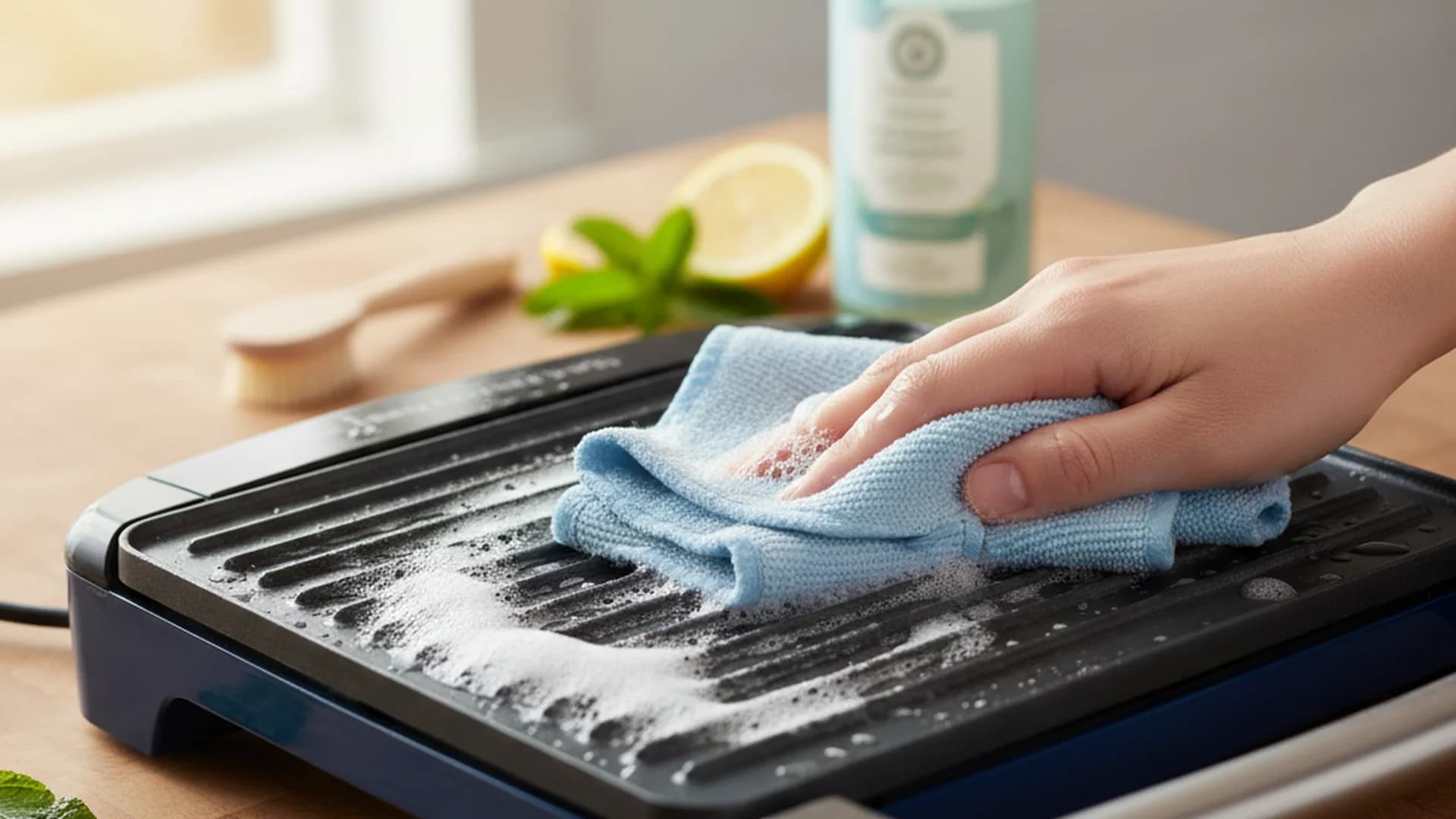
To clean george foreman vinegar solutions are most effective when used as a spray. Mix a 50/50 solution of white vinegar and water in a clean spray bottle. While the plates are slightly warm, mist the entire surface. Let the solution sit for 2–3 minutes. The acidity will break down the molecular bond of the grease. Finally, wipe the plates clean with a soft microfiber cloth.
Success: Using vinegar not only cleans the grill but also deodorizes it, ensuring your morning grilled panini doesn’t taste like last night’s salmon.
Real-World Cleaning Scenarios
To help you visualize how these techniques fit into a busy lifestyle, consider these three common scenarios:
Example 1: The Busy Professional
The Situation: You’ve just grilled a quick chicken breast for lunch and have a meeting in 15 minutes. The Solution: Use the Steam Method. Unplug the grill, throw on the damp paper towels, and go eat your lunch. By the time you’re done eating, the grill is ready for a 30-second wipe-down before you jump back on your laptop.
Example 2: The Sunday Meal Prepper
The Situation: You’ve just cooked three pounds of high-fat ground beef burgers, and the grill is covered in thick, heavy grease. The Solution: Use the Vinegar Spray Method. Because the fat volume is high, the acidity of the vinegar is necessary to "cut" the grease so it doesn't just smear around the plates.
Example 3: The New Owner (Ceramic Upgrade)
The Situation: You just purchased a 2025 model with the "George Tough" Ceramic Coating. The Solution: Since these newer ceramic surfaces are 3x more durable, you can use a soft sponge with mild dish soap. However, you should still avoid the dishwasher to preserve the "easy release" properties of the ceramic.
Deep Cleaning: Removable vs. Fixed Plates
In 2025 and 2026, George Foreman has leaned heavily into "Submersible" models and "Removable Plate" designs. Knowing which one you have changes your cleaning workflow significantly.
| Feature | Fixed Plate Models | Removable Plate Models | Submersible Models (e.g., GRES060BS) |
|---|---|---|---|
| Cleaning Method | Steam Method / Wipe down | Sink soaking | Full immersion |
| Dishwasher Safe? | No | Plates only | Yes (Entire plate assembly) |
| Best Tool | Paper Towels | Soft Sponge | Soft Brush |
| Risk Factor | Electrical Short | Losing Clips | None |
Note: Even if your plates are labeled as "dishwasher safe," hand washing is always recommended by experts. The high heat and abrasive detergents in dishwashers can degrade the non-stick coating over time, shortening the grill's lifespan.
Common Mistakes to Avoid
Avoiding damage is just as important as the cleaning itself. Here are the most frequent errors that lead to "grill death":
- Using Aerosol Cooking Sprays: This is the #1 killer of non-stick grills. Sprays like Pam contain lecithin, which leaves a gummy, plastic-like residue when heated. This residue is nearly impossible to remove and actually makes food stick more over time. Use a refillable oil mister with plain olive or avocado oil instead.
- The Magic Eraser Trap: While they seem like a "miracle" for stains, Magic Erasers are actually micro-abrasives (essentially very fine sandpaper). Using them on your grill will slowly strip away the non-stick coating.
- Cleaning a Cold Grill: As mentioned, trying to scrape off cold, solidified fat is the fastest way to scratch your plates.
- Submerging the Plug: Even on "submersible" models, ensure the electrical pins are completely dry for 24 hours before plugging the unit back in.
Maintenance Tips for Longevity
To make your next cleaning session even easier, try these pro-level maintenance tips:
- Drip Tray Prep: Place a folded, damp paper towel in the plastic drip tray before you start cooking. This catches the hot fat and prevents it from splashing or sticking to the plastic, making the tray cleanup instant.
- The Silicone Barrier: If you are cooking something particularly sticky (like BBQ sauce), you can actually use a small piece of parchment paper inside the grill. It still allows the heat through but keeps the plates pristine.
- Store it Properly: Once clean and dry, store the grill with a paper towel tucked between the plates. This prevents the plates from scratching each other if the unit is moved or bumped in your cabinet.
Frequently Asked Questions
Can I put George Foreman plates in the dishwasher?
How do I clean a grill with non-removable plates?
Is vinegar safe for the non-stick coating?
Can I use a Magic Eraser to get off burnt-on food?
Conclusion
Cleaning your George Foreman grill doesn't have to be a chore that keeps you from using this healthy cooking tool. By utilizing the steam method and natural degreasers like vinegar, you can maintain the "George Tough" or ceramic coating for years to reach that 5–7 year lifespan goal. Remember to ditch the aerosol sprays, keep your metal utensils away from the plates, and always clean while the unit is still warm.
Whether you have a classic fixed-plate model or one of the new 2025 submersible versions, these steps ensure your appliance remains hygienic and high-performing for every meal.
Success: Consistent, gentle cleaning preserves the non-stick surface, ensuring your grill continues to provide healthy, low-fat meals for your family.
Cleaning that keeps score
Every task earns points, every streak multiplies them, and Premium adds a household leaderboard plus a monthly Dustagorgon to beat.
- Free forever
- 30 badges to earn
- Up to 6 in a household
No card needed. Set up your rooms in a couple of minutes.