In this article
What you’ll learn
- Daily cleaning removes debris, but sanitizing requires "dwell time" to kill pathogens.
- Wood, marble, and quartz each require specific pH-neutral cleaning agents to avoid damage.
- New 2026 trends focus on probiotic cleaners that provide 72-hour surface protection.
The kitchen table is the undisputed heart of the home. It is where we share morning coffee, help children with homework, and gather for Sunday roasts. However, recent hygiene studies have revealed a startling reality: your dining surface might be the most contaminated area in your house. Learning how to clean kitchen table surfaces correctly isn't just about aesthetics; it is a vital part of home health.
Recent longitudinal studies conducted between 2022 and 2024 found that domestic dining areas frequently harbor more bacteria than bathroom surfaces. In fact, 100% of evaluated kitchens contained at least one foodborne pathogen like E. coli or S. aureus on the dining table. This is often the result of "the cross-contamination cycle"—placing grocery bags, mail, or unwashed hands on the same surface where we eat.
The Material Guide: The Ultimate Cheat Sheet
The best way clean kitchen table surfaces depends entirely on the material. Using the wrong cleaner on a porous surface like wood or marble can lead to permanent damage in less than 15 minutes.
Wood Tables: Protecting the Grain
Wood is naturally porous and highly sensitive to moisture. If water is left to sit for more than 10–15 minutes, the fibers can swell, leading to cracks or "blooming" (white cloudy spots).
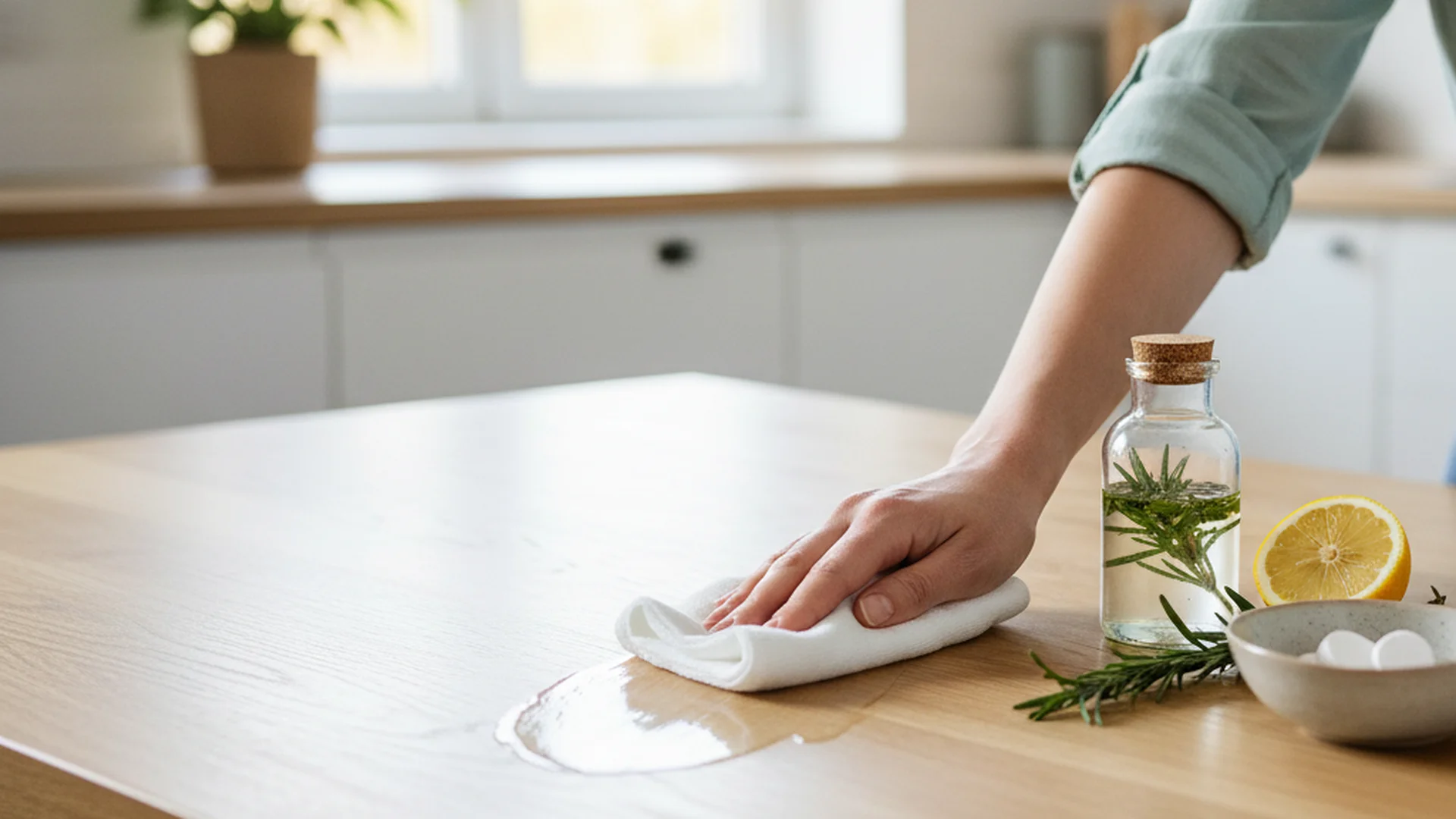
- Process: Dust with a dry microfiber cloth first to remove abrasive crumbs. Use a "damp-not-wet" cloth with a drop of mild dish soap.
- Direction: Always wipe with the grain. This prevents microscopic debris from becoming trapped in the wood's pores.
Warning: Never use pure vinegar on finished wood. The high acidity can strip the protective lacquer or wax over time, leaving the wood vulnerable to rot.
Marble and Natural Stone
Marble is beautiful but chemically reactive. Many homeowners accidentally "etch" their stone by using lemon-based cleaners or vinegar. Etching creates permanent dull spots that look like water rings but are actually physical damage to the stone.
- Process: Use only pH-neutral stone cleaners or warm, soapy water.
- Maintenance: Ensure the stone is sealed annually to prevent liquid penetration.
Glass and Quartz
Glass is prone to streaks, while quartz—though highly durable—is sensitive to extreme heat and abrasive chemicals.
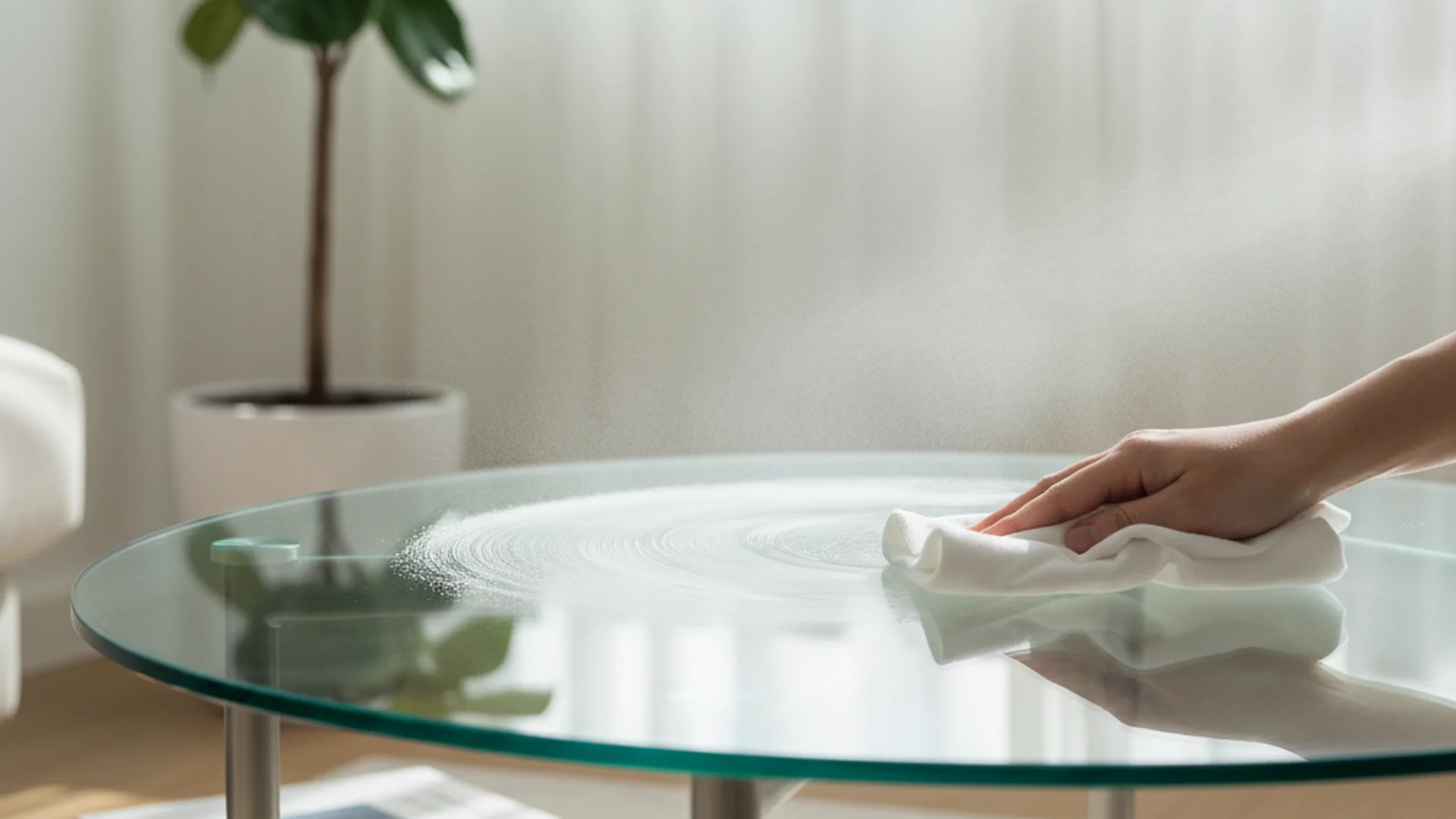
- Glass: Use the "Two-Cloth Method." Spray a 50/50 vinegar-water mix onto a cloth (not the table), wipe, and buff immediately with a second dry, lint-free cloth.
- Quartz: Avoid "magic erasers" or scouring pads, as these can dull the resin finish that makes quartz look polished.
| Material | Recommended Cleaner | Avoid At All Costs |
|---|---|---|
| Wood | pH-Neutral Soap | Excessive Water |
| Marble | Stone-Specific Spray | Vinegar/Lemon |
| Glass | Vinegar/Water Mix | Paper Towels |
| Quartz | Mild Dish Soap | Abrasive Pads |
Emerging 2025-2026 Cleaning Trends
As we move into 2026, the philosophy of "how to clean kitchen table" surfaces is shifting from scorched-earth chemical warfare to a more balanced, biological approach.
Probiotic Cleaning
The biggest trend in 2025 is the rise of "living cleaners." Probiotic sprays deposit beneficial bacteria onto your table. These "good" microbes continue to consume organic matter and crowd out pathogens for up to 72–120 hours after you finish wiping. This creates a self-cleaning surface that works even while you sleep.
The "Skin-Care" for Furniture Movement
We are seeing a trend toward "nourishing" furniture rather than just stripping it clean. Homeowners are increasingly using furniture balms made of beeswax, eucalyptus, and tea tree oils. These act as both a protective sealant and an aromatherapy ritual, keeping wood supple and resistant to spills.
AI-Integrated Sanitation
Smart home systems in 2026 now include kitchen sensors that track table usage. If the sensors detect a high-traffic meal or raw food preparation without a subsequent cleaning cycle, they send an alert to your phone. This ensures that the 68% of surfaces that typically fail safety standards are finally getting the attention they need.
Note: Even with AI and probiotics, the mechanical action of wiping is still necessary to remove physical debris and biofilms.
Real-World Cleaning Examples
To understand the best way clean kitchen table hygiene, let’s look at three common household scenarios:
- The Taco Night Cleanup: After handling raw proteins or unwashed produce, the table is a high-risk zone. In this case, a simple wipe isn't enough. You must clean the surface with soap to remove grease, then apply a food-safe sanitizer, allowing it to stay wet for the recommended "dwell time" (usually 60 seconds) to kill bacteria.
- The Homework Hub: When kids use the table for art projects, you often deal with ink or glue. For wood tables, a tiny amount of rubbing alcohol on a cotton swab can remove ink, but it must be followed immediately by a wood conditioner to prevent drying.
- The Sun-Drenched Dining Room: A table sitting in direct sunlight is prone to finish degradation. For these tables, using a UV-protective furniture wax once a month is essential to prevent the "bleaching" effect of the sun.
Common Mistakes to Avoid
- Spraying Directly on the Surface: This is a classic error. Liquid can seep into the expansion cracks of wood tables or under the edges of glass inserts, causing mold or warping. Always spray your microfiber cloth first.
- Using Paper Towels on Fine Finishes: Many people don't realize that paper towels are made of wood pulp and can be surprisingly abrasive. Over time, they create microscopic scratches that dull the shine of your table.
- Forgetting the "High-Touch" Underside: We often clean the top but forget the edges and the "pull zone" underneath where people grip the table to move their chairs. These areas harbor the most skin oils and are prime spots for bacterial transfer.
- Neglecting Dwell Time: If you spray a disinfectant and immediately wipe it off, you haven't sanitized the surface. Most disinfectants require 30 to 60 seconds of contact time to actually kill pathogens.
Tip: Use color-coded microfiber cloths—blue for the dining table and red for the kitchen sink—to prevent spreading germs from the "wet zone" to the "eating zone."
Frequently Asked Questions
Can I use vinegar on my wood table?
How do I remove white heat marks or water rings?
Is dish soap enough for a daily clean?
How often should I deep clean my kitchen table?
Conclusion
Mastering how to clean kitchen table surfaces is a cornerstone of a healthy home. By moving away from abrasive chemicals and embracing material-specific care and probiotic technology, you can ensure your dining area remains a safe space for your family. Remember: the goal isn't just a table that looks clean, but one that is microscopically safe.
Success: By implementing a "spray the cloth, not the table" rule and respecting dwell times, you can reduce household bacterial loads by up to 99%.
Cleaning that keeps score
Every task earns points, every streak multiplies them, and Premium adds a household leaderboard plus a monthly Dustagorgon to beat.
- Free forever
- 30 badges to earn
- Up to 6 in a household
No card needed. Set up your rooms in a couple of minutes.