In this article
What you’ll learn
- Always use pH-neutral cleaners to avoid etching the stone surface.
- The secret to a streak-free finish is buffing with a dry microfiber cloth.
- Perform the 'Water Test' annually to check if your sealant is still effective.
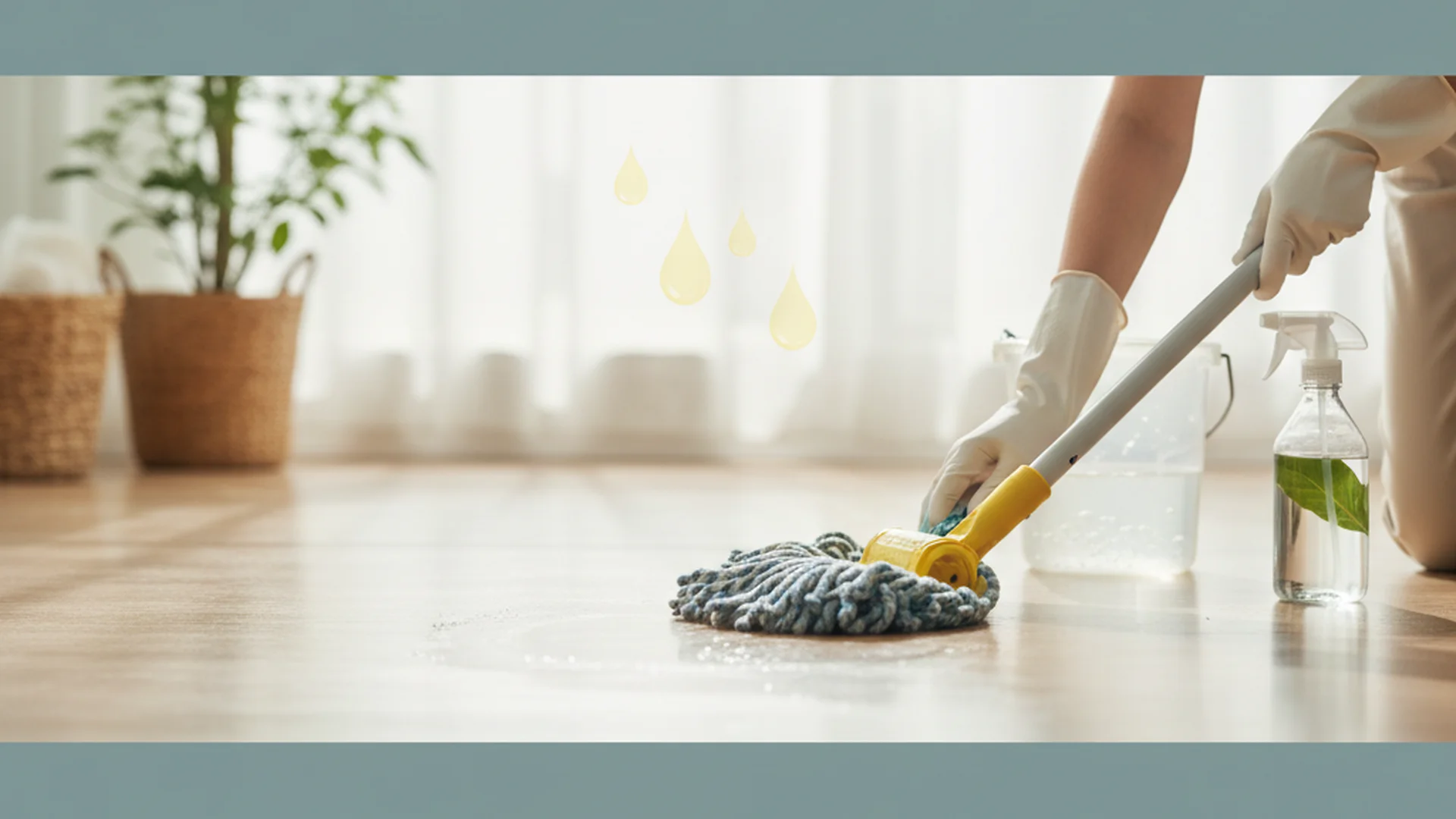
Granite has long been the gold standard for homeowners looking to combine luxury with longevity. Whether it is the speckled depths of "Ubatuba" or the clean lines of "Bianco Romano," granite offers a unique aesthetic that can significantly boost your home’s resale value. However, maintaining that "just-installed" luster requires more than just a quick swipe with a wet rag. Knowing how to clean granite floors correctly is the difference between a floor that lasts a lifetime and one that becomes dull, etched, and stained within a few years.
In this comprehensive guide, we will dive into the science of granite care, the safest cleaning methods for 2025, and the common pitfalls that even the most diligent homeowners fall into.
Why Granite Requires Special Care
To understand how to clean granite floors, you first have to understand what granite is. Unlike synthetic flooring, granite is a natural igneous rock. It scores between a 6 and 7 on the Mohs Scale of Mineral Hardness. This makes it incredibly durable—far tougher than marble, which sits at a 3 or 4—but it isn't invincible.
While granite is dense, it is also porous. Without a proper sealant, microscopic fissures in the stone can absorb oils, water, and pigments, leading to permanent discoloration.
The Daily Maintenance Routine
The secret to a long-lasting shine isn't a miracle chemical; it’s consistency. Daily maintenance prevents the buildup of "grit," which is the primary enemy of natural stone.
The Power of the Dust Mop
Think of dirt and sand as microscopic sandpaper. Every time someone walks across your floor, they are grinding those particles into the granite. Over months, this creates tiny scratches that dull the stone's natural reflection.
- Action: Use a clean, dry microfiber dust mop every evening.
- Pro Tip: Avoid "treated" dust mops that contain oils, as these can leave a residue that attracts even more dust.
Tip: Use large walk-off mats at every entrance to your home. Most of the grit that dulls a stone floor is tracked in from outside, so stopping it at the door is the easiest way to keep granite clean.
The Step-by-Step Deep Clean
When it's time for more than just a dusting, you need a method that removes grime without stripping the stone’s protective seal. This is the best way clean granite floors while ensuring the stone stays healthy.
1. The pH-Neutral Rule
Never use a cleaner unless it is specifically labeled "pH-neutral." Natural stone is sensitive to both high acidity (vinegar, lemon) and high alkalinity (bleach).
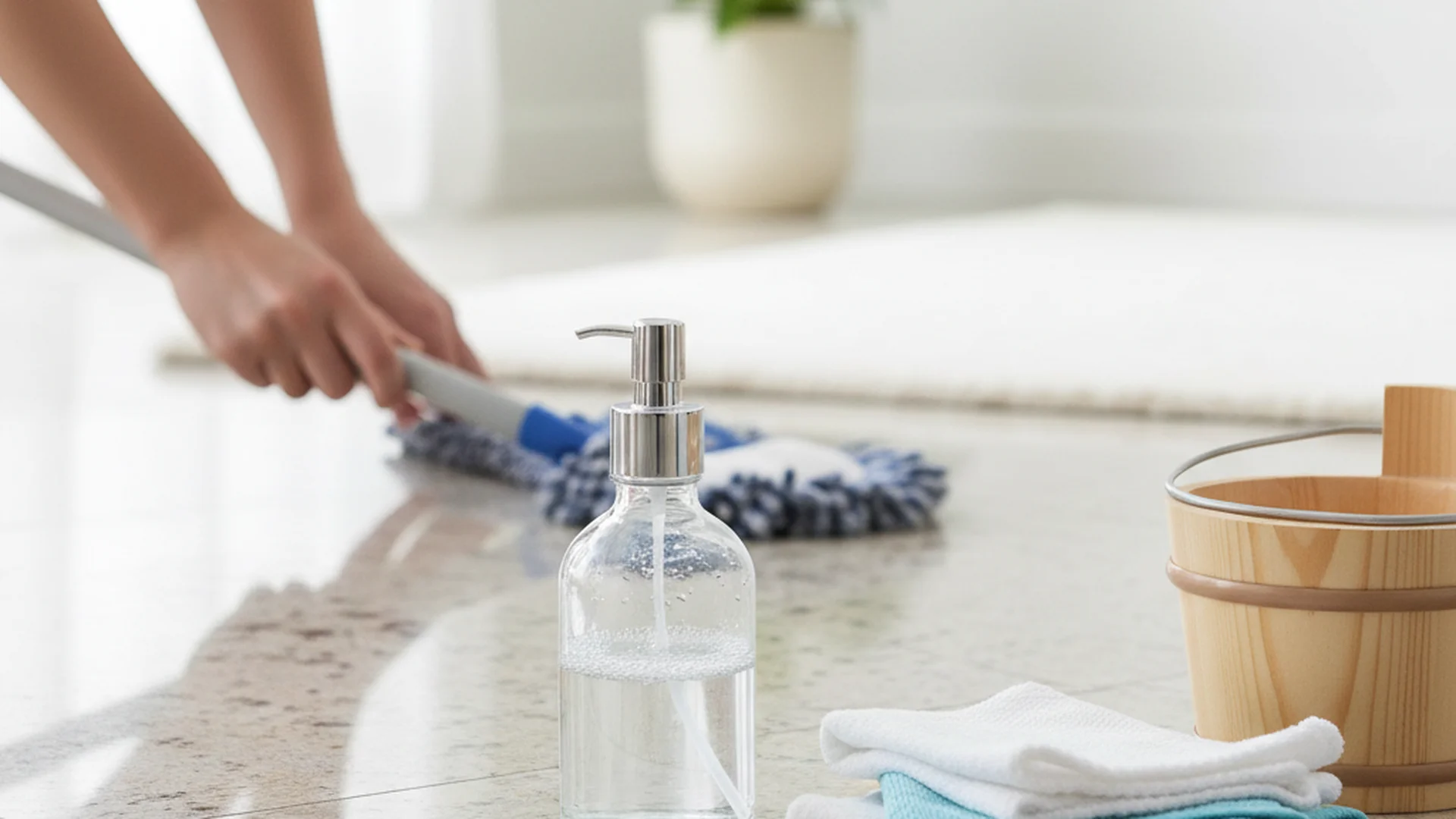
2. The Two-Bucket Method
To avoid spreading dirty water across your beautiful floors:
- Bucket A: Warm water mixed with a stone-safe cleaner.
- Bucket B: Clean, plain water for rinsing.
- The Process: Dip your mop in Bucket A, clean a section, rinse the dirty mop in Bucket B, wring it out, and repeat.
3. Choose the Right Mop
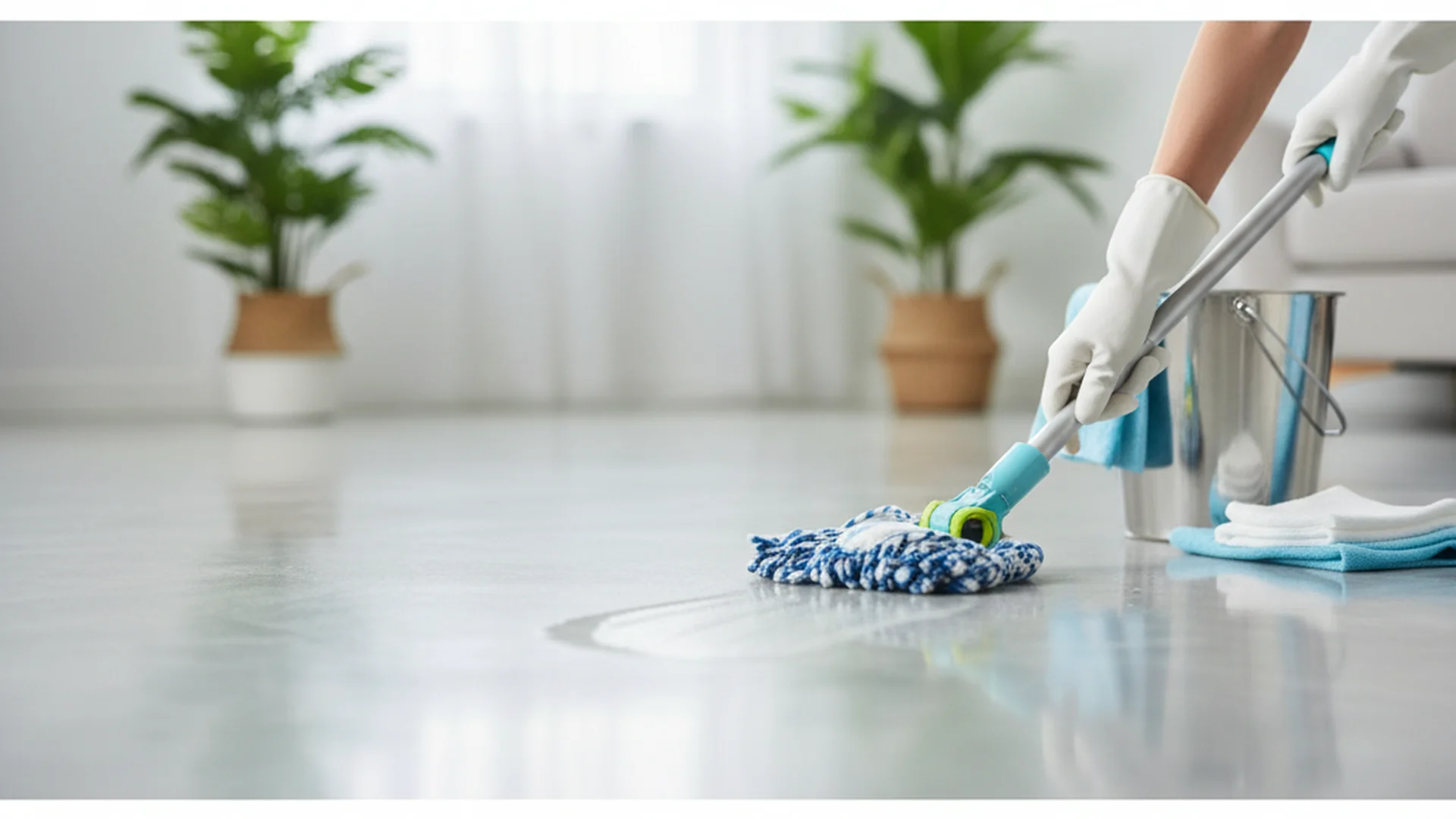
Forget the old-fashioned string mops or sponge mops. Microfiber loop mops are superior because the fibers are designed to lift and trap dirt within the fabric rather than pushing it into the grout lines.
Warning: Never use a "Steam Mop" for daily cleaning. While they are marketed as safe, the repeated application of high-heat pressurized steam can eventually weaken topical sealants and cause moisture to be driven deep into the stone's pores.
How to Clean Granite Floors Naturally
If you prefer to avoid commercial chemicals, you can clean granite floors naturally with items already in your pantry. However, "natural" does not mean "anything goes."
The DIY Natural Solution
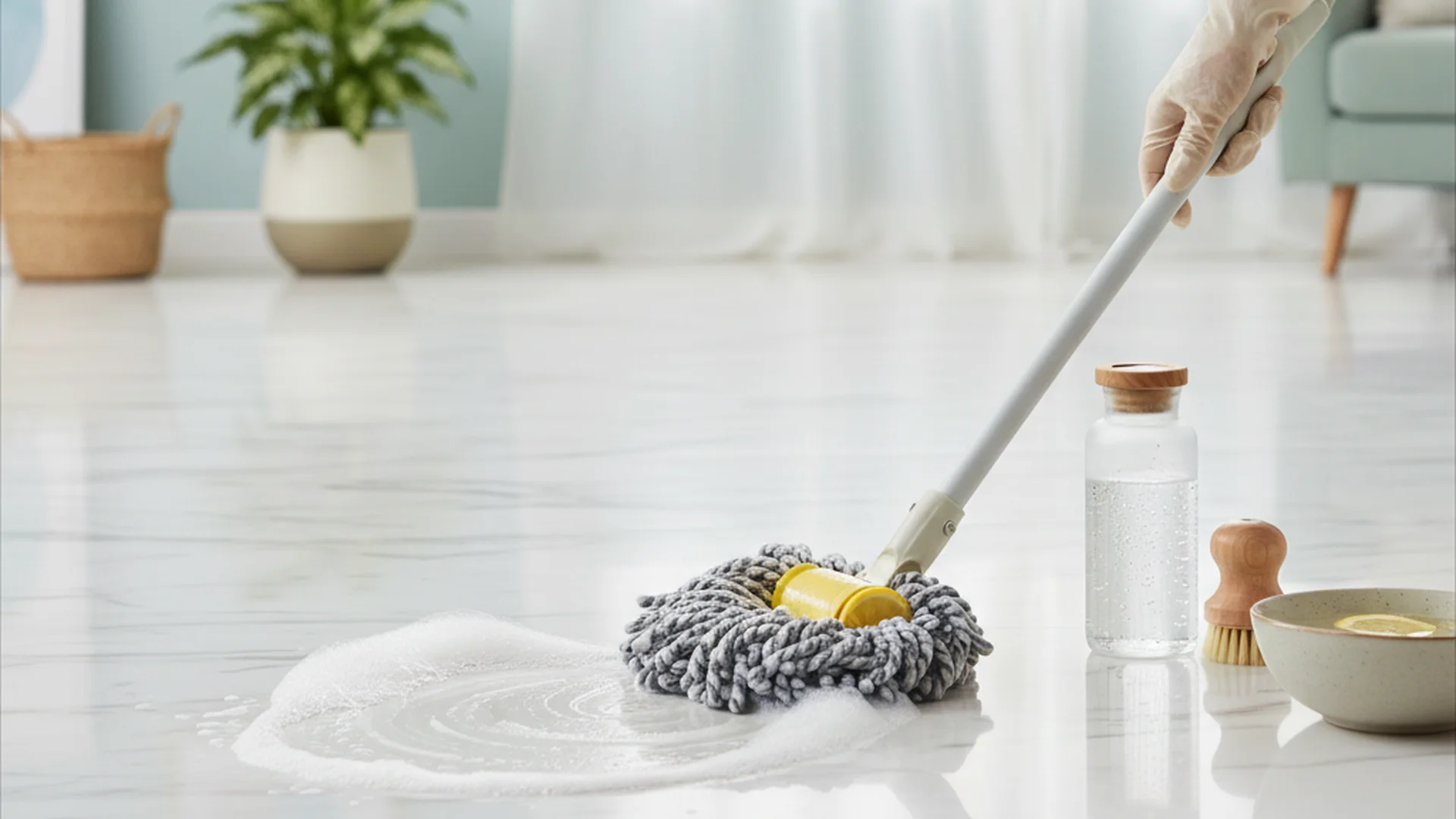
Mix 5 drops of clear, dye-free dish soap with 1 gallon of warm water.
- Example 1: A homeowner in Seattle found that using high-fragrance, "ultra-degreasing" dish soap left a cloudy film on her black granite. Switching to a clear, simple soap restored the shine instantly.
- Example 2: In a busy household with pets, mixing a 50/50 solution of 70% isopropyl alcohol and water provided a natural disinfectant that evaporated quickly without leaving streaks.
Note: If you use dish soap, you must rinse the floor with plain water afterward. Even a tiny amount of soap residue will build up over time, making the floor look hazy and attracting more hair and lint.
The Maintenance Calendar: Sealing and Testing
How do you know when your granite needs professional help? You use the "Water Test."
| Test Frequency | Method | Result | Action |
|---|---|---|---|
| Every 6 Months | Pour 1 tbsp of water on a high-traffic area. | Water beads up indefinitely. | Seal is healthy. No action needed. |
| Every 6 Months | Pour 1 tbsp of water on a high-traffic area. | Water darkens the stone in < 10 mins. | Seal is compromised. Reseal immediately. |
Most granite floors require resealing every 12 to 24 months, depending on the foot traffic and the type of stone.
Success: Regularly sealing your floors can extend the lifespan of granite to over 100 years, making it one of the most sustainable flooring options available today.
Common Mistakes to Avoid
Even with the best intentions, it’s easy to damage natural stone. Avoid these common blunders:
- The "Vinegar is Natural" Myth: Vinegar is acetic acid. Using it on granite is essentially a slow-motion chemical burn. It will "etch" the stone, turning a glossy finish into a dull, rough patch.
- Using Abrasive Pads: Never use steel wool or the abrasive side of a kitchen sponge.
- Ignoring the Grout: If your granite looks clean but the room feels "off," look at the grout. Grout is more porous than the stone. Use a specialized grout brush and a neutral cleaner to keep these lines bright.
- Over-Waxing: Never apply floor wax to granite. Granite’s shine comes from the stone itself, not a topical coating. Wax creates a sticky layer that is incredibly difficult to remove.
2025-2026 Trends in Granite Care
The world of stone maintenance is evolving. Here is what is trending for the upcoming seasons:
Probiotic Cleaners
A major shift in 2025 is the use of bacteria-based cleaners. These "good" bacteria reside in the microscopic pores of the granite and grout, consuming organic waste like skin cells and oils for days after you finish mopping.
Nanotechnology Sealers
Traditional resins are being replaced by nano-molecular sealers. These penetrate significantly deeper into the stone than older products, with some manufacturers now offering 5-year or even 10-year "permanent" protection.
AI-Integrated Maintenance
The newest generation of robotic mops (released in 2025) now includes "Stone Recognition" sensors. These machines can detect when they have moved from carpet or tile onto natural stone, automatically adjusting the water flow and downward pressure to prevent over-saturation.
Frequently Asked Questions
Can I use Windex on my granite floors?
How do I remove streaks from my granite?
Is it safe to use a "Magic Eraser" on tough stains?
How do I handle a wine or coffee spill?
Conclusion
Granite flooring is an investment in your home’s future. By following a simple routine of daily dust mopping, using pH-neutral cleaners, and performing the annual water test, you can ensure your floors remain a stunning focal point for decades. Remember: when it comes to granite, less is usually more. Avoid the harsh acids and heavy waxes, stick to microfiber and neutral soaps, and your stone will reward you with a timeless, mirror-like finish.
Success: By implementing a "shoes-off" policy and a weekly microfiber damp-mop routine, you can reduce the frequency of professional polishing by up to 50%.
Cleaning that keeps score
Every task earns points, every streak multiplies them, and Premium adds a household leaderboard plus a monthly Dustagorgon to beat.
- Free forever
- 30 badges to earn
- Up to 6 in a household
No card needed. Set up your rooms in a couple of minutes.