In this article
What you’ll learn
- Use a clear ammonia solution for a streak-free, residue-free finish.
- Avoid acidic cleaners like vinegar which dull the epoxy gloss over time.
- Daily dust mopping is essential to prevent micro-scratches from grit and sand.
Epoxy flooring has long been the gold standard for industrial warehouses and automotive shops, but in recent years, it has exploded in popularity for residential garages, basements, and even modern kitchens. Known for its incredible durability and "liquid" aesthetic, many homeowners assume these surfaces are indestructible. However, knowing how to clean epoxy floors correctly is the difference between a surface that lasts twenty years and one that loses its luster in twenty months. Because epoxy is a 100% non-porous material, it doesn't behave like wood or tile; it requires a specific approach to maintain its signature resilience and shine.
Why Epoxy Cleaning Requires a Unique Approach
Unlike concrete, which is porous and absorbs liquids, epoxy creates a seamless, sealed barrier. This is a massive advantage for hygiene—it’s resistant to mold, mildew, and bacteria—but it means that any dirt, sand, or chemical residue sits directly on top of the surface.
If you don't use the best way clean epoxy floors, you risk "ambering" (yellowing) or micro-abrasions. While epoxy can withstand gasoline and oil, it is surprisingly sensitive to certain household chemicals and physical abrasives.
Note: A professionally installed epoxy floor can last up to 20 years, but its lifespan is directly tied to how well you manage the "grit factor" on the surface.
The Essential Tools for Epoxy Maintenance
Before you start mopping, you need the right kit. Using the wrong tools is one of the fastest ways to ruin an expensive coating.
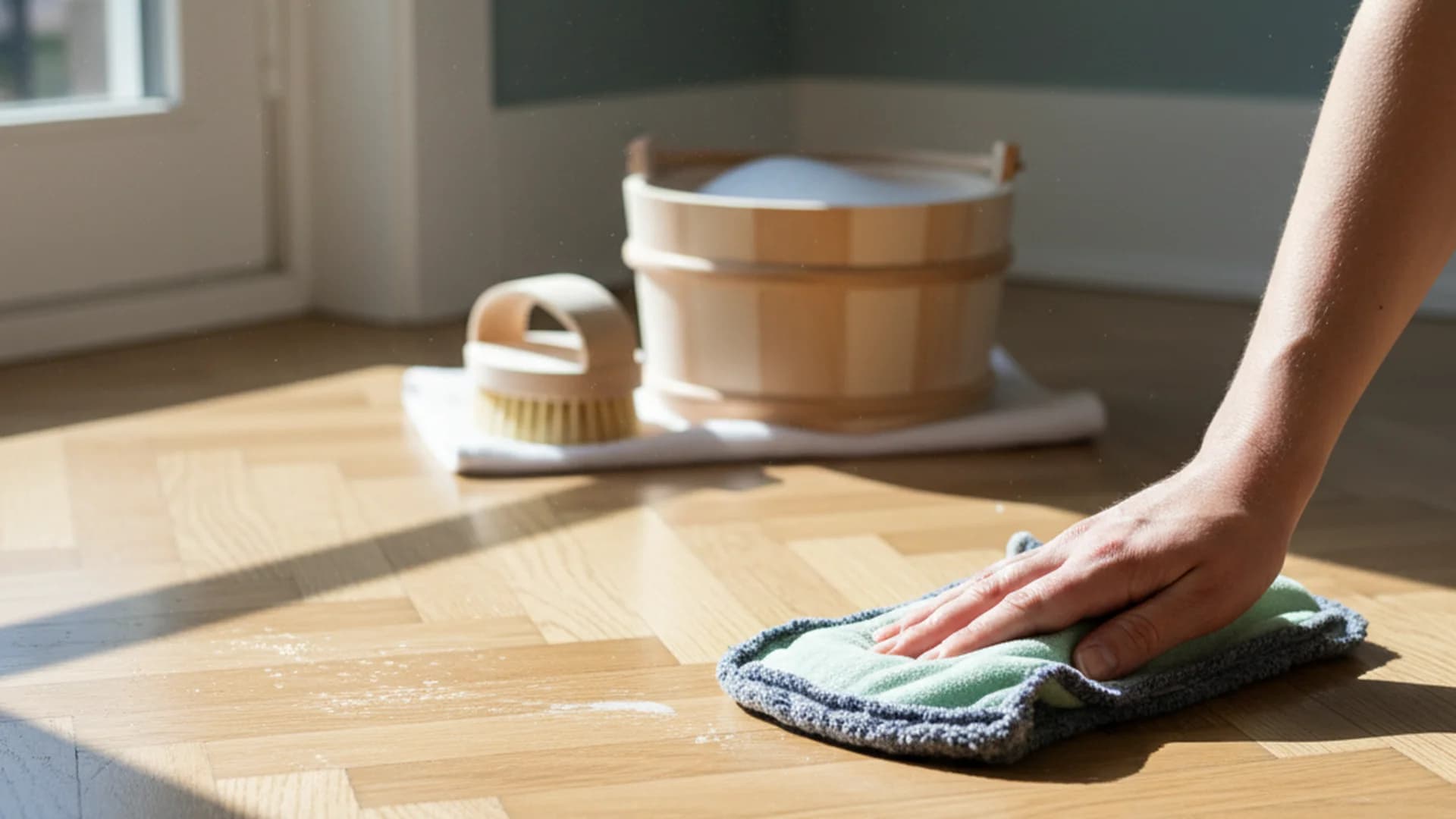
- Microfiber Dust Mop: This is your most important tool for daily maintenance.
- Hard Foam Mop: For wet mopping, avoid string mops as they tend to leave streaks and move dirty water around rather than lifting it.
- Clear Ammonia: The industry-standard cleaning agent.
- Soft-Bristle Brush: For localized scrubbing of stubborn stains.
- Neoprene Squeegee: Ideal for large areas to move excess water toward a drain.
Warning: Never use metal scrapers, steel wool, or "Magic Erasers" on epoxy. These are too abrasive and will create permanent dull spots in the finish.
Step-by-Step: How to Clean Epoxy Floors
Maintaining that "just-installed" look requires a three-tiered approach: daily, weekly, and deep cleaning.
Phase 1: The Daily "Dust Mop" Rule
The number one enemy of epoxy is sand and grit. When walked upon, these tiny particles act like sandpaper, grinding into the topcoat and killing the shine.
- Use a wide microfiber dust mop to sweep the entire surface.
- In a garage setting, ensure you get into the corners where road salt and pebbles accumulate.
- If you have a large commercial space, 2025 trends show a rise in residential autonomous floor scrubbers that can handle this task overnight.
Phase 2: The Weekly Deep Clean
For a streak-free finish, you need a solution that cuts through grime without leaving a film. Many people search for how to clean epoxy floors naturally, and while vinegar is often the "go-to" green cleaner, it is actually harmful here (more on that below).
- Mix 2–3 ounces of clear ammonia per gallon of hot water.
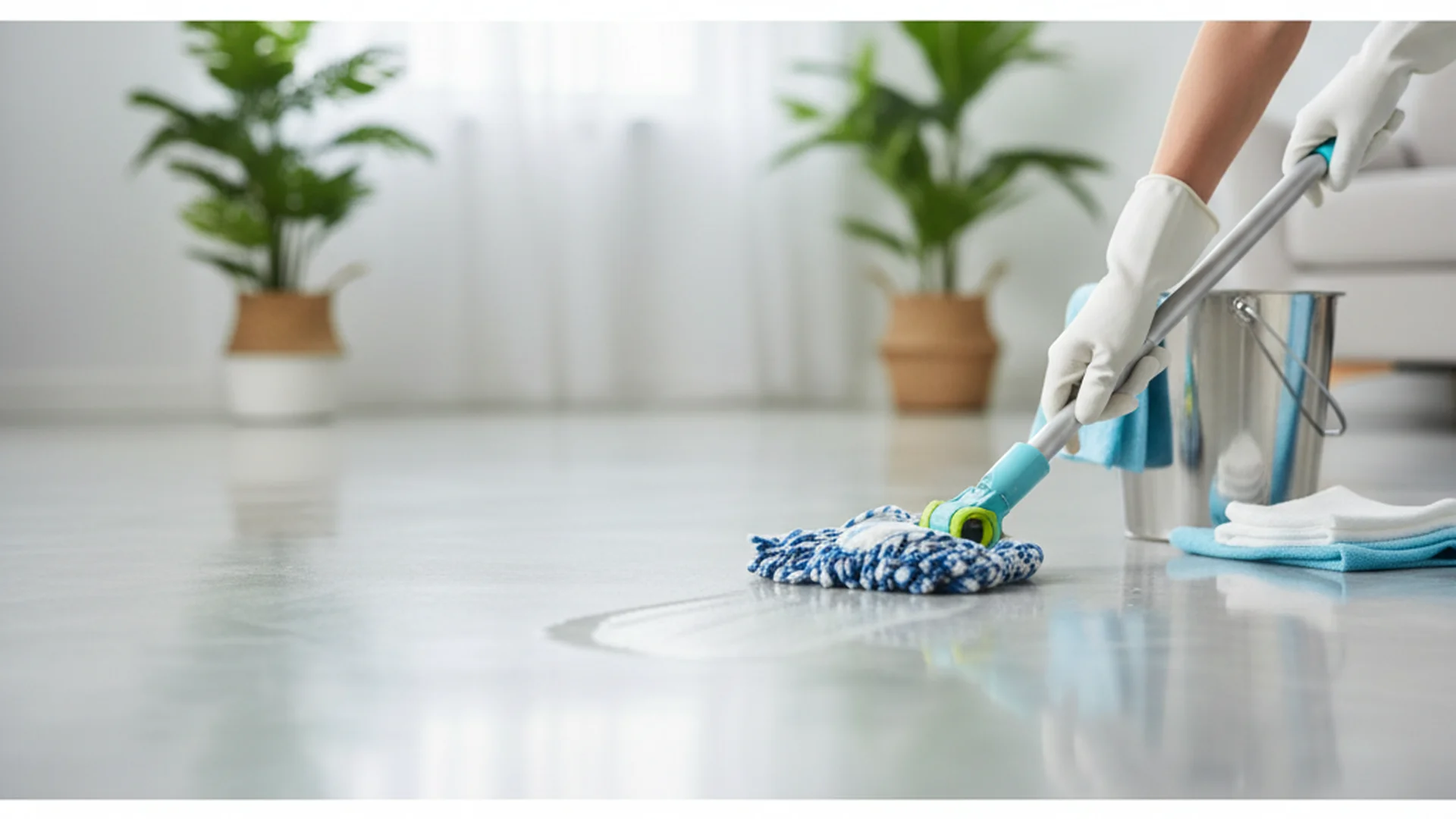
- Dip your hard foam mop into the solution and wring it out so it is damp, not dripping.
- Mop in sections, ensuring you don't leave standing pools of water.
- Rinse the mop frequently in a second bucket of clean water to avoid spreading lifted dirt.
Phase 3: Spot Cleaning and Stains
For oil spills or chemical drips, time is of the essence. Even though epoxy is chemically resistant, leaving substances like engine coolant or concentrated detergents for days can cause staining.
- Wipe up the bulk of the spill with a paper towel.
- Apply a mild degreaser or the ammonia solution to the spot.
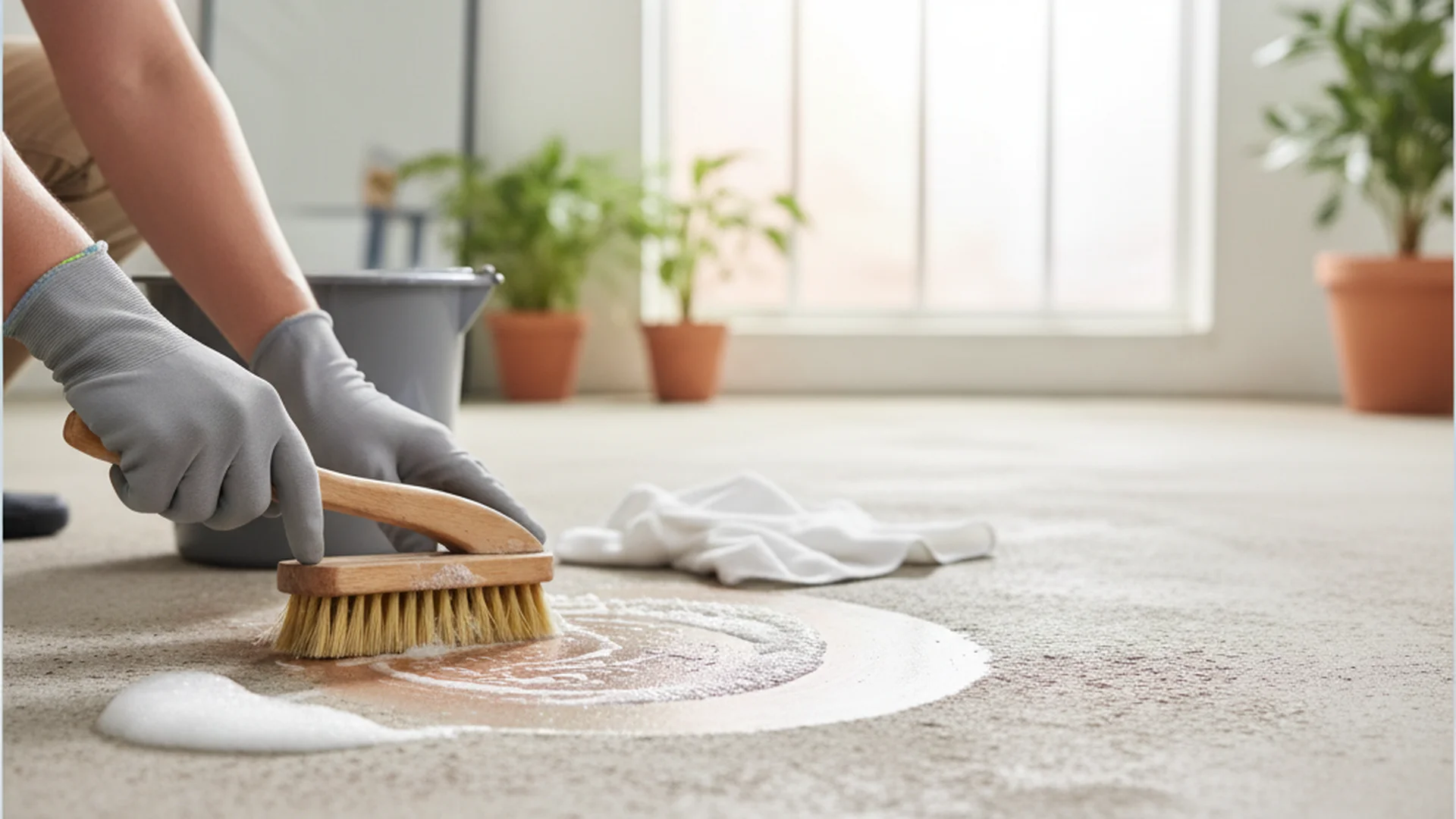
- Scrub gently with a soft-bristle nylon brush.
- Rinse with fresh water and dry with a microfiber cloth.
Success: Regularly following this routine can reduce your long-term maintenance costs by up to 50% compared to vinyl or tile floors, as epoxy never needs waxing or stripping.
Real-World Examples: Epoxy Cleaning in Action
Example 1: The "Winter Garage" Challenge
In colder climates, cars bring in a slurry of road salt, magnesium chloride, and melting snow. If left to dry, the salt creates a white, hazy film that is highly abrasive. The Solution: During winter months, use a garden hose (if drainage allows) or a wet-vacuum to remove the salt slush every two weeks, followed by a quick ammonia mop.
Example 2: The Modern "Chef’s Kitchen"
High-gloss epoxy in a kitchen looks stunning but shows every drop of grease. The Solution: Instead of using dish soap—which contains animal fats or surfactants that leave a slippery, dull film—the best way clean epoxy floors in a kitchen is using a pH-neutral cleaner specifically designed for resinous surfaces.
Example 3: The Home Workshop
Metal shavings and wood dust are common in DIY spaces. The Solution: These require a vacuum with a soft brush attachment before mopping. Dragging a mop over metal shavings will result in deep gouges that may require a new topcoat to repair.
2025–2026 Trends in Epoxy Care
As we move into 2025 and 2026, the technology behind epoxy is shifting. We are seeing a move toward low-VOC and zero-VOC systems, which are much better for indoor air quality.
Furthermore, the "high-gloss" look is being replaced by matte and satin finishes. These are trending because they are significantly easier to maintain; they hide scratches and dust much better than the "mirror" finishes of the past decade. If you are installing a new floor this year, consider a "terrazzo-inspired" flake pattern, which is the leading aesthetic for 2025 luxury home builds.
Tip: If your floor is a newer "matte" finish, you can be slightly less aggressive with dust mopping, but the ammonia-water rule still applies for deep cleaning.
Common Mistakes to Avoid
- Using Vinegar or Citrus: These are acidic. Acids react with the epoxy resins and will slowly "etch" the surface, turning a glossy floor into a cloudy, dull mess.
- Soap-Based Cleaners: Dish soaps and floor waxes create a "soapy film." This film is not only a magnet for more dirt, but it also becomes dangerously slippery when even slightly damp.
- Steam Cleaning: While tempting, the extreme heat (over 200°F) can weaken the bond between the epoxy and the concrete substrate, potentially leading to delamination or bubbling.
- Pressure Washing at High PSI: While you can use a pressure washer, keep it under 1,200 PSI. Anything higher can catch a small imperfection and begin to peel the coating.
Frequently Asked Questions
What is the best cleaner for epoxy floors?
Can I use vinegar or citrus-based cleaners?
Is it safe to pressure wash an epoxy floor?
How do I remove tire marks?
Can I use a steam cleaner?
Conclusion
Mastering how to clean epoxy floors doesn't require expensive chemicals or professional equipment; it requires consistency and the right pH-balanced approach. By ditching the acidic "natural" cleaners like vinegar and adopting the "Daily Dust Mop Rule," you can ensure your floor remains a highlight of your home for decades. Remember: keep it simple, keep it grit-free, and always avoid soap.
Success: A clean epoxy floor is not just about aesthetics—it's about protecting a major investment in your property's value and safety.
Cleaning that keeps score
Every task earns points, every streak multiplies them, and Premium adds a household leaderboard plus a monthly Dustagorgon to beat.
- Free forever
- 30 badges to earn
- Up to 6 in a household
No card needed. Set up your rooms in a couple of minutes.