In this article
What you’ll learn
- Avoid abrasive cleaners and bleach to preserve the fiberglass gel coat.
- The "Steam & Soak" method is the most efficient way to loosen grime.
- Weekly maintenance reduces deep cleaning time by up to 300%.
Fiberglass is often considered the "Goldilocks" material of modern bathrooms. It is lightweight, affordable, and incredibly water-resistant, yet it possesses a surprising sensitivity that many homeowners overlook. If you have been wondering how to clean fiberglass shower units without scratching the surface or dulling the finish, you aren't alone. Unlike heavy stone or ceramic tile, fiberglass is finished with a thin "gel coat" that requires a specific touch to maintain its luster and structural integrity over its 15-to-20-year lifespan.
The Chemistry of Clean: Understanding Fiberglass
Before we dive into the scrubbing, we must understand what we are cleaning. Fiberglass, or Fiber-Reinforced Plastic, is non-porous but physically softer than most other bathroom surfaces. Using the wrong chemicals is the fastest way to ruin it. For instance, statistics from EZPro Express indicate that using abrasive cleaners can reduce a shower's lifespan to under 10 years by thinning the gel coat and creating micro-scratches. These scratches act as "anchors" for soap scum and hard water, making the shower harder to clean every subsequent time.
The 2025 DIY Gold Standard
For most homeowners, the best way to clean fiberglass shower stalls involves a simple, non-toxic chemistry:
- 1 part Dawn Dish Soap (to emulsify body oils)
- 2 parts Warm White Vinegar (to dissolve mineral deposits)
This combination works because the acidity of the vinegar breaks down calcium and limescale, while the surfactant in the dish soap latches onto oils and carries them away during the rinse.
Note: While vinegar is a powerful natural cleaner, it should be used for weekly deep cleans rather than daily sprays. Over-exposure to acid without rinsing can eventually dull the gel coat's high-gloss finish.
Step-by-Step Guide: The Steam-Soak-Scrub-Seal Method
To achieve professional results with minimal effort, follow this four-stage protocol.
Step 1: The Steam and Soak
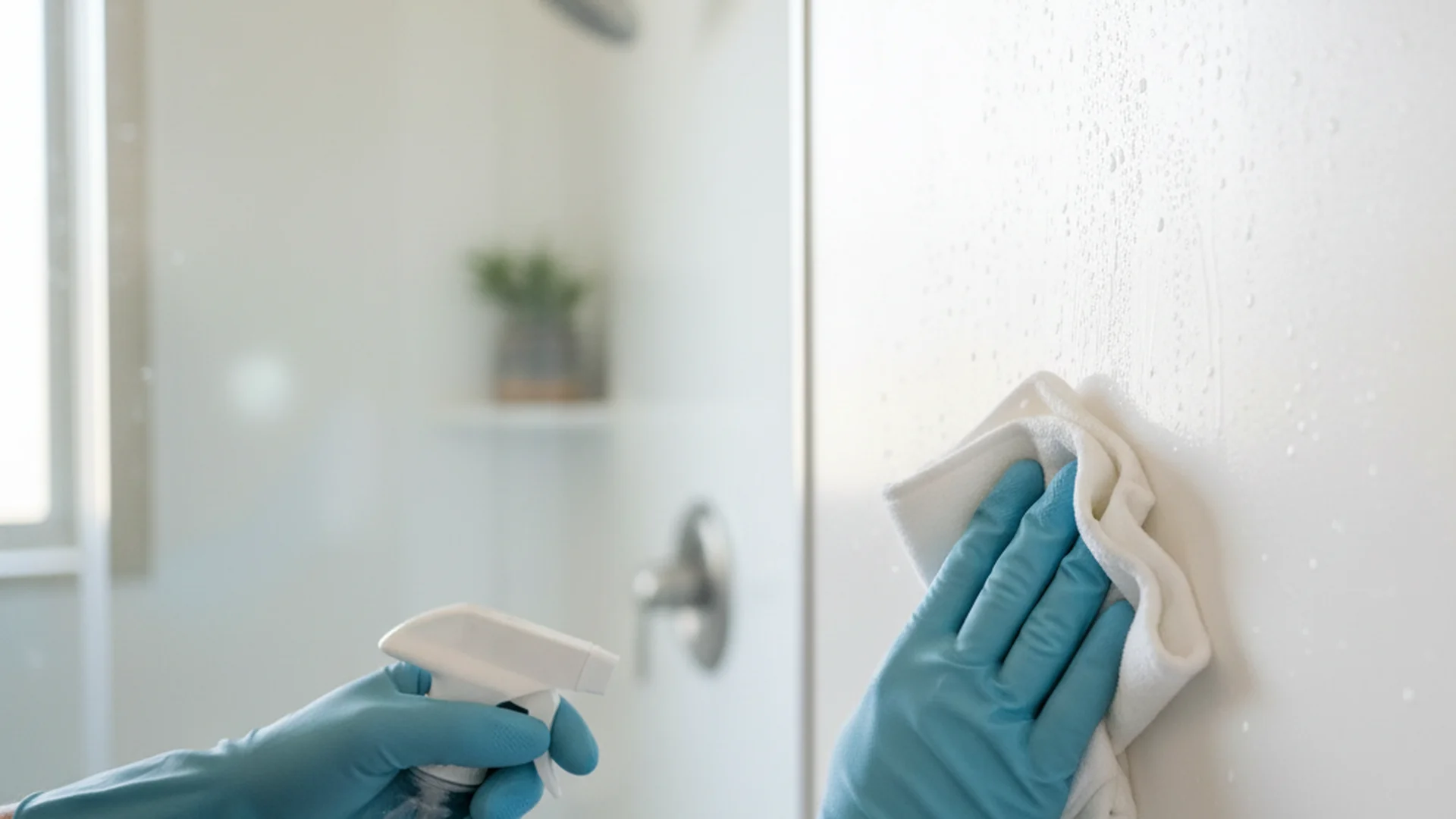
Before you apply any product, turn your shower on to its hottest setting for five minutes and close the bathroom door. The steam hydrates dried soap scum and opens the "pores" of the grime. Apply your DIY solution or a bio-based enzyme cleaner and let it sit for 15–20 minutes.
Success: Letting the cleaner "dwell" does 90% of the work for you. Chemical dwell time is significantly more effective than physical scrubbing when it comes to preserving fiberglass.
Step 2: Choosing Your Tools
In 2025, the "elbow grease" era is officially ending. High-torque, cordless electric scrubbers with interchangeable soft heads (such as HOTO or Jorking models) have become the top-recommended tool for avoiding physical strain and ensuring even cleaning.
| Tool Type | Recommended | Why? |
|---|---|---|
| Microfiber Cloth | Yes | Non-abrasive, picks up bacteria |
| Soft-Bristle Brush | Yes | Reaches into textured floors safely |
| Electric Spin Scrubber | Yes | Efficient and saves physical labor |
| Green Scouring Pad | NO | Will permanently scratch the gel coat |
| Steel Wool | NO | Causes rust stains and deep gouges |
Step 3: Gentle Agitation
Work from the top down. Use your soft brush or electric scrubber in circular motions. Focus on the corners where "biofilm"—that slippery pink or orange bacteria—tends to accumulate.
Step 4: The Protective Seal
Once the shower is clean and dry, experts recommend applying a water-repellent coating. Products like Rain-X for showers or specialized fiberglass waxes create a sacrificial layer. This ensures that water and soap slide off the walls before they can bond to the surface.
Tip: Applying a high-quality car wax once a year can restore a "factory shine" to a dulling fiberglass unit.
Tech-Forward Tools and 2025 Trends
The landscape of bathroom maintenance is shifting toward "biophilic maintenance" and smart technology. We are seeing a move away from harsh Volatile Organic Compounds (VOCs) and toward sustainable systems.
Bio-Based Enzyme Cleaners
A major trend for 2025–2026 is the rise of enzymatic cleaners. Unlike traditional acids, these use "good bacteria" to consume organic matter like mold and mildew. They are perfect for fiberglass because they are pH-neutral and won't degrade the resin over time.
Plastic-Free Refillables
Brands like Blueland are revolutionizing the cleaning cabinet with tablet-to-spray systems. These are not only better for the environment but are formulated specifically to be safe for synthetic surfaces like fiberglass, avoiding the harsh solvents found in some budget "big box" sprays.
Smart Ventilation
Homeowners are now linking smart dehumidifiers to bathroom fans. By keeping humidity levels below 50% immediately after a shower, you prevent mold spores from ever taking root in the first place.
Real-World Examples
Case 1: The "Yellow Floor" Syndrome
A homeowner in Seattle noticed the floor of their fiberglass stall was turning a dingy yellow. Instead of reaching for bleach—which would have made the resin brittle—they used a paste of baking soda and hydrogen peroxide. After letting it sit for 30 minutes, the oxygenating power of the peroxide lifted the mineral stains without damaging the gel coat.
Case 2: The Spilled Shampoo Biofilm
In a high-traffic family bathroom, soap scum and spilled shampoo created a dangerously slippery orange film. By switching to a weekly "squeegee habit," the family reduced their deep-cleaning frequency by 75%, as the squeegee removed the "food source" for the bacteria before it could colonize.
Case 3: The Scratched Stall Recovery
After mistakenly using a green scouring pad, a homeowner's shower looked dull and "cloudy." They used a fine-grit marine polishing compound (designed for fiberglass boats) followed by a specialized wax. This filled the micro-scratches and restored the gloss, proving that a worn gel coat can often be "resurrected" rather than replaced.
Common Mistakes to Avoid
- The "Scrub Harder" Fallacy: Physical force does not compensate for the wrong cleaner. If the grime isn't coming off, you need more dwell time, not more muscle.
- Mixing Chemicals: This is a critical safety issue. Never mix vinegar (acid) with bleach (base), as this creates toxic chlorine gas. Always rinse the shower thoroughly between using different products.
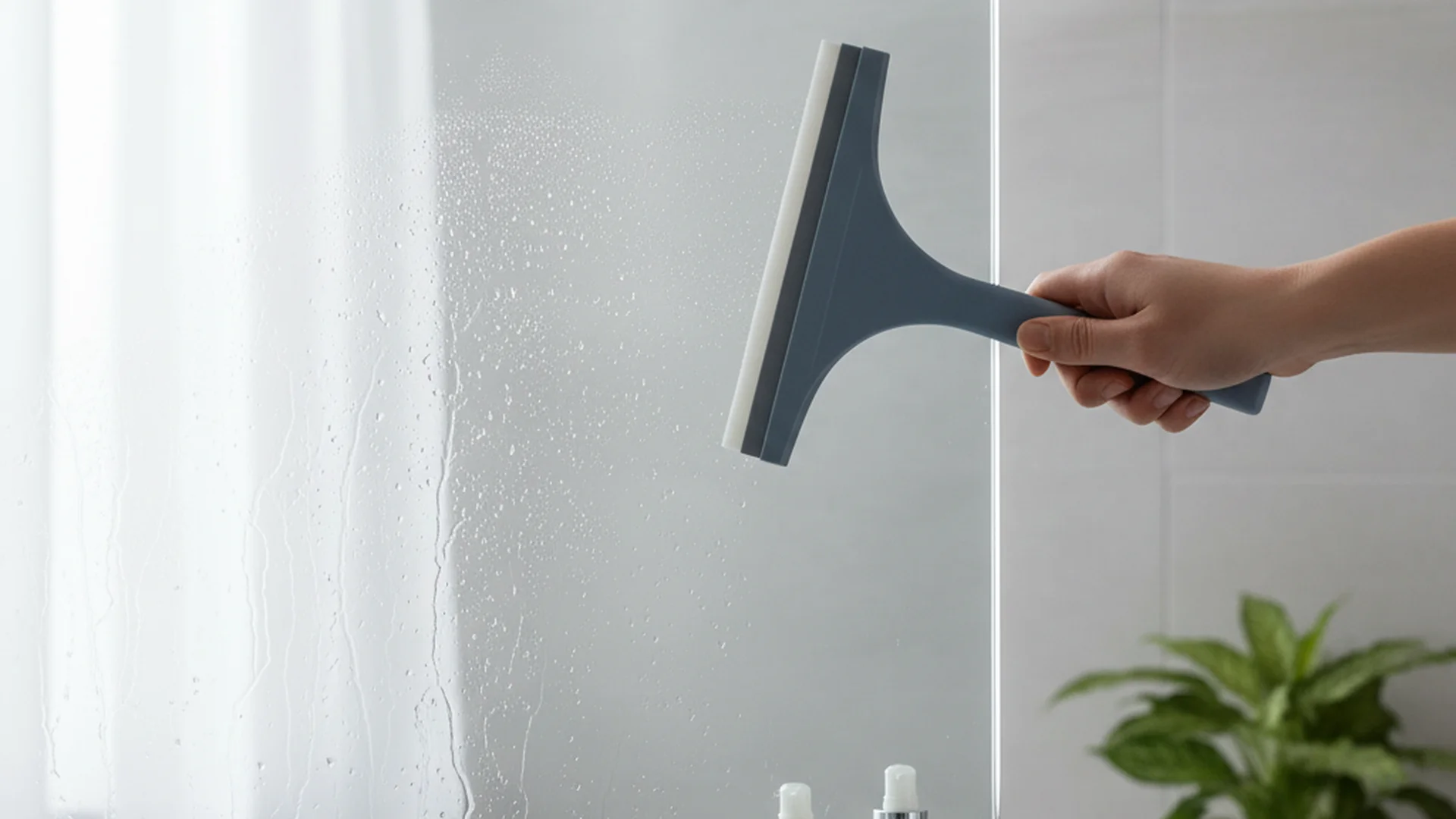
- Ignoring the Squeegee: Many people think squeegees are only for glass doors. Using a squeegee on fiberglass walls after every shower is the single most effective way to prevent calcium buildup.
- Over-using Bleach: Bleach is a common go-to, but it is the enemy of fiberglass resin. Frequent use leads to yellowing and can eventually cause the material to become brittle and crack.
Warning: Never use a Magic Eraser as your daily cleaner. While it seems like a "sponge," it is actually a micro-abrasive (equivalent to 3000-grit sandpaper). It will eventually strip the shine right off your shower.
Frequently Asked Questions
Can I use bleach on my fiberglass shower?
How do I get the "yellow" out of the floor?
Can I use a Magic Eraser?
Why is my shower still dull after cleaning?
Conclusion
Cleaning your fiberglass shower doesn't have to be a back-breaking chore involving harsh, toxic fumes. By shifting to a "Consistency over Intensity" mindset—utilizing the DIY Dawn and vinegar formula, embracing 2025 tech like electric scrubbers, and finishing with a protective wax—you can ensure your shower remains a sparkling sanctuary for its full 20-year lifespan.
Success: Regular maintenance prevents the hardening of calcium and soap scum, keeping your bathroom hygienic and your home value high.
Cleaning that keeps score
Every task earns points, every streak multiplies them, and Premium adds a household leaderboard plus a monthly Dustagorgon to beat.
- Free forever
- 30 badges to earn
- Up to 6 in a household
No card needed. Set up your rooms in a couple of minutes.