In this article
What you’ll learn
- Daily squeegeeing reduces deep cleaning needs by 80%.
- Use acidic cleaners for minerals and alkaline cleaners for soap scum.
- Avoid abrasive pads and bleach to protect glass and hardware finishes.
Frameless shower doors are the pinnacle of modern bathroom design, offering a sleek, spa-like aesthetic that makes any space feel larger and more luxurious. However, that crystal-clear beauty can quickly vanish behind a veil of cloudy film and stubborn spots. If you are wondering how to clean frameless shower door glass effectively without damaging your investment, you aren't alone. In fact, because these doors lack a metal frame to hide grime, they require a specific approach to maintenance to keep them looking pristine.
In this guide, we will explore the science of shower glass, the most effective cleaning solutions for 2025, and a routine that ensures your bathroom remains a sanctuary rather than a chore.
The Science of Dirty Glass: Why It Gets Cloudy
To understand the best way clean frameless shower door surfaces, you first have to understand what you are fighting. It’s not just "dirt"; it is a combination of mineral deposits and organic matter.
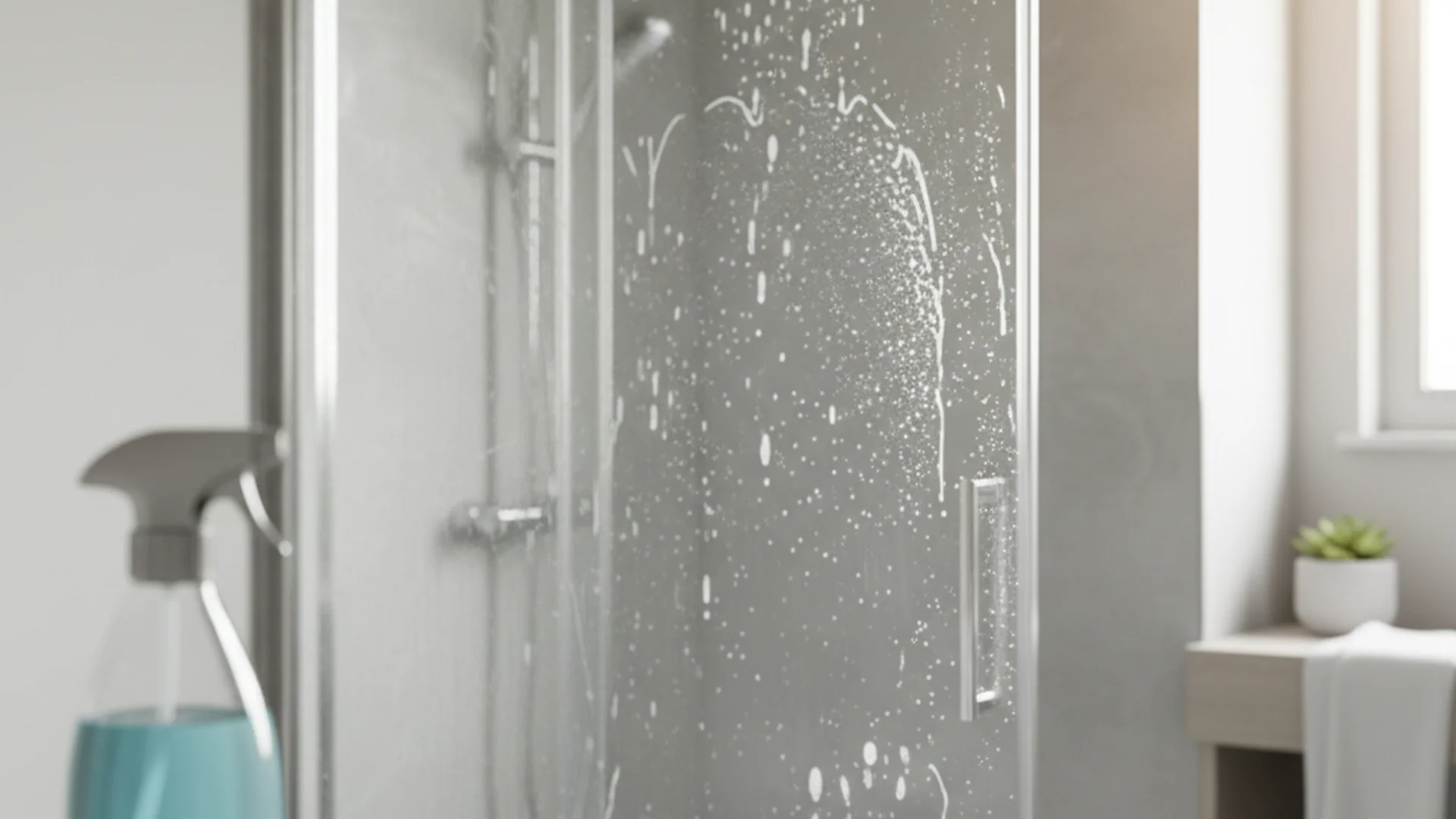
The vast majority of US homes have hard water. This water contains high levels of dissolved minerals like calcium and magnesium. When water droplets dry on your shower door, the water evaporates, but the minerals stay behind. While glass looks perfectly smooth to the naked eye, it is actually porous at a microscopic level. If these mineral deposits are left to sit, they can "etch" into these pores, causing permanent cloudiness that no amount of scrubbing can fix.
Furthermore, you are dealing with soap scum—a chemical reaction between the minerals in your water and the fatty acids in your soap. This creates a sticky, alkaline film that attracts skin cells and body oils.
Note: Etching is permanent damage. If your glass remains cloudy even after a professional-grade cleaning, the surface may be physically damaged by long-term mineral exposure.
The Gold Standard Cleaning Routine
The secret to a spotless frameless shower isn't a "miracle" product; it's a consistent routine. Aim for a "Daily Wipe, Weekly Clean, Monthly Deep-Dive" approach.
1. The Daily Maintenance (30 Seconds)
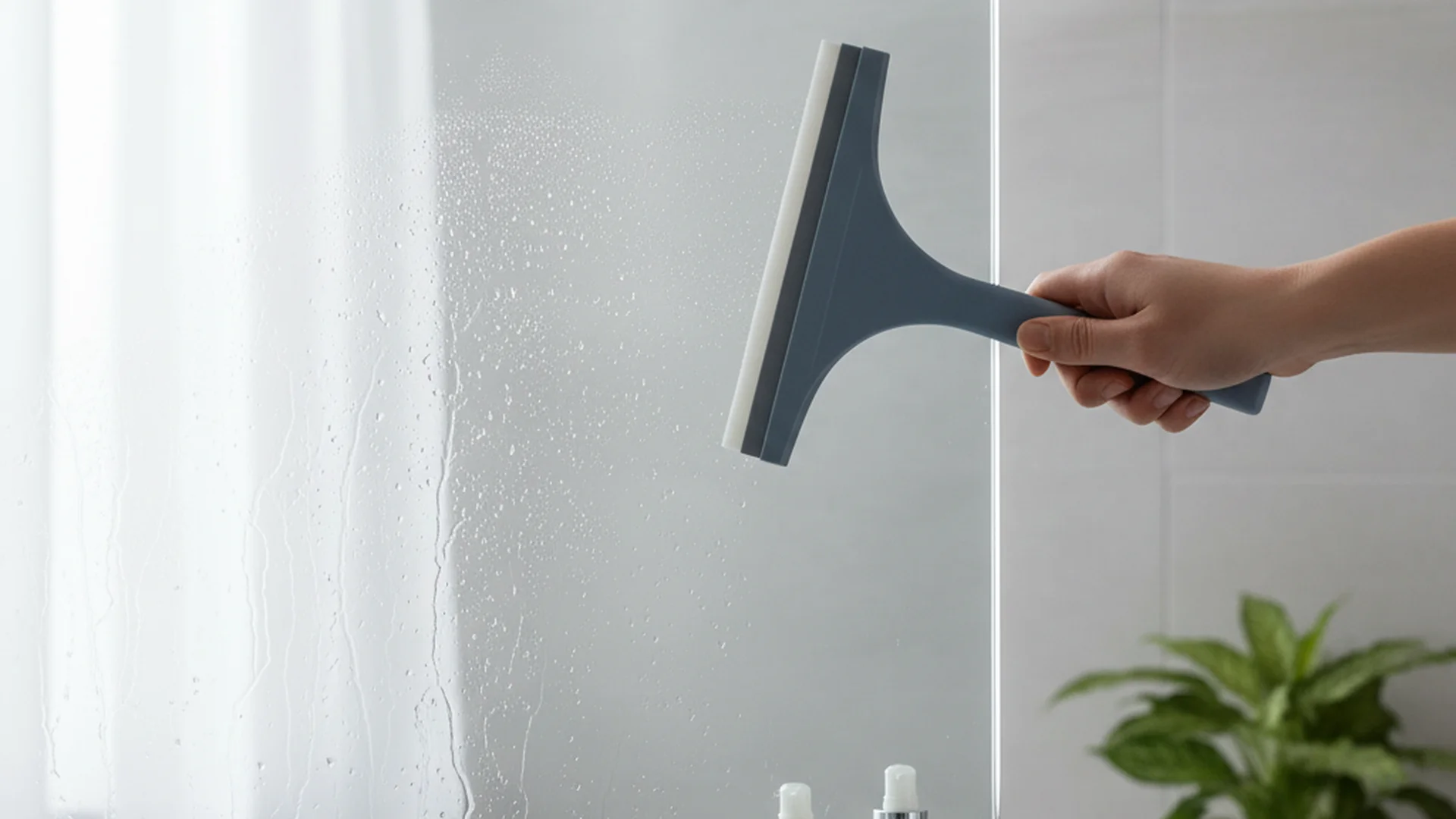
The most effective way to keep your shower clean is to never let it get dirty in the first place. Consistently using a squeegee after every single shower can reduce the need for deep cleaning by up to 80%. By removing 90% of the water before it evaporates, you prevent mineral buildup from starting.
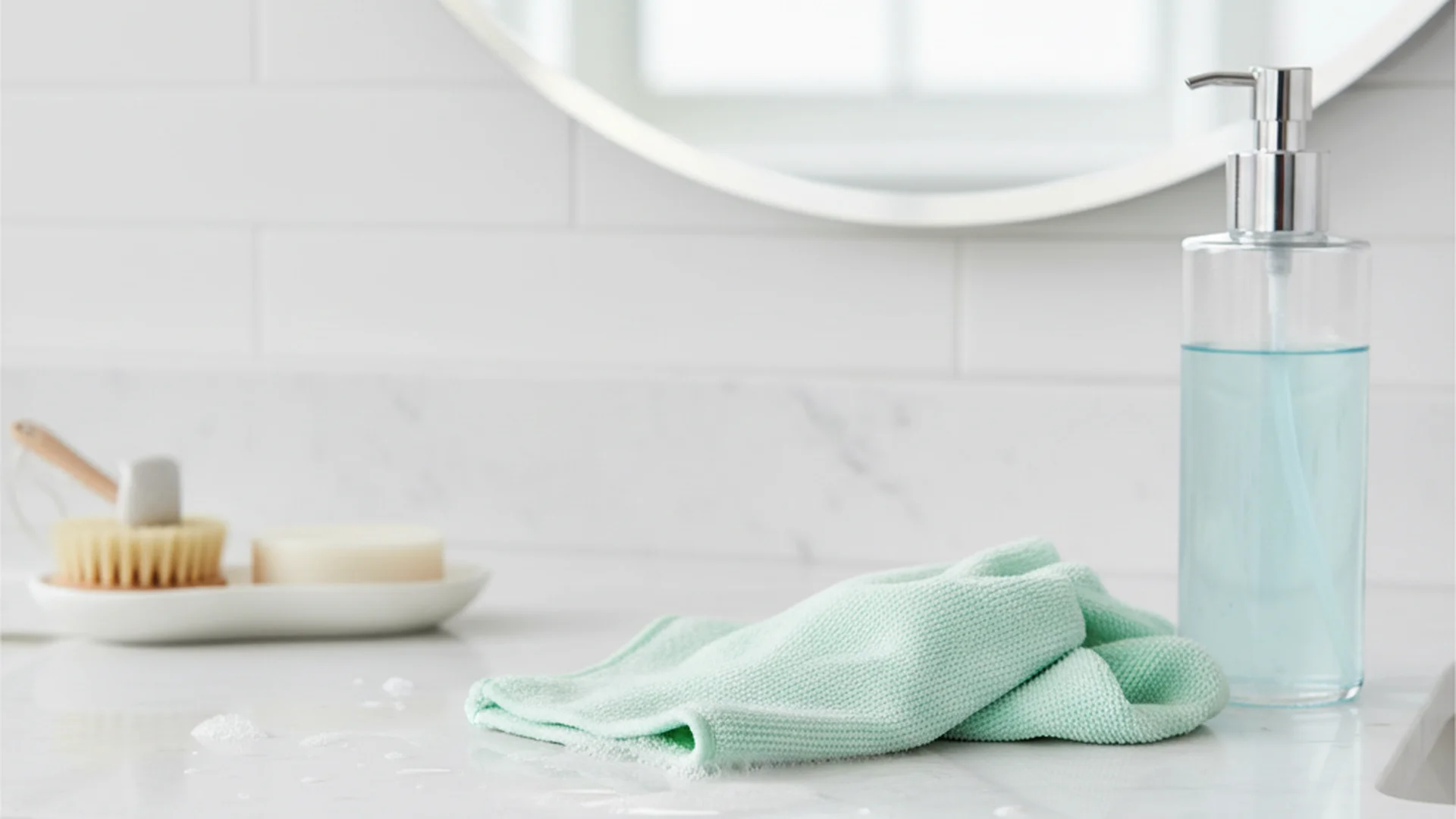
Tip: Work from top to bottom with the squeegee in long, overlapping strokes. Use a microfiber cloth to wipe the edges and the metal hinges where the squeegee can’t reach.
2. The Weekly Clean (10 Minutes)
For your weekly maintenance, you need a solution that cuts through both light soap scum and fresh mineral spots.
- The Mix: 50% white vinegar (acidic) and 50% water, plus one drop of Dawn dish soap (alkaline).
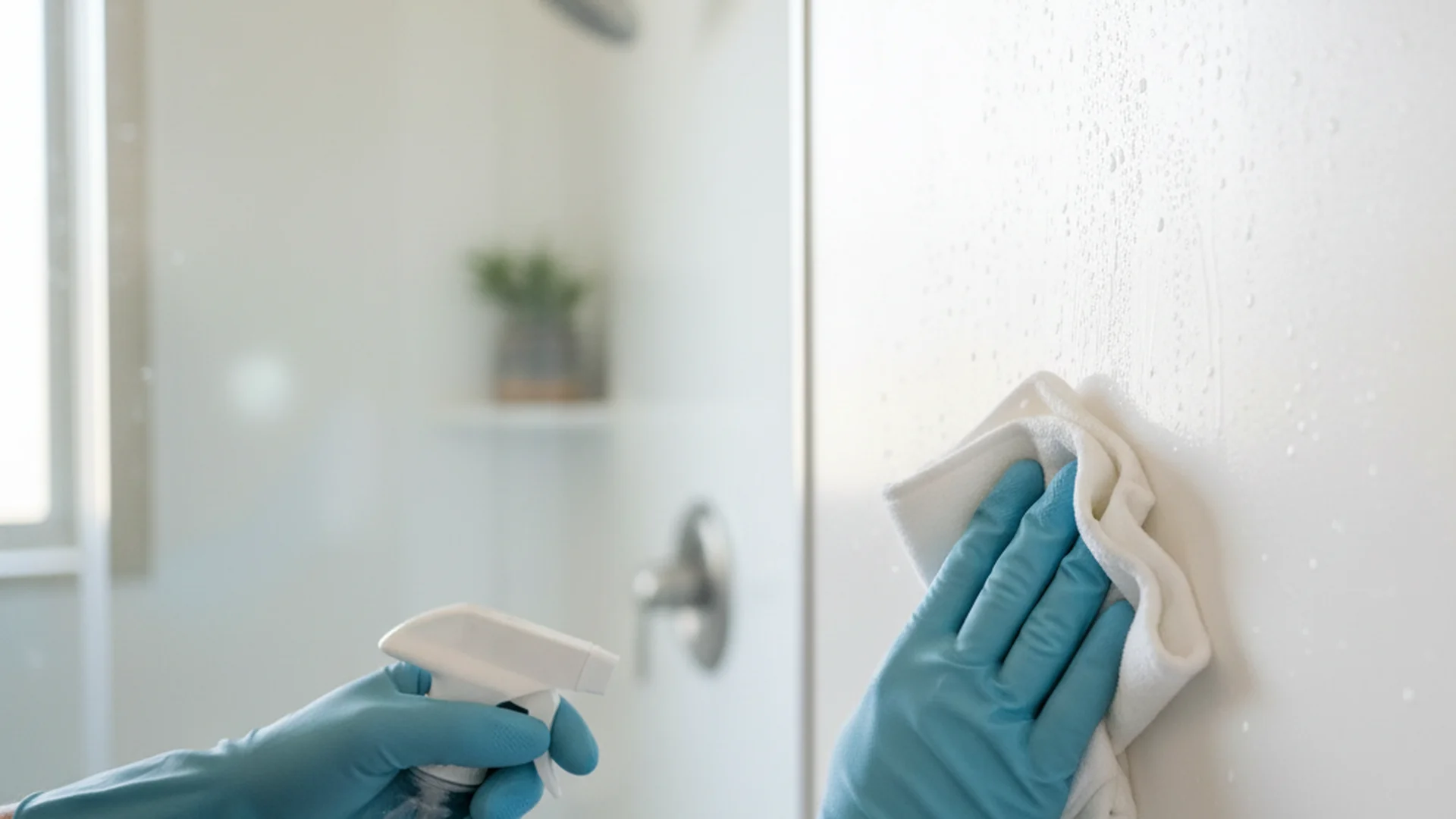
- The Method: Spray the solution liberally over the glass. Let it sit for 5–10 minutes to break down the minerals. Scrub gently with a non-abrasive sponge and rinse with warm water.
3. The Monthly Deep-Dive (20 Minutes)
Once a month, focus on the areas that are often overlooked: the hinges, the handles, and the "sweep" (the plastic seal at the bottom). Use a soft-bristled toothbrush to reach into the crevices of the hardware to prevent mold growth and mineral crusting.
| Cleaning Task | Tool Needed | Purpose |
|---|---|---|
| Glass Surface | Squeegee / Microfiber | Remove water and prevent spots |
| Mineral Spots | White Vinegar | Dissolve calcium and magnesium |
| Soap Scum | Dish Soap (Dawn) | Break down oils and fats |
| Hardware | Soft Toothbrush | Remove grime from hinges |
Real-World Cleaning Scenarios
To see how these methods work in practice, let’s look at three common household examples.
Example 1: The Busy Professional
Sarah has a high-end frameless shower but very little time. She keeps a decorative squeegee suctioned to the glass inside the shower. By spending 30 seconds squeegeeing every morning, she only has to do a "real" clean once every three weeks. Her glass looks brand new because the minerals never have a chance to settle.
Example 2: The Hard Water Hero
Mark lives in an area with extremely hard water (high grains per gallon). He found that vinegar alone wasn't enough. He began using a hydrophobic treatment (like Rain-X) every three months. This creates a barrier that makes water bead off the glass instantly, preventing the minerals from even touching the surface.
Example 3: The Matte Black Enthusiast
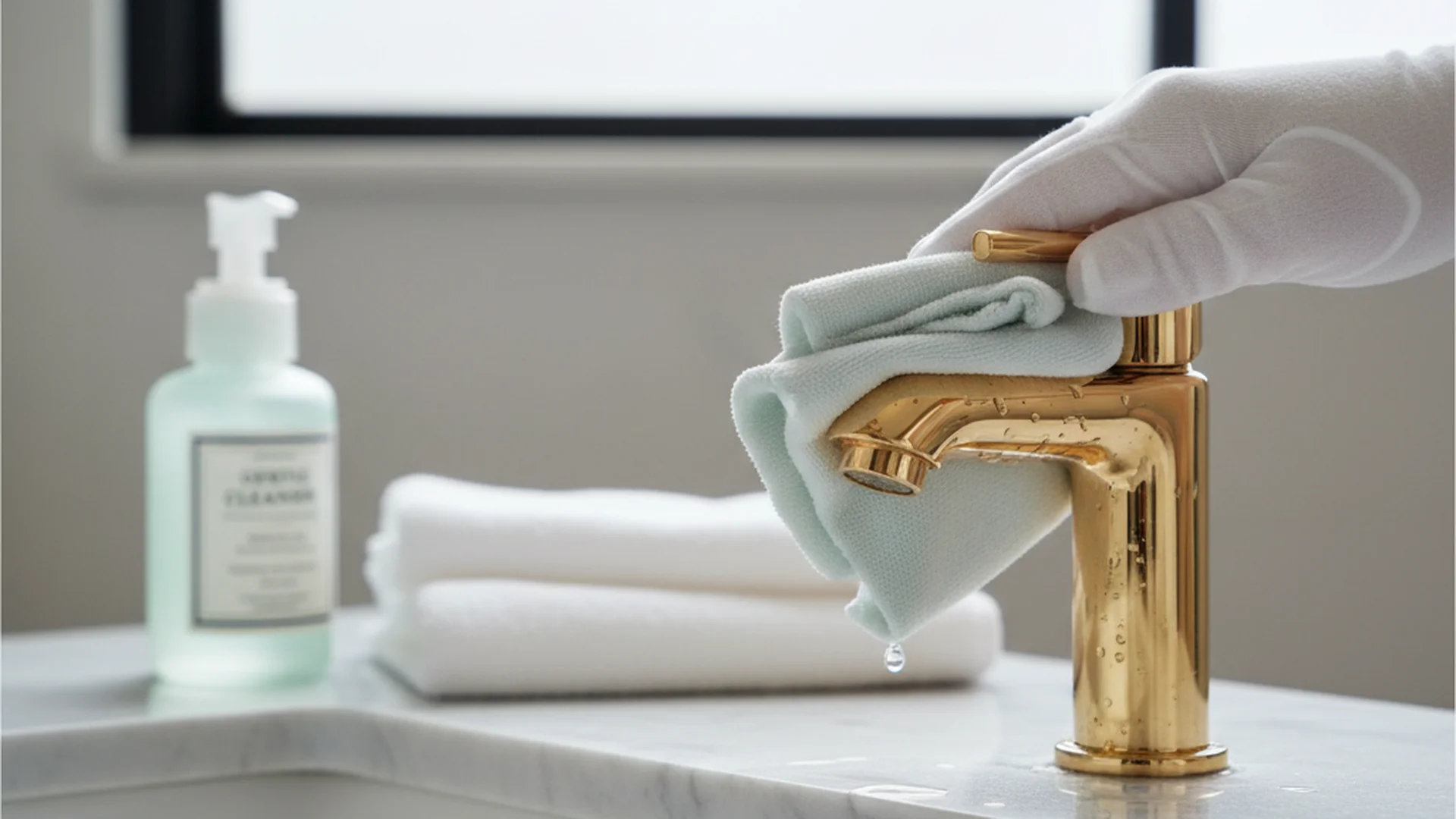
Jessica installed the latest 2025 trend: matte black hardware. She initially used a harsh acidic cleaner, which began to dull the finish. She switched to a pH-neutral cleaner and a microfiber cloth for the hardware, preserving the "factory-fresh" look of her fixtures while using a vinegar-water mix strictly on the glass panels.
Warning: Never use acidic cleaners (like vinegar or lemon) on Matte Black hardware. It can strip the delicate finish and lead to permanent spotting or peeling.
2025–2026 Trends in Shower Maintenance
As we move into 2026, the technology behind frameless showers is evolving. Keeping up with these trends can make your cleaning routine much easier.
Permanent Factory Coatings
More manufacturers are now offering glass with C.10 or baked-on hydrophobic coatings as a standard feature. Unlike DIY sprays that last a few months, these coatings are chemically bonded to the glass during manufacturing. If you have this type of glass, you should avoid heavy chemicals entirely, as they can eventually wear down the protective layer.
Probiotic Cleaners
The industry is shifting toward "Smart" eco-friendly cleaners. Probiotic cleaners use beneficial bacteria to "eat" soap scum and organic matter over time. These are excellent for those who want a "set it and forget it" approach to mold prevention in the bottom seals.
Smart Glass Integration
High-end 2026 designs often feature "switchable" privacy glass that turns opaque at the flip of a switch.
Warning: Electronic "Smart Glass" panels require strictly dry-cleaning methods or specific alcohol-based cleaners. Getting water inside the electrical components can cause a short circuit.
Common Mistakes to Avoid
Even with the best intentions, you can accidentally ruin your frameless shower if you use the wrong tools or techniques.
- Using Abrasive Pads: Never use steel wool, the green side of a Scotch-Brite sponge, or abrasive powders (like Ajax/Comet). These create micro-scratches that actually trap more dirt and minerals in the future.
- Bleach on Hardware: While bleach is great for killing mold, it is highly corrosive to the brass, chrome, and aluminum used in frameless hinges. Over time, bleach will pit the metal and ruin the finish.
- Ignoring the Bottom Seal: The plastic sweep at the bottom of the door is the #1 place for mold to hide. Failing to remove and clean this periodically will lead to odors and stains that can spread to your bathroom floor.
- Paper Towels: These often leave behind lint and streaks. Microfiber cloths are superior because they are more absorbent and leave a lint-free shine.
Success: Using a dedicated hydrophobic coating twice a year can reduce your scrubbing time by nearly 90%, as water simply cannot stick to the glass.
Frequently Asked Questions
How often should I clean my frameless shower door?
Is vinegar safe for all shower glass?
Why does my glass look cloudy even after cleaning?
Can I use Windex?
Conclusion
Maintaining a frameless shower door doesn't have to be a grueling task. By understanding the relationship between hard water and glass porosity, you can shift from reactive scrubbing to proactive prevention. Remember: the best way clean frameless shower door glass is to never let the water dry on it in the first place. Embrace the squeegee, respect your hardware finishes, and utilize modern hydrophobic treatments to keep your bathroom looking as stunning as the day it was installed.
Cleaning that keeps score
Every task earns points, every streak multiplies them, and Premium adds a household leaderboard plus a monthly Dustagorgon to beat.
- Free forever
- 30 badges to earn
- Up to 6 in a household
No card needed. Set up your rooms in a couple of minutes.