In this article
What you’ll learn
- Chores build the capacity to work, which pays off long after childhood.
- 8-year-olds should have 2-3 daily tasks and 1-2 weekly larger responsibilities.
- Digital chore charts and gamification are the leading trends for 2025-2026.
At age eight, your child is standing at a unique developmental crossroads. They are moving out of early childhood and into the "Concrete Operational" stage, where their ability to follow multi-step instructions and understand logical sequences flourishes. Introducing a structured routine of chores for 8 year olds is not just about keeping a tidy house; it is a vital investment in their future. These early household contributions are the building blocks for executive function, academic success, and emotional intelligence.
Many parents wonder if their third-grader is truly ready for "real" work. The answer is a resounding yes. At this age, children crave autonomy and a sense of belonging within the family unit. By assigning meaningful tasks, you transition them from being passive observers of the household to active stakeholders.
The Science of Why Chores Matter at Age Eight
The impact of chores extends far beyond a clean kitchen. What a child really develops through regular household work is a capacity to work at all—the habit of seeing a job, starting it, and finishing it. That capacity has remarkably little to do with family income or raw intelligence, and it tends to matter far more than either for how well someone copes as an adult.
"Family-care" chores, such as preparing a simple meal or sorting laundry, are especially good at this. They demand that a child hold several steps in mind at once and resist the urge to wander off halfway through. For an 8-year-old, these tasks serve as "brain training" that prepares them for the increasing academic demands of late elementary school.
Note: Children who start chores early tend to arrive at age eight already knowing how to finish what they start, which shows up both in the classroom and in how they get along with their peers.
The Ultimate Chores for 8 Year Olds List
When building your chores for 8 year olds list, it is helpful to categorize tasks by the area of the home. This helps the child visualize their "zones of responsibility."
Kitchen Responsibilities
By age eight, motor skills are refined enough to handle most non-breakable items.
- Dishwasher Duty: Loading and unloading plastic containers, plates, and silverware.
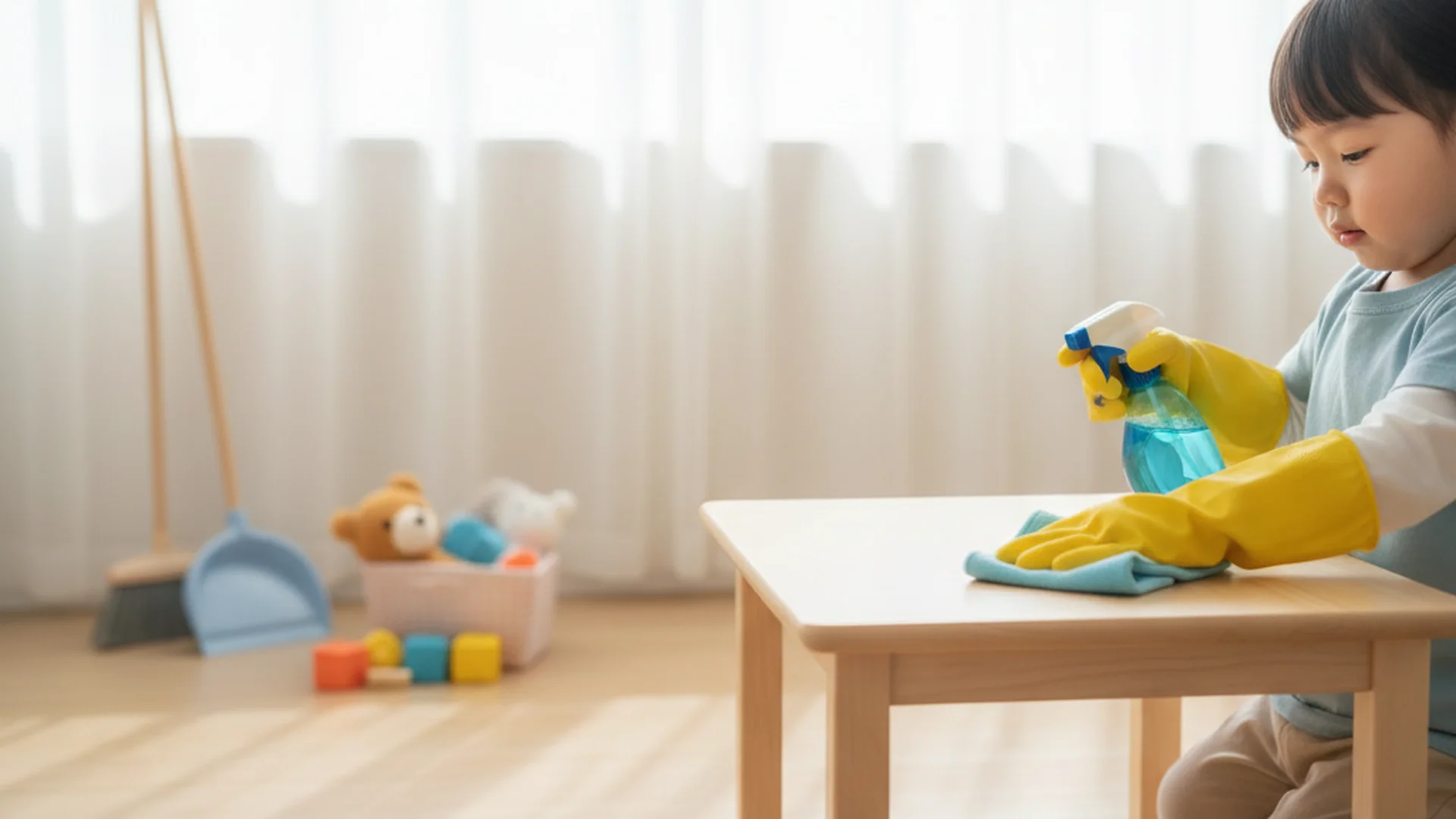
- Counter Maintenance: Spraying and wiping down kitchen surfaces after meals.
- Meal Prep: Packing their own school lunch (with a healthy checklist) and using a toaster or microwave under supervision.
- Table Setting: Setting the table for dinner and clearing all dishes afterward.
Laundry and Clothing Care
This is the perfect age to teach the "cycle of clothing."
- Sorting: Distinguishing between whites, darks, and delicates.
- Transferring: Moving wet clothes from the washer to the dryer.
- Folding: Handling simple items like towels, pajamas, and pillowcases.
- Putting Away: Ensuring all clean clothes find their way into the correct drawers or onto hangers.
Pet and Outdoor Care
8-year-olds often have a deep emotional bond with pets, making this a high-motivation category.
- Feeding: Measuring out kibble and refreshing water bowls daily.
- Grooming: Brushing a dog or cat’s fur to help with shedding.
- Yard Work: Raking leaves into piles or pulling obvious weeds from garden beds.
- Vehicle Care: Helping wash the lower half of the car or cleaning the interior floor mats.
| Category | Task | Frequency |
|---|---|---|
| Kitchen | Load/Unload Dishwasher | Daily |
| Bedroom | Make Bed & Vacuum | Daily/Weekly |
| Pets | Feed & Water | Daily |
| Laundry | Fold Towels & Pjs | Weekly |
Using a Chores for 8 Year Olds Chart
At this age, children still benefit immensely from visual reminders. A chores for 8 year olds chart serves as a "boss" so you don't have to. Instead of nagging, you can simply ask, "Have you checked your chart today?"
The Shift to Digital Charts (2025-2026 Trends)
The latest trend in domestic efficiency is the "Digital Chore Ecosystem." Parents are moving away from paper and magnets toward integrated apps like Sweepy, KiddiKash, or S'moresUp. These platforms use AI to suggest chores based on your specific home layout.
Gamification 2.0
For the 8-year-old who loves video games, apps like Joon have revolutionized household help. In these apps, the child cares for a virtual pet that only "levels up" or stays healthy when the child completes their real-world tasks. This taps into the 8-year-old’s love for digital progression and provides immediate dopamine rewards for mundane tasks.
Tip: If you prefer a physical chart, use a "Done/To-Do" slider board. The physical click of moving a slider provides a tactile sense of accomplishment.
The "Show Me" Method: Scaffolding for Success
One of the biggest hurdles in household management is the "Motivation Gap." Far more of today's parents grew up with regular chores than currently expect them of their own children—the habit skipped a generation somewhere along the way. To close this gap, use the Scaffolding Technique:
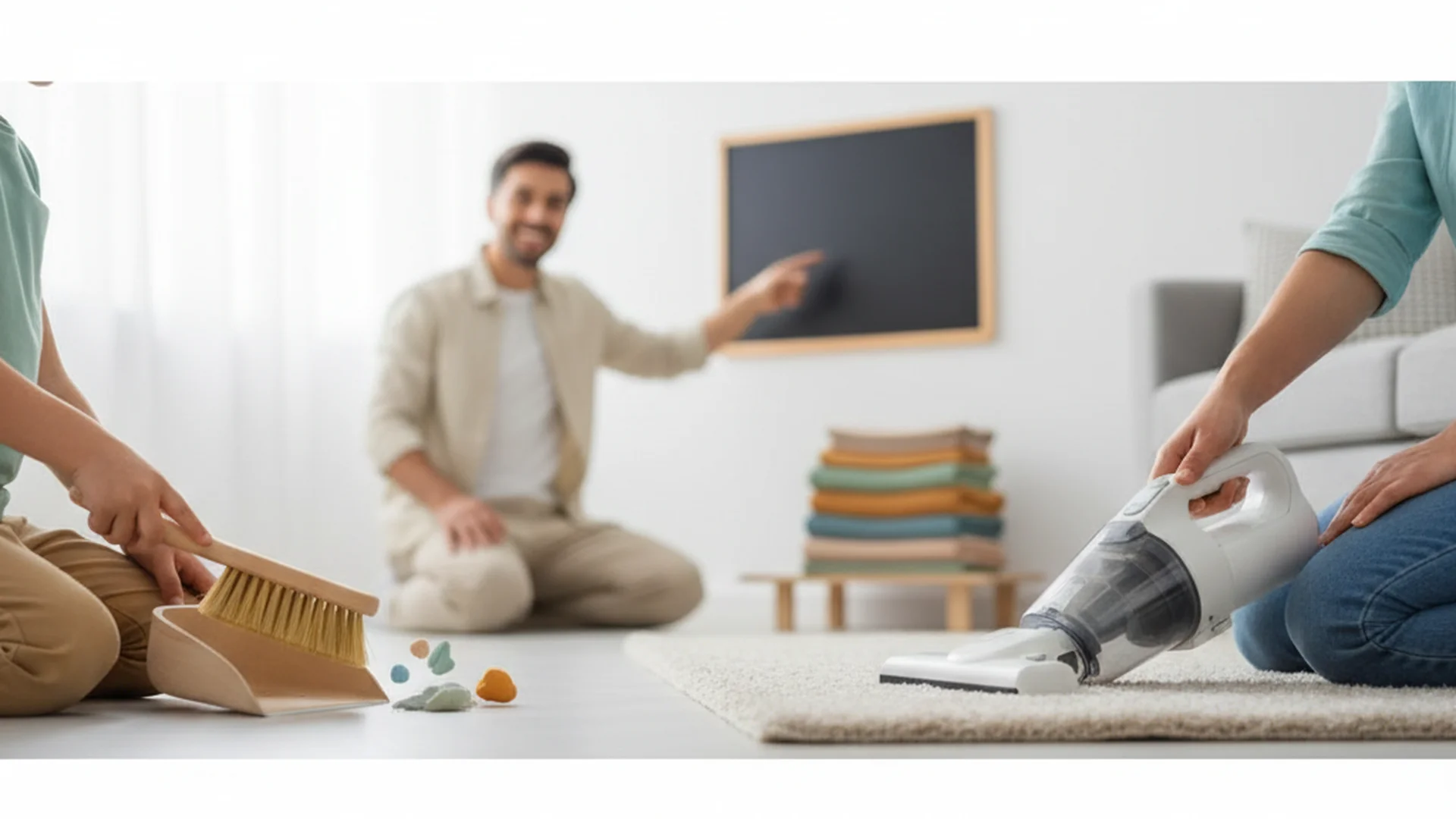
- I Do, You Watch: Demonstrate the task while explaining the why (e.g., "I wipe in a circular motion so we don't leave streaks").
- I Do, You Help: Have them hold the dustpan or put the soap in the dishwasher while you do the main work.
- You Do, I Help: Let them take the lead while you provide "spot checks" and encouragement.
- You Do, I Watch: They perform the task independently while you stand by to answer questions.
Success: Using the four-step scaffolding method reduces frustration and ensures the child feels capable rather than overwhelmed.
Real-World Examples of Multi-Step Projects
To build the executive function mentioned earlier, assign "projects" rather than just "tasks."
- Example 1: The Pizza Night Project. Instead of just clearing the table, have your 8-year-old follow a 5-step recipe to make the dough. This requires planning, measuring, and timing—all essential 3rd-grade skills.
- Example 2: The Toy Audit. Once a month, have them categorize their toys into "Keep," "Donate," and "Trash." This teaches organization and empathy.
- Example 3: The Mail Sort. Have them bring in the mail and sort it into piles for each family member. This builds attention to detail and literacy.
Warning: Never use chores as a punishment for bad behavior. This creates a negative association with contributing to the family, making them view work as a burden rather than a life skill.
Common Mistakes to Avoid
Even with the best intentions, parents often fall into traps that undermine their chore systems.
- The "I’ll Just Do It Myself" Trap: It is always faster for an adult to do it. However, taking over teaches your child that if they wait long enough or do a poor job, someone else will handle it.
- Demanding Perfection: At age eight, a bed might be lumpy, and there might be a few crumbs left on the counter. Criticizing the quality of work can lead to a "fixed mindset." Focus on the effort and the routine first; the skill will follow.
- Inconsistency: If you set up a chore chart but stop checking it after three days, you signal that the work isn't actually important to the family rhythm. Consistency is the key to habit formation.
- Over-Rewarding: Paying for every minor task (like making the bed) can kill internal motivation. Keep "expected household contributions" separate from "allowance" used for financial literacy training.
Frequently Asked Questions
Should I pay my 8-year-old for chores?
How many chores should an 8-year-old have?
Can an 8-year-old use the stove?
How long should chores take?
What if my child refuses to do their chores?
Conclusion
Implementing a routine of chores for 8 year olds is one of the most proactive things you can do for your child's development. By moving away from a "service-provider" model of parenting and toward a "team-member" model, you equip your child with the working memory, organization, and self-confidence they need to navigate the world. Remember to focus on progress over perfection, utilize modern tools like digital charts, and frame every task as a valuable contribution to the family's happiness.
Success: Consistent chore routines build the self-belief and organizational habits that make the transition into middle school far less rocky.
Cleaning that keeps score
Every task earns points, every streak multiplies them, and Premium adds a household leaderboard plus a monthly Dustagorgon to beat.
- Free forever
- 30 badges to earn
- Up to 6 in a household
No card needed. Set up your rooms in a couple of minutes.