In this article
What you’ll learn
- Early household participation lays the groundwork for competence and confidence later on.
- At age 4, children are in a 'sensitive period' where they naturally want to mimic adult tasks.
- Use the 'I Do, We Do, You Do' scaffolding method to teach new skills without frustration.
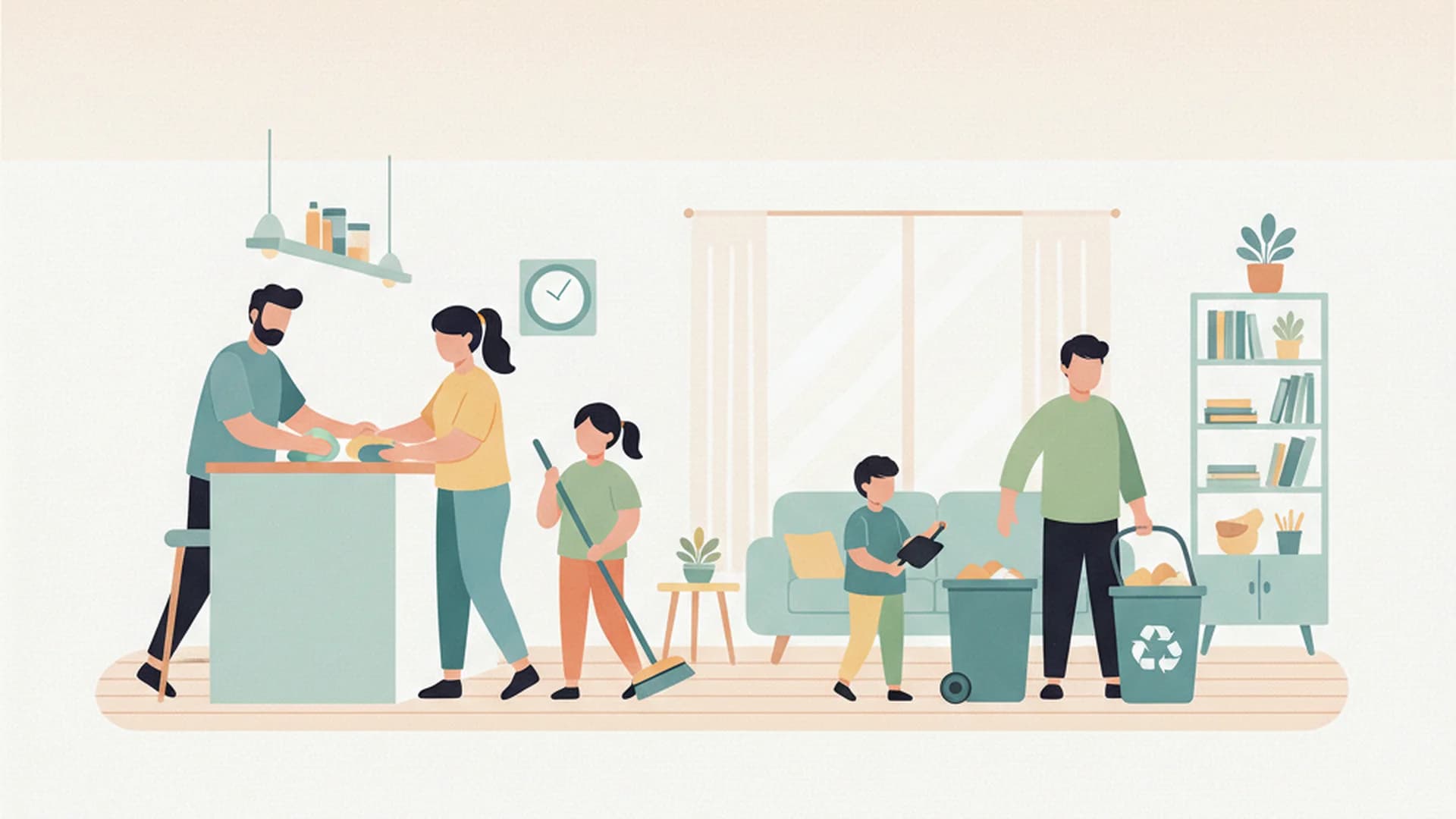
As parents, we often find ourselves caught in a cycle of cleaning up the same pile of blocks for the third time in a single afternoon. It is tempting to wait until the kids are in bed to finally get the house in order, but doing so quietly misses a golden developmental window. Introducing chores for 4 year olds isn’t just about getting a cleaner living room; it is about setting the foundation for a successful life.
A child who grows up knowing how to work—who learns early that effort produces a visible result and that the household depends on them for something real—carries that into adulthood in ways that have very little to do with tidiness. It shapes how they approach problems, how they show up for other people, and how competent they believe themselves to be. When we involve our preschoolers in household tasks, we aren't just teaching them how to match socks; we are teaching them that they are capable, contributing members of a team.
Why Age 4 is the "Magic Window" for Chores
If you have a 4-year-old, you know they are in a unique phase of development. They are no longer toddlers, yet they still possess that infectious desire to "do it myself." The ages of 2 to 5 are often described as a "sensitive period" for order and mimicry. During this time, children naturally want to copy what they see their parents doing.
Timing matters more than most parents expect. A child folded into household tasks at three or four simply absorbs it as how families work, and the habit sticks. A child handed their first real chore at thirteen experiences the same request as an imposition, and you spend the next several years negotiating rather than delegating.
Beyond that, the mechanics of chores are quietly good for a developing brain. "Self-care" tasks like dressing themselves and "family-care" tasks like setting the table exercise working memory, sequencing, and impulse control—the same skills a classroom will ask for a year or two later.
Success: Starting chores at age 4 leverages their natural desire to help, making the transition to household responsibility much smoother than starting in later childhood.
The Master Chores for 4 Year Olds List
When creating a chores for 4 year olds list, it is essential to focus on tasks that are physically manageable and cognitively simple. At this age, instructions need to be singular and concrete. Instead of "clean the kitchen," try "wipe this spot on the table."
Personal Care and Bedroom
- Hamper Duty: Placing dirty clothes into the hamper rather than leaving them on the floor.
- Outfit Selection: Choosing between two weather-appropriate outfits and helping pull on easy-to-wear items.
- The Coat Hook: Hanging up their coat on a low, reachable hook when they come inside.
- Making the Bed: Pulling up the duvet or comforter (it won’t be perfect, and that is okay!).
Kitchen Contributions
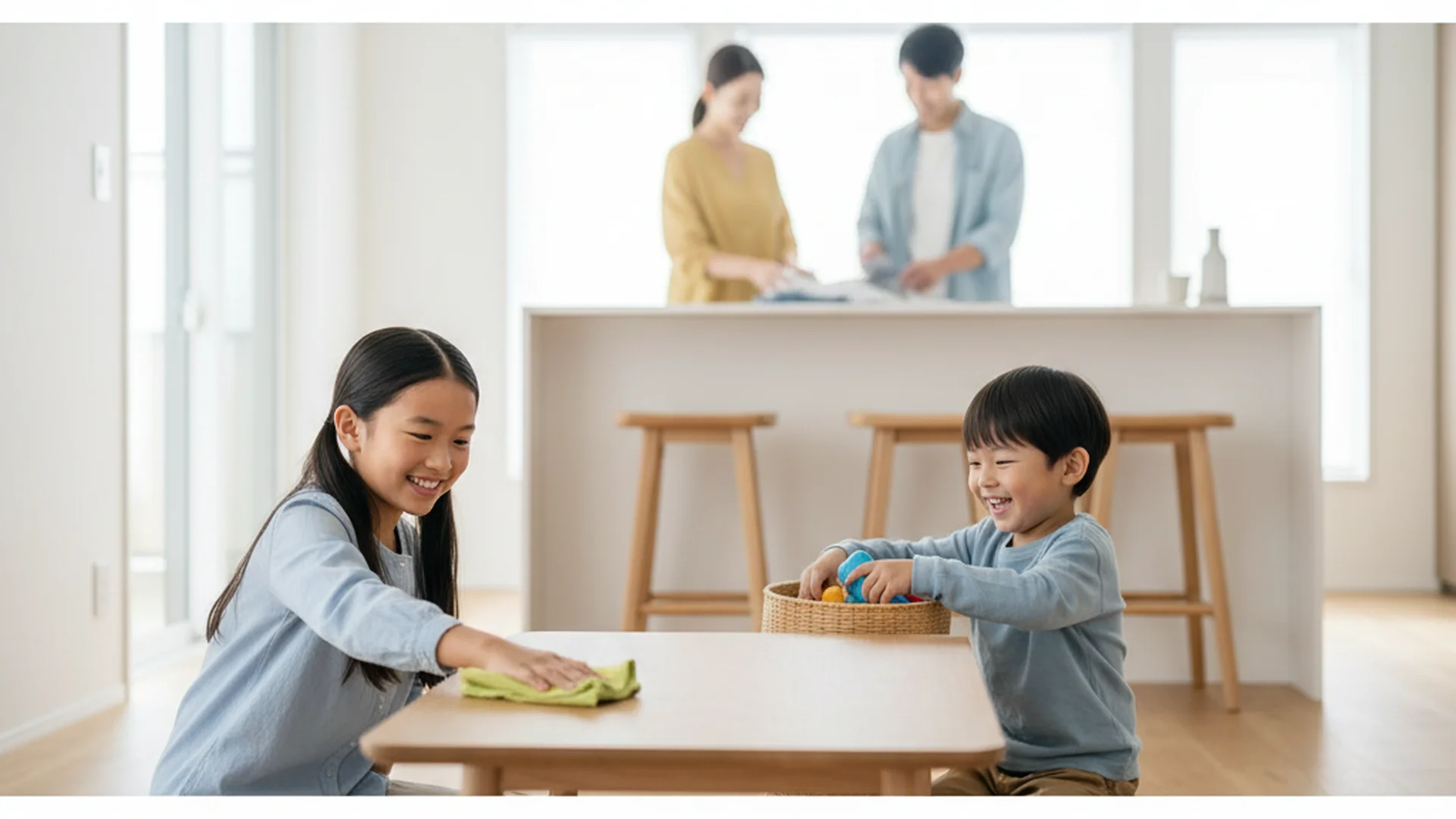
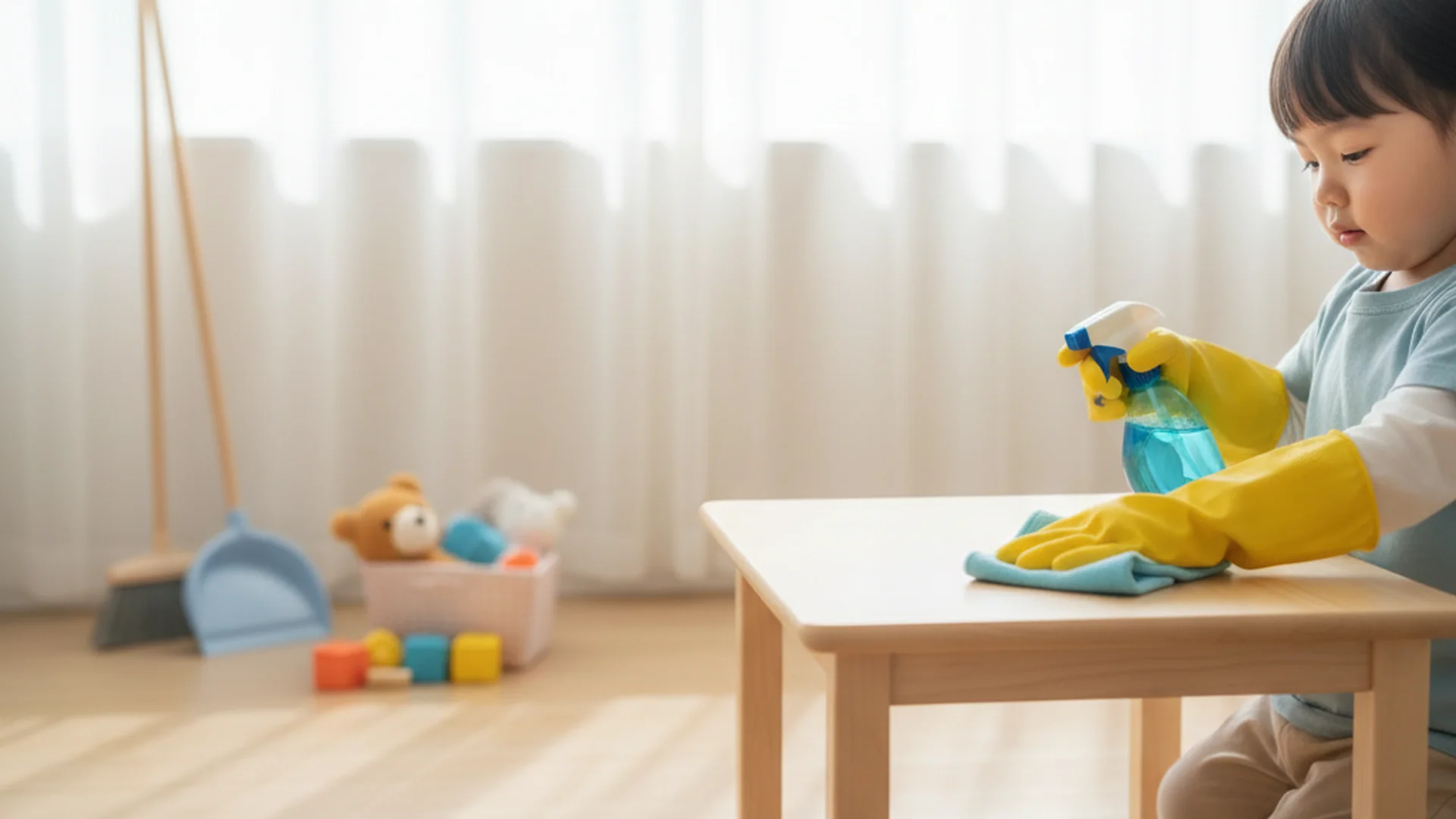
- The Crumb Patrol: Wiping the kitchen table with a damp sponge or cloth after meals.
- Dishwasher "Unloading": Safely handing plastic containers or Tupperware to a parent.
- Clearing the Table: Taking their own plastic plate and cup to the kitchen counter.
- Sorting the Groceries: Helping put "unbreakable" items (like boxes of cereal or bags of apples) into lower cabinets.
Living Areas and Pets
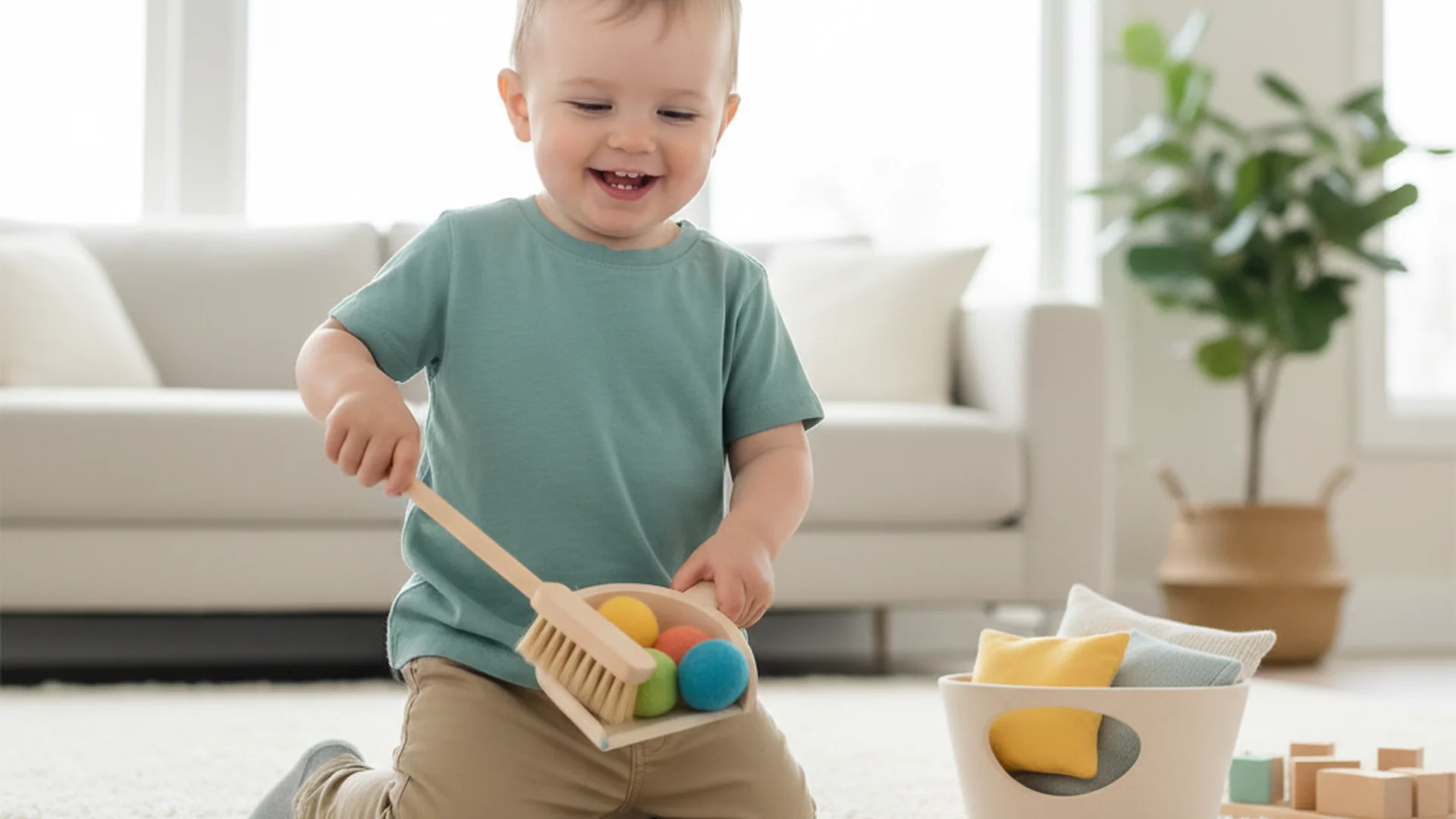
- Toy Sorting: Putting blocks in the block bin and cars in the car box.
- The Dusting Sock: Putting a clean, old sock on their hand and "dusting" coffee tables or baseboards.
- Pet Care: Filling a water bowl using a small, manageable pitcher.
- Matching Socks: Finding the "twins" in a pile of clean laundry (this is also a great cognitive sorting exercise).
| Category | Chore Example | Developmental Skill |
|---|---|---|
| Kitchen | Clearing plate | Responsibility |
| Bedroom | Sorting toys | Organization |
| Laundry | Matching socks | Visual discrimination |
| Pets | Filling water | Empathy & Care |
Tip: Use a "10-Minute Tidy" timer. Set a kitchen timer and see how many toys the family can put away before it dings. Making it a game reduces power struggles.
Creating a Chores for 4 Year Olds Chart That Works
A visual chores for 4 year olds chart is one of the most effective tools for maintaining consistency. Since most 4-year-olds are not yet reading fluently, a chart filled with words like "Laundry" or "Dishes" will be ignored.
To make an effective chart:
- Use Photos: Take a picture of your child actually doing the chore. A photo of them putting toys in a bin is much more powerful than a generic icon.
- Keep it Simple: Limit the chart to 3–4 daily tasks. Too many options lead to overwhelm.
- The "Check-off" Factor: Whether it’s a sticker, a magnet, or a dry-erase mark, 4-year-olds love the tactile satisfaction of marking a task as "done."
- Morning and Evening Routines: Split the chart into "Sun" chores (morning) and "Moon" chores (evening) to help them understand the flow of the day.
Note: The goal of the chart isn't just to get the work done; it is to build a routine where "Family Contributions" are as natural as brushing teeth.
How to Teach a New Chore: The Scaffolding Method
You cannot simply tell a 4-year-old to "sweep the floor" and expect it to happen. Use a framework called "Scaffolding" to ensure they feel confident and capable.
Step 1: I Do (The Demonstration)
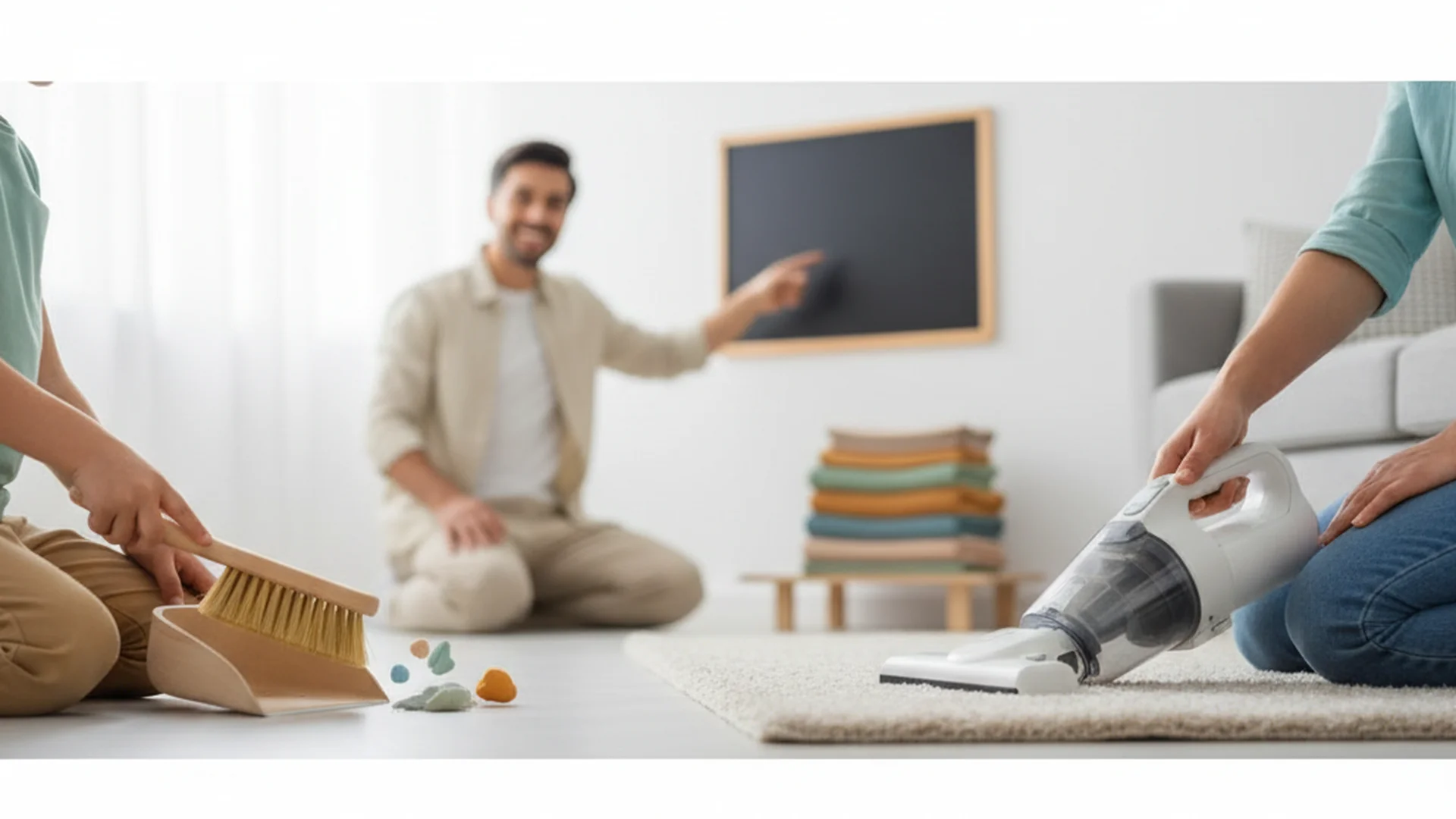
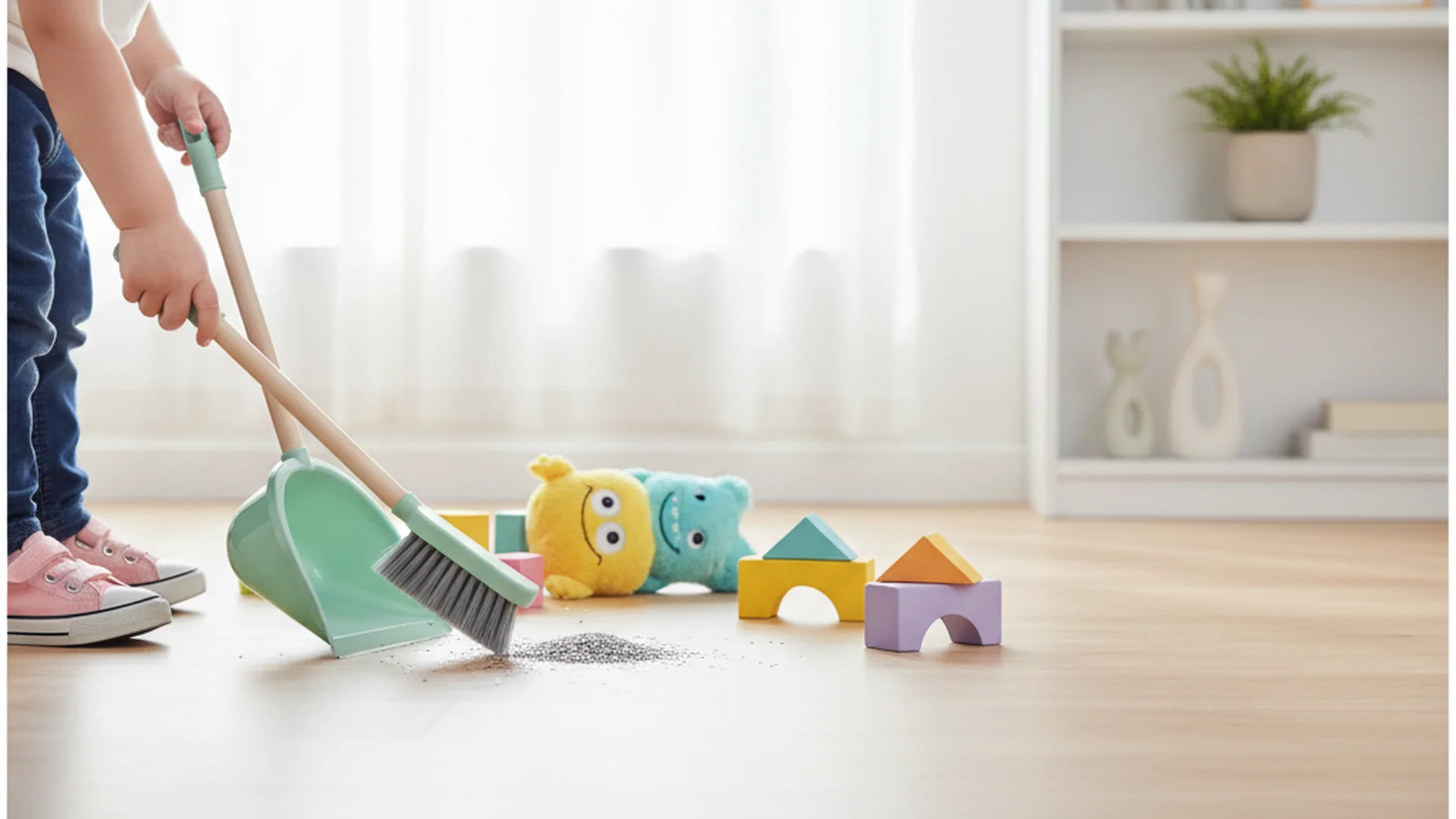
Perform the chore while your child watches. Narrate what you are doing. "I am using the big broom to move the crumbs into a little pile. See how I move it slowly?"
Step 2: We Do (The Collaboration)
Do the chore together. This is the stage where most 4-year-olds spend their time. You might hold the dustpan while they attempt to sweep the crumbs into it. Or you might wash the plastic plate while they dry it with a towel.
Step 3: You Do (Supervised Independence)
Once they have the mechanics down, let them try it alone while you stay nearby. Offer "gentle coaching" rather than criticism. "You got almost all the crumbs! Do you see that little one hiding by the chair?"
Warning: Avoid the "Redo Trap." If you immediately go behind your child and "fix" their work (like re-folding a towel), you send a clear message that their effort wasn't good enough. This kills their motivation to help in the future.
Modern Trends in Preschool Responsibility (2025–2026)
As we move through 2025, the way we approach household tasks is evolving. We are seeing several key shifts in how experts and parents handle chores for young children.
From "Chores" to "Life Skills"
The word "chore" often has a negative, burdensome connotation. Modern parenting trends are shifting toward using terms like "Life Skills," "Family Contributions," or "Teamwork Tasks." This frames the work as a positive contribution to the household rather than a punishment.
Eco-Chores and Sustainability
4-year-olds are increasingly being involved in "Eco-Chores." This involves teaching children to sort the recycling (paper vs. plastic) or helping to water a vegetable garden. This turns tidying into a lesson about caring for the planet.
Neuro-Affirming Strategies
New guidelines emphasize "low-demand" environments, particularly for neurodivergent children. Instead of a rigid command, parents are offering agency through choices. For example: "Do you want to pick up the blue blocks or the red blocks first?" This gives the child a sense of control.
Tech-Responsibility
With the rise of screen time and audio players (like Yoto or Tonies), "Device Charging" has become a standard chore. Teaching a child to place their device on its "bed" (the charger) at night teaches them to value and care for their belongings.
Common Mistakes to Avoid
Even with the best intentions, it is easy to fall into habits that discourage a 4-year-old from helping.
- Using Chores as Punishment: "You hit your brother, so now you have to pick up the toys." This creates a lifelong association between cleaning and "being bad."
- Inconsistency: 4-year-olds thrive on routine. If they only have to clear their plate "sometimes," they will likely fight you every time because the expectation isn't clear.
- The "Faster if I do it" Fallacy: While it is objectively faster for you to sweep the floor now, you are trading 5 minutes today for years of work later. View this time as an investment in their future capability.
- Vague Instructions: Phrases like "Clean your room" are too abstract. A 4-year-old sees a messy room and doesn't know where to start. Breakdown the task into "Put the books on the shelf."
Frequently Asked Questions
Should I pay my 4-year-old for chores?
How long should a 4-year-old spend on chores?
What if my child says "No"?
Does it have to be perfect?
Conclusion
Introducing chores for 4 year olds is one of the most significant gifts you can give your child’s future self. By moving away from the idea of "work" and toward the idea of "contribution," you help your child build the executive function and confidence they need to thrive. Start small, use visual cues, and remember to focus on the progress rather than the perfection.
Before you know it, that little helper will be a capable teenager who views household responsibility as a natural part of life—all because you took the time to let them "help" with the dishwasher today.
Success: Children who contribute to their household feel a greater sense of belonging and higher self-esteem.
Cleaning that keeps score
Every task earns points, every streak multiplies them, and Premium adds a household leaderboard plus a monthly Dustagorgon to beat.
- Free forever
- 30 badges to earn
- Up to 6 in a household
No card needed. Set up your rooms in a couple of minutes.