In this article
What you’ll learn
- Starting chores between 18 months and 3 years builds lifelong success and executive function.
- Focus on intrinsic motivation and identity-based praise (being a "helper") rather than external rewards.
- Use visual, functional chore charts and child-sized tools to encourage autonomy.
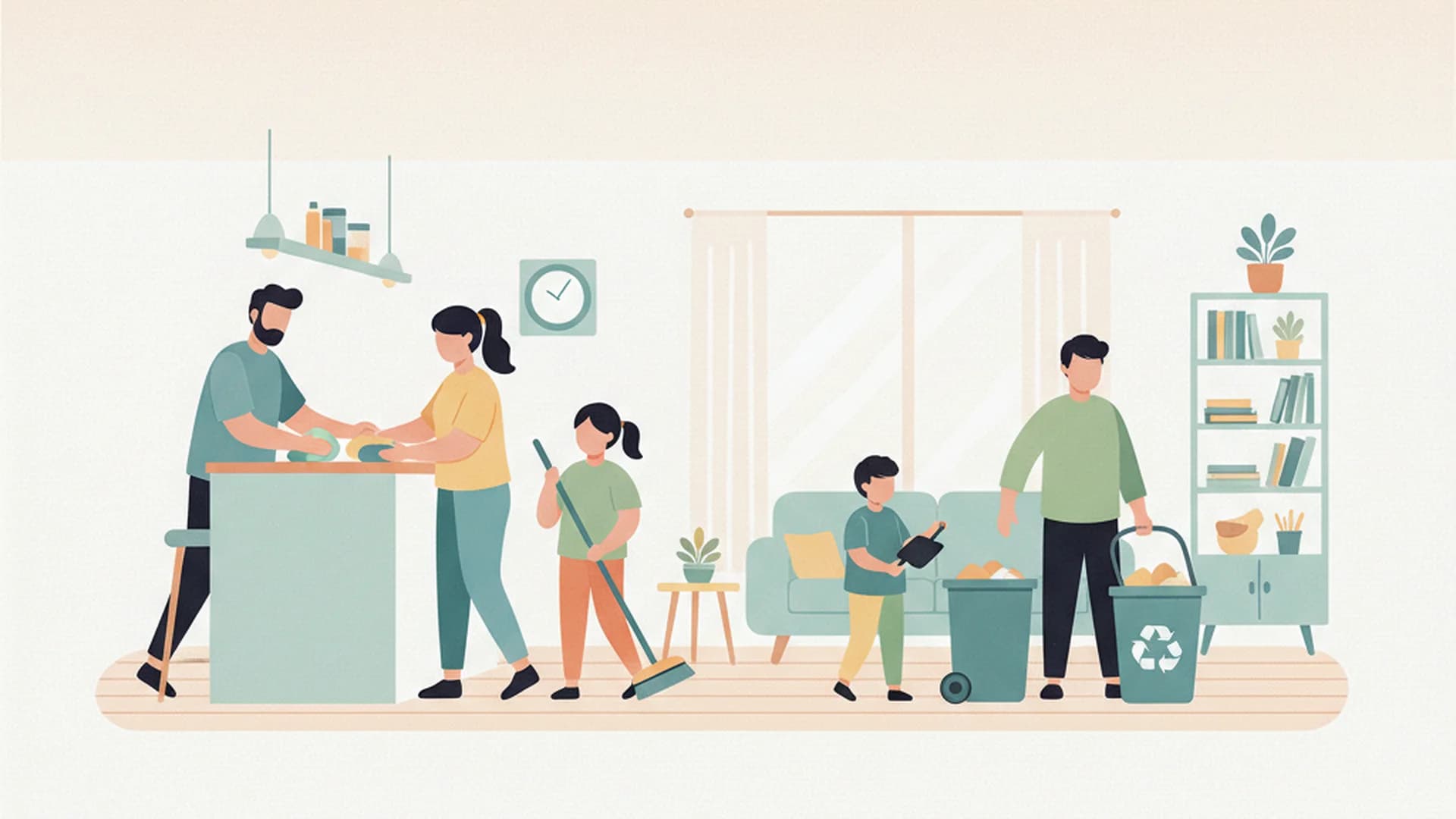
What if the secret to your child's future career success wasn't a high-priced coding camp or an elite preschool, but a simple pile of laundry? It sounds counterintuitive in our high-tech world, but chores for toddlers are the ultimate "life hack" for 2026. While it might be faster to sweep the floor yourself, inviting your two-year-old to grab a mini-broom is an investment in their cognitive and emotional architecture that pays dividends for decades.
The "Helper’s High"
An early habit of pitching in is one of the better foundations for a capable adult life. A childhood capacity to work—measured by nothing more sophisticated than whether a child had regular household chores—tends to say more about how well they will cope at forty than their school report ever did. This isn't just about learning how to fold a towel; it’s about the "Helper’s High."
There is a real surge of pride and agency in toddlers when they realize their actions positively impact others. When a toddler helps clear a plate, they aren't just performing a task; they are realizing they are a competent member of a community.
That confidence compounds. Children who take on household tasks from kindergarten onward tend to think of themselves as more capable at school, get along better with their peers, and be happier in general by the third grade.
Note: Household tasks improve executive functioning, specifically working memory and inhibitory control—the ability to think before acting.
The 2025–2026 Shift: The Analog Childhood
As we move through 2025 and into 2026, there is a strong cultural movement away from high-tech parenting apps and back to "slow," hands-on domestic activities. Parents are prioritizing baking, gardening, and folding together as primary bonding time. This "Analog Childhood" shift isn't about rejecting technology entirely, but about reclaiming the domestic space as a training ground for the human spirit.
In this new era, the "Instagram-perfect" chore chart is out. Modern parents are favoring "functional" charts that are messy, hand-drawn, or use simple magnets. The pressure of perfection has been replaced by the beauty of contribution. While parents are avoiding AI for child coaching, they are using it as a "Parental Assistant" to automate the mental load—using AI to generate age-appropriate chore lists based on their specific home layout or to create "silly cleaning songs" on the fly to motivate kids.
Best Practices: The Montessori Method and Scaffolding
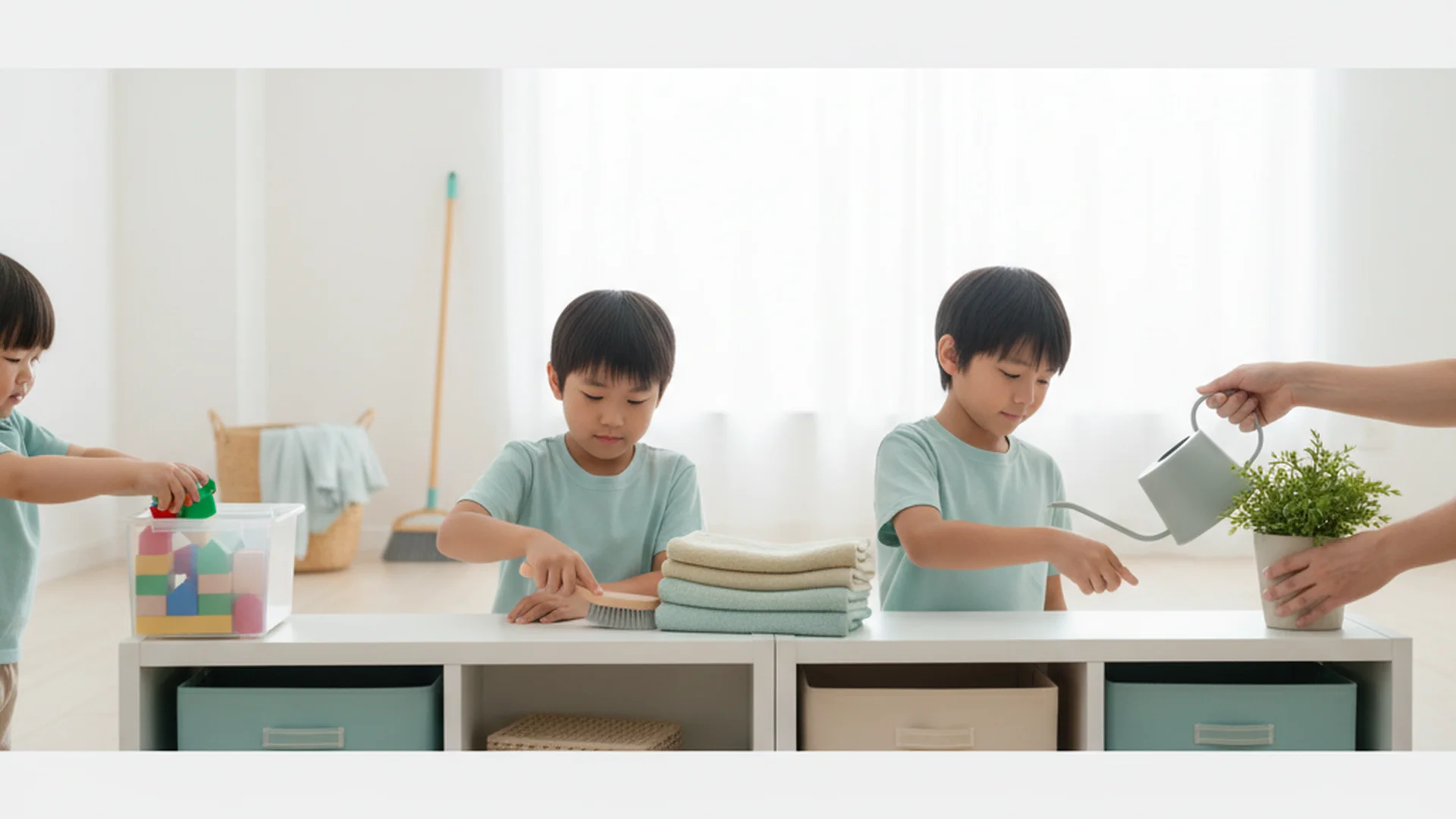
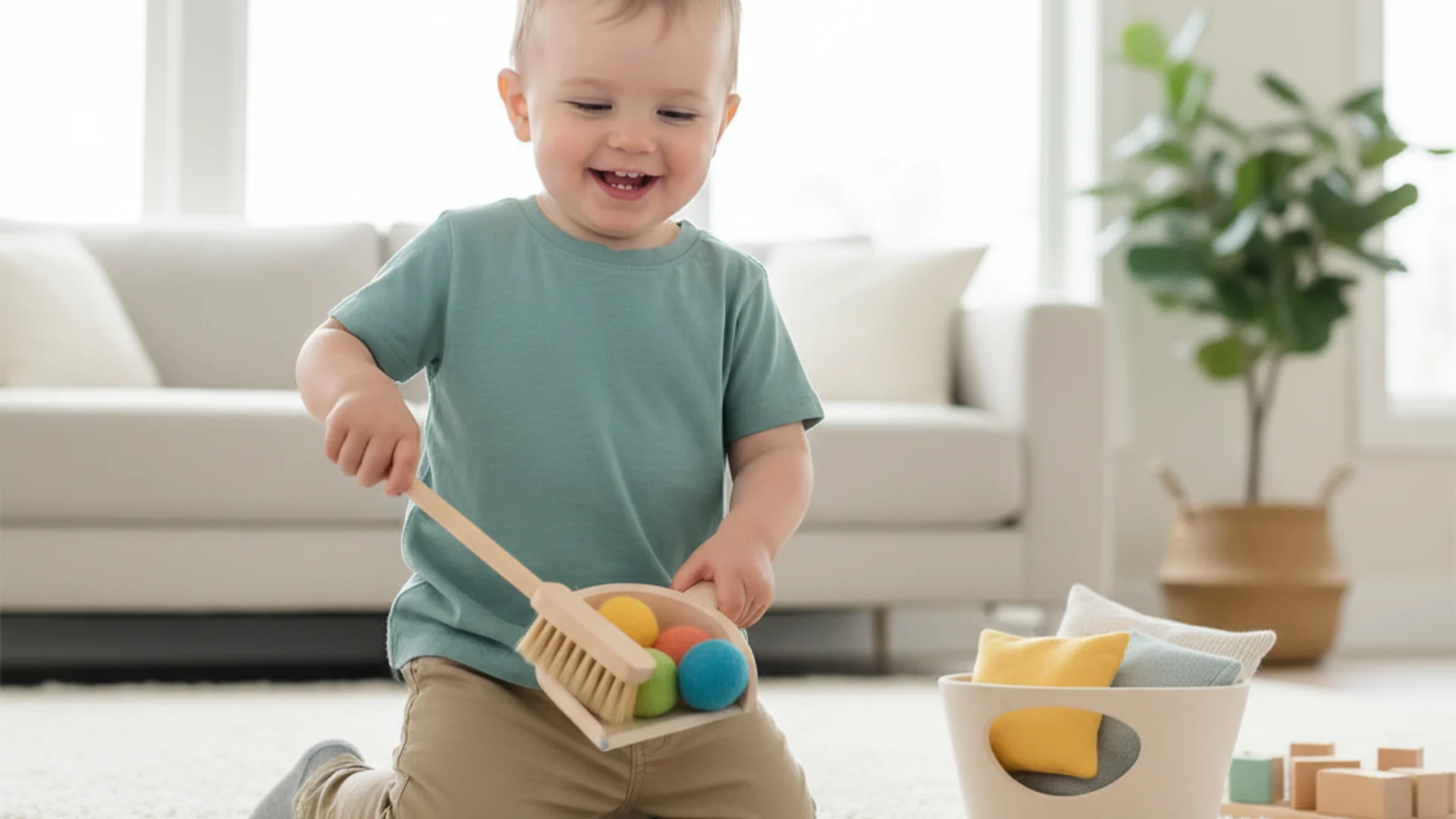
To successfully integrate chores for toddlers into your daily routine, you need to think like a specialist. The Montessori method emphasizes child-sized tools. A toddler is significantly more likely to sweep if they have a broom that actually fits their hands.
The "I Do, We Do, You Do" Method
Don't just assign a task and walk away. Use the scaffolding technique to build confidence:
- I Do: You perform the chore while they watch. Narrate what you are doing. "I am putting the soft socks into the basket."
- We Do: You do it together. "I'll put in the blue sock, now you put in the red one."
- You Do: You supervise while they complete it solo. Offer encouragement, not correction.
Tip: Use "Noun Praise" instead of "Verb Praise." Thanking a child for "being a helper" (noun) lands better than saying "thanks for helping" (verb). It reinforces their identity as a person who contributes.
Real-World Example: The Laundry Sort
Instead of seeing laundry as a solo task, turn it into a "We Do" activity. Give your toddler the job of finding all the "small socks" or "blue shirts." This builds visual discrimination skills while completing a necessary household task.
The Ultimate Chores for Toddlers List
When building your routine, it helps to have a clear chores for toddlers list categorized by developmental milestones. Remember, these are suggestions; every child develops at their own pace.
| Age Range | Suggested Chores | Developmental Focus |
|---|---|---|
| 18–24 Months | Put dirty clothes in the hamper, put a toy in the bin, help "wipe" a spill. | Gross motor skills & Mimicry |
| 2–3 Years | Match socks, water plants (with help), dust low surfaces, put pet food in a bowl. | Visual sorting & Empathy |
| 3–4 Years | Clear their own plate, help set the table, "fold" washcloths, pull light weeds. | Sequence memory & Responsibility |
Warning: Never use chores as a punishment. If cleaning becomes a "time-out" activity, the child will develop a negative association with contributing to the home.
Implementing a Chores for Toddlers Chart
To make these tasks stick, a visual chores for toddlers chart is essential. Since most toddlers cannot read, a text-based list on the fridge won't suffice.
- Use Photos: The most effective charts use photos of the child actually doing the task. Seeing a picture of themselves putting toys in a bin is a powerful visual cue.
- The "Done" Flip: Use a chart where the child can physically move a magnet or flip a tab when a task is finished. This provides a tactile sense of accomplishment.
- Micro-Contributions: The 2026 trend is "micro-chores"—integrated 2-minute tasks throughout the day rather than one big "cleaning Saturday." This builds a habit of "leaving a space better than you found it."
Success: A toddler who completes two 2-minute "micro-chores" a day is more likely to maintain a clean environment as a teenager than one who is forced into a 2-hour cleaning spree once a week.
Common Mistakes to Avoid
Even the most well-meaning parents can fall into traps that derail the "helpful human" process.
1. The Perfection Trap
The most common mistake is re-doing the chore in front of the child. If you fix the "crooked" bedsheets while they watch, you send a clear message: Your effort wasn't good enough. If you must fix it, do it later when they aren't in the room.
2. The Rewards Economy
Using stickers, treats, or money for every single task creates a "transactional" mindset. This trains the child to ask, "What do I get?" rather than "What needs to be done?" Chores should be framed as a natural part of living in a family.
3. Waiting "Until They're Ready"
Many parents wait until age 5 or 6, thinking the toddler is "too small." However, by age 5, the natural "mimicry" phase has often passed, and chores are met with resistance. Start during the "golden window" of 18 months to 3 years.
4. Over-Explanation
Toddlers don't need a lecture on the hygiene of sanitized surfaces. Keep instructions to one or two steps. "We wipe the table after we eat" is much more effective than explaining germ theory.
Note: If your toddler says "No," shift from "commanding" to "inviting." Use phrases like "It’s time to be a helper" or "I need a big strong helper for this basket" rather than "Go clean your room."
Frequently Asked Questions
When can a toddler actually start?
Should I pay my toddler for chores?
Is it worth the extra mess?
What if they refuse to help?
Conclusion
Teaching chores for toddlers is not about getting your house clean—it’s about raising a child who sees a need and fills it. By utilizing age-appropriate tasks, fostering a "helper" identity, and avoiding the perfection trap, you are giving your child the tools for executive function and emotional intelligence. In the "analog" world of 2026, these hands-on skills are the most valuable gifts you can give.
Success: By integrating these small habits now, you are building a foundation of competence that will last a lifetime.
Cleaning that keeps score
Every task earns points, every streak multiplies them, and Premium adds a household leaderboard plus a monthly Dustagorgon to beat.
- Free forever
- 30 badges to earn
- Up to 6 in a household
No card needed. Set up your rooms in a couple of minutes.