In this article
What you’ll learn
- Start as early as age two to build a natural habit of contribution.
- Use the "I Do, We Do, You Do" model to teach competence and confidence.
- Focus on intrinsic motivation rather than a strict "pay-for-work" economy.
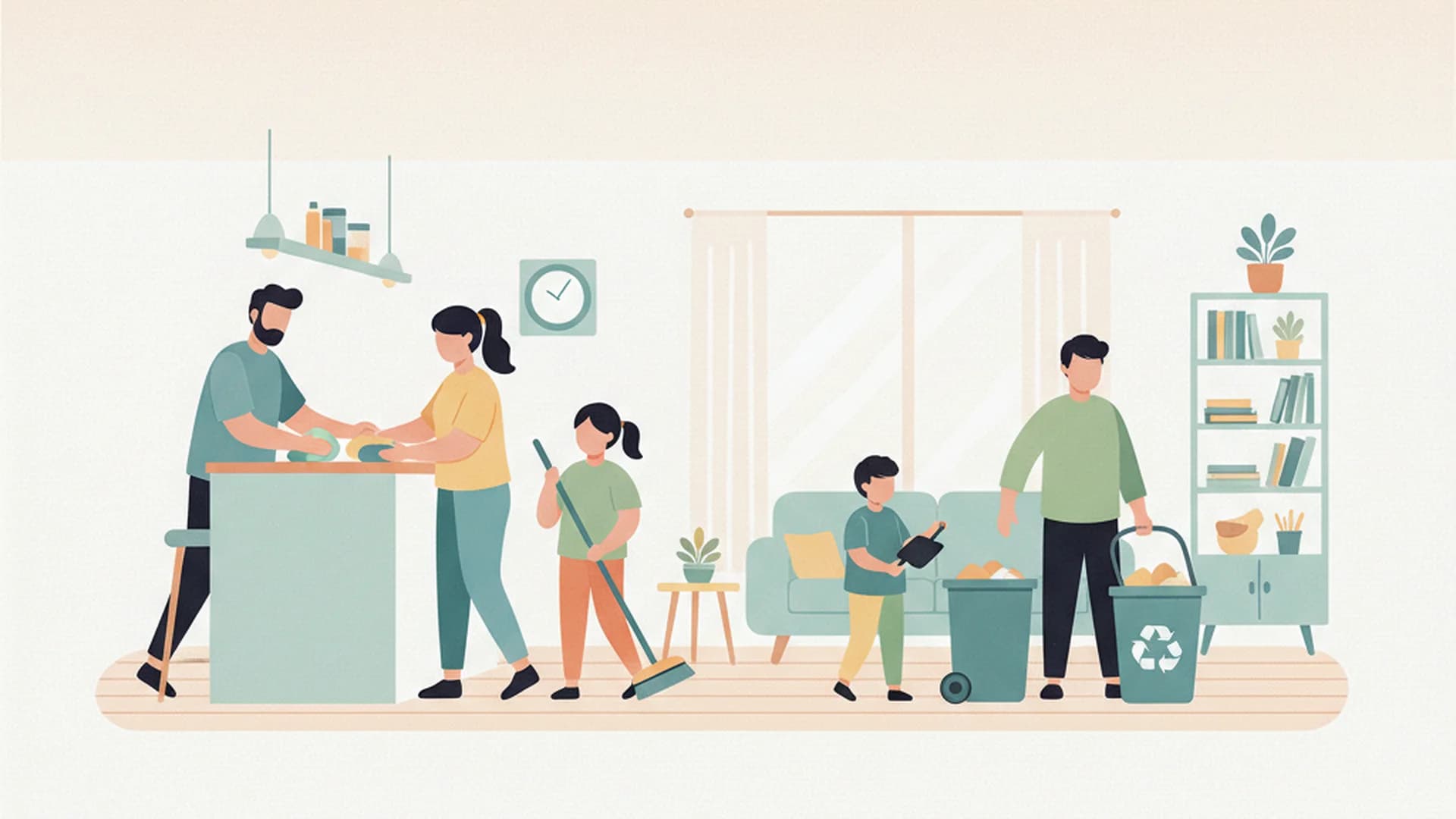
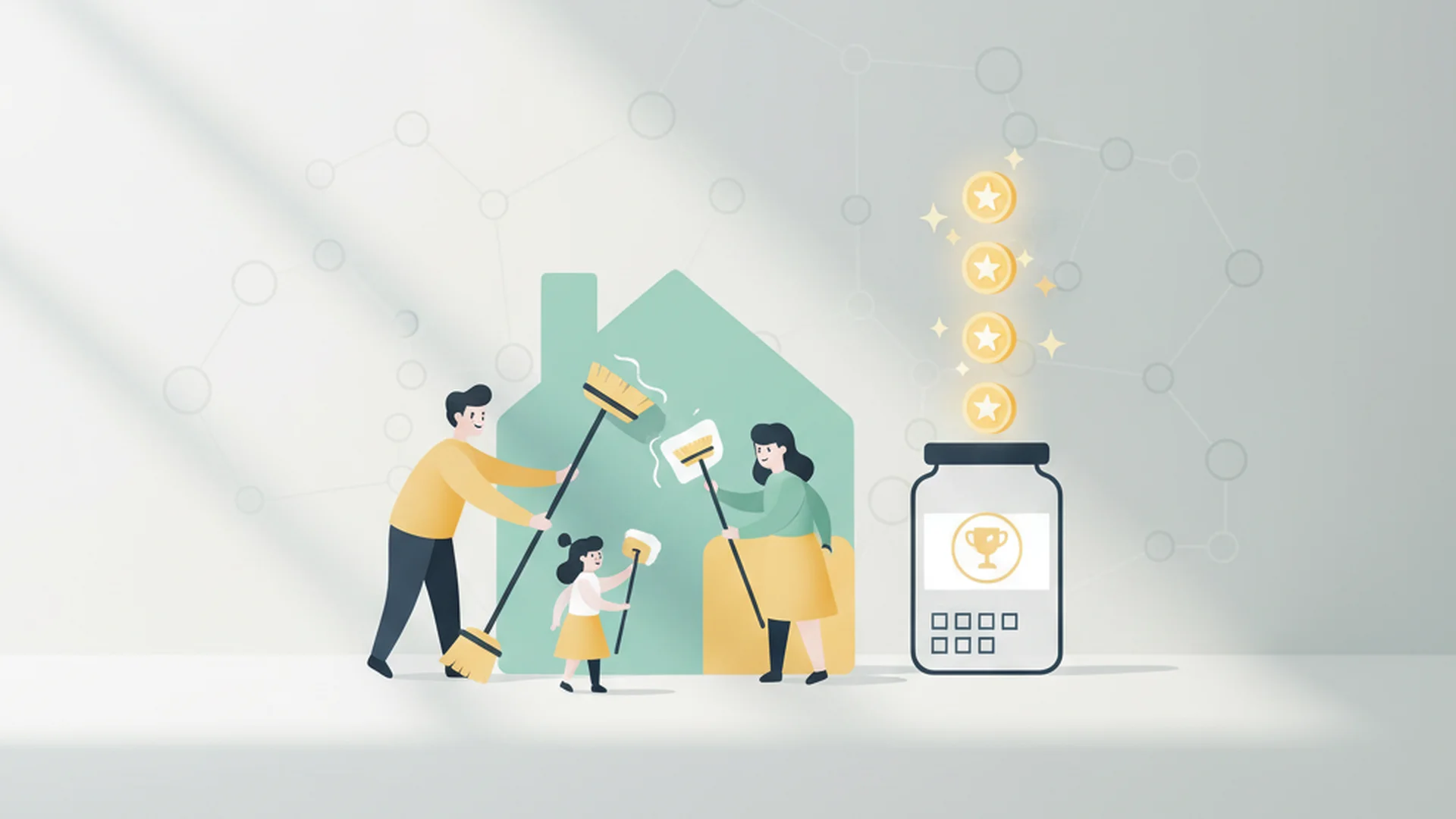
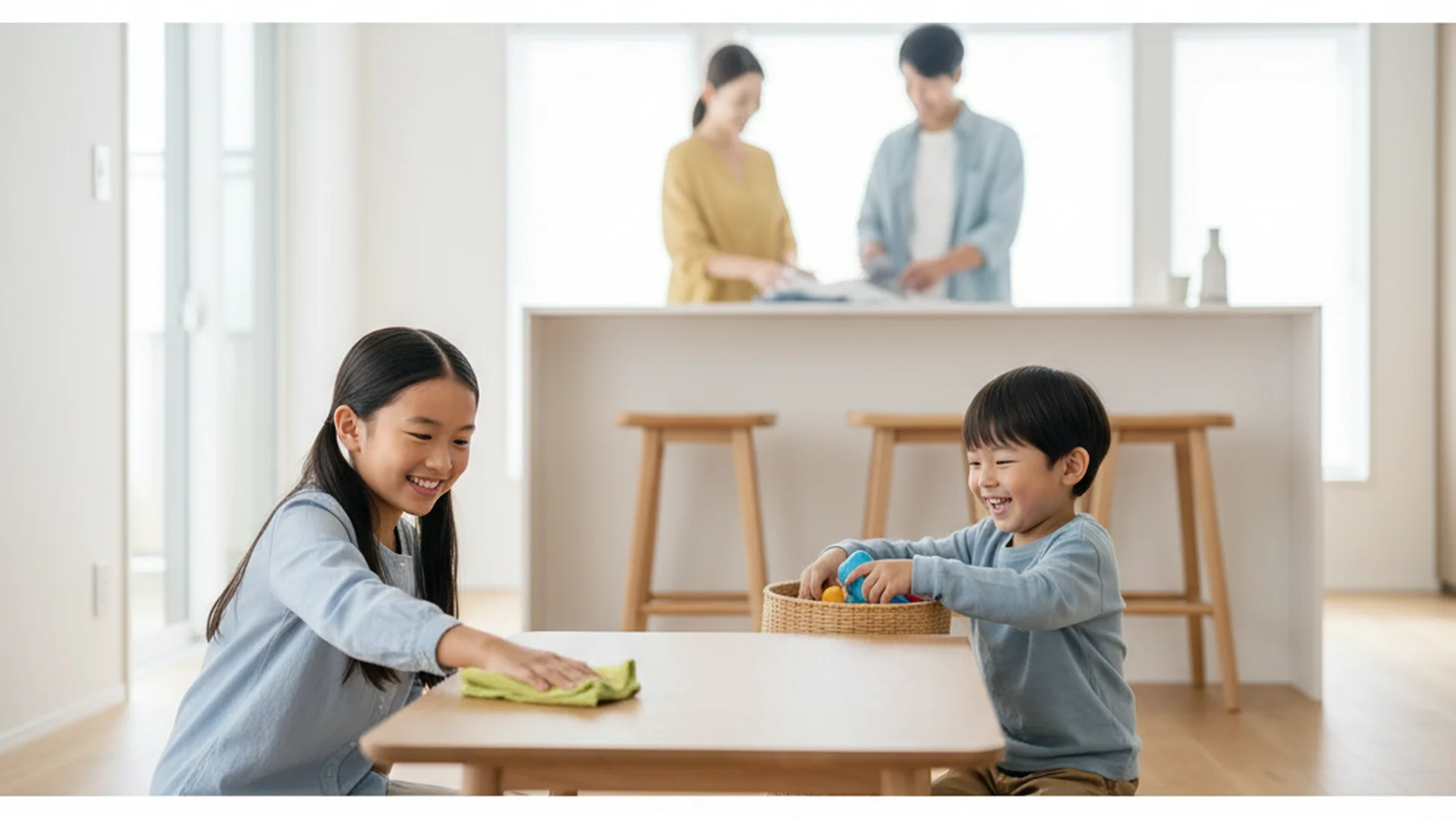
Getting the family to help around the house is a challenge that spans generations, but as we move into 2026, the philosophy behind household labor is shifting. Many parents are moving away from the "command and control" style of parenting and asking a fundamental question: how to get kids to do chores while fostering a sense of teamwork rather than resentment? Modern domestic efficiency is no longer about "making" kids work; it is about integrating them into the family ecosystem where every member’s contribution is valued.
The Science of Pitching In
The benefits of household chores extend far beyond a clean living room. According to the Harvard Study of Adult Development, one of the longest-running studies on human success, children who were given chores developed a stronger work ethic and significantly higher life satisfaction as adults. They weren't just better at cleaning; they were better at navigating relationships and professional challenges.
Furthermore, recent 2025 research involving 10,000 children found a direct correlation between early chores and academic performance. Children who began helping by kindergarten showed marked improvements in mathematics by third grade. This is likely due to the executive functioning skills required to follow multi-step directions and organize physical spaces.
Success: Children who participate in household tasks often show better working memory and inhibitory control, which are essential building blocks for emotional intelligence and self-regulation.
Age-Appropriate Tasks: Your "How to Get Kids to Do Chores" List
One of the biggest hurdles for parents is knowing what is realistic. If a task is too hard, the child feels defeated; if it is too easy, they feel patronized. Use the following how to get kids to do chores list to align expectations with developmental stages.
| Age Group | Recommended Tasks | Cognitive Focus |
|---|---|---|
| Toddlers (2-3) | Putting toys in bins, "dusting" with a sock, fetching diapers. | Mimicry and Routine |
| Preschool (4-5) | Setting the table, sorting laundry by color, feeding pets. | Categorization |
| Elementary (6-9) | Emptying the dishwasher, vacuuming, packing school lunches. | Sequential Steps |
| Middle/Teens (10+) | Mowing the lawn, deep cleaning bathrooms, preparing full meals. | Autonomy & Mastery |
Note: These are guidelines. Every child develops at a different pace, and neurodivergent children may benefit from staying on "preschool" tasks longer to build confidence.
Modern Strategies: The "I Do, We Do, You Do" Model
To successfully transition a child from a bystander to a contributor, specialists recommend a scaffolding approach. This prevents the "learned helplessness" that occurs when a child feels overwhelmed by a vague request.
Step 1: I Do
The parent performs the task while the child observes. During this phase, narrate your actions. For example: "I am putting the LEGOs in the blue bin because that is where they live. This way, we don’t step on them later."
Step 2: We Do
This is the collaborative phase. You work side-by-side. If the goal is a clean bedroom, you might say, "I'll pick up the clothes, and you put the books on the shelf." This reduces the "daunting" factor of cleaning.
Step 3: You Do
Once the child has demonstrated competence, let them take the lead. You should remain nearby for questions but resist the urge to take over.
Tip: Praise the effort, not just the result. If your 6-year-old folds the towels and they look like lumpy burritos, leave them that way. Refolding them in front of the child communicates that their best isn't good enough.
Navigating the "Chore Chart" in 2026
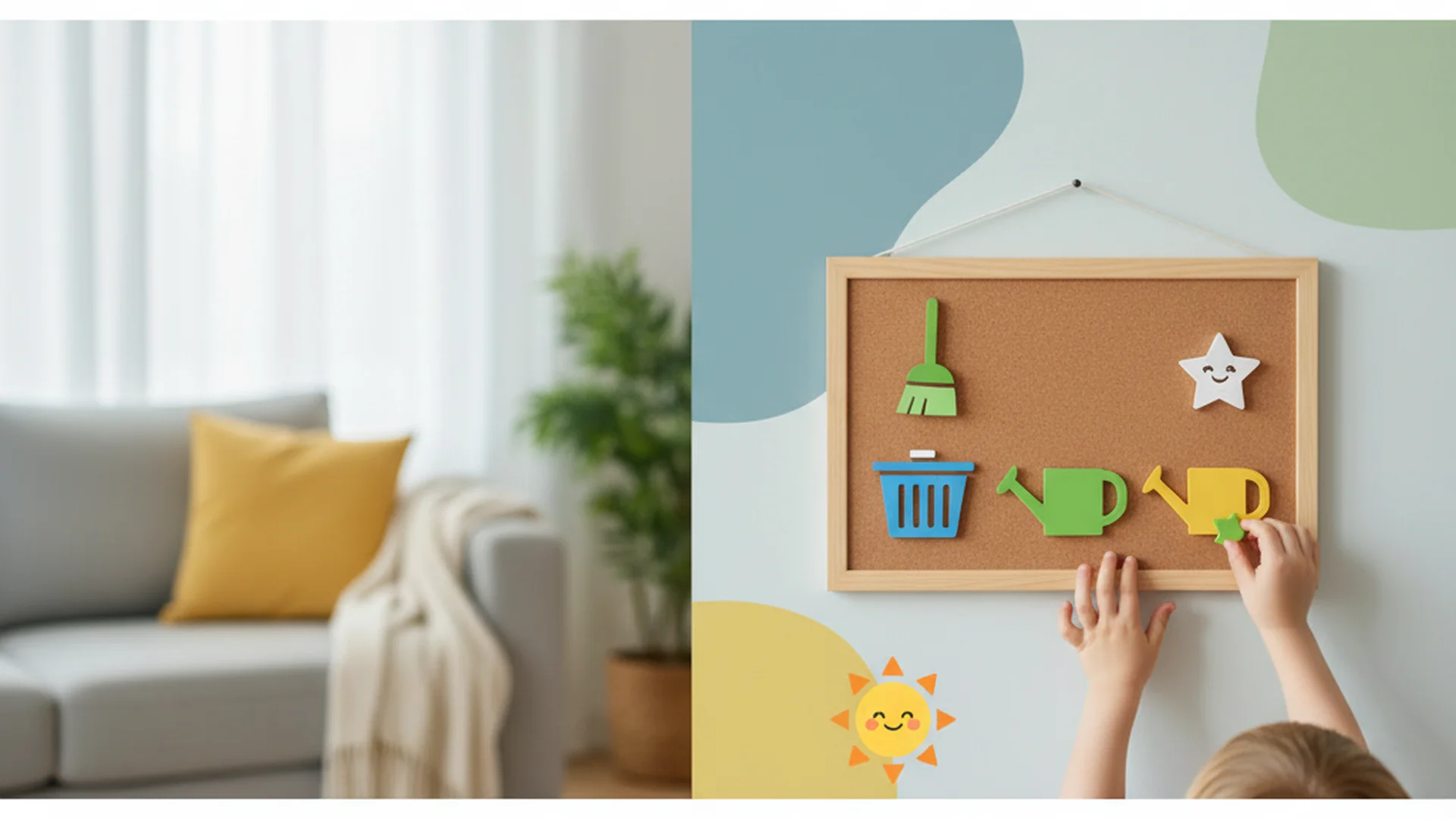
In recent years, the traditional paper list on the fridge has evolved. While a physical how to get kids to do chores chart is still highly effective for younger children who need visual cues, older children are gravitating toward digital solutions.
AI-Enhanced Gamification
New apps like Chaos and KiddiKash have revolutionized the 2025–2026 parenting landscape. These apps use AI to analyze a family's schedule and auto-suggest the best times for chores. They gamify the experience with "streaks" and digital badges, tapping into the same dopamine loops that make video games so engaging.
Visual Checklists for ADHD
For neurodivergent children, high-contrast, icon-based visual charts are the gold standard. These charts break down "Clean your room" into a series of visual icons:
- Basket for clothes
- Bin for toys
- Shelf for books This reduces the "executive function load" and makes the task manageable.
Warning: Avoid over-scheduling. The 2026 trend toward "Calm and Simple" parenting suggests that children who are over-burdened with extracurriculars and chores are more likely to experience burnout and domestic resentment.
Real-World Examples of Success
Example 1: The "Reset Sunday" Routine
The Miller family in Seattle implemented a "Reset Sunday." Instead of nagging throughout the week, the family spends 60 minutes every Sunday morning cleaning together while listening to a high-energy playlist. This frames chores as a collective family effort rather than an individual punishment.
Example 2: The Choice Card System
Instead of assigning a specific task, 10-year-old Maya chooses two "Chore Cards" from a deck every Saturday. This gives her autonomy over whether she would rather pull weeds or vacuum the stairs. Giving kids a choice drastically reduces "no" responses.
Example 3: The Financial Literacy Link
The Thompson family uses the app BusyKid to link "extra" chores (like washing the car) to a digital investment account. Their 12-year-old is learning that extra effort translates directly to long-term financial growth, teaching value beyond just a clean driveway.
Common Mistakes to Avoid
Even with the best intentions, parents often fall into traps that undermine their long-term goals.
- Waiting Until They Are "Old Enough": If you wait until a child is 13 to ask them to do laundry, it feels like a new, unfair punishment. Starting at age 3 makes chores a "fact of life."
- The "Rewards Economy": Paying for every small task (like making the bed) can destroy intrinsic motivation. Eventually, the child will ask, "How much will you pay me?" before helping with anything.
- Using Chores as Punishment: If "cleaning the toilet" is the penalty for a bad grade, the child will associate household care with shame and failure.
- The "Faster Myself" Fallacy: It is faster to do it yourself. But doing it yourself today ensures you will still be doing it yourself when they are 25. View the extra 20 minutes of teaching as an investment in your future freedom.
Frequently Asked Questions
When should I start giving my child chores?
Should I pay my kids for doing chores?
What should I do if my child refuses to help?
How many chores are too many?
Conclusion
The journey of learning how to get kids to do chores is less about the state of your floors and more about the state of your child’s character. By shifting from a mindset of "nagging" to one of "teamwork," you are equipping your children with the working memory, empathy, and work ethic they need for the world of 2030 and beyond. Focus on consistency, celebrate the small wins, and remember that a messy room today is a small price to pay for a capable adult tomorrow.
Cleaning that keeps score
Every task earns points, every streak multiplies them, and Premium adds a household leaderboard plus a monthly Dustagorgon to beat.
- Free forever
- 30 badges to earn
- Up to 6 in a household
No card needed. Set up your rooms in a couple of minutes.