In this article
What you’ll learn
- Starting chores at age 3 lays the groundwork for independence later on.
- Focus on 'Collaborative Contribution' rather than strict assignments.
- Use visual and tactile chore charts to engage non-reading toddlers.
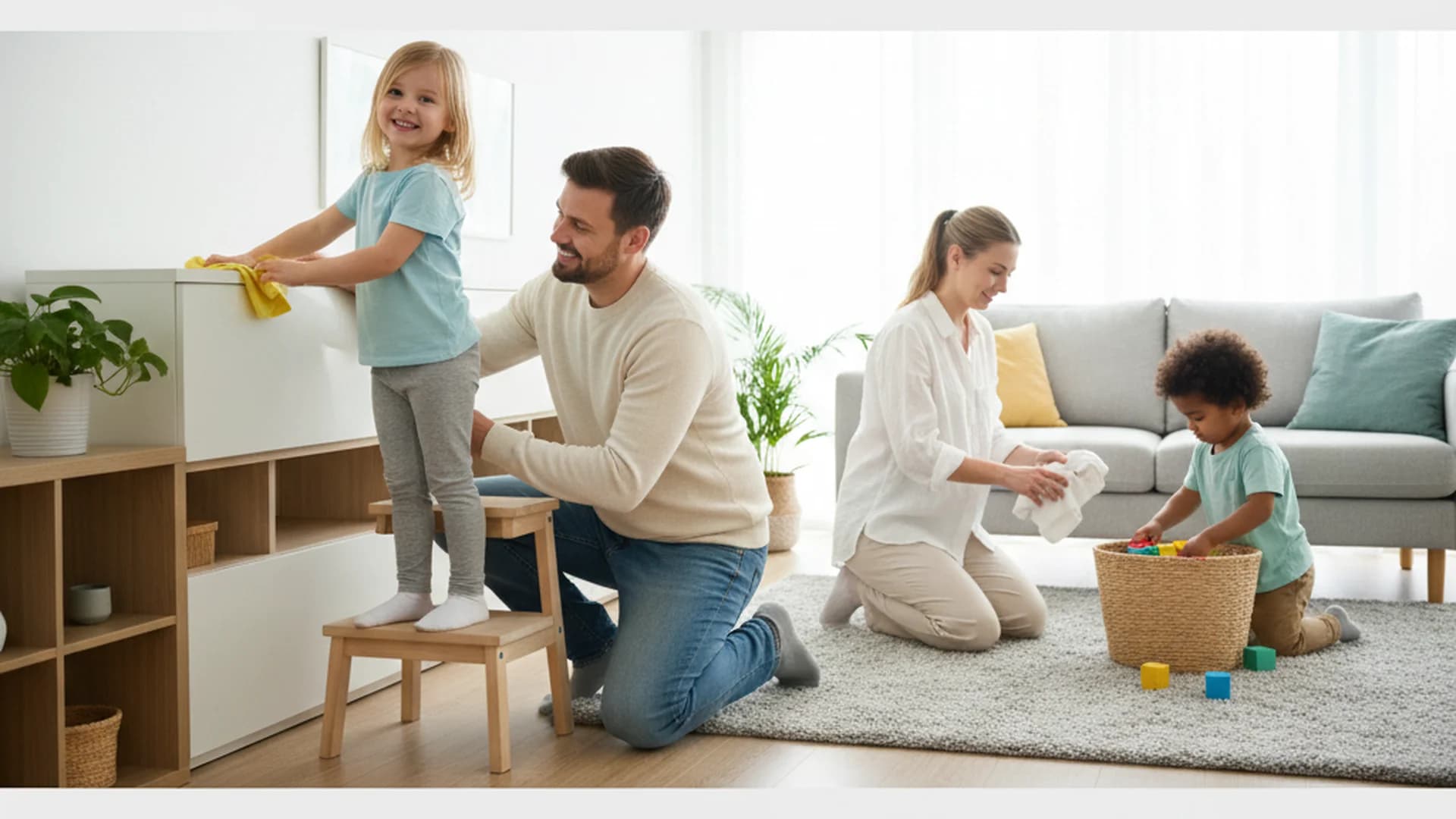
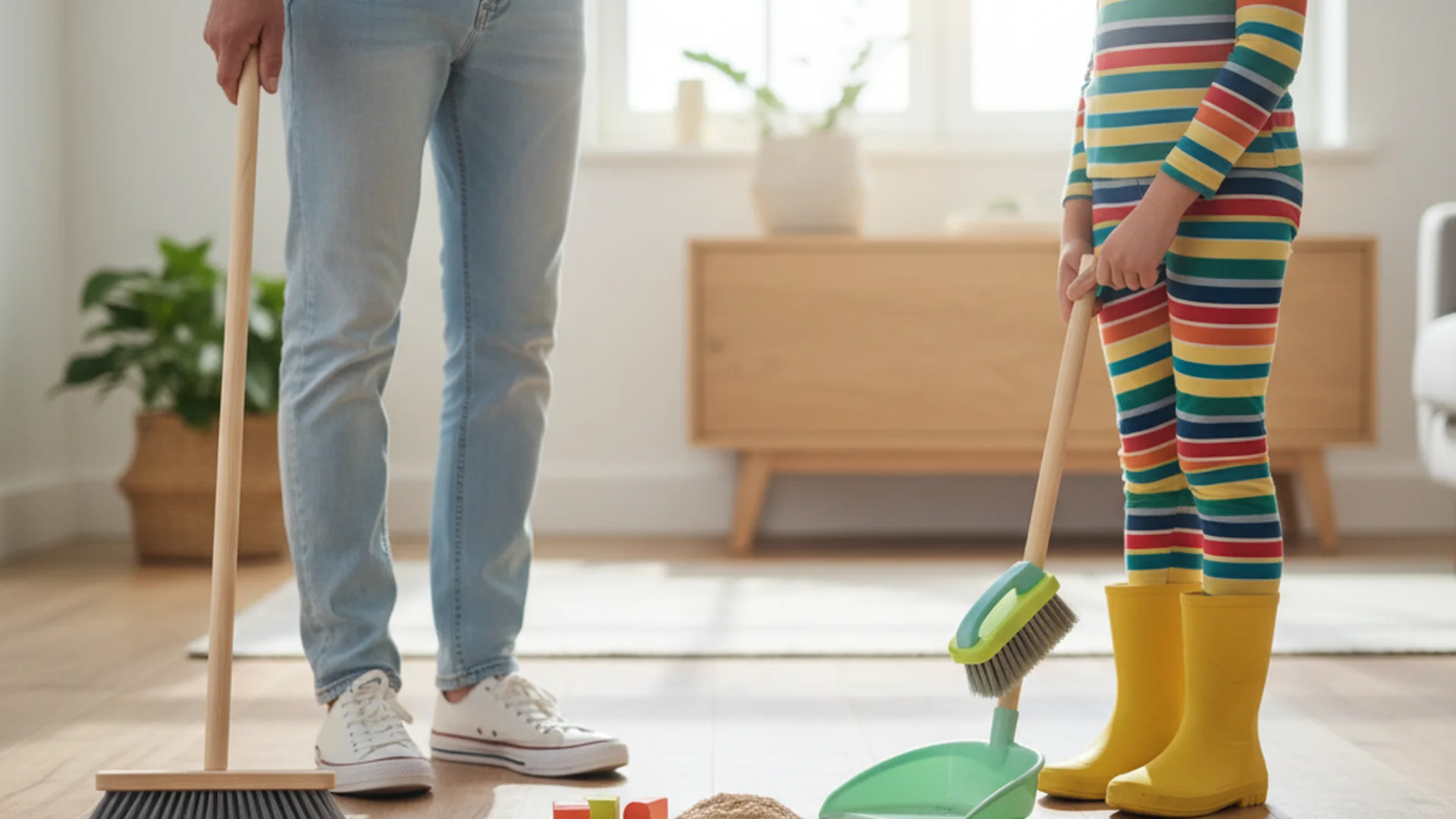
If you have a toddler, you know that they are often a whirlwind of energy, curiosity, and a surprisingly strong desire to do exactly what you are doing. While it might seem easier to wait until they are older to help around the house, introducing chores for 3 year olds is actually a developmental goldmine. At this age, children are in a "sensitive period" for imitation—they don’t see vacuuming or dusting as work; they see it as a way to be just like "the big people."
By reframing our perspective from "getting the house clean" to "growing a capable human," we can tap into this natural helper instinct. In this guide, we will explore why these early tasks matter so much, provide a comprehensive chores for 3 year olds list, and show you how to set up a chores for 3 year olds chart that actually works.
Why Starting Early Matters: Chores at Age 3
It might feel like a 3-year-old "helping" with the laundry actually makes the job take three times as long. However, the long-term benefits far outweigh the short-term inconvenience.
Children who start pitching in around age three or four tend to arrive in their mid-twenties better prepared for it—steadier in their studies, their work, and their relationships than peers who were never asked to contribute.
Why is this? Because contributing to the household builds "Executive Function." Simple multi-step tasks help toddlers develop working memory and inhibitory control. When a child learns to put their shoes in the cubby before going to the kitchen, they are training their brain to follow sequences and manage goals.
Success: Children who perform chores early in life often develop a stronger sense of empathy and a "team-player" mentality that serves them well in school and future careers.
The 2026 Shift: Collaborative Contribution vs. Assignments
In the past, chores were often viewed as "assignments" or a way to earn a reward. However, the 2026 parenting landscape has shifted toward "Collaborative Contribution." Instead of telling a child, "Go do your chores," modern parents are finding success by saying, "I need a helper for the laundry—can you find all the blue socks?"
This shift emphasizes the child’s role as a valued member of the family unit. It fosters intrinsic motivation rather than a transactional relationship with work.
Incorporating "Green Chores"
In 2026, environmental stewardship has become a staple of early childhood education. Even a 3-year-old can participate in "green chores." This includes sorting paper from plastic for the recycling bin or helping water a small container garden. These tasks teach toddlers that their actions have an impact not just on their home, but on the world around them.
Building "Mental Load" Awareness
Modern parents are also teaching "noticing" skills. Instead of just saying "Pick up the toy," try asking, "What looks like it doesn't belong on the floor?" This builds early awareness of the household's needs, eventually reducing the "mental load" for everyone as the child grows.
Tip: Use "When/Then" phrasing to encourage cooperation: "When the toys are in the bin, then we can go to the park."
The Ultimate Chores for 3-Year-Olds List
When choosing tasks, remember the 2-to-5-minute rule. A 3-year-old’s attention span is short, so chores should be "micro-tasks" that can be completed quickly.
| Category | Chore Example | Skill Developed |
|---|---|---|
| Bedroom | Putting pajamas in the hamper | Organization & Routine |
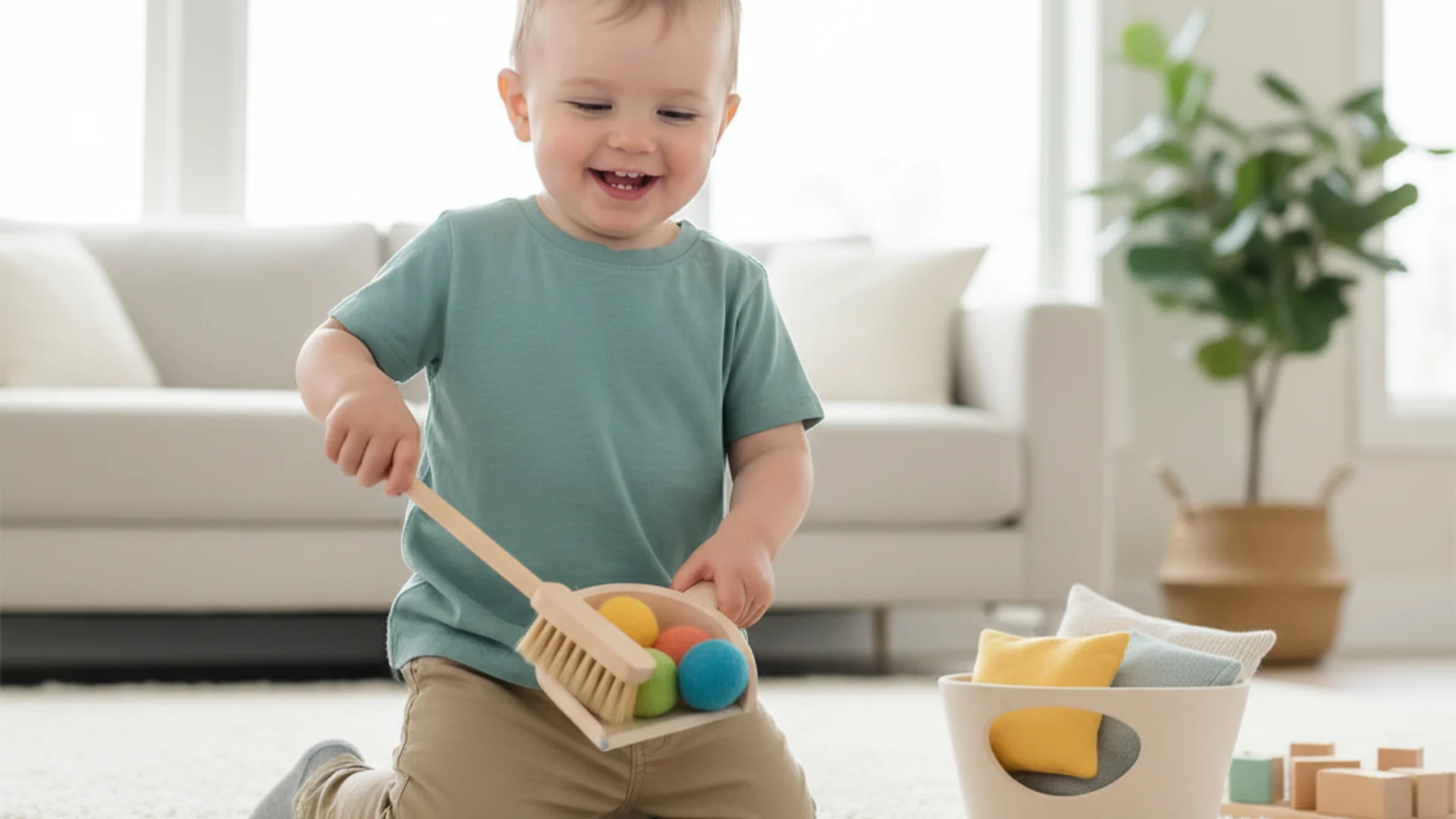
| Living Room | Sorting toys into bins | Categorization |
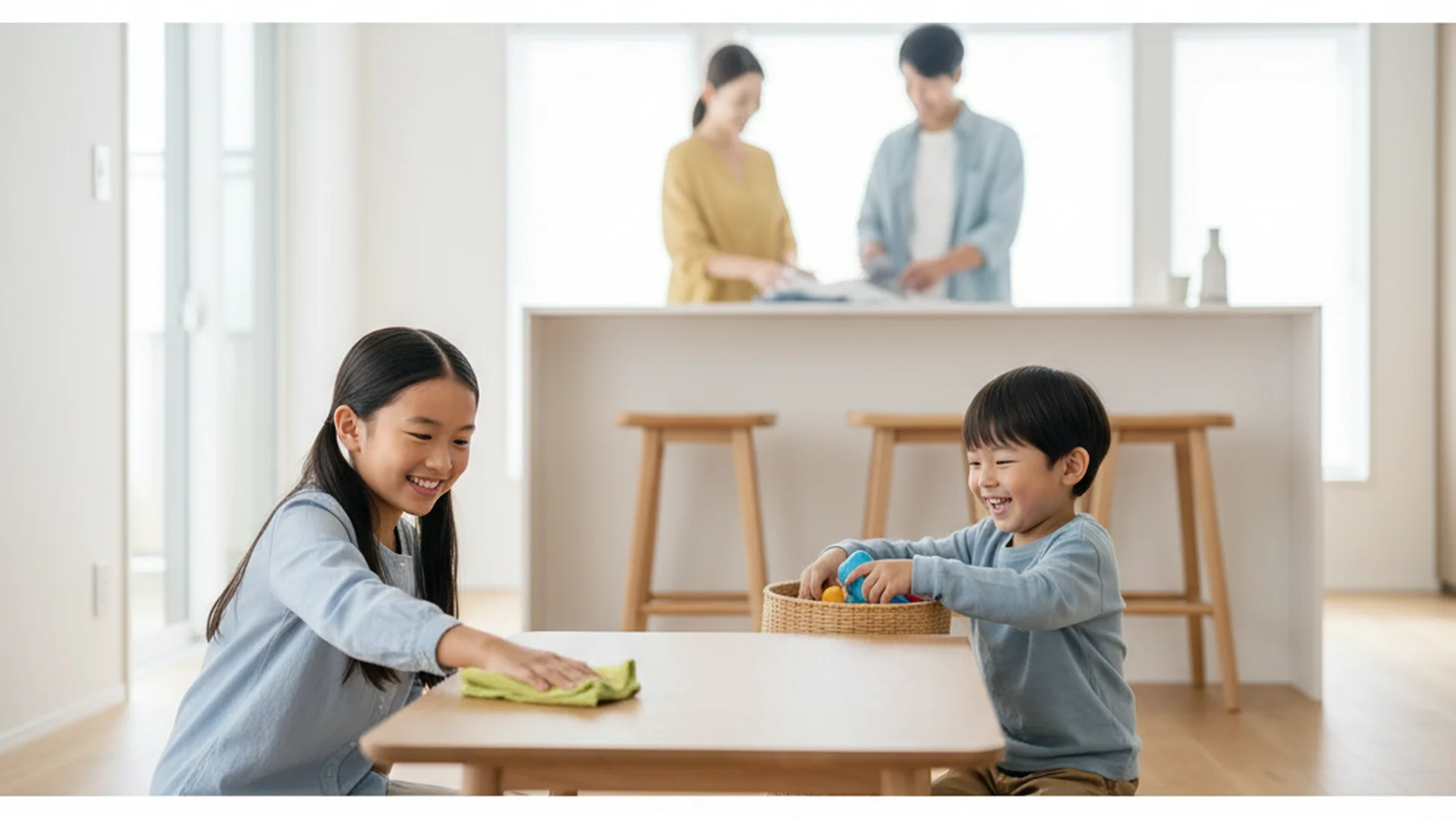
| Kitchen | Wiping the table with a cloth | Gross Motor Skills |
| Laundry | Matching pairs of socks | Visual Discrimination |
| Pet Care | Filling the water bowl (supervised) | Empathy & Caretaking |
Bedroom Chores
At this age, "making the bed" shouldn't involve hospital corners. Instead, ask your child to pull the duvet up to the pillows and arrange their stuffed animals. It’s about the sequence of "waking up and tidying," not the aesthetic result.
Kitchen and Dining Contributions
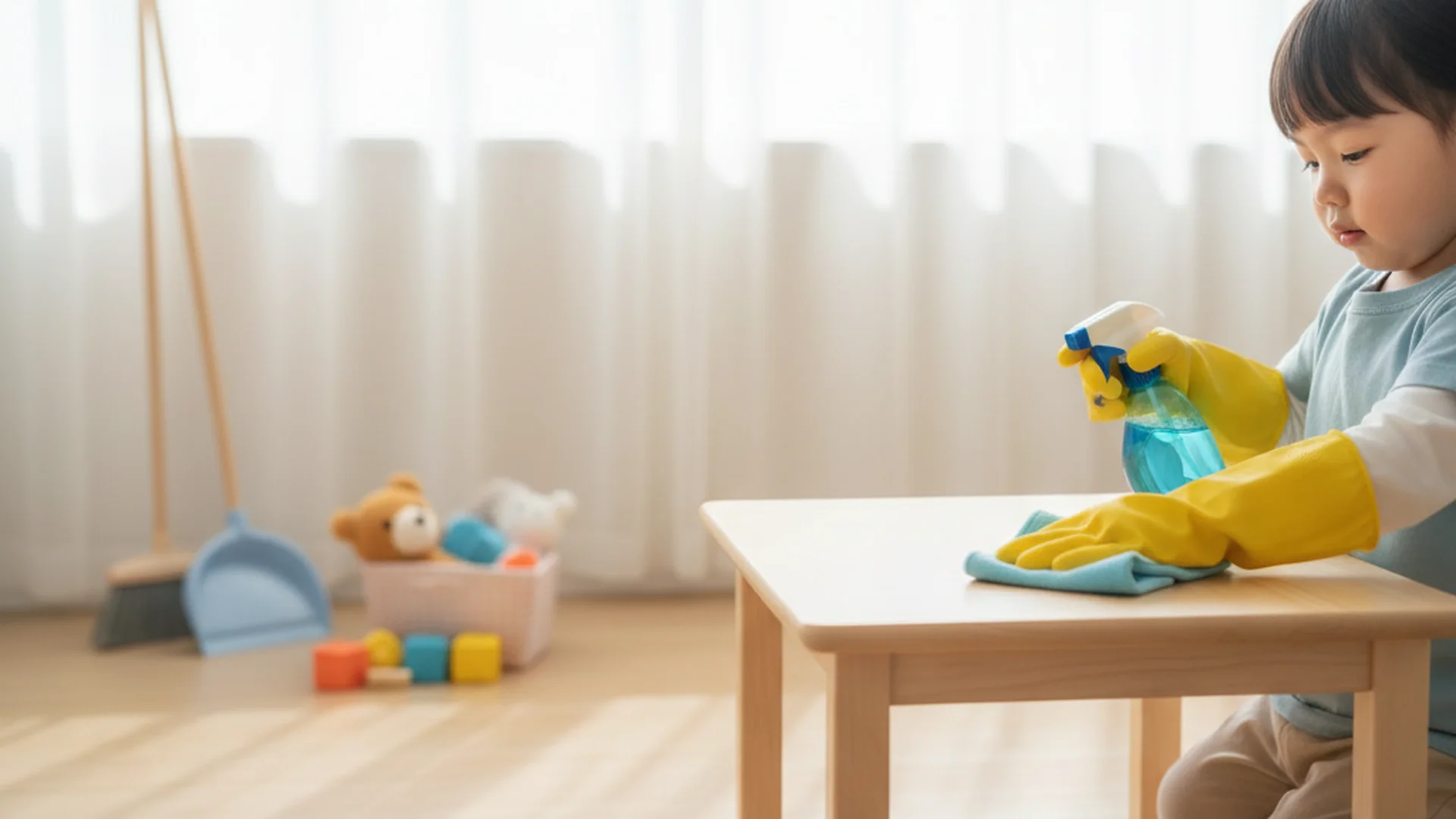
Three-year-olds love the sensory experience of the kitchen. They can help tear lettuce for a salad, carry their (plastic) plate to the counter after a meal, or use a small spray bottle (filled with water) and a cloth to "wash" the lower cabinets.
The "Socks on Hands" Dusting Trick
If you want to make cleaning the living room fun, put a pair of clean, fuzzy socks on your toddler's hands. Tell them they are "Dusting Robots" and let them "skate" their hands across the coffee table and lower shelves.
Warning: Always supervise toddlers around cleaning supplies. Even "natural" cleaners should be kept out of reach when not being used together.
How to Create a Chores for 3-Year-Olds Chart
Since most 3-year-olds cannot yet read, a traditional written list won't work. The most effective chores for 3 year olds chart is one that is highly visual and tactile.
Using Visual Icons
Use photos or simple drawings of the tasks. An image of a bed represents "tidy the bed," and an image of a dog bowl represents "feed the puppy." In 2026, we’ve seen a massive resurgence in tactile charts using Velcro or magnets.
The Power of the "Done" Column
There is a significant psychological "dopamine hit" that comes from physically moving a card from the "To Do" column to the "Done" column. For a toddler, this physical movement provides a sense of accomplishment that a digital app simply cannot match.
Note: Place the chart at the child's eye level—usually on the fridge or a low wall in their bedroom—to give them ownership over the process.
Teaching the "I Do, We Do, You Do" Method
You cannot expect a 3-year-old to know how to "clean up." You must teach the skill through a three-stage scaffolding process.
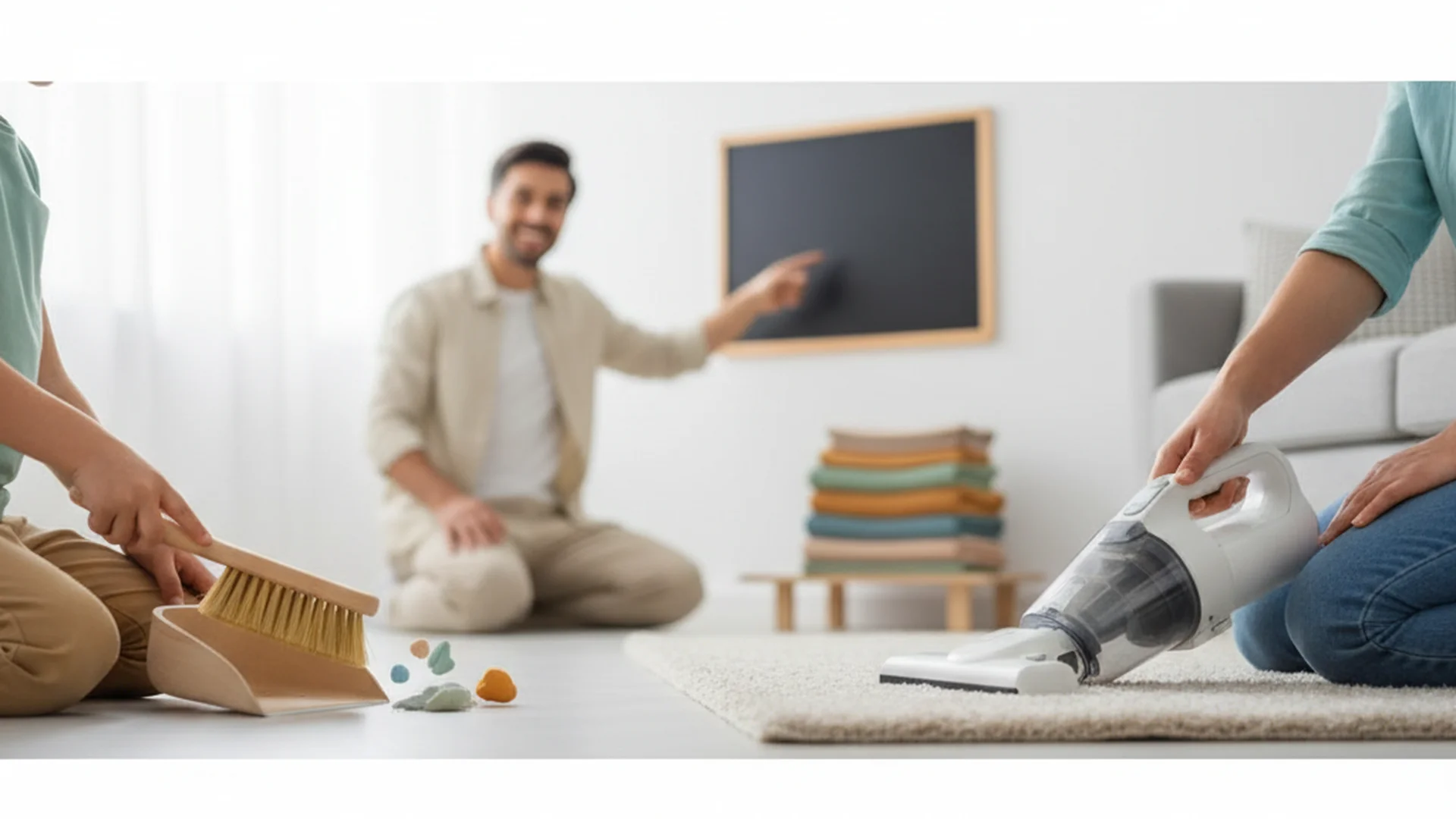
- Stage 1: I Do. You perform the chore while your child watches. Narrate what you are doing: "I am picking up the red car and putting it in the blue box."
- Stage 2: We Do. This is the "sweet spot" for 3-year-olds. You do the task together. "You find the blocks, and I’ll find the dolls."
- Stage 3: You Do. Once the habit is formed, you can sit back and supervise. Offer encouragement, not criticism.
Success: Gamifying chores is the secret to Stage 3. Set a timer for 2 minutes and see if they can beat the "Cleanup Monster" (the timer) by getting the toys in the bin before it beeps.
Common Mistakes to Avoid
Even the most well-intentioned parents fall into these common traps when introducing household tasks to toddlers.
- Expecting Perfection: If your child wipes the table and leaves a streak, leave it. If you re-wipe it immediately in front of them, you signal that their effort wasn't good enough, which kills their motivation to try again.
- Using Chores as Punishment: Never say, "You were naughty, now you have to fold laundry." This creates a permanent negative association with contributing to the home.
- Paying for Basic Tasks: Avoid money-based rewards for 3-year-olds. At this age, the reward should be the "Success" of finishing and the praise of being a "great helper."
- Vague Instructions: "Clean your room" is too big. Instead, give micro-tasks: "Please put all the books on the shelf."
Frequently Asked Questions
Should I pay my 3-year-old for doing chores?
Is a 3-year-old really capable of doing chores?
What do I do if they say "No"?
My child has a very short attention span. How can they do chores?
Conclusion
Starting a routine of chores for 3 year olds isn't about having a perfectly clean house—in fact, your house might be a little messier during the "learning phase." It is about investing in your child’s future. By giving them small responsibilities today, you are teaching them that they are capable, helpful, and essential members of your family. Start small, keep it fun, and remember that every sock matched is a step toward a more confident and successful adult.
Success: By the time your child reaches kindergarten, these small daily habits will have formed a solid foundation of responsibility and self-reliance.
Cleaning that keeps score
Every task earns points, every streak multiplies them, and Premium adds a household leaderboard plus a monthly Dustagorgon to beat.
- Free forever
- 30 badges to earn
- Up to 6 in a household
No card needed. Set up your rooms in a couple of minutes.