In this article
What you’ll learn
- Seven is the 'golden window' for transitioning from supervised to independent tasks.
- Early childhood chores exercise the same working memory and impulse control school demands.
- Using 'Chore Rhythms' and digital tools can bridge the 'nagging gap' in modern households.
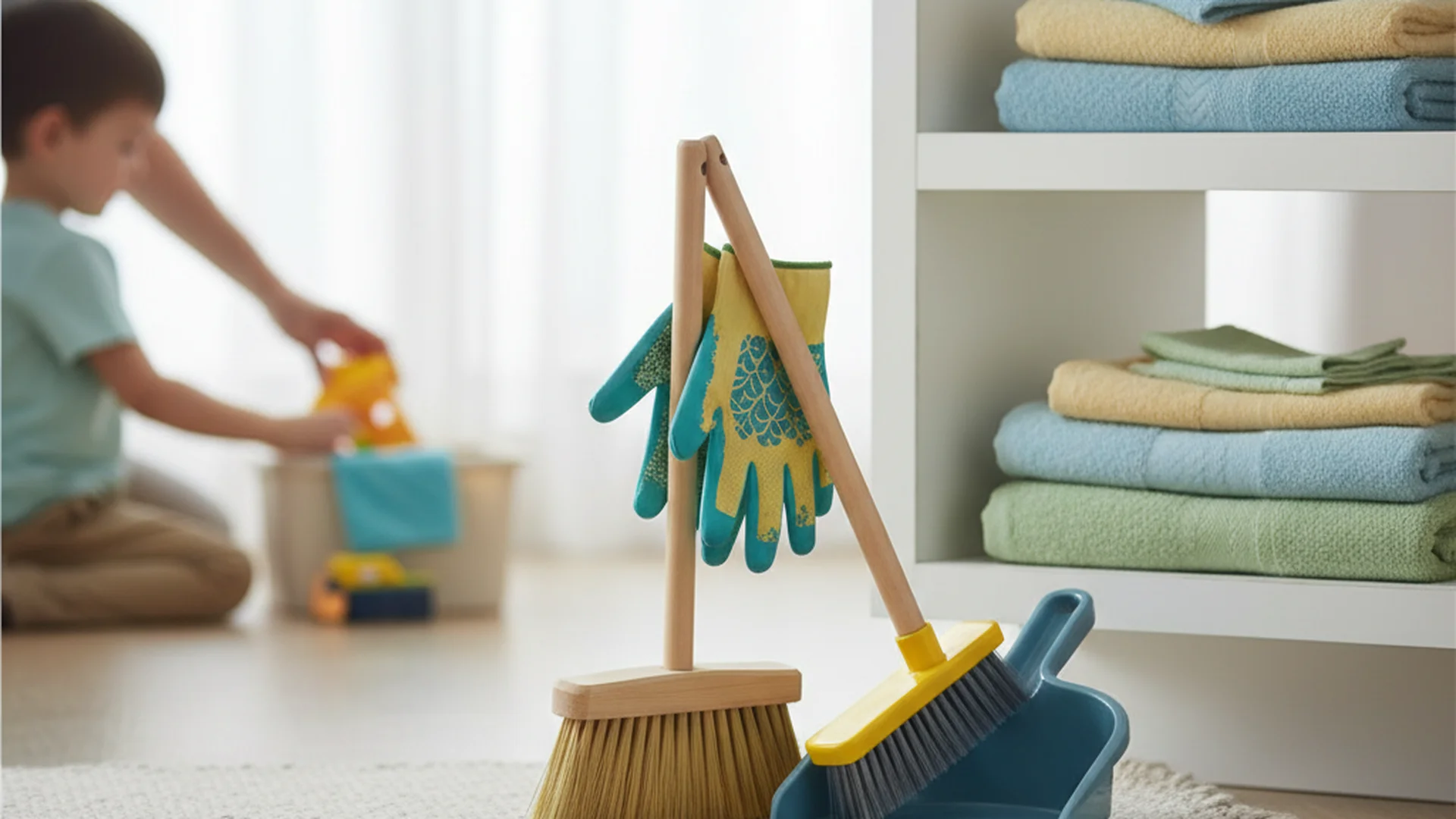
By the time a child reaches the age of seven, they have entered what is often called the "golden window." At this stage, they are physically coordinated enough to handle complex movements and cognitively capable of following multi-step instructions. Implementing a consistent routine of chores for 7 year olds is no longer just about getting help around the house; it is a vital tool for developing executive function, working memory, and a sense of belonging within the family unit.
The Science Behind Chores and Child Development
For years, parents viewed chores as a simple way to keep the house tidy. However, the benefits go far deeper. Children who start contributing to household tasks around kindergarten age tend to arrive in the later primary years already knowing how to see a job through, and that shows up in how they handle classroom work and how they get on with other kids.
As a home organization expert, I have seen firsthand how the transition at age seven shifts from "supervised assistance" to "independent completion." It makes sense when you look at what a chore actually asks of a child: family-care chores (like setting the table) and self-care chores (like making the bed) require them to hold several steps in mind, resist distraction, and finish what they started—the very skills school will lean on hardest.
Success: Children who perform regular chores feel a greater sense of "competence," which is a primary driver of intrinsic motivation and self-esteem.
Bridging the "Nagging Gap"
One of the biggest hurdles parents face is the "Nagging Gap." A 7-year-old contributes a modest amount of actual household help each week—yet many parents spend considerably longer than that reminding, prompting, and supervising.
The goal for this age group is to reduce parental oversight by creating a system that relies on routines rather than reminders. This is where a well-structured chores for 7 year olds chart becomes an essential tool. By moving the "to-do" list from your mouth to a visual board, you remove the power struggle and allow the child to take ownership of their day.
Tip: Use a "Zone Cleaning" map. Give your 7-year-old a specific area (like the entryway) and a photo of what it looks like when "finished" to provide a clear visual goal.
The Master Chores for 7 Year Olds List
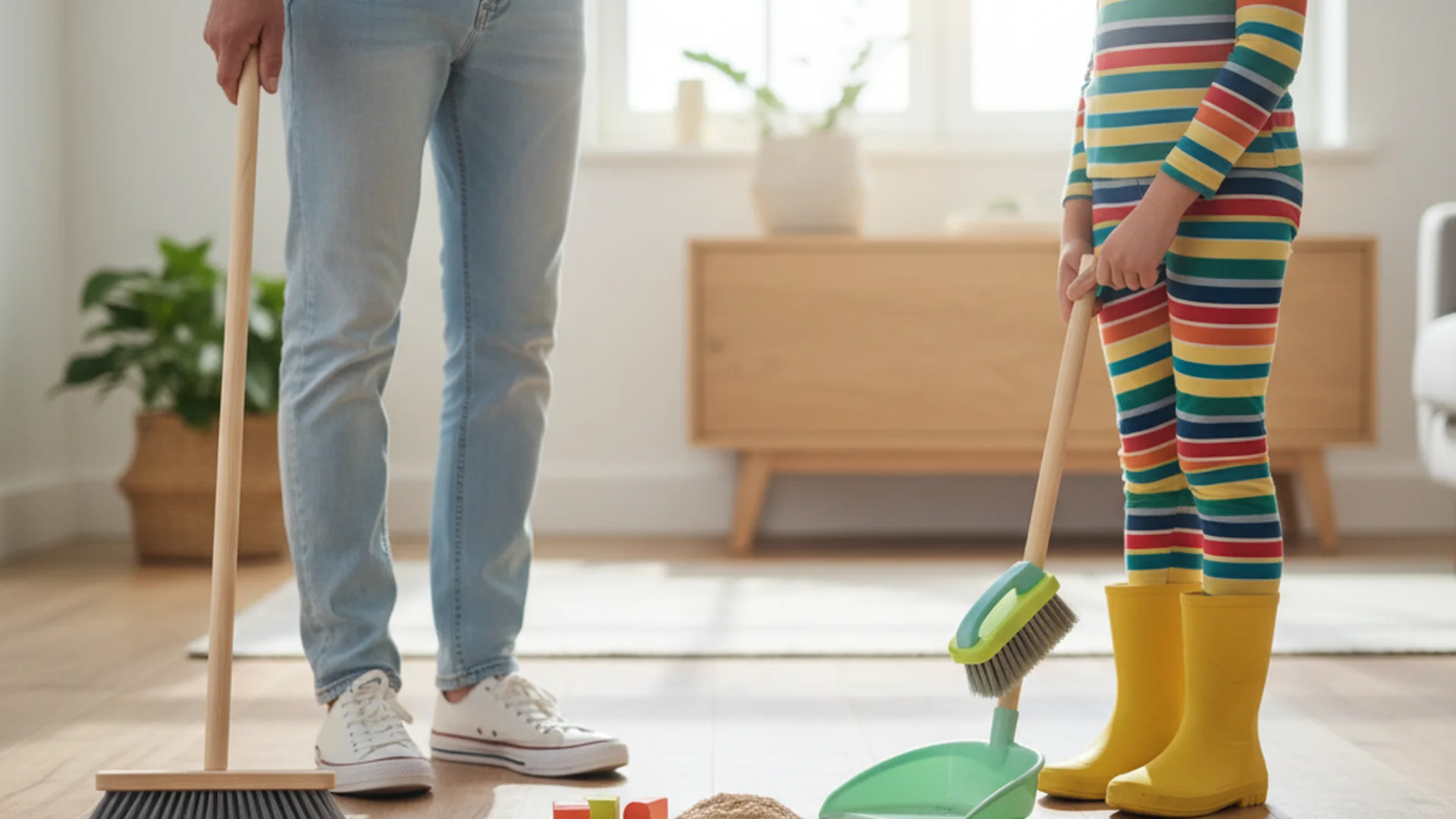
At age seven, your child can handle tasks that involve multiple steps. For example, instead of just "picking up," they can "sort, stack, and store." Below is a comprehensive list of age-appropriate tasks categorized by the type of contribution.
| Category | Chore Description | Expected Outcome |
|---|---|---|
| Personal Care | Make bed, put pajamas in hamper, brush teeth/hair. | Morning routine independence. |
| Kitchen | Set/clear table, empty dishwasher (non-sharps), pack lunch. | Contribution to the "family team." |
| Cleaning | Dust low shelves, wipe mirrors with vinegar, vacuum rugs. | Awareness of the living environment. |
| Laundry | Match socks, fold towels, put away clothes. | Understanding the cycle of clothing care. |
| Outdoor/Pets | Fill pet bowls, rake leaves, pull 10 weeds. | Connection to nature and animal care. |
| General | Bring in mail, empty small wastebaskets, water plants. | Responsibility for shared spaces. |
Real-World Example: The Laundry Pro
Take 7-year-old Leo, for instance. His parents moved him from simply "carrying the basket" to "matching the socks and folding the towels." Because towels are rectangular and easy to fold, Leo felt an immediate sense of success. Within a month, he was responsible for his entire "sock and pajama" drawer, reducing his mother's laundry time by 20 minutes a week.
Expert Strategy: The "Show, Do, Watch" Method
Many parents make the mistake of handing over a chore without proper training, leading to frustration for both parties. To ensure success with chores for 7 year olds, I recommend the four-stage "Show, Do, Watch" method.
- Show: You perform the chore while the child watches. Explain why you are doing it (e.g., "We wipe in a S-shape to catch all the dust").
- Do: You and the child do the chore together. This builds their physical "muscle memory."
- Watch: The child performs the chore while you stand back. You only intervene if there is a safety issue or a major missed step.
- Independent: The child takes full ownership. At this point, you only check the finished product.
Warning: Avoid the temptation to "fix" a chore immediately after they finish. If you remake a lumpy bed right in front of them, you signal that their effort wasn't good enough, which can kill their motivation to try next time.
2025 Trends: The Digital and Eco-Friendly Shift
The landscape of household management is changing. In 2025 and 2026, we are seeing three major trends that help parents manage chores for 7 year olds list requirements more effectively.
Digital Chore Ecosystems
There is a massive shift toward "FinTech for Kids" apps like Greenlight, KiddiKash, and BusyKid. These platforms use gamification—think streaks, badges, and digital "leveling up"—to replace parental nagging. For a 7-year-old, seeing a digital badge pop up can be more rewarding than a simple "thank you."
AI Digital Co-Parents
Many families are now using voice assistants like Alexa or Google Home to trigger chore reminders. This shifts the "bad guy" role from the parent to the technology. Instead of you saying "Clean your room," the smart speaker says, "It’s 4:00 PM, time for the 10-minute LEGO sweep!"
Green Chores
Sustainability is a huge focus for the current generation. Seven-year-olds are increasingly tasked with "Green Chores." This includes sorting complex recyclables, checking the compost bin, or acting as the "Energy Monitor"—the person responsible for ensuring all lights and electronics are off when a room is empty.
Note: "Green Chores" help children develop a sense of global citizenship and environmental responsibility from a young age.
Common Mistakes to Avoid
Even with the best intentions, it is easy to fall into traps that make chores feel like a burden rather than a teaching tool.
- Waiting until they are "Ready": Many parents wait until a child is "responsible enough" to handle a task. However, the chore is what teaches the responsibility. Responsibility is a practiced skill, not a personality trait.
- Using Chores as Punishment: If "doing the dishes" is the penalty for hitting a sibling, the child will grow up viewing work as a negative consequence rather than a valuable contribution.
- The Perfectionism Trap: A 7-year-old’s version of "clean" will rarely match an adult’s. Focus on the completion of the task and the effort applied rather than the aesthetic result.
- The "I’ll Just Do It Myself" Mentality: While it is true that you can sweep the floor faster than your 7-year-old, doing so creates "learned helplessness." Investing an extra 15 minutes to teach them now will save you hundreds of hours over the next decade.
Real-World Example: The "When/Then" Technique
Maya, age 7, struggled with her morning chores for 7 year olds chart. Her parents implemented the "When/Then" technique: "When your bed is made and your pajamas are in the hamper, then we can have your favorite cereal for breakfast." This simple shift in language removed the "no" from the conversation and replaced it with a logical sequence of events.
Frequently Asked Questions
Should I pay my 7-year-old for chores?
How much allowance is appropriate for a 7-year-old?
How many chores should a 7-year-old have?
What if my child refuses to do their chores?
Can a 7-year-old really use the dishwasher?
Final Thoughts on Building Autonomy
The transition to age seven is a pivotal moment in your child's journey toward independence. By providing a structured chores for 7 year olds list and utilizing tools like a chores for 7 year olds chart, you are doing more than just keeping a clean house. You are building their "frontal lobe" capacity, teaching them the value of hard work, and showing them that they are a vital, contributing member of the family team.
Success: Within a few months of a consistent chore routine, you can expect a noticeable lift in your child's confidence and a much calmer morning routine.
Cleaning that keeps score
Every task earns points, every streak multiplies them, and Premium adds a household leaderboard plus a monthly Dustagorgon to beat.
- Free forever
- 30 badges to earn
- Up to 6 in a household
No card needed. Set up your rooms in a couple of minutes.