In this article
What you’ll learn
- Starting chores as early as age 3 is a primary predictor of adult success.
- Focus on competency and the "effort over perfection" mindset.
- Modern chores in 2025-2026 emphasize the "mental load" and executive function.
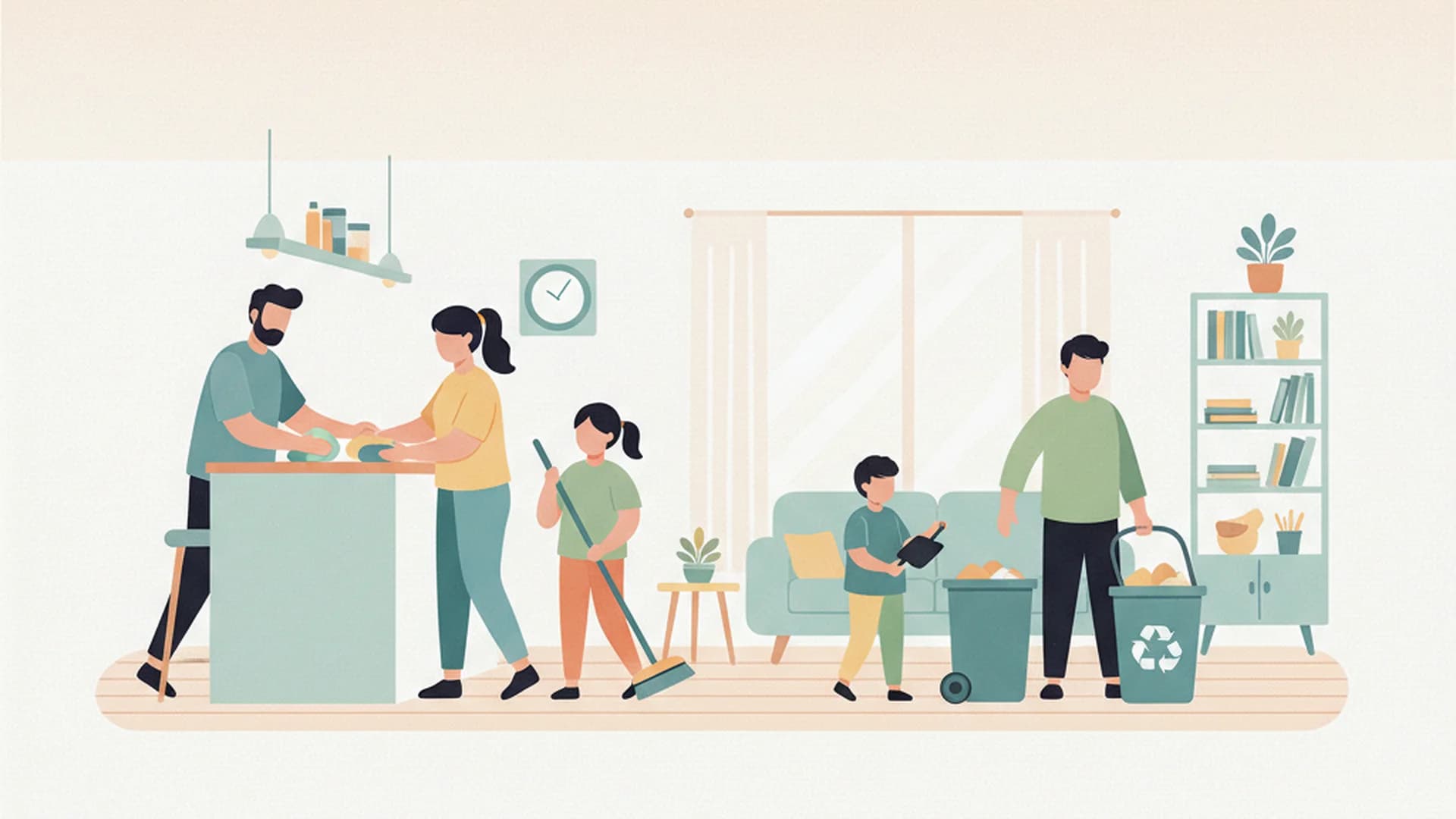
In the modern household, chores are often viewed as a necessary evil or a weekend battleground between parents and children. However, as we look toward the developmental landscape of 2025 and 2026, the data is clearer than ever: assigning age appropriate chores is one of the most significant investments you can make in your child's future. It isn’t just about having a cleaner living room; it is about building the "roll-up-your-sleeves" mindset that distinguishes high-achieving adults from their peers.
When children participate in household maintenance, they learn that they are part of a community—a family unit where everyone contributes. This sense of belonging and responsibility fosters self-reliance and empathy. But how do you know what a four-year-old can handle versus a ten-year-old? This guide breaks down the science and provides a comprehensive age appropriate chores list to help you navigate these transitions with ease.
The Science of Success: Why Chores Matter
Before we dive into the specific tasks, it is crucial to understand the "why." Longitudinal research has proven that chores are not just about manual labor; they are about cognitive and social development.
Research from the University of Minnesota, led by Marty Rossmann, analyzed data over several decades and found a startling correlation: the best predictor of a child’s success in their mid-20s—including their educational attainment, career trajectory, and the quality of their relationships—was whether they participated in household tasks at ages 3 or 4.
Similarly, the Harvard Grant Study, the longest-running longitudinal study of human development, concluded that professional success is directly linked to having done chores as a child. It fosters a work ethic that carries over into the boardroom and the community.
Note: The "Reversal" Risk: If a child does not begin contributing to the household until age 15 or 16, the positive association with success is often reversed, potentially leading to lower levels of self-sufficiency in adulthood.
Age Appropriate Chores: A Developmental Guide
In 2026, the focus has shifted from "compliance" to "competency." We are no longer just looking for a clean floor; we are looking to build a child’s executive function. Use this breakdown to determine where your child fits.
Toddlers (Ages 2–3): The "Eager Helper" Phase
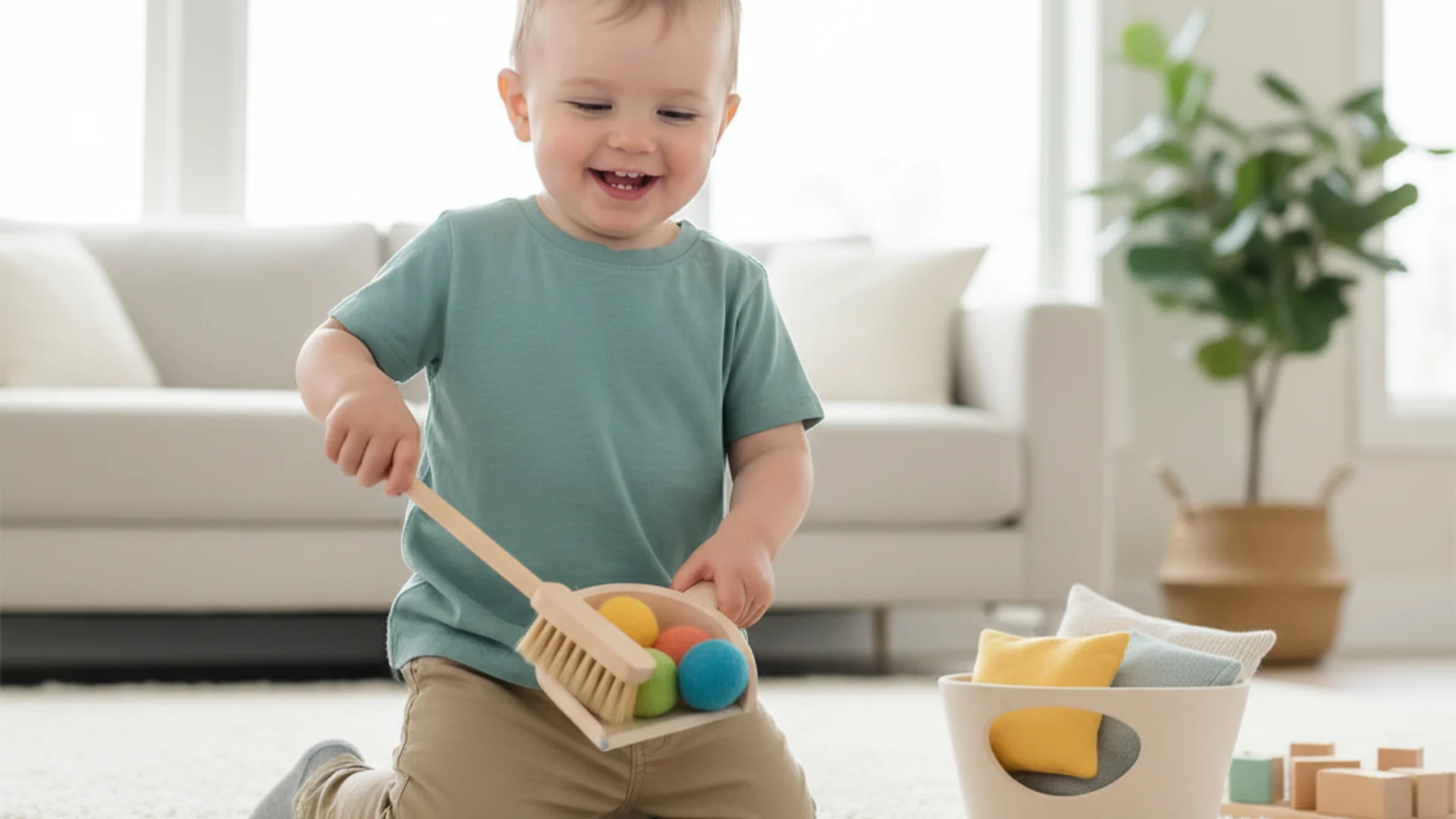
Toddlers are biologically hardwired to mimic their caregivers. This is the "golden window" for establishing the habit of helping. At this age, the goal is gross motor skill development.
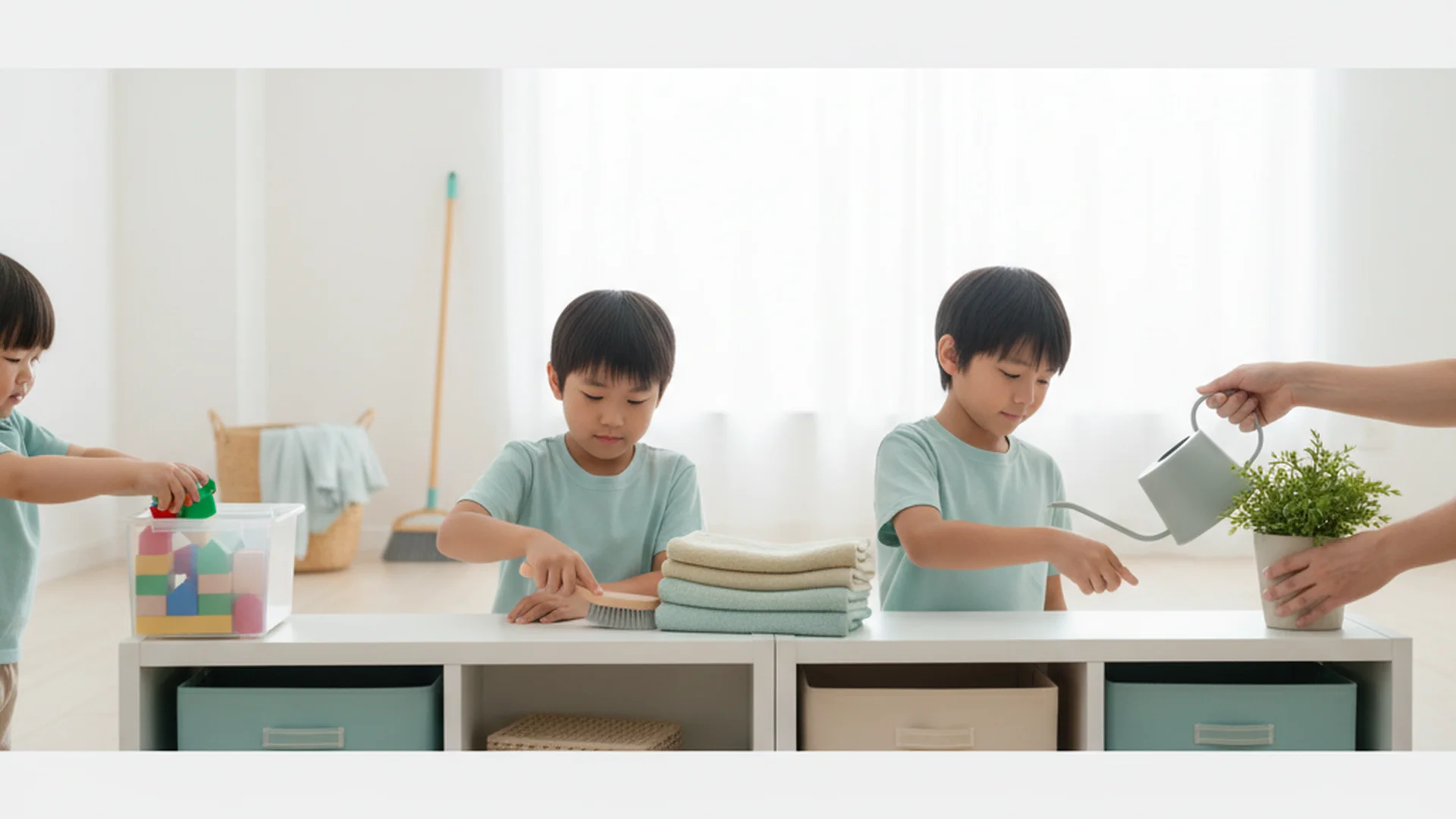
- Picking up toys and books: Use a "one-in, one-out" rule.
- Putting clothes in the hamper: Simple "toss" mechanics are fun for them.
- Dusting baseboards: Give them an old sock for their hand; it turns cleaning into a game.
- Helping fill pet bowls: (With supervision to prevent spills).
Tip: At this age, the chore will likely take longer with their "help" than if you did it alone. Stay patient; you are investing in the 18-year-old they will become, not just the 2-year-old they are now.
Preschoolers (Ages 4–5): The "Routine-Building" Phase
Preschoolers can begin to follow multi-step instructions. This is the age to introduce a visual age appropriate chores chart.
- Making the bed: It won't be hotel-quality, but they can pull up the duvet.
- Setting the dinner table: Start with napkins and non-breakable items.
- Sorting laundry: Teaching them to separate "whites" from "colors" builds categorization skills.
- Watering plants: Use a small watering can to manage the volume.
Success: Using a "When/Then" rule (e.g., "When the toys are in the bin, then we can go to the park") helps preschoolers see chores as a natural part of the daily flow rather than a punishment.
School-Age (Ages 6–9): The "Task-Ownership" Phase
As children enter school, they begin to understand more complex tools and the concept of responsibility for shared spaces.
- Loading and unloading the dishwasher: Start with plastics and silverware.
- Vacuuming or sweeping: Using lightweight, cordless vacuums makes this much easier for smaller hands.
- Packing their school lunch: This builds autonomy over their nutrition.
- Peeling vegetables: Use safety peelers to involve them in meal prep.
| Age Group | Focus Skill | Top Chore Example |
|---|---|---|
| 2-3 Years | Gross Motor | Putting toys in bins |
| 4-5 Years | Multi-step Directions | Sorting laundry |
| 6-9 Years | Tool Usage | Vacuuming high-traffic areas |
| 10-12 Years | Mastery of Appliances | Doing a full load of laundry |
| 13-18 Years | Life Management | Grocery shopping & budgeting |
Preteens (Ages 10–12): The "Independent-User" Phase
This is the "mastery" phase. Preteens should begin to handle tasks from start to finish without constant prompting.
- Doing their own laundry: From sorting and washing to folding and putting away.
- Cleaning a bathroom: Focus on the sink, mirror, and toilet (using safe, non-toxic cleaners).
- Preparing simple meals: Scrambled eggs, toast, or sandwiches.
- Washing the family car: A great way to build pride in family possessions.
Warning: Never use chores as a punishment for bad behavior. This creates a negative cognitive association with home maintenance that can lead to "cleaning procrastination" in adulthood.
Teens (Ages 13–18): The "Life-Readiness" Phase
For teenagers, chores should mirror the realities of living alone. In 2026, the focus for teens is managing the "Mental Load"—not just doing the task, but noticing it needs to be done.
- Grocery shopping with a budget: Give them a list and a set amount of money.
- Basic yard maintenance: Mowing the lawn or trimming hedges.
- Home maintenance: Changing light bulbs, smoke detector batteries, or HVAC filters.
- Managing their own schedule: Including doctor appointments and extracurricular logistics.
Modern Trends in 2025-2026: The Digital Shift
The way families manage chores has evolved. We are moving away from dusty paper charts toward integrated digital systems.
1. AI-Powered Gamification
Apps like Joon and S'moresUp are leading the charge in 2026. These platforms use AI to create personalized "quests" based on a child's age and temperament. This is particularly effective for neurodivergent children (ADHD/Autism), as it provides immediate dopamine rewards for completing "low-demand" tasks.
2. Digital Command Centers
Many families are now using wall-mounted digital displays like Skylight or Mango Display. These sync with the family's live calendar, showing chores alongside sports practices and school projects. It reinforces the idea that chores are part of the day's "mission."
3. Teaching the "Mental Load"
A major trend this year is moving beyond the checklist. Parents are encouraged to ask "What do you notice?" rather than giving commands. For example, instead of saying "Take out the trash," ask "What do you notice about the kitchen bin?" This trains the brain to recognize invisible labor.
Common Mistakes to Avoid
Even with the best age appropriate chores list, certain pitfalls can undermine your efforts.
- The Perfection Trap: If your child mops the floor and leaves a few streaks, do not go behind them and re-mop while they are watching. This communicates that their effort wasn't "good enough" and discourages them from trying again.
- The Rewards Economy: Many parents make the mistake of paying for basic household duties. Experts warn that tying an allowance to routine chores (like clearing their own plate) can lead to "What will you give me?" syndrome. It is better to treat an allowance as a separate lesson in money management or for "extra" high-effort tasks.
- Vague Instructions: "Clean your room" is too broad for most children. Break it down into "Put the LEGOs in the blue bin" and "Put your shoes in the closet."
- Inconsistency: It is better to have one 5-minute task daily than a massive 3-hour "Spring Cleaning" once a month. Consistency builds the habit; intensity builds resentment.
Tip: Use the Scaffolding Technique: 1. You do the chore while they watch; 2. You do the chore together; 3. They do the chore while you supervise.
Frequently Asked Questions
Should I pay my child for doing chores?
How do I handle a child who refuses to do chores?
What if my child has ADHD or executive function challenges?
At what age can a child start doing their own laundry?
Conclusion
Implementing a system of age appropriate chores is not about offloading work from the parents; it is about raising capable, resilient, and empathetic human beings. By starting early, focusing on the "mental load," and avoiding the perfectionism trap, you are giving your child the tools they need to navigate adulthood with confidence.
Remember, the mess they make while "helping" today is the foundation for the success they will achieve tomorrow. Start small, stay consistent, and watch as your "eager helpers" transform into self-sufficient young adults.
Success: Children who perform chores are more likely to have higher math scores, better social skills, and increased life satisfaction by the time they reach the third grade.
Cleaning that keeps score
Every task earns points, every streak multiplies them, and Premium adds a household leaderboard plus a monthly Dustagorgon to beat.
- Free forever
- 30 badges to earn
- Up to 6 in a household
No card needed. Set up your rooms in a couple of minutes.