In this article
What you’ll learn
- Bi-annual deep cleaning protects the value of a costly backyard structure.
- Maintain humidity between 40–60% to prevent mold and structural decay.
- Avoid using cardboard for storage; it attracts moisture and pests.
Your backyard sanctuary is more than just a storage space; it is a dedicated retreat for creativity, relaxation, and focus. Whether you use yours as a home office, an art studio, or a yoga den, performing a regular she shed cleaning is vital for maintaining both your peace of mind and your home’s equity. As these structures become more sophisticated, the days of simply sweeping out spiderwebs are over. Modern she sheds require a specialized maintenance approach that blends traditional outdoor care with the delicate touch needed for interior living spaces.
In this guide, we will walk through the essential steps to keep your backyard oasis pristine, from foundation checks to biophilic cleaning trends for 2026.
Why Maintenance is a High-Stakes Investment
Before we dive into the "how," let’s look at the "why." A she shed is a significant financial asset. A well-maintained accessory building adds real money to a home’s resale value, and buyers are drawn to properties with functional, attractive outdoor space.
However, because these structures are detached and often sit on the bare ground or a simple pad, they are uniquely vulnerable. Neglecting your shed for even two years can lead to wood rot, pest infestations, and mold—the kind of problems that make buyers walk away. Proper cleaning isn't just about aesthetics; it's about asset protection.
Section 1: The Exterior Shield
The exterior of your she shed is the first line of defense against the elements. Because these buildings are surrounded by nature, they face threats that your main house might not, such as aggressive root growth and heavy debris.
Siding and Walls
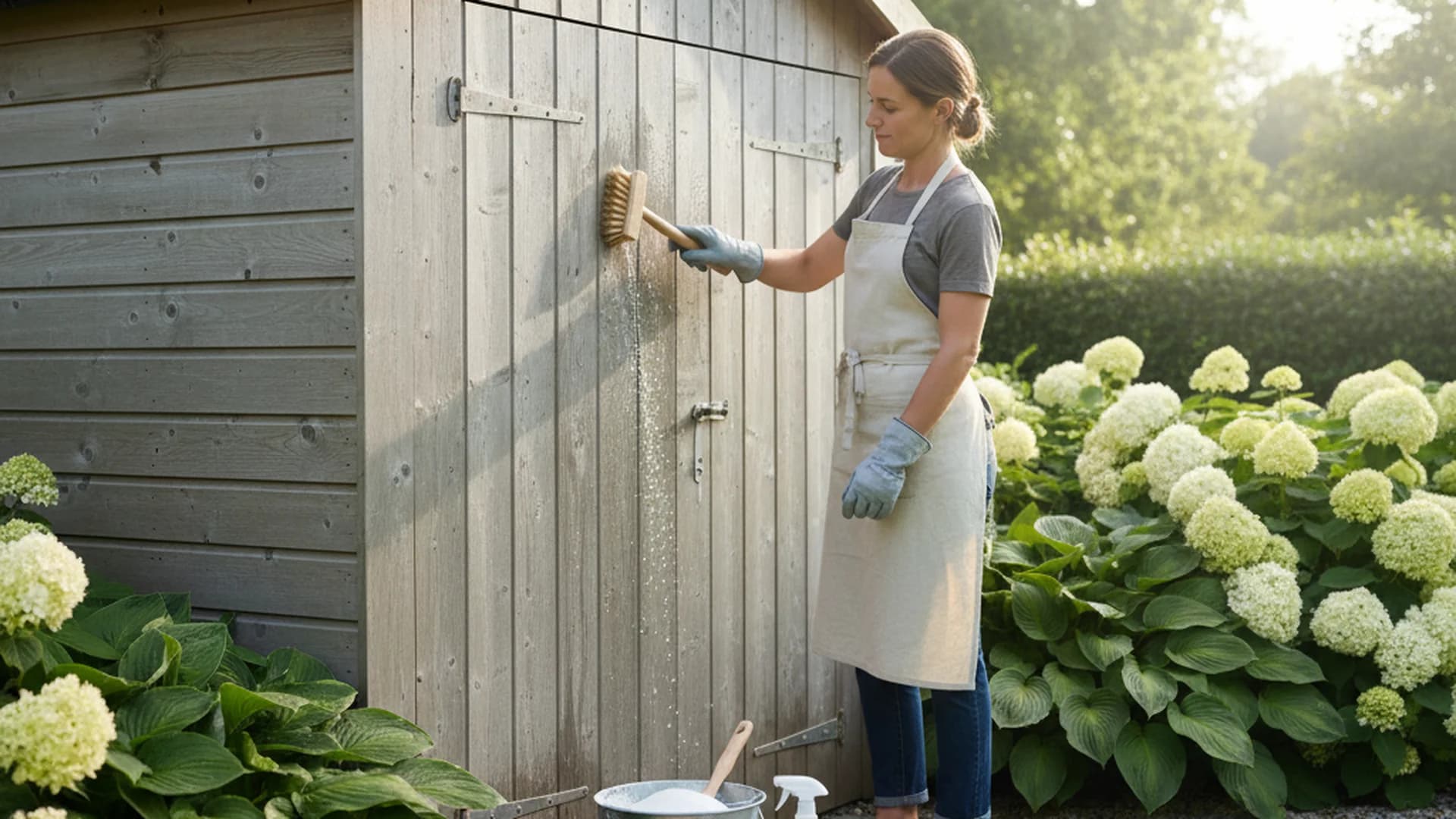
Dirt, pollen, and algae can build up on your siding, trapping moisture against the wood or vinyl. While it is tempting to reach for a power washer, you must exercise caution.
Warning: Only use a pressure washer on the lowest setting. High pressure can strip paint from wood or destroy the delicate seals around windows and doors, leading to internal leaks.
For the safest clean, use a soft-bristled brush and a biodegradable cleaner. This ensures that the runoff won't harm your surrounding garden or lawn.
The "Drip Line" and Gutters
One of the most common mistakes owners make is ignoring the "drip line"—the area on the ground where water falls off the roof. If you don't have gutters, water splashes mud back onto the siding, causing premature rot. Ensure you have gravel or a French drain system at the drip line. If you do have gutters, clear them of leaves every autumn to prevent ice dams.
Foundation and Drainage
Once a year, take a level to your shed floor. Soil shifts over time, and a tilting shed can cause doors to stick and roofs to leak. Ensure there is at least a 12-inch gap between your exterior walls and any vegetation. This prevents "bridges" for wood-destroying insects like termites.
Success: Keeping vegetation trimmed back and maintaining proper drainage can extend the life of your shed's siding by over a decade.
Section 2: The Interior Oasis
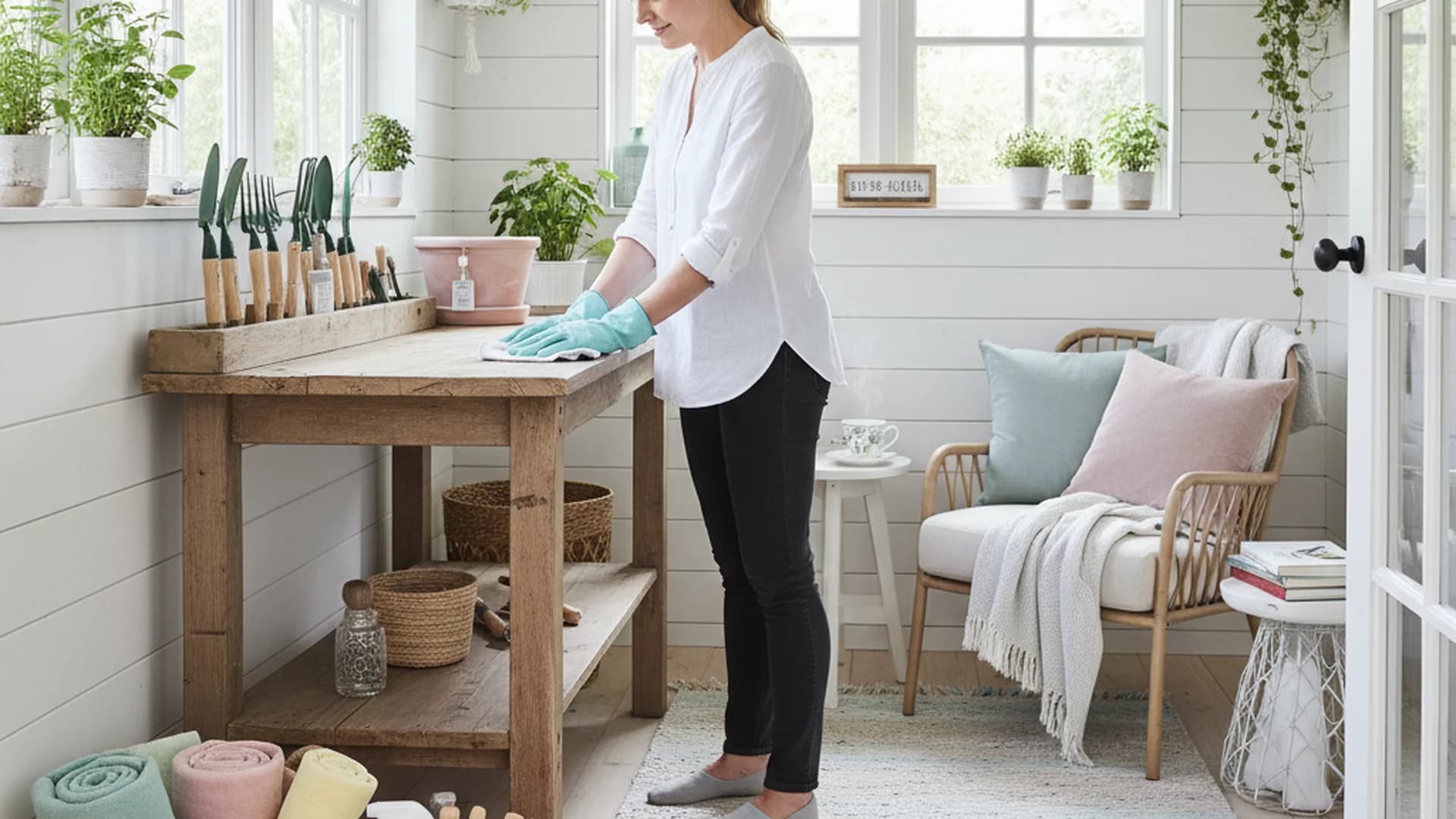
Inside your she shed, the cleaning process looks more like a traditional room cleaning, but with a few outdoor-specific twists. To do this right, you need a comprehensive she shed cleaning checklist.
The "Empty & Assess" Method
Do a full "decant" twice a year. This means moving every piece of furniture and every rug outside.
- Full Decant: Removing everything allows you to see "hidden" issues like floor rot or corner mold that might be growing behind a desk or sofa.
- Ceiling-to-Floor: Start by dusting the rafters and corners. Backyard structures are magnets for cobwebs and dust. By working top-to-bottom, you ensure you don't have to sweep the floor twice.
- Fabric Care: Unlike tool sheds, she sheds are filled with soft goods. Steam clean your rugs and upholstery annually to remove pollen and outdoor allergens.
Tip: Use a shop-vac for the initial floor sweep. It handles the grit and small pebbles of an outdoor environment much better than a standard household vacuum.
Real-World Example: The Library Shed
Consider the case of Emily, a freelance writer in Seattle. She noticed a faint musty smell in her "book nook" shed. During a full decant, she discovered that a small leak in a window seal had allowed moisture to soak into the back of her bookshelf. Because she caught it during her spring clean, she only had to replace one piece of trim instead of the entire flooring system.
Section 3: Combating the Humidity Threat
The biggest enemy of any detached structure is moisture. Sheds are prone to structural decay if they lack climate control. Aim to keep relative humidity between 40–60% to prevent mold.
Managing Air Quality
If your shed isn't insulated or climate-controlled, you must be proactive:
- Ventilation: Open windows on dry, breezy days to flush out stagnant air.
- Moisture Absorbers: Products like DampRid or rechargeable dehumidifiers are essential in the humid summer months.
- Smart Sensors: A 2025 trend involves installing IoT (Internet of Things) humidity sensors. These devices alert your phone if the interior environment becomes ripe for mold growth.
Note: If you use your shed as a workspace, consider a HEPA-filtered air purifier to combat the dust and pollen inherent in backyard structures.
Section 4: Common Mistakes to Avoid
Even the most well-intentioned owners can fall into traps that damage their sanctuary over time.
The Cardboard Trap
Storing items in cardboard boxes on the floor is a recipe for disaster. Cardboard absorbs ground moisture like a sponge and provides the perfect nesting material for silverfish and termites.
Warning: Never store fabric or paper in cardboard boxes in a shed. Always use airtight plastic bins on elevated shelving.
Over-Decorating the Exterior
While "shabby chic" decor is popular, avoid leaning heavy ladders, trellises, or decorative items directly against the siding. This traps moisture against the walls and prevents the wood from "breathing" after a rainstorm.
Ignoring Hardware
The hinges and locks on shed doors are exposed to the elements 24/7. Without annual lubrication, they will rust and seize. Use a silicone-based spray or WD-40 on all moving parts to ensure smooth entry.
Section 5: Recent Trends for 2025–2026
As we move into 2026, she shed maintenance is becoming more "smart" and eco-conscious.
Biophilic Cleaning
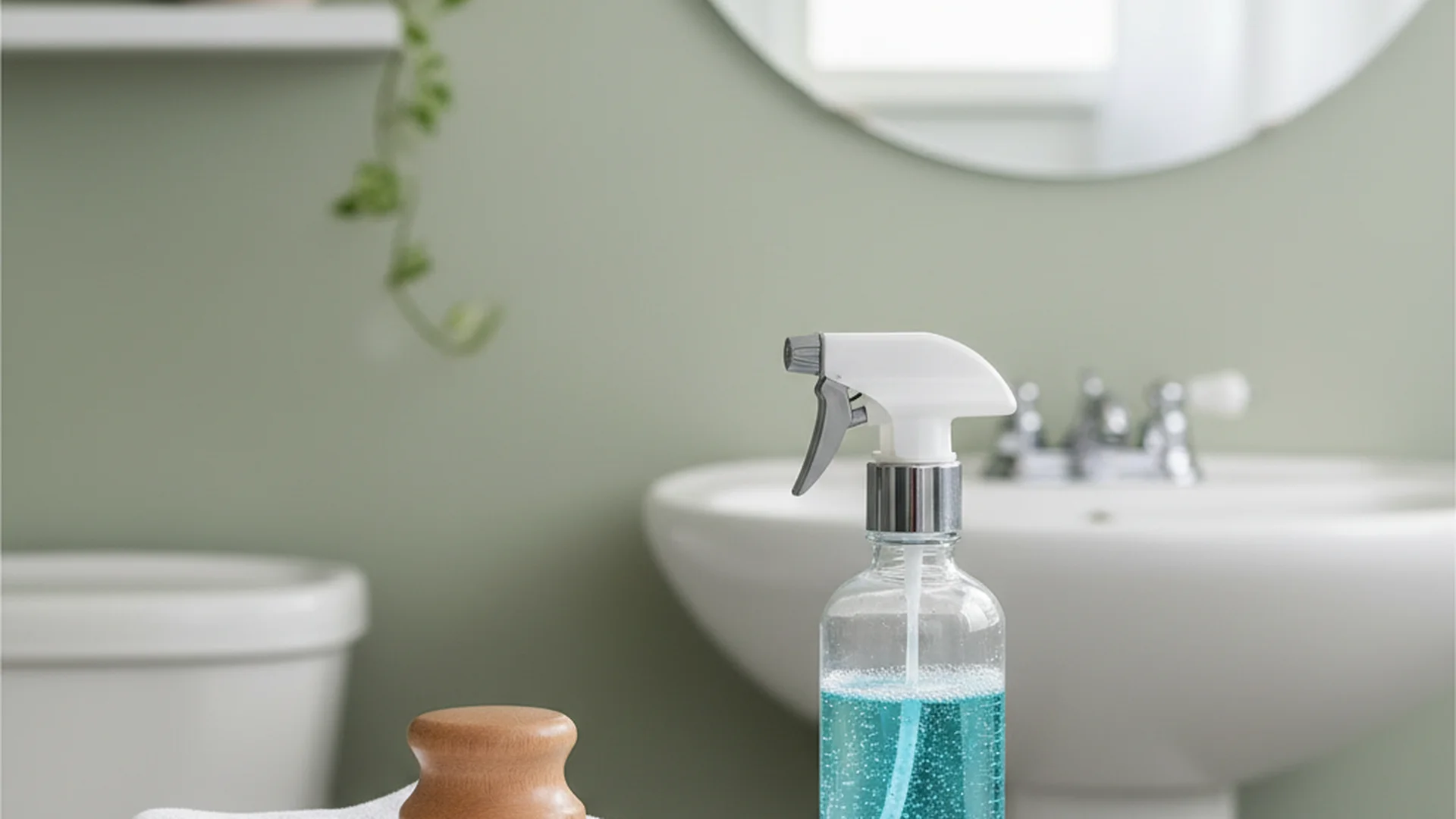
This trend focuses on nature-inspired maintenance. It involves using plant-based, non-toxic cleaners that are safe for the "living walls" or indoor plants that many owners are now integrating into their shed designs. These cleaners ensure that your sanctuary remains a healthy environment for both you and your greenery.
Robotic Integration
With "Shedworking" becoming a permanent lifestyle for many, small-profile robotic vacuums are becoming a staple in detached offices. These are particularly useful for sheds with hard flooring, as they can run daily to manage the dirt tracked in from the yard.
High-Tech Sanitization
2026 sees an increase in UV-C light sanitizers. These are used to treat surfaces and air, killing mold spores and bacteria without the need for harsh chemical residues.
Your Seasonal She Shed Cleaning Checklist
To stay organized, follow this schedule to keep your retreat in top condition.
| Season | Tasks |
|---|---|
| Spring | Full decant, wash exterior siding, check foundation level, lubricate hinges. |
| Summer | Monitor humidity levels, trim back surrounding vegetation (12" gap), clean windows. |
| Fall | Clear gutters, check weather stripping for drafts, store outdoor fabric items. |
| Winter | Inspect for roof leaks after snow/rain, check for pest entry points, run dehumidifier. |
Frequently Asked Questions
How do I stop my she shed from smelling musty?
Can I pressure wash my she shed?
How do I bug-proof my sanctuary?
Is it safe to use standard household cleaners?
Conclusion
Maintaining a she shed is an ongoing labor of love, but the rewards are significant. By following a consistent she shed cleaning routine, you aren't just tidying a room; you are protecting a substantial investment and ensuring your personal sanctuary remains a healthy, inspiring space for years to come. Whether you’re adopting the latest biophilic cleaning products or simply staying on top of your "Empty & Assess" deep cleans, your efforts will pay off in both property value and personal peace.
Success: A clean, well-maintained she shed can last for decades, providing a timeless escape just steps from your back door.
Cleaning that keeps score
Every task earns points, every streak multiplies them, and Premium adds a household leaderboard plus a monthly Dustagorgon to beat.
- Free forever
- 30 badges to earn
- Up to 6 in a household
No card needed. Set up your rooms in a couple of minutes.