In this article
What you’ll learn
- Proper organization can increase weekly crafting time from 2.5 to 6.5 hours.
- Using "Activity Zones" prevents cross-contamination and reduces cleanup time.
- Visibility is the
For many of us, the craft room is a sanctuary—a place where imagination takes physical form. However, when the surfaces disappear under a mountain of fabric scraps, tangled yarn, and dried-out paint tubes, that sanctuary can quickly become a source of stress. Effective craft room cleaning isn't just about aesthetics; it is about reclaiming your mental bandwidth and your time. Research shows that cluttered environments lead to higher cortisol levels, which can stifle the very creativity you are trying to cultivate.
In this comprehensive guide, we will explore the most efficient strategies for deep cleaning and organizing your creative space, incorporating the latest 2025 and 2026 trends in smart storage and sustainable design.
Why a Clean Craft Room Matters in 2026
This means more hobbyists are acquiring more supplies than ever before. But more "stuff" often leads to more "searching." The average person spends over 3,600 hours in their lifetime looking for lost items. In a craft room, this manifests as 20 minutes spent hunting for a specific 4mm crochet hook or a particular shade of distress ink.
By implementing a structured approach to craft room cleaning, you can reclaim up to four hours of crafting time every week. Furthermore, organized crafters save approximately 15-20% annually by avoiding "duplicate buying"—the frustrating habit of purchasing a tool you already own but simply cannot find.
Success: A study of dedicated storage users showed that when supplies were visible and accessible, their weekly creative output more than doubled.
Step 1: The "Clear Out" Method
When the mess is overwhelming, the biggest mistake is trying to organize the clutter as it sits. Instead, use the "Clear Out" method.
- Remove Non-Craft Items: Start by taking out anything that doesn't belong. This includes coffee mugs, mail, kid’s toys, or tools from other rooms.
- Category Sorting: Rather than tackling the whole room at once, focus on one category (e.g., all adhesives, all paper, or all textiles).
- The Purge: Apply the "6-Month Rule." If you haven't touched a specific supply in six months and it doesn't have a designated upcoming project, it’s time to donate it to a local school or community center.
Warning: Never buy storage bins before you have finished the decluttering phase. Buying containers for items you might eventually throw away only adds to the volume of clutter.
Step 2: Designing Your Activity Zones
In 2026, the trend in home organization has shifted toward "Workflow-Based Layouts." Instead of grouping all "blue things" together, organize your room based on how you move through a project.
The Hot Zone
This is your main desk or work surface. Only keep the tools you use every single time you craft within arm’s reach—scissors, your favorite adhesive, and a ruler. Everything else should be moved to the perimeter.
The Storage Zone
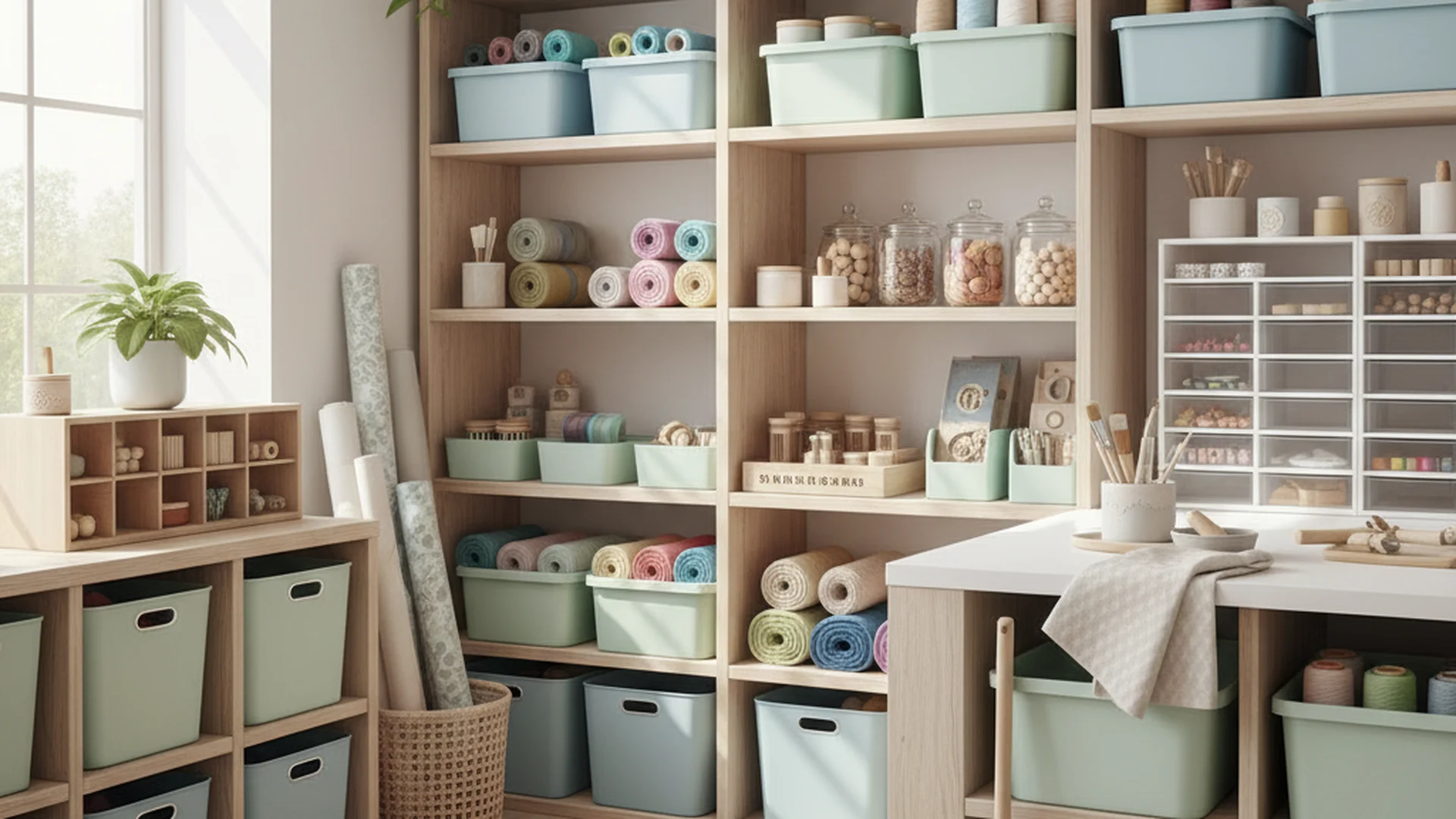
This area is for bulk supplies like backstock paper, rolls of vinyl, or yarn cakes. Use vertical storage here to maximize floor space. Pegboards and wall-mounted racks are essential for keeping items off the floor while remaining visible.
The Messy Zone
Dedicated spots for "wet" crafts—like resin, painting, or pottery—are crucial. By confining these activities to one area, you prevent paint spills or glitter from migrating into your sewing machine or paper trimmer.
Tip: Use "Project Trays" for Works in Progress (WIPs). When you need to clear your main desk, you can move the entire tray without losing small components, keeping the momentum of your project alive.
The Ultimate Craft Room Cleaning Checklist
To maintain the results of your deep clean, follow this tiered craft room cleaning checklist designed for the modern crafter.
Daily: The 5-Minute Reset
- Clear the primary work surface.
- Return tools (scissors, pens, brushes) to their "Hot Zone" containers.
- Dispose of small scraps and thread clippings.
Weekly: Surface Maintenance
- Vacuum or sweep under the desk (the primary habitat for glitter and scraps).
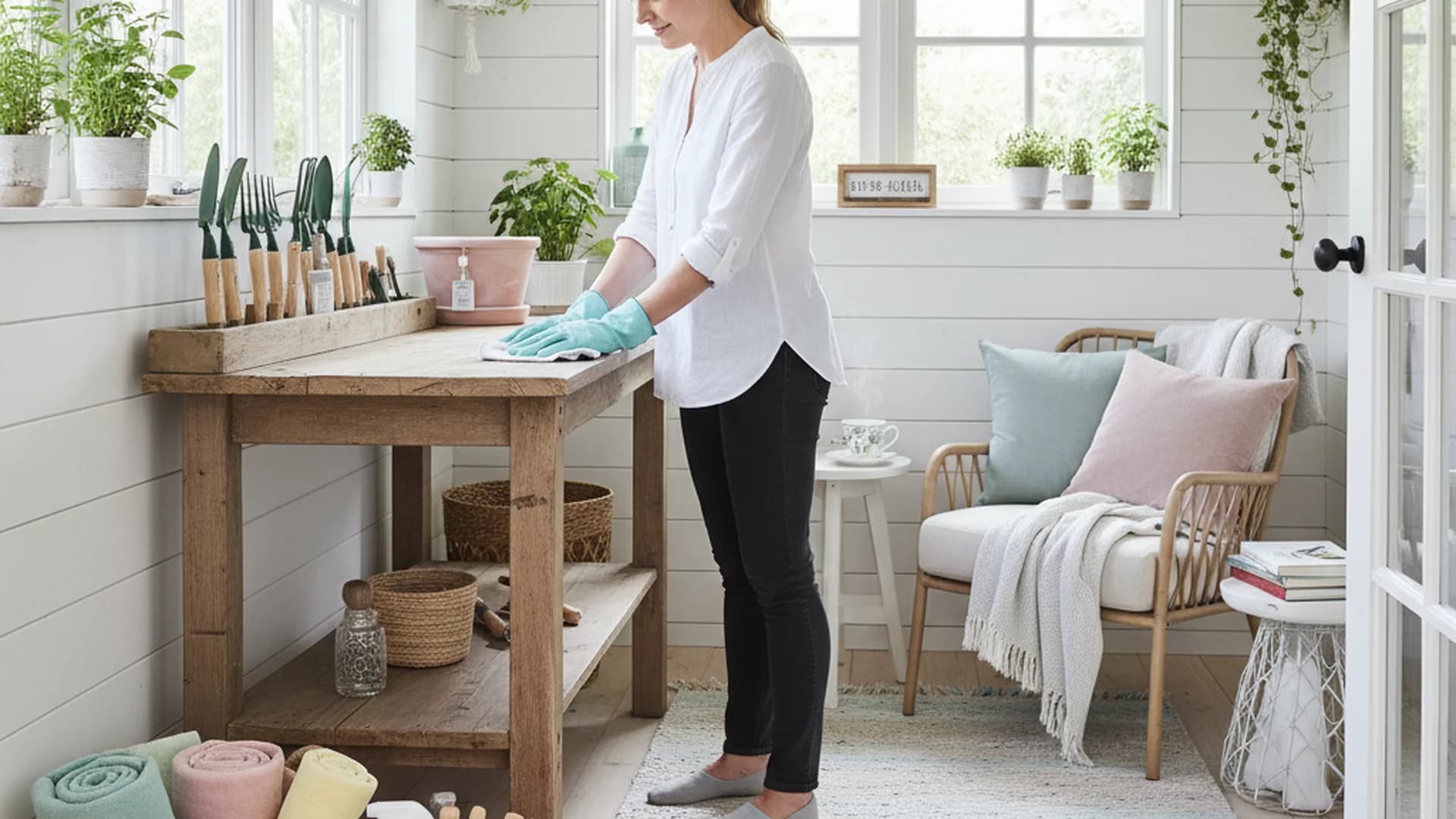
- Wipe down work surfaces with a microfiber cloth.
- Sort any "incoming" supplies into their correct zones.
Monthly: Inventory & Quality Control
- Test pens, markers, and glues; toss any that have dried out.
- Sort the "Scrap" bin—keep only what is truly usable.
- Dust open shelving and display pieces.
Seasonally: The Deep Dive
- Rotate seasonal supplies (e.g., move holiday ribbons to the back and spring florals to the front).
- Deep clean tools (soak brushes, sharpen scissors, oil sewing machines).
- Audit your digital inventory if using smart tracking.
| Task Category | Frequency | Benefit |
|---|---|---|
| 5-Minute Reset | Daily | Prevents buildup of "creative chaos." |
| Tool Audit | Monthly | Ensures you never start a project with dead tools. |
| Zone Rotation | Seasonal | Keeps the most relevant supplies accessible. |
2026 Trends: Smart and Sustainable Storage
As we move into 2026, organization is becoming smarter and more eco-friendly.
- Smart Inventory (QR Codes): High-volume crafters are now using QR codes on opaque bins. A quick scan with your phone shows a digital photo of the contents, eliminating the need to dig through stacked boxes.
- Micro-Organizers: Instead of large, bulky plastic bins, the trend is moving toward "Micro-Storage"—repurposing cosmetic organizers or silicone inserts to hold tiny embellishments and hot tools like glue guns.
- Sustainability: Eco-friendly materials like bamboo, glass jars, and recycled felt are replacing single-use plastics. This "Zen" aesthetic uses natural materials to create a calming environment.
Note: Visibility is king. 83% of crafters report that if a supply is "out of sight, it is out of mind." Use clear containers for anything you use weekly, and reserve opaque, labeled bins for seasonal items.
Common Mistakes to Avoid
Even the most well-intentioned craft room cleaning efforts can fail if these common pitfalls aren't addressed:
- Over-Organizing: If it takes more than two steps to put an item away (e.g., open a cabinet, then a bin, then a bag), you won't do it. Aim for "One-Handed Access" for your most-used items.
- The "Black Hole" Drawer: Deep drawers are where supplies go to die. Use shallow, customizable drawer dividers to keep everything in a single layer.
- Filling Every Inch: Leave 15–20% of your storage empty. This "breathing room" allows you to incorporate new supplies without immediate overcrowding.
- Ignoring Verticality: Floors are for walking; walls are for storing. If your desk is covered, look up!
Real-World Examples
Example 1: The Multi-Media Artist
Jane, a mixed-media artist, struggled with "cross-contamination." By creating a "Messy Zone" with a wipeable silicone mat for her resin work, she reduced her cleanup time by 40% and saved her expensive cardstock from accidental spills.
Example 2: The Small-Space Solution
Mark crafts from a corner of his bedroom. He used an over-the-door shoe organizer to store his yarn by color. This repurposed item utilized "dead space" and turned his supplies into a vertical piece of art, keeping his limited floor space clear.
Example 3: The Sustainability Switch
A local sewing guild replaced all their plastic bins with uniform glass jars and bamboo crates. Not only did the room feel more cohesive and professional, but the "Zen" aesthetic led to reported lower stress levels among the members during long workshops.
Frequently Asked Questions
How do I start when the mess is overwhelming?
How often should I deep clean my craft room?
How do I organize a small craft space on a budget?
Should I store by color or by type?
Conclusion
Mastering craft room cleaning is a journey, not a destination. By implementing zone-based layouts, maintaining a consistent cleaning checklist, and embracing the visibility of your supplies, you transform your workspace from a cluttered storage unit into a high-functioning creative studio. Remember, the goal is to spend less time searching and more time creating.
Success: A clean space equals a clear mind. By reducing the visual "noise" in your room, you invite more inspiration and joy into your creative process.
Cleaning that keeps score
Every task earns points, every streak multiplies them, and Premium adds a household leaderboard plus a monthly Dustagorgon to beat.
- Free forever
- 30 badges to earn
- Up to 6 in a household
No card needed. Set up your rooms in a couple of minutes.