In this article
What you’ll learn
- Implement the "Least-to-Most" rule to prevent cross-contamination.
- Use age-appropriate tools and checklists to empower children.
- Prioritize probiotic and eco-friendly cleaners for a safer environment.
If you have children, you know that the bathroom is often the "ground zero" of household chaos. From mysterious toothpaste smears on the mirror to damp towels left in heaps on the floor, maintaining a hygienic space can feel like a full-time job. However, mastering kids bathroom cleaning doesn’t have to be a solo mission. By implementing a structured approach and teaching your children the right habits, you can transform this high-traffic room into a clean, organized sanctuary.
The importance of keeping this area tidy goes beyond aesthetics. In a high-moisture environment, germs can thrive, making regular maintenance a health priority for your family. In this guide, we will explore everything from the germiest spots in the room to the latest 2026 trends in smart hygiene, ensuring your home stays ahead of the curve.
The Science of Bathroom Germs: Why We Clean
Before diving into the "how," it is essential to understand the "why." Recent data from 2025 highlights some surprising facts about household hygiene. Many parents focus solely on the toilet seat, but swab tests reveal that shower curtains and bathroom floors can harbor up to 70 times more bacteria than the toilet. This is largely due to lingering moisture and the lack of regular disinfection in these "overlooked" areas.
Furthermore, research from the NIH indicates that the "toilet plume"—the aerosolized particles released during a flush—can remain airborne for up to two hours. These germs settle on high-touch surfaces like faucets and toothbrushes. This is why teaching kids to close the lid before flushing is the single most effective "pre-cleaning" tip you can offer.
Warning: Household countertops often have higher levels of E. coli than public restrooms due to the storage of personal care items and less frequent professional-grade disinfection.
The "Least-to-Most" Rule of Cleaning
One of the most common mistakes in kids bathroom cleaning is the order of operations. To prevent the spread of bacteria, experts recommend the "Least-to-Most" rule. This means you always start with the cleanest areas and move toward the dirtiest.
The Correct Sequence:
- Mirrors: Start high and clean.
- Countertops: Wipe away dust and personal items.
- Sinks and Faucets: Scrub away toothpaste and soap scum.
- Toilet: Save the most germ-prone area for very last.
By following this sequence, you ensure that the cloth used to wipe the mirror isn't the same one that just touched the base of the toilet.
Tip: Use a color-coded microfiber cloth system. For example, use blue cloths for mirrors, yellow for sinks, and red strictly for toilets.
Age-Appropriate Cleaning Tasks
Delegating chores is a vital part of home organization. It teaches responsibility and ensures the burden of cleaning doesn't fall on one person. However, tasks must be age-appropriate to be effective and safe.
Toddlers (Ages 2–4)
At this age, it’s about "tidying" rather than deep cleaning. Toddlers can help by:
- Placing dirty clothes in the laundry hamper.
- Putting bath toys back into their storage bins.
- Fetching fresh towels from the linen closet.
School-Aged Children (Ages 6–9)
Kids in this bracket have the motor skills to handle light scrubbing. They can:
- Wipe down mirrors using a vinegar and water solution.
- Clean the sink basin after brushing their teeth.
- Refill soap dispensers and toilet paper rolls.
Pre-Teens and Teens (13+)
Teens are capable of managing the entire bathroom. They should be taught to:
- Sanitize the toilet (inside and out).
- Scrub the bathtub or shower walls.
- Mop the floors and vacuum the exhaust fan.
Success: Empowering children with specific tasks increases their "ownership" of the space, making them less likely to make a mess in the first place.
Essential Tools for a Kid-Safe Cleaning Caddy
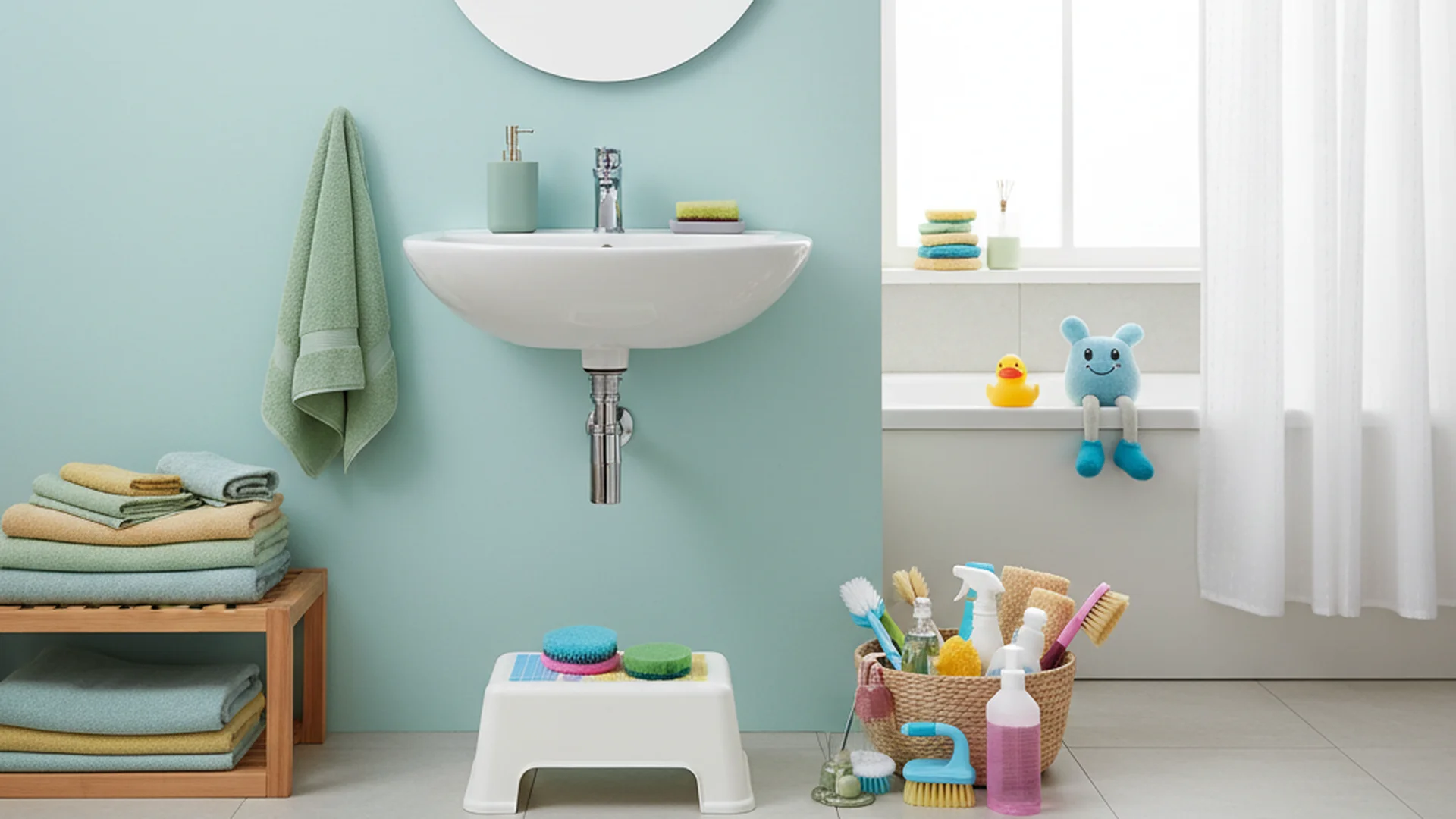
To make the process seamless, create a dedicated cleaning caddy that stays under the bathroom sink. If you have younger children, ensure this is kept in a locked cabinet or on a high shelf.
What to Include:
- Microfiber Cloths: Cut these into quarters. Smaller cloths are easier for small hands to maneuver.
- Vinegar/Water Spray: A safe, non-toxic way to get streak-free mirrors.
- Probiotic Surface Sprays: A 2026 trend, these sprays leave "good" bacteria behind to fight off mold and mildew.
- Non-Toxic Wipes: Perfect for quick daily wipes of faucet handles.
- A Dedicated Toilet Brush: Ensure every bathroom has its own to prevent cross-contamination between rooms.
The Importance of Dwell Time
Teach your children that cleaning isn't just "spray and wipe." For a disinfectant to actually kill bacteria and viruses, it needs "dwell time." Most solutions require staying damp on a surface for 10 minutes before being wiped away.
Note: Use a visual timer or a fun 10-minute playlist to help kids understand how long the cleaner needs to sit.
Emerging Trends: 2025–2026 Hygiene Updates
The world of home cleaning is evolving. As we move into 2026, several trends are changing how we maintain kids' bathrooms:
Smart Hygiene Tech
Many modern homes are now integrating UV-C self-cleaning toilets. These use ultraviolet light to kill bacteria inside the bowl automatically. Touchless faucets are also becoming standard in kids' bathrooms, significantly reducing the bacterial load on high-touch surfaces.
Probiotic Cleaning
We are moving away from the "scorched earth" approach of using heavy bleach. The latest trend focuses on probiotic cleaners. These products introduce beneficial bacteria that "eat" the organic matter germs feed on, providing a long-lasting clean that is much safer for developing lungs.
Subscription "Chore-Crafting"
Services like Blueland have popularized concentrated cleaning tablets. Kids love the "science experiment" aspect of dropping a tablet into a reusable bottle and watching it fizz to create their own cleaning solution. This involvement makes them more invested in the cleaning process.
The Ultimate Kids Bathroom Cleaning Checklist
Use this kids bathroom cleaning checklist to keep everyone on track. We recommend laminating this list and sticking it to the back of the bathroom door.
| Task Category | Action Item | Frequency |
|---|---|---|
| Declutter | Put all toys and laundry in bins | Daily |
| Surfaces | Wipe faucets, handles, and switches | Daily |
| Glass | Spray mirror and wipe with microfiber | Weekly |
| Sanitation | Scrub toilet bowl and wipe exterior | Weekly |
| Airflow | Vacuum the exhaust fan cover | Every 3 Months |
| Restock | Check TP and hand soap levels | Weekly |
Common Mistakes to Avoid
Even with the best intentions, certain cleaning habits can do more harm than good.
- Using Bleach on Rust: Many parents reach for bleach to clean orange rust stains around the drain. Warning: Bleach is an oxidizer and can actually make rust stains permanent. Use a citric-acid-based cleaner instead.
- Neglecting the Exhaust Fan: A dusty fan cannot pull moisture out of the room. This leads to mold growth on the ceiling and can even become a fire hazard.
- One Cloth to Rule Them All: Using the same sponge for the toilet and then the sink is the fastest way to spread Staphylococcus and E. coli. Always use separate tools for the "red zone" (the toilet).
- Overlooking the Bath Mat: Because they stay damp, bath mats are hotbeds for bacteria. Shake them out daily and wash them in hot water weekly.
Frequently Asked Questions
At what age can kids start cleaning the bathroom?
Is it safe for kids to use standard bathroom cleaners?
How do I get my kids to stop leaving toothpaste everywhere?
How often does a kids' bathroom really need to be cleaned?
Conclusion
Managing kids bathroom cleaning doesn't have to be an uphill battle. By understanding the science of germs, utilizing the "Least-to-Most" rule, and staying updated on the latest probiotic and smart-tech trends, you can maintain a space that is both hygienic and organized. Remember, the goal is not just a clean room, but to teach your children the life skills they need to care for their own environment.
Success: A clean bathroom reduces allergens, prevents the spread of illness, and creates a more peaceful morning routine for the whole family.
Cleaning that keeps score
Every task earns points, every streak multiplies them, and Premium adds a household leaderboard plus a monthly Dustagorgon to beat.
- Free forever
- 30 badges to earn
- Up to 6 in a household
No card needed. Set up your rooms in a couple of minutes.