In this article
What you’ll learn
- Fix moisture issues before cleaning to prevent mold regrowth.
- Use a top-to-bottom approach to avoid re-contaminating surfaces.
- Replace bleach with enzymatic or bio-based cleaners for porous concrete.
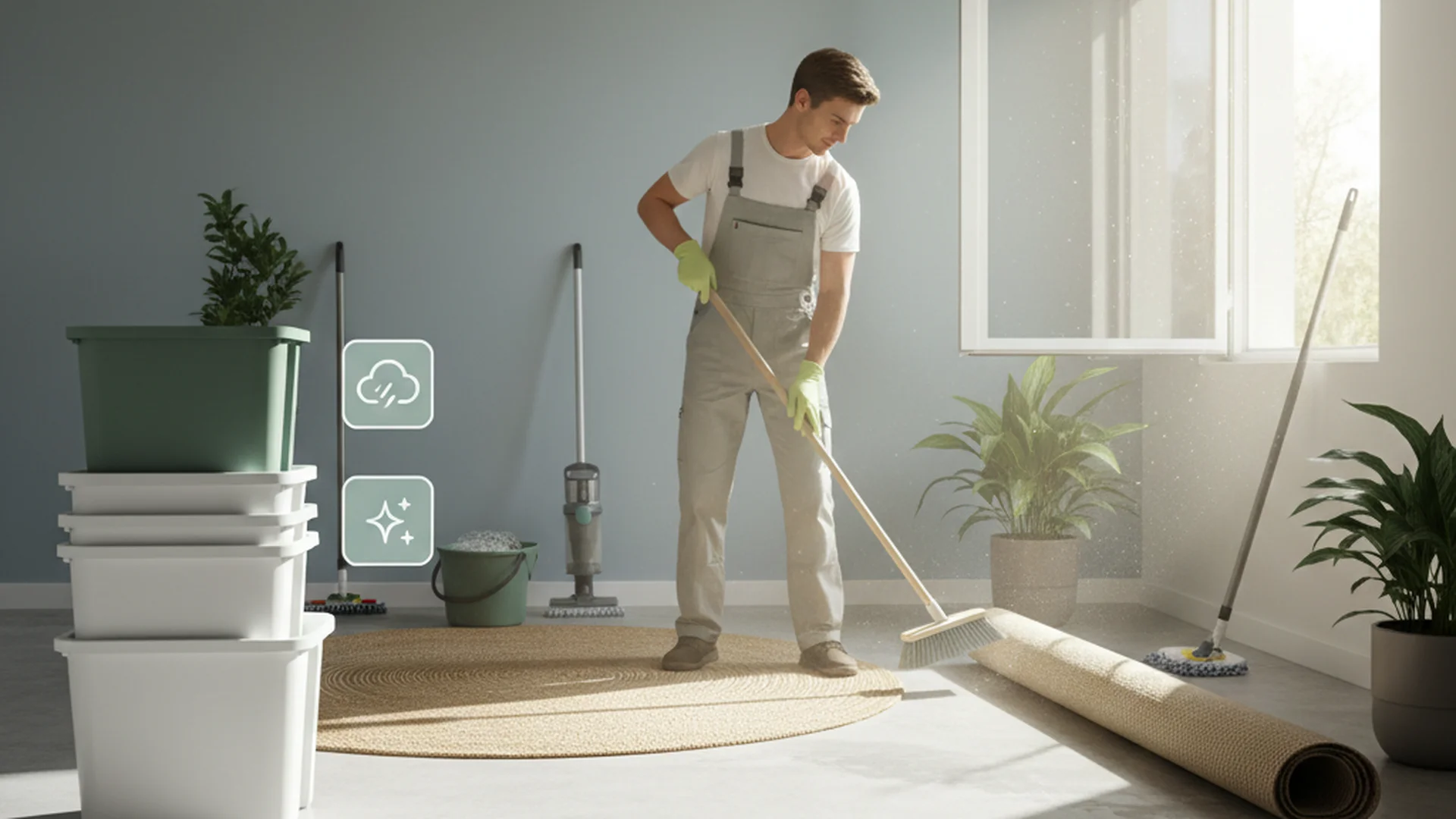
For many homeowners, the basement is the "forgotten" floor—a catch-all for seasonal décor, old fitness equipment, and stacks of cardboard boxes. However, because this area is nestled underground, it faces unique environmental challenges that a standard broom and dustpan simply can't handle. To truly deep clean basement environments, you must look beyond surface dust and tackle the biological health of the space. In 2026, we understand more than ever that a clean basement isn't just about aesthetics; it is a critical component of your home’s air quality and structural integrity.
Why Your Basement Needs a "Biological" Reset
Before diving into the manual labor, it is important to understand the high stakes involved in basement maintenance. Unlike the upstairs living areas, basements are prone to dampness and poor ventilation. According to data from 5 Microns Tech, approximately 47% of U.S. homes show visible signs of mold or carry a distinct musty odor, with the basement being the primary culprit.
This isn't just an inconvenience. The EPA and Berkeley National Laboratory have linked 4.6 million cases of asthma in the U.S. to dampness and mold exposure in the home. Furthermore, mold and moisture damage can be more destructive to wood than fires and termites combined. When you set out to deep clean your basement, you are performing preventative healthcare for both your family and your property.
Note: Professional basement deep cleaning costs have risen in 2026, ranging from $300 to $2,000. Doing it yourself can save thousands, provided you use the right techniques.
Phase 1: The Moisture and Air Quality Audit
You should never start cleaning a damp basement. If you mop a floor while the humidity is high, you are simply providing the moisture mold needs to bloom.
Assessing Humidity Levels
Begin by running a dehumidifier for at least 48 hours before you plan to clean. In 2026, many homeowners use smart moisture sensors that alert their phones if humidity spikes above 55%. Your goal is to maintain a level between 30% and 50%.
Inspecting the Foundation
Check for "sweating" pipes, foundation cracks, or white salty powder on the walls known as efflorescence. Cleaning over these issues is a temporary fix; the moisture source must be addressed to keep the space clean long-term.
Warning: If you discover a mold colony larger than 10 square feet, stop immediately and consult a professional. Large-scale mold remediation requires specialized containment that standard household tools cannot provide.
Phase 2: The "Three-Pile" Declutter
A major part of any basement deep cleaning checklist is removing the obstacles that trap dust and limit airflow. Clutter is the enemy of a healthy basement.
Keep, Donate, Discard
Create three distinct zones.
- Keep: Items used within the last year.
- Donate: Useful items that no longer serve your lifestyle.
- Discard: Broken items or anything that shows signs of mold/mildew.
A Real-World Example: The Miller Family
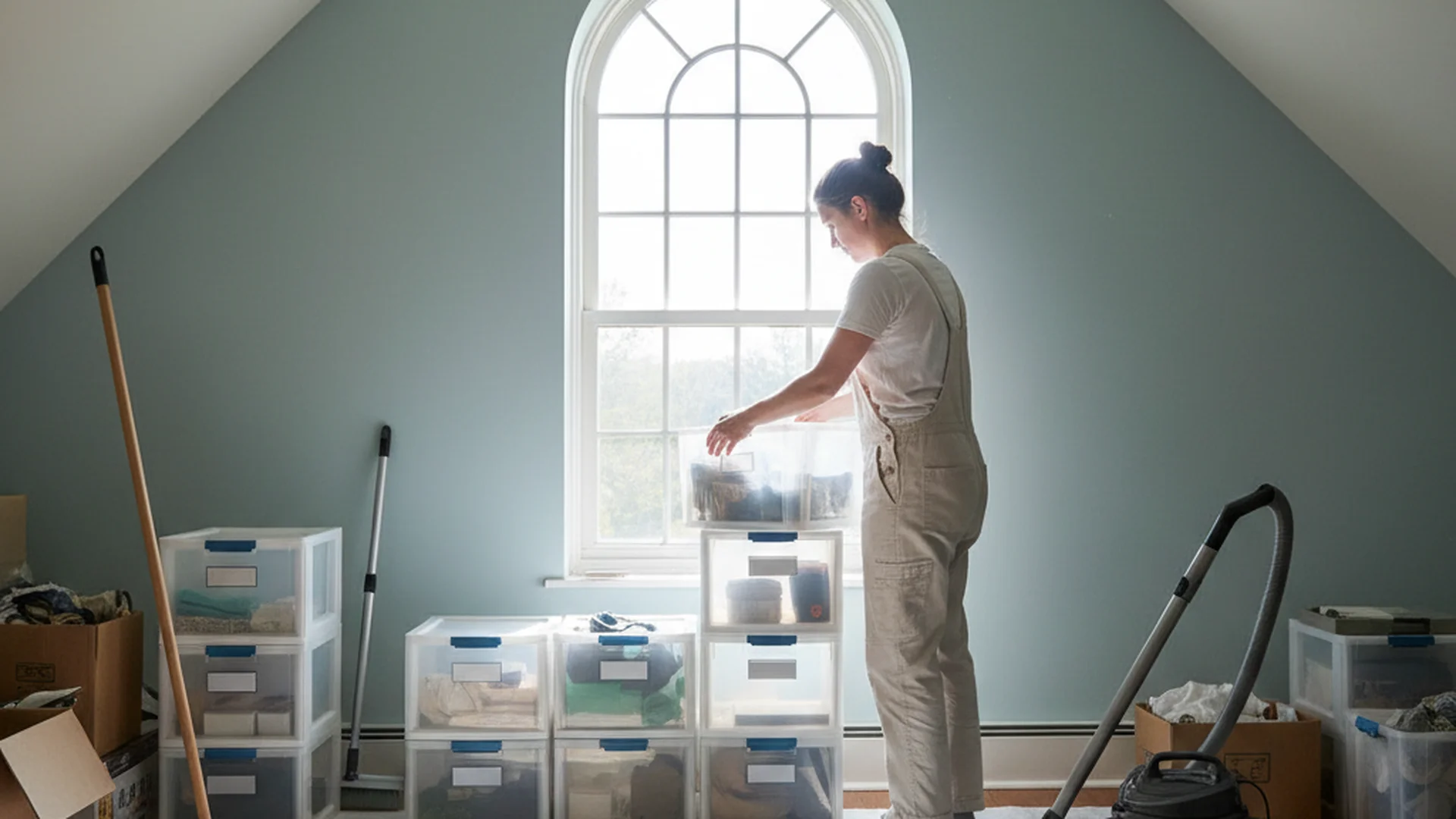
The Miller family in Ohio hadn't cleaned their basement in five years. They found that by removing 15 water-damaged cardboard boxes and switching to airtight plastic bins, the "basement smell" vanished within a week. Cardboard is organic material; it absorbs moisture and acts as a food source for silverfish and mold.
Tip: Always use clear, plastic airtight bins for basement storage. They protect your belongings from floods and pests while allowing you to see the contents without opening the lid.
Phase 3: Top-to-Bottom Dusting
The golden rule of professional cleaning is to work from the ceiling down to the floor. If you clean the floors first, the dust you knock off the ceiling joists will simply settle on your freshly scrubbed surface.
Ceiling Joists and Ductwork
In unfinished basements, use a vacuum with a HEPA filter to clean the ceiling joists, pipes, and ductwork. HEPA filters are essential because they trap 99.97% of particles, ensuring you aren't just blowing mold spores and dust back into the air.
Light Fixtures and Cobwebs
Basements are magnets for spiders. Use a long-handled duster to reach corners. Remove light fixture globes, wash them in warm soapy water, and dry them completely before re-installing.
Phase 4: Wall and Surface Sanitization
Once the overhead dust is gone, focus on the vertical surfaces.
Cleaning Unfinished Walls
For concrete or brick walls, use a stiff-bristled brush to scrub away dust and efflorescence. If there are no signs of mold, a simple solution of warm water and a few drops of dish soap works well.
Modern Cleaning Solutions: Bio-Based Cleaners
A major trend in 2026 is the shift toward probiotic or bio-based cleaners. These products contain live beneficial bacteria that continue to "eat" organic matter and odors for up to 72 hours after application. They are particularly effective on porous surfaces like basement walls where traditional chemicals can't reach.
| Surface Type | Cleaning Tool | Solution Recommendation |
|---|---|---|
| Concrete | Stiff Brush | Probiotic/Enzymatic |
| Drywall | Microfiber | Mild Detergent |
| Brick | Vacuum Brush | Vinegar/Water |
Success: Using bio-based cleaners not only removes the current dirt but creates a microscopic barrier that prevents odor-causing bacteria from returning quickly.
Phase 5: The Deep Floor Reset
The floor is the final stage of the process. Because gravity brings all contaminants to the ground, this requires the most intensive effort.
For Finished Floors
If you have a finished basement with laminate, vinyl, or carpet, use a steam cleaner. Steam kills 99% of bacteria without the need for harsh chemicals that can linger in poorly ventilated spaces.
For Unfinished Concrete
Standard mopping is rarely enough for concrete. Use a shop-vac to remove all fine grit first. Then, apply a heavy-duty degreaser or an enzymatic cleaner. Scrub the solution into the floor and use a wet-dry vac to pick up the liquid. This prevents the concrete from soaking up excess water.
Warning: Never use bleach on concrete. Bleach’s chemical structure prevents it from penetrating the pores of the concrete. It kills the mold on the surface but leaves the "roots" alive, often providing the moisture they need to grow back stronger.
Recent Trends: The "Wellness Basement" in 2026
The concept of the basement has evolved. It is no longer just storage; it is being converted into "recharge zones" like home gyms, meditation rooms, and saunas.
- UV-C Light Integration: Many homeowners are now using portable UV-C wands to sanitize high-touch surfaces and HVAC vents to kill airborne mold spores on contact.
- Smart HVAC Filters: Upgrading to MERV 13 filters is now standard practice after a deep clean. These filters are thick enough to catch bacteria and smoke particles, keeping the air in your sub-level as fresh as the air upstairs.
- AI-Powered Monitoring: Smart dehumidifiers now integrate with home ecosystems (like Matter or HomeKit) to automatically adjust levels based on outdoor weather patterns.
Common Mistakes to Avoid
- Cleaning Out of Order: Many people start with the floor because it's the most visible. Always follow the top-to-bottom rule to save time and effort.
- Over-Saturating Surfaces: Using too much water can trigger a new mold bloom within 24–48 hours. Aim for surfaces to be "damp," not "wet."
- Ignoring the HVAC Filter: Your deep clean is useless if your furnace is blowing old dust and spores back into the room. Change your filter immediately after finishing the cleaning process.
- Accepting the "Basement Smell": Do not assume a musty odor is normal. A healthy, clean basement should have no distinct odor at all. If it smells, there is active organic growth or off-gassing occurring.
Frequently Asked Questions
How do I get rid of the "basement smell"?
Can I clean mold myself?
How often should a basement be deep cleaned?
What is the best way to clean concrete floors?
Conclusion
Deep cleaning your basement is a labor-intensive task, but the rewards are significant. By following this basement deep cleaning checklist, you aren't just organizing your boxes—you are protecting your home from structural decay and your family from respiratory irritants. In the modern era of the "Wellness Basement," a clean sub-level is the foundation of a healthy home. Take the time to audit your moisture, declutter your space, and use the biological cleaning tools available today to ensure your basement remains a functional, fresh part of your house for years to come.
Success: A properly cleaned basement can increase your home's air quality by up to 30% and prevent thousands of dollars in future moisture-related repairs.
Cleaning that keeps score
Every task earns points, every streak multiplies them, and Premium adds a household leaderboard plus a monthly Dustagorgon to beat.
- Free forever
- 30 badges to earn
- Up to 6 in a household
No card needed. Set up your rooms in a couple of minutes.