In this article
What you’ll learn
- Use a top-to-bottom workflow and HEPA-certified vacuums to prevent dust circulation.
- Avoid bleach on concrete; use Borax or vinegar to penetrate porous surfaces.
- Implement smart sensors and air monitoring to maintain basement health in 2025.
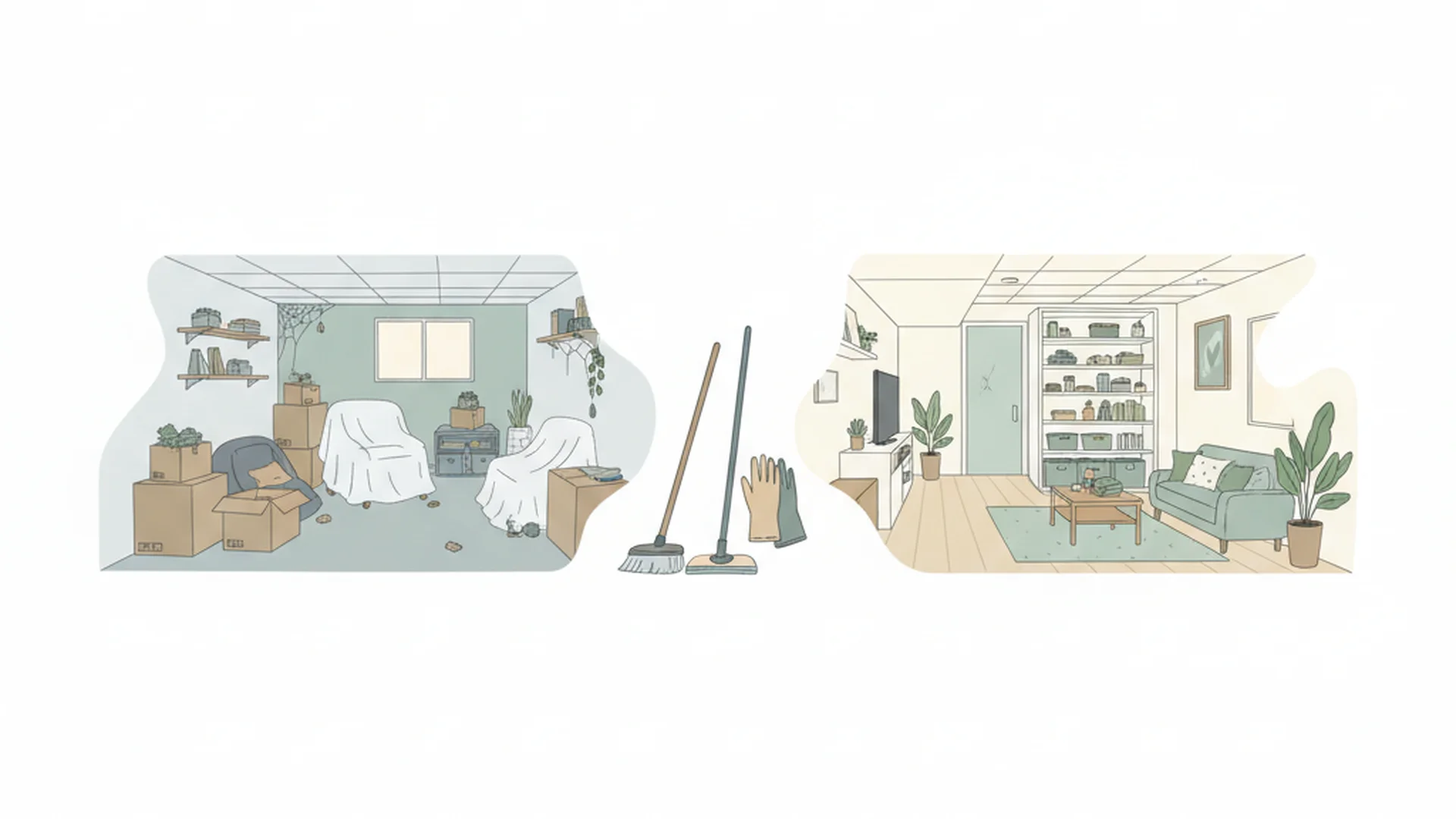
For many homeowners, the basement is a "set it and forget it" zone—a dark expanse reserved for holiday decorations and old gym equipment. However, understanding how to clean basement spaces properly is one of the most significant things you can do for your home's longevity and your family’s respiratory health. In 2025, we no longer view the basement as just a storage area; it is the "lungs" of the home. Because of the "stack effect," the air in your basement eventually circulates through your entire living space, meaning a dirty basement leads to a dirty home.
In this guide, we will walk through a comprehensive, professional-grade strategy to reclaim your lower level, utilizing the latest 2025–2026 cleaning technologies and practical maintenance protocols.
The Pre-Clean Assessment: Identifying Invisible Threats
Before you grab a mop, you must assess the environment. Basements are unique because they are subterranean, making them susceptible to issues that a standard bedroom or kitchen never faces.
Checking for Radon and Efflorescence
Elevated radon levels turn up in a surprising number of homes. Since radon is an odorless, colorless gas that enters through foundation cracks, your cleaning routine should begin with a digital radon monitor check.
While inspecting the walls, look for "efflorescence"—a white, fluffy, salt-like substance. While often mistaken for mold, it is actually a sign of moisture evaporating through the concrete. If you see it, your cleaning process must include a moisture-sealing step to prevent future structural damage.
The Mold Reality Check
Visible mold is common in homes, and the basement is almost always the primary "hot zone." If you discover a mold patch larger than 10 square feet, professional remediation is recommended. For smaller areas, you’ll need to swap standard household cleaners for fungicidal solutions.
Warning: Always wear an N95 mask, goggles, and gloves when deep cleaning a basement. Scrubbing mold or heavy dust releases millions of particles that can trigger severe respiratory issues.
Phase 1: The Great Purge and Decluttering
You cannot clean a basement that is overflowing with "stuff." Professional organizers and cleaners utilize the Three-Pile Sorting Method to reclaim the floor plan.
The Three-Pile Method
- Keep: Items used within the last year that are in good condition.
- Donate: Functional items that no longer serve your lifestyle (e.g., old toys, outgrown clothes).
- Discard: Items that are broken, moldy, or have been damaged by pests.
Tip: Use different colored bags for sorting—clear for donations and black for trash—to prevent accidentally throwing away items meant for the local charity.
Modern Storage Rules
In 2025, we are moving away from cardboard. Cardboard is organic material, which means it serves as a primary food source for mold and a nesting material for rodents.
- Switch to Plastic: Use airtight plastic bins for all soft goods.
- The "Lift-Off" Strategy: Never store items directly on the concrete floor. Even a dry-looking basement can suffer from "sweating" (condensation). Use metal or plastic shelving units to keep items at least 6 inches off the ground.
Phase 2: The Top-to-Bottom Deep Clean
Once the floor is clear, it’s time to clean. The most common mistake homeowners make is cleaning the floor first. This is counterproductive, as gravity will pull dust from the ceiling onto your freshly scrubbed tiles.
Step 1: Ceilings and Overheads
Start by vacuuming the joists, pipes, and light fixtures. If your basement is unfinished, use a long-handled duster or a shop-vac with a brush attachment to remove cobwebs and "ghost dust" (fine particulates that cling to static-heavy surfaces).
Step 2: Walls and Porous Surfaces
Basement walls are often concrete or cinder block, both of which are highly porous.
Warning: Do not use bleach to clean mold off concrete. Bleach’s chemical structure prevents it from soaking into the pores; it kills the surface mold but leaves the "roots" (hyphae) alive, leading to regrowth within weeks.
Instead, use a solution of Borax and water or undiluted white vinegar. These liquids penetrate the concrete to kill the mold at its source. Scrub the walls with a stiff-bristled brush, then allow them to air dry completely.
Step 3: The "HEPA Only" Vacuuming Rule
Standard household vacuums often lack the filtration needed for basements. They may suck up large debris but blow fine mold spores and allergens back out of the exhaust. Use a vacuum with a certified HEPA filter to ensure you are trapping 99.97% of microscopic particles.
Step 4: Floor Scrubbing
For concrete floors, a probiotic cleaning agent is the gold standard for 2025–2026. These cleaners leave behind beneficial bacteria that continue to "eat" organic matter and odor-causing compounds long after you’ve finished mopping.
| Surface Type | Recommended Cleaner | Tool |
|---|---|---|
| Bare Concrete | Borax & Warm Water | Stiff Scrub Brush |
| Finished Tile | Probiotic Floor Cleaner | Microfiber Mop |
| Epoxy Coating | pH-Neutral Soap | Soft Squeegee Mop |
Phase 3: The 2026 Tech Upgrade
Cleaning isn't just about the physical act of scrubbing; it's about maintaining a healthy environment through technology. In 2025, "invisible maintenance" is the trend for future-ready homes.
AI-Driven Leak Detection
Homeowners are now installing smart sensors near sumps, water heaters, and washing machines. Devices like those from Moen or Govee send real-time alerts to your smartphone if they detect even a few drops of water.
Example: A homeowner in Seattle recently saved $15,000 in flooring repairs because a $30 smart sensor alerted him to a pinhole leak in his water heater at 2:00 AM, allowing him to shut off the main valve immediately.
Wellness-Focused Air Monitoring
Integration of air quality monitors (such as Airthings) into your smart home hub allows you to track radon and Volatile Organic Compounds (VOCs) in real-time. These monitors can be programmed to trigger your air purifier or HVAC fan automatically when air quality dips below a certain threshold.
Success: Regularly running a dehumidifier to keep humidity levels below 50% is the single most effective way to prevent the return of the "basement smell."
Common Mistakes to Avoid
- Ignoring the Dryer Vent: If your laundry room is in the basement, a clogged dryer vent is a double threat. It is a major fire hazard and releases excessive moisture into the air, feeding mold growth. Clean the entire length of the vent annually.
- Neglecting the "Stack Effect": Many homeowners assume that as long as they don't go into the basement, the dust and mold there won't affect them. Because warm air rises, your basement air is constantly being pulled upward into your bedrooms and kitchen.
- Using the Wrong Vacuum: Using a shop-vac without a HEPA bag for fine dust like drywall or mold is essentially an "allergen distributor." Always verify your filtration levels before starting.
- Cleaning Without Ventilation: If your basement lacks windows, use a high-powered air mover or floor fan to circulate air while you use cleaning agents.
Your Basement Cleaning Checklist
Use this checklist to ensure no corner is overlooked during your deep clean:
- Test for Radon levels.
- Check the sump pump for proper operation.
- Vacuum ceiling joists and pipes (Top-to-Bottom).
- Purge cardboard boxes and move items to plastic bins.
- Scrub walls with Borax or Vinegar solution.
- Clean the dryer vent and lint trap.
- HEPA-vacuum the entire floor area.
- Mop with a probiotic cleaning agent.
- Replace HVAC filters and dehumidifier filters.
- Inspect window wells for debris and standing water.
Note: If you find white salt deposits (efflorescence), do not just scrub them off. This indicates you may need to check your outdoor gutters and downspouts to ensure water is being diverted away from the foundation.
Frequently Asked Questions
How do I get rid of that 'basement smell'?
Is bleach the best way to clean mold off concrete?
How often should I deep clean my basement?
What is the white fluffy stuff on my basement walls?
Conclusion
Mastering how to clean basement environments is an essential skill for the modern homeowner. By moving away from outdated methods like bleach and cardboard storage, and embracing 2025 technologies like HEPA filtration and probiotic cleaners, you do more than just tidy a room. You protect your home’s structural integrity, make it far more appealing to a future buyer, and—most importantly—ensure the air your family breathes is clean and safe.
Success: A clean, dry basement is the foundation of a healthy home. Following this guide ensures your lower level remains a functional asset rather than a hidden liability.
Cleaning that keeps score
Every task earns points, every streak multiplies them, and Premium adds a household leaderboard plus a monthly Dustagorgon to beat.
- Free forever
- 30 badges to earn
- Up to 6 in a household
No card needed. Set up your rooms in a couple of minutes.