In this article
What you’ll learn
- Utilize a two-mat system to stop dirt before it enters the main living areas.
- Follow the top-down cleaning method to prevent redistributing dust.
- Integrate modern HEPA and antimicrobial solutions for a healthier home.
Your entryway is the hardest-working part of your home. It serves as the transition point between the chaotic outside world and your personal sanctuary. However, because it is the primary "drop zone" for shoes, mail, and umbrellas, it often becomes a magnet for grime and clutter. Knowing how to clean entryway spaces effectively is about more than just aesthetics; it is about setting the tone for your entire living environment. Guests form an opinion of your home within seconds of stepping inside, which makes this small square footage the most critical area for a positive first impression.
Why the Entryway Matters More Than You Think
The entryway isn't just a hallway; it's a psychological threshold. Plenty of people feel overwhelmed by clutter at home, and that stress usually begins the moment they step through the door. If your first sight upon returning home is a pile of muddy boots and a dusty console table, you can feel your shoulders tighten before you even take off your coat.
Beyond the mental impact, the entryway is a frontline defense for your home’s hygiene. More and more homeowners are realizing that stopping dirt at the door saves hours of cleaning in the rest of the house. By mastering an entryway cleaning checklist, you can preserve your flooring and improve indoor air quality significantly.
Essential Tools and Supplies for 2025
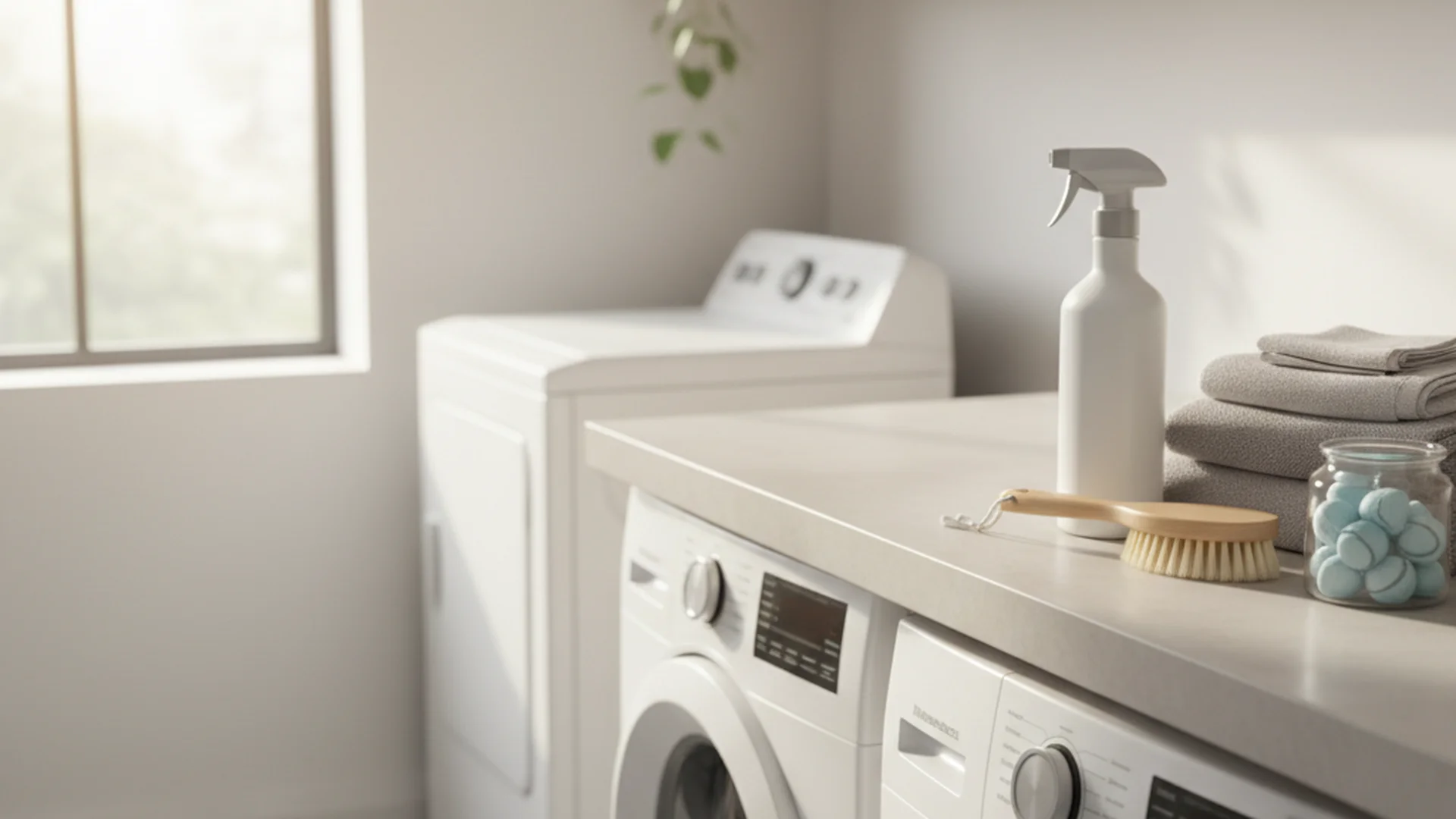
Before diving into the process, ensure you have the right arsenal. The 2025-2026 trend in home maintenance leans heavily toward "green cleaning" and high-tech filtration.
The Modern Cleaning Toolkit
- Microfiber Cloths: Essential for the "S-pattern" wipe down.
- HEPA-Filter Vacuum: Crucial for catching outdoor allergens.
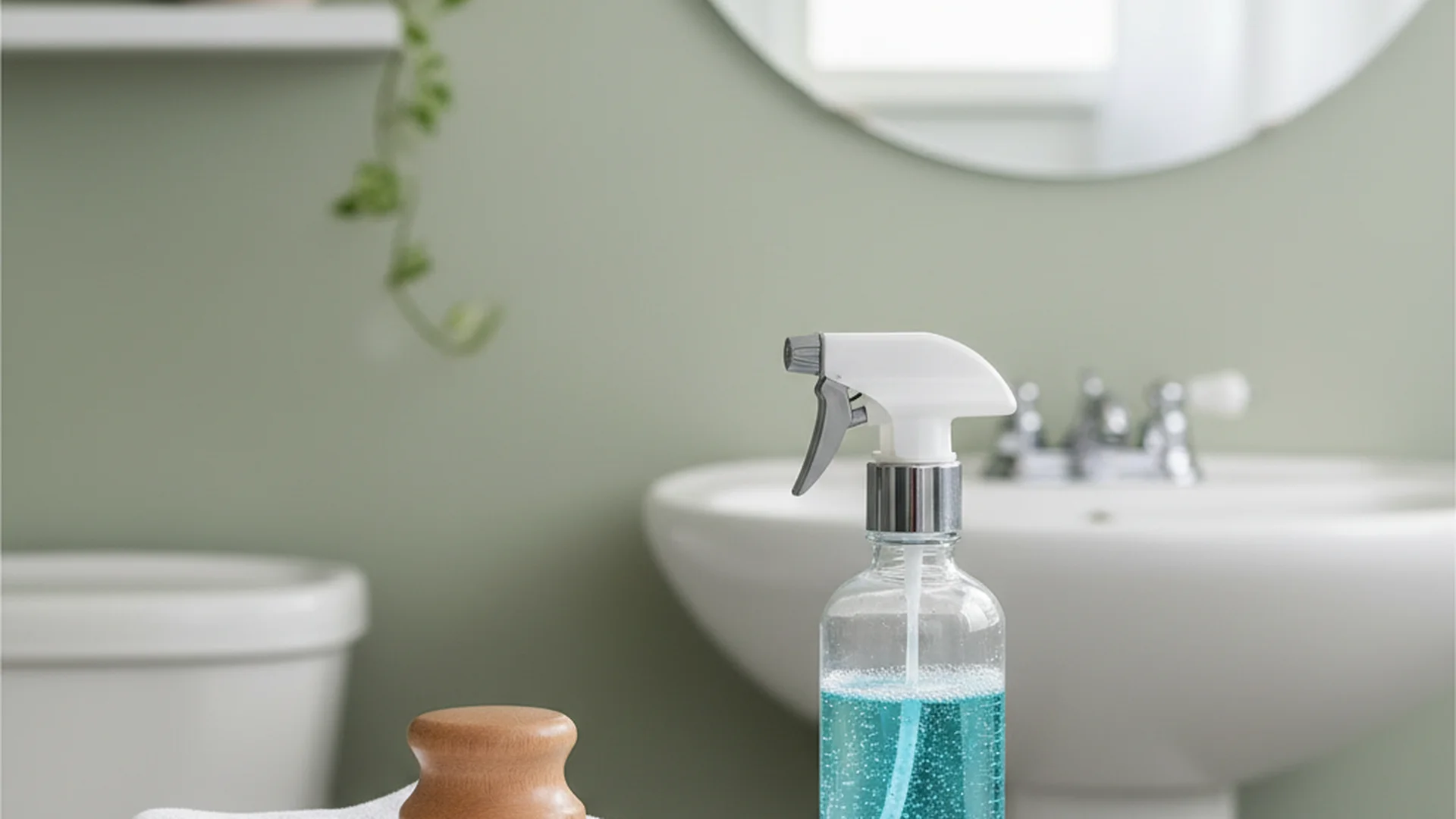
- Plant-Based All-Purpose Cleaner: Biodegradable options are now the industry standard.
- Electrolyzed Water System: A modern trend for chemical-free disinfection.
- Microfiber Mop: Better for trapping fine dust than traditional string mops.
- Soft-Bristled Brush: For cleaning baseboards and door moldings.
Note: Many modern entryways now incorporate IoT (Internet of Things) sensors to monitor humidity. High humidity in coat closets can lead to mold; if your sensor alerts you, it's time to reorganize and aerate the space.
Your Step-by-Step Entryway Cleaning Checklist
To clean efficiently, you must follow a logical order. The "Top-Down" method is the golden rule of professional cleaners: always start at the ceiling and work your way to the floor.
Step 1: Dusting and High Areas
Start by removing cobwebs from corners and dusting the ceiling fan or light fixture. Entryway lights often harbor dead insects and thick layers of dust that dim the "first impression" brightness. Move down to the tops of door frames and any wall-mounted art.
Tip: Use a long-handled duster for high light fixtures, but always ensure the power is off before cleaning bulbs.
Step 2: High-Touch Points and Walls
The dirtiest places in an entryway are often the ones we touch most. Light switches, doorknobs, and the area around the door handle are hotspots for bacteria.
- Doorknobs: Use an antimicrobial cleaner or a 70% alcohol solution.
- Light Switches: Spray your cleaner onto a microfiber cloth first—never directly onto the switch—to avoid electrical shorts.
- Walls: Spot clean scuff marks from shoes or bags using a damp cloth and a drop of dish soap.
Step 3: Mirrors and Glass
A sparkling mirror makes an entryway feel larger and brighter. To avoid streaks, do not clean your glass when the sun is shining directly on it.
| Surface Type | Recommended Cleaner | Technique |
|---|---|---|
| Glass/Mirrors | Vinegar & Water (or Glass Cleaner) | S-Pattern Wipe |
| Wood Frames | Microfiber (Dry) | Circular Buffing |
| Metal Accents | Damp Cloth | Straight Lines |
Warning: Never use vinegar on stone console tables or tile floors, as the acidity can etch and dull the finish over time.
Step 4: Furniture and Decluttering
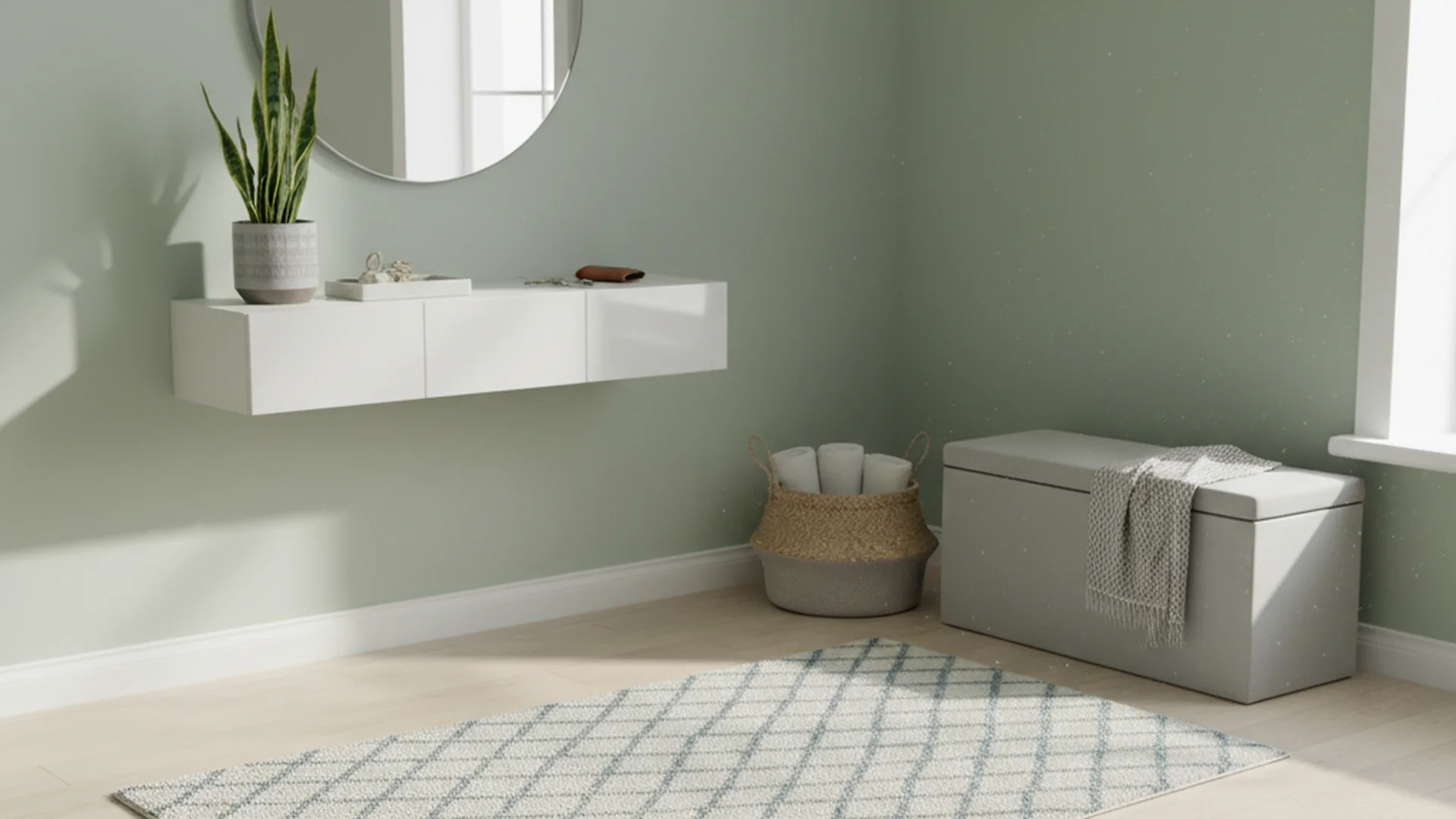
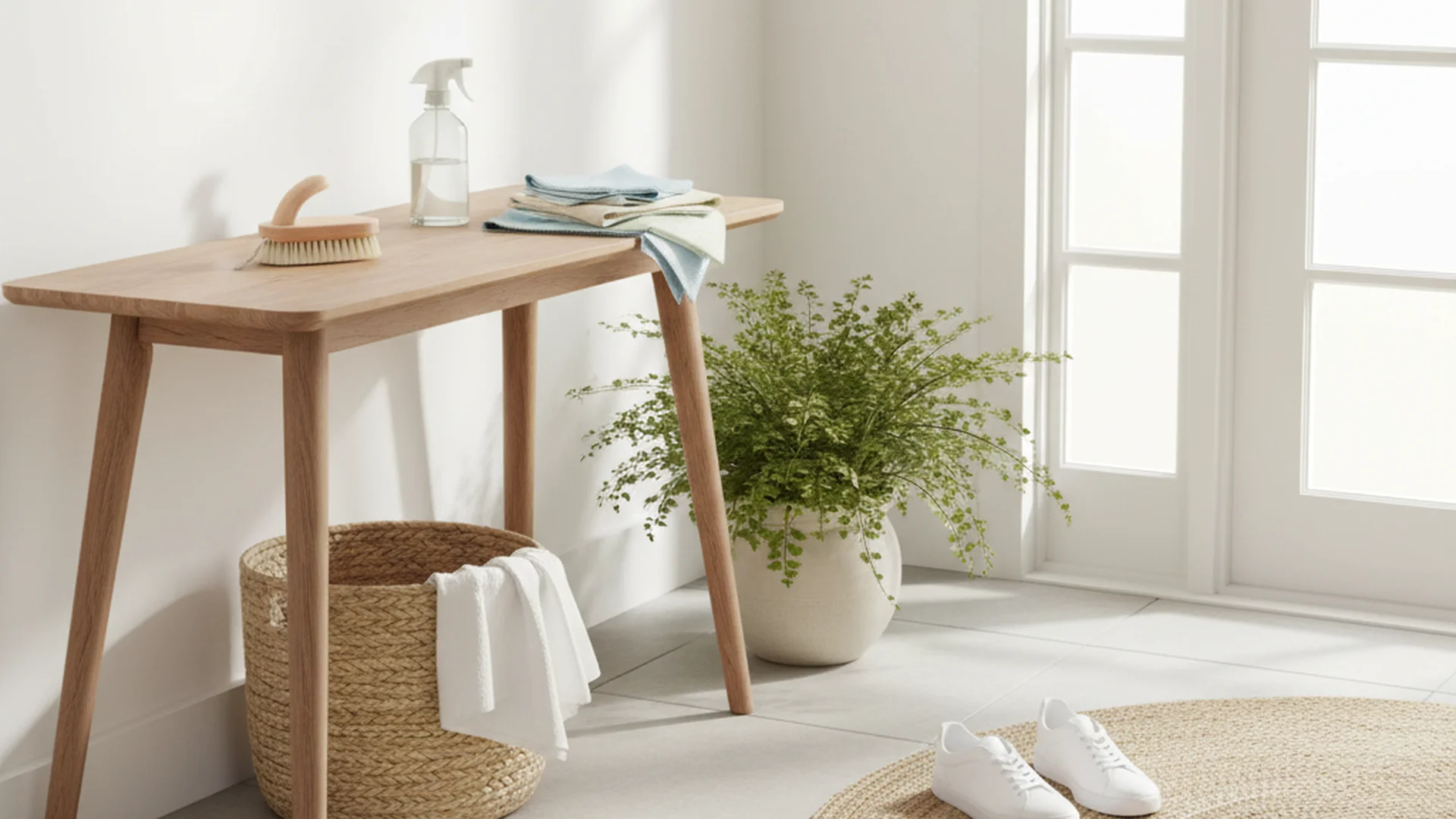
Clear off your console table. Use the "Zonal Organization" strategy:
- Landing Zone: For keys and mail.
- Departure Zone: For items that need to leave the house (returns, donations).
Step 5: The Floor and The Two-Mat System
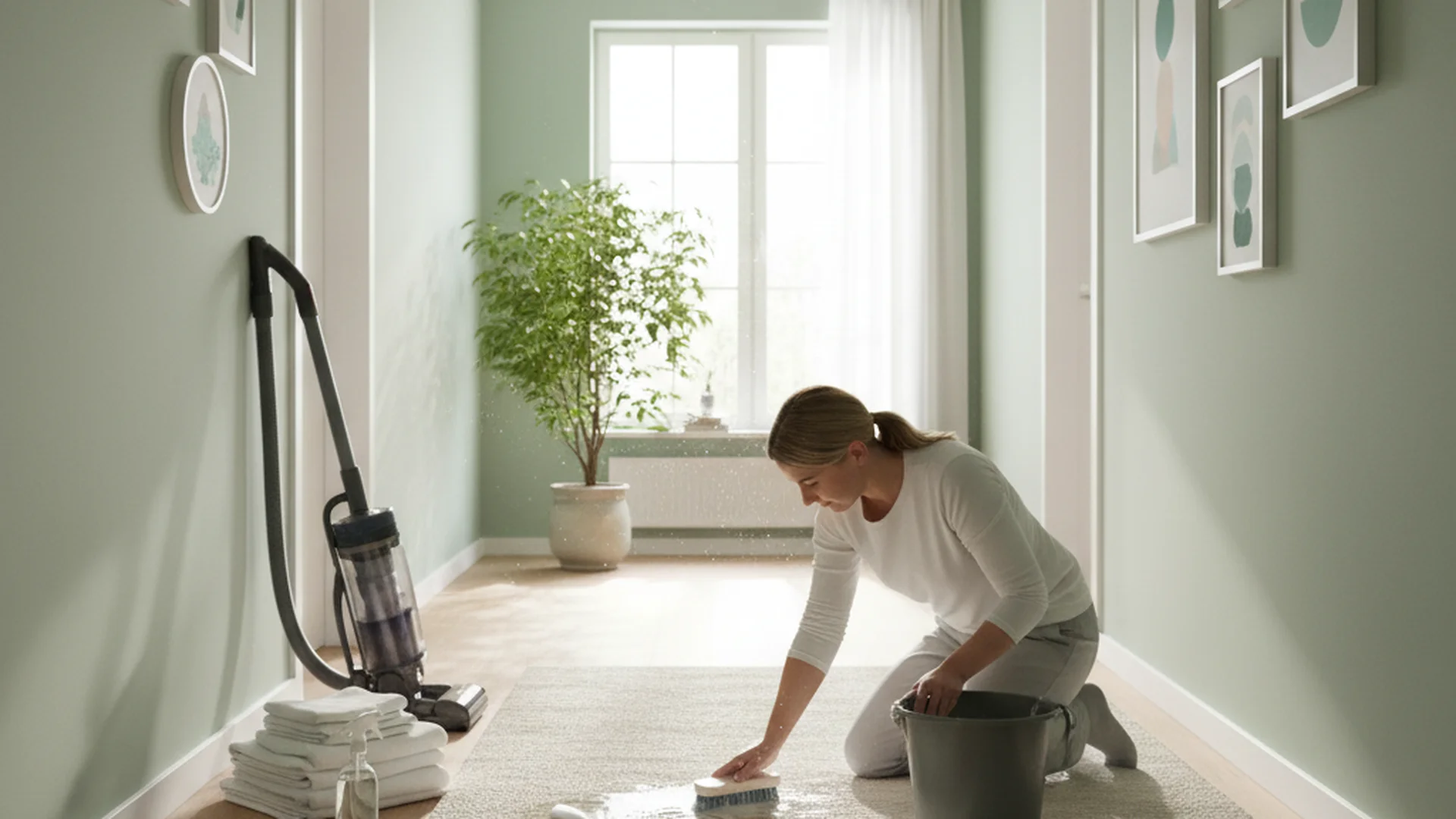
This is where the bulk of the dirt lives. Professionals recommend a "Two-Mat System": a scraper mat outside for heavy debris and an absorbent microfiber mat inside for moisture.
- Vacuum: Use a HEPA vacuum on any rugs and the hard floor.
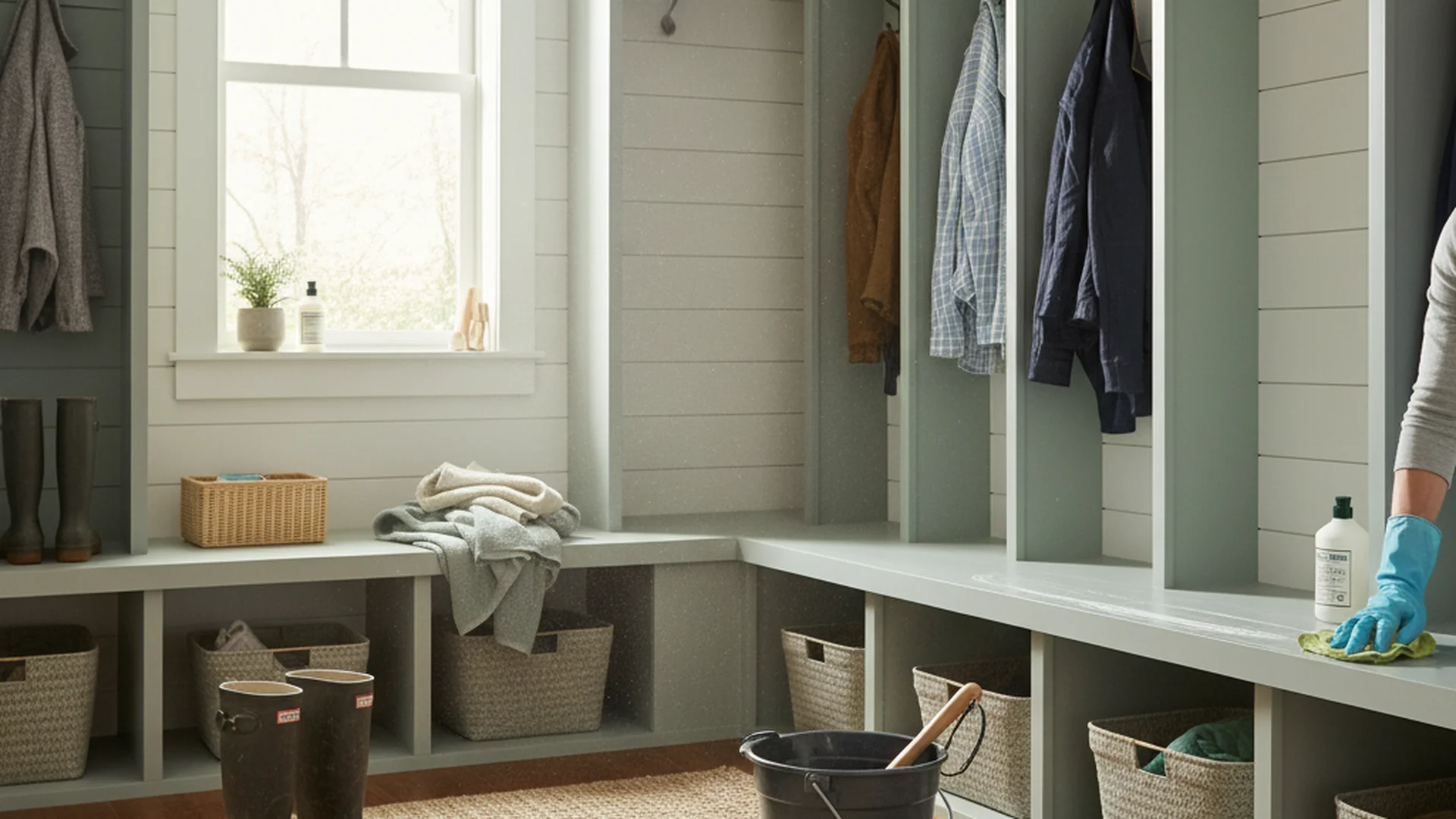
- Mop: Use a microfiber mop with a cleaner appropriate for your floor type (wood, tile, or stone).
- Baseboards: Wipe these down last, as they often collect the dust that settled during the previous steps.
Real-World Examples of Entryway Success
Example 1: The Active Family Entryway
The Miller family struggled with "muddy floor syndrome." By implementing a strict "One Pair Policy" (only one pair of shoes per person in the entryway) and a dedicated waterproof boot tray, they reduced their weekly cleaning time from 40 minutes to 10. They use a "scraper mat" outside that catches 80% of the mud before it hits the hardwood.
Example 2: The Small Apartment Solution
In a 400-square-foot apartment, the entryway is often just a corner. Sarah used vertical storage—wall-mounted hooks and floating shelves—to keep the floor clear. This allowed her to run a robot vacuum daily, preventing the buildup of city soot and dust that typically accumulates in high-traffic urban areas.
Example 3: The "Departure Zone" Efficiency
Mark created a "Departure Zone" box by his door. Anything that needed to leave—a library book, a bag for Goodwill, or a borrowed tool—went into this box. This prevented the "clutter creep" that often makes entryways impossible to clean thoroughly, as he no longer had to move random objects to dust the surfaces.
Advanced 2025 Trends: Air Quality and Tech
As we move into 2026, the definition of "clean" has expanded to include air quality. Entryways are the primary entry point for outdoor pollutants, pollen, and allergens.
- HEPA Integration: Placing a small, stylish HEPA air purifier in the entryway can catch particles the moment the door opens.
- Self-Disinfecting Surfaces: Many homeowners are now installing copper-infused doorknobs or applying long-lasting antimicrobial coatings to high-touch surfaces.
- UV-C Light Sanitizers: Small UV-C boxes for keys and phones are becoming a staple in modern entryways to neutralize bacteria brought in from the outside.
Common Mistakes to Avoid
Even with the best intentions, certain habits can actually make your entryway dirtier or damage your home.
- Scrubbing Carpet Spills: If someone tracks in mud or spills coffee, never scrub. Scrubbing pushes the liquid deeper into the fibers. Instead, use a plastic scraper for solids and blot the liquid with a microfiber towel, moving from the outside in.
- Cleaning Windows in Direct Sun: The heat causes the cleaner to evaporate too quickly, leaving those frustrating white streaks. Wait for an overcast day or clean in the early morning.
- Neglecting the Door Seal: Dust often enters through gaps. Check your weatherstripping annually. If you see light through the cracks, you’re letting in more than just a draft—you’re letting in dust and allergens.
- Spraying Directly on Wood: Always spray your cleaner onto your cloth. This prevents "pooling" which can warp wood finishes or seep into the electronics of smart locks.
Success: Regularly cleaning your entryway doesn't just make the house look better; it significantly reduces the amount of dust that travels into your bedrooms and kitchen, leading to a healthier household overall.
Frequently Asked Questions
How do I keep my entryway clean from dirt?
What are the dirtiest places in an entryway?
How often should I clean the entryway?
How do I protect my floors from winter salt and slush?
Conclusion
Mastering how to clean entryway spaces is the secret to a low-stress, high-functioning home. By treating this area as a defensive barrier—using the right mats, the top-down cleaning method, and modern air-quality tech—you ensure that the outside world stays outside. Remember, the entryway is your home’s "handshake"; make sure it’s a clean and welcoming one.
Cleaning that keeps score
Every task earns points, every streak multiplies them, and Premium adds a household leaderboard plus a monthly Dustagorgon to beat.
- Free forever
- 30 badges to earn
- Up to 6 in a household
No card needed. Set up your rooms in a couple of minutes.