In this article
What you’ll learn
- Treat the stain within the "Golden Window" of 10–15 minutes for the best chance of total removal.
- Identify the base of your foundation (oil, silicone, or water) to choose the right solvent.
- Never rub or apply heat to a foundation stain, as this can permanently set the pigments.
We have all been there: you are running five minutes late, your favorite white blouse is already on, and a stray pump of liquid makeup lands right on your collar. In that moment of panic, your first instinct might be to grab a tissue and scrub, but that is exactly where most people go wrong. Learning how to remove foundation stains effectively requires more than just soap and water; it requires an understanding of modern cosmetic chemistry.
Modern foundations are engineered to stay on your face through sweat, humidity, and 24 hours of wear. While this is great for your complexion, it makes them incredibly difficult to remove from textiles. Whether you need to remove foundation stains from fabric or you’ve had a mishap with a bottle on your bedroom rug, this guide provides the practical steps to save your belongings.
Know Your Enemy: The Chemistry of Foundation
Before you reach for a cleaning agent, you must identify what you are trying to dissolve. In 2025, makeup formulas are more complex than ever. Most current high-wear foundations rely on silicone (dimethicone) or specialized oils to ensure longevity.
Identifying the Base
| Foundation Type | Primary Ingredient | Best Removal Agent |
|---|---|---|
| Oil-Based | Natural or Mineral Oils | Grease-cutting dish soap |
| Silicone-Based | Dimethicone/Cyclomethicone | Isopropyl Alcohol (70%+) |
| Water-Based | Aqua/Water | Shaving Cream or Mild Detergent |
| Powder/Mineral | Mica/Zinc Oxide | Vacuum (No liquids initially) |
Note: Check the first three ingredients on your foundation bottle. If you see "Aqua," it’s water-based. If you see words ending in "-cone" or "-siloxane," it is silicone-based.
Section 1: How to Remove Foundation Stains from Fabric
When you need to remove foundation stains from fabric, the "Golden Window" is your best friend. Treating a spill within the first 10–15 minutes dramatically improves your chances of removing it completely.
Step 1: Remove the Excess
If the foundation is liquid, use a dull knife or a credit card to lift the excess makeup off the surface. Do not use a cloth yet, as this often pushes the liquid deeper into the weave. If it is a powder foundation, blow it off or use a vacuum hose.
Step 2: The Solvent Application
- For Oil-Based Stains: Apply a drop of concentrated grease-cutting dish soap (like Dawn) directly to the stain. Let it sit for 10 minutes to break down the lipids.
- For Silicone-Based Stains: Use a cotton swab dipped in 70% isopropyl alcohol. Dab the stain from the outside in.
- For Water-Based Stains: Apply a dollop of foaming shaving cream (not gel). The surfactants in the foam help lift the pigment to the surface.
Step 3: The Cold Rinse
Always rinse with cold water.
Warning: Hot water can "cook" the proteins and oils in the foundation, permanently bonding the pigments to the fabric fibers.
Real-World Example: The Silk Blouse Rescue
Sarah, a marketing executive, dropped a full-coverage silicone foundation on her silk blouse. Instead of rubbing it with a wet paper towel, she used a cotton swab with a tiny amount of rubbing alcohol on a hidden seam to test for colorfastness. Once safe, she blotted the stain and followed up with a cold-water rinse. The blouse was saved because she avoided the heat of the hand dryer in the restroom.
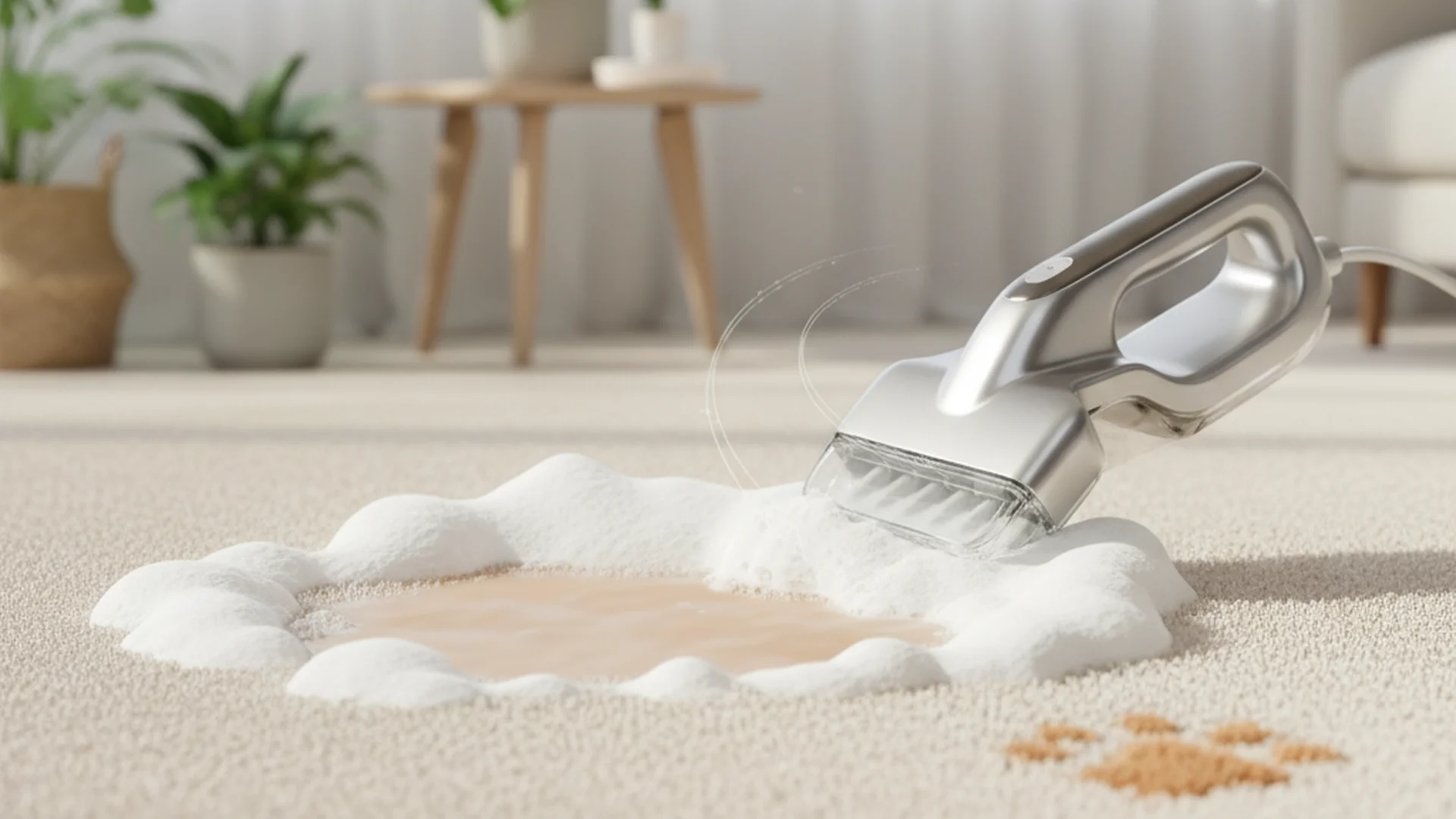
Section 2: How to Remove Foundation Stains from Carpet
To remove foundation stains from carpet, you have to contend with much thicker fibers and a secondary backing that can be easily damaged.
The "Blot and Lift" Technique
- Vacuum First: Especially for powder spills, vacuuming is the only way to prevent a "mud" stain.
- The Solution: Mix one tablespoon of dish soap with two cups of cool water.
- The Motion: Dampen a white microfiber cloth and blot the stain. Work from the outside of the stain toward the center. This prevents the pigment from spreading and creating a larger halo.
- The Alcohol Method (For Silicone): If the soap doesn't work, lightly mist the area with isopropyl alcohol.
Tip: Always perform a patch test in an inconspicuous corner of the carpet. Rubbing alcohol can sometimes dissolve the adhesive backing of certain carpet types.
Real-World Example: The Cream Rug Incident
A homeowner spilled a bottle of "Long-Wear" liquid foundation on a cream-colored wool rug. By using a "blot and lift" motion and a 2026-era probiotic cleaning spray, they were able to break down the organic oils over 24 hours without damaging the delicate wool fibers.
Section 3: The 2025–2026 Tech Guide to Cleaning
The cleaning industry has seen a massive shift toward biotechnology. If traditional methods fail, 2026’s newest tools offer a high-tech solution.
Biotech and Enzyme Cleaners
Modern "biotech" cleaners use proteases and lipases—enzymes that literally "eat" the proteins and fats found in makeup. These are now standard in high-end laundry pods and are specifically designed to work in "Cold Wash" cycles (down to 15°C).
AI-Integrated Washing
Many smart washers manufactured in 2025 and 2026 now feature "Cosmetic Spill" settings. These cycles use specific water pulse patterns to vibrate the pigments out of the fabric rather than using high-heat agitation.
Success: Using an enzyme-based pre-treatment before a cold-water smart cycle can remove even 24-hour "set" stains that were previously considered impossible to clean.
Common Mistakes to Avoid
Even with the best intentions, a few common errors can ruin your favorite items forever:
- Rubbing the Stain: This is the #1 mistake. Rubbing pushes the foundation deeper into the pile or weave and can fray delicate fibers like silk or wool.
- Using Vinegar for Everything: While vinegar is a great natural cleaner, it is largely ineffective against the silicones and heavy waxes found in modern "full-coverage" foundations.
- The Hairdryer Trap: Never use a hairdryer to see if the stain is gone. Heat sets the pigment. Always allow the item to air-dry naturally.
- Makeup Wipes on Clothes: Many makeup wipes contain oils to help break down waterproof mascara. Using them on clothes can leave a secondary "grease halo" that is harder to remove than the foundation itself.
Frequently Asked Questions
Can I use makeup remover wipes on my clothes?
Does shaving cream really work for foundation stains?
Is rubbing alcohol safe for all carpets?
Should I use hot or cold water?
Conclusion
Accidents happen, but a foundation spill doesn't have to mean the end of your favorite outfit or your pristine carpet. By identifying the chemical base of your makeup—whether it’s oil, silicone, or water—you can choose the right solvent to break it down. Remember the "Golden Window" of 10–15 minutes, avoid the temptation to scrub, and lean on modern enzyme-based cleaners for the best results.
With the rise of bio-based cleaners and smart appliance technology in 2026, we have more tools than ever to keep our homes and wardrobes spotless. The next time you see a beige smudge on your sleeve, stay calm, grab the dish soap, and follow the science.
Success: Following these steps ensures your fabrics remain vibrant and your carpets stay stain-free, saving you hundreds of dollars in replacement costs.
Cleaning that keeps score
Every task earns points, every streak multiplies them, and Premium adds a household leaderboard plus a monthly Dustagorgon to beat.
- Free forever
- 30 badges to earn
- Up to 6 in a household
No card needed. Set up your rooms in a couple of minutes.