In this article
What you’ll learn
- A focused 15-minute daily reset saves hours of deep cleaning every month.
- Using the "Top-to-Bottom" and "S-Pattern" rules maximizes efficiency.
- "Dwell time" is essential for actually killing bacteria on high-touch surfaces.
There is a specific kind of peace that comes from walking into a sparkling kitchen first thing in the morning to brew your coffee. Conversely, waking up to a sink full of crusty dishes and sticky countertops can set a chaotic tone for the entire day. The secret to maintaining a sanctuary isn't a grueling four-hour deep clean every weekend; it is the mastery of the quick kitchen clean.
By implementing a focused, strategic 15-minute daily "reset," you can transform the heart of your home from a germ-heavy zone into a pristine environment. The kitchen is often the germiest room in the house—even more so than the bathroom—and the sink in particular is one of the most bacteria-laden spots in the entire home. This makes a daily maintenance routine not just an aesthetic choice, but a health necessity.
The Psychology of the 15-Minute Reset
Why do we procrastinate on kitchen cleaning? Usually, it is because we view it as a monumental task. However, a focused 15-minute daily "reset" spares you hours of deep cleaning later in the month. This "habit stacking" approach—where you perform small cleaning tasks while waiting for the microwave or the coffee pot—allows you to maintain a high level of cleanliness without the burnout.
In 2025, the trend has shifted toward "micro-cleaning segments." Instead of a "Sunday Scrub," modern households are adopting a "clean as you go" philosophy that relies on speed and efficiency. By following the fastest quick kitchen clean methods, you ensure that dirt and grease never have the chance to bond to your surfaces.
The Professional Framework: Top-to-Bottom and Clockwise
Efficiency is born from movement. If you find yourself pacing back and forth across the kitchen, you are losing time. Professionals use two primary rules to ensure no spot is missed and no effort is wasted.
The Top-to-Bottom Rule
Gravity is your best friend—or your worst enemy. Always start with the highest surfaces, such as upper cabinets or the top of the refrigerator, and work your way down to the countertops, and finally, the floor. This ensures that any crumbs or dust you dislodge fall onto surfaces you haven't cleaned yet.
The Clockwise/Counter-Clockwise Method
To avoid "analysis paralysis," pick a starting point (usually the door or the sink) and move around the perimeter of the room in one consistent direction. This mental map ensures that every inch of the countertop and every cabinet handle is addressed without you having to think about "what's next."
Tip: Use an "S-pattern" wipe when cleaning flat surfaces. Instead of circular motions, which just move dirt around, move your cloth in a continuous 'S' shape to pull debris toward you and off the surface.
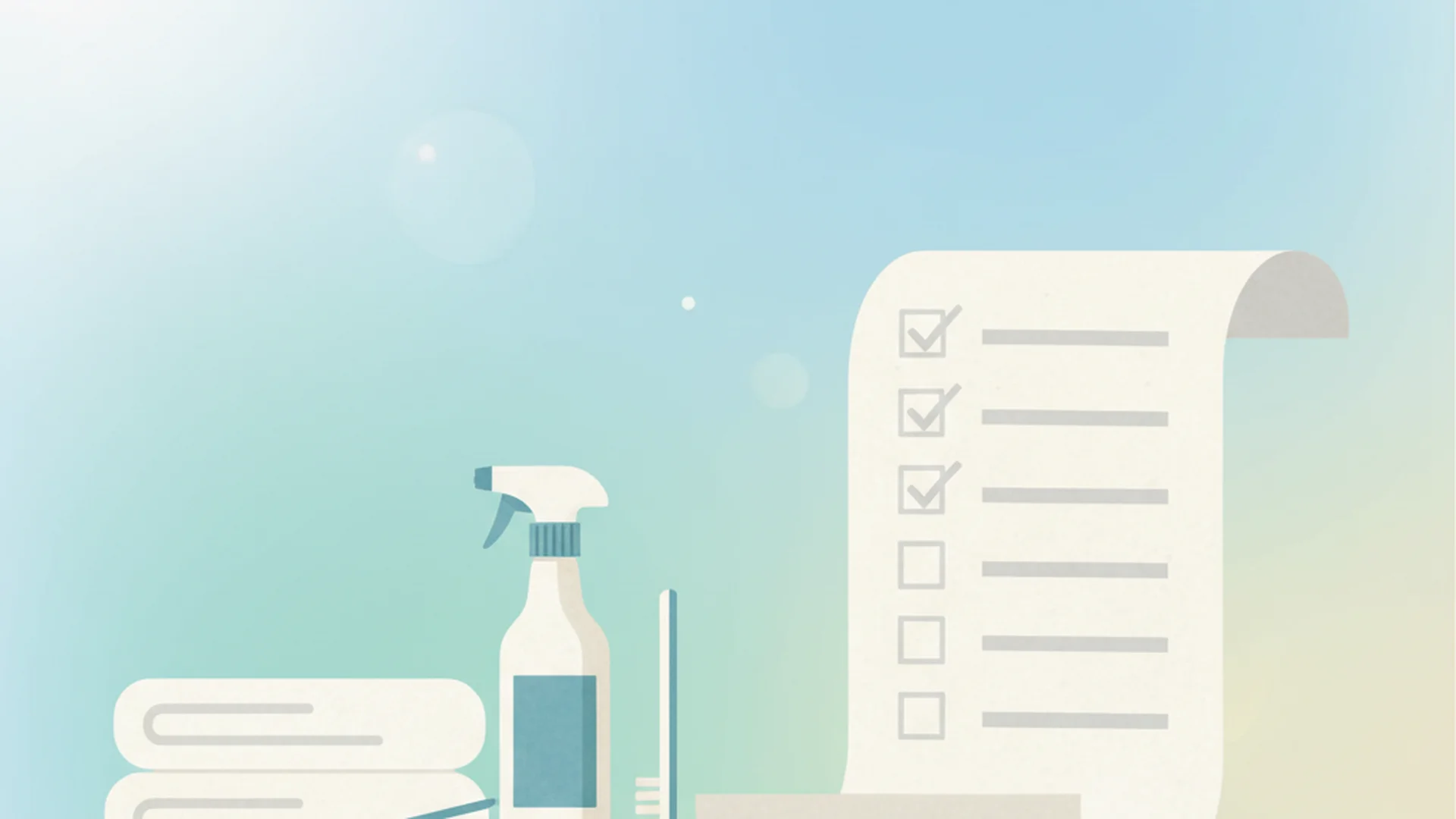
The Ultimate Quick Kitchen Clean Checklist
To achieve the fastest quick kitchen clean, you need a repeatable system. Use this checklist to hit the high-impact areas in record time.
- Clear the Visual Weight: Put away small appliances, mail, or stray items that don't belong on the counter.
- The Dish Blitz: Load the dishwasher or wash the final few hand-wash items. An empty sink is the "anchor" of a clean kitchen.
- Spray and Dwell: Spray your countertops, stovetop, and sink. Do not wipe immediately (see the "Dwell Time" section below).
- The High-Touch Wipe: While the cleaner sits, wipe down the fridge handle, microwave buttons, and faucet lever.
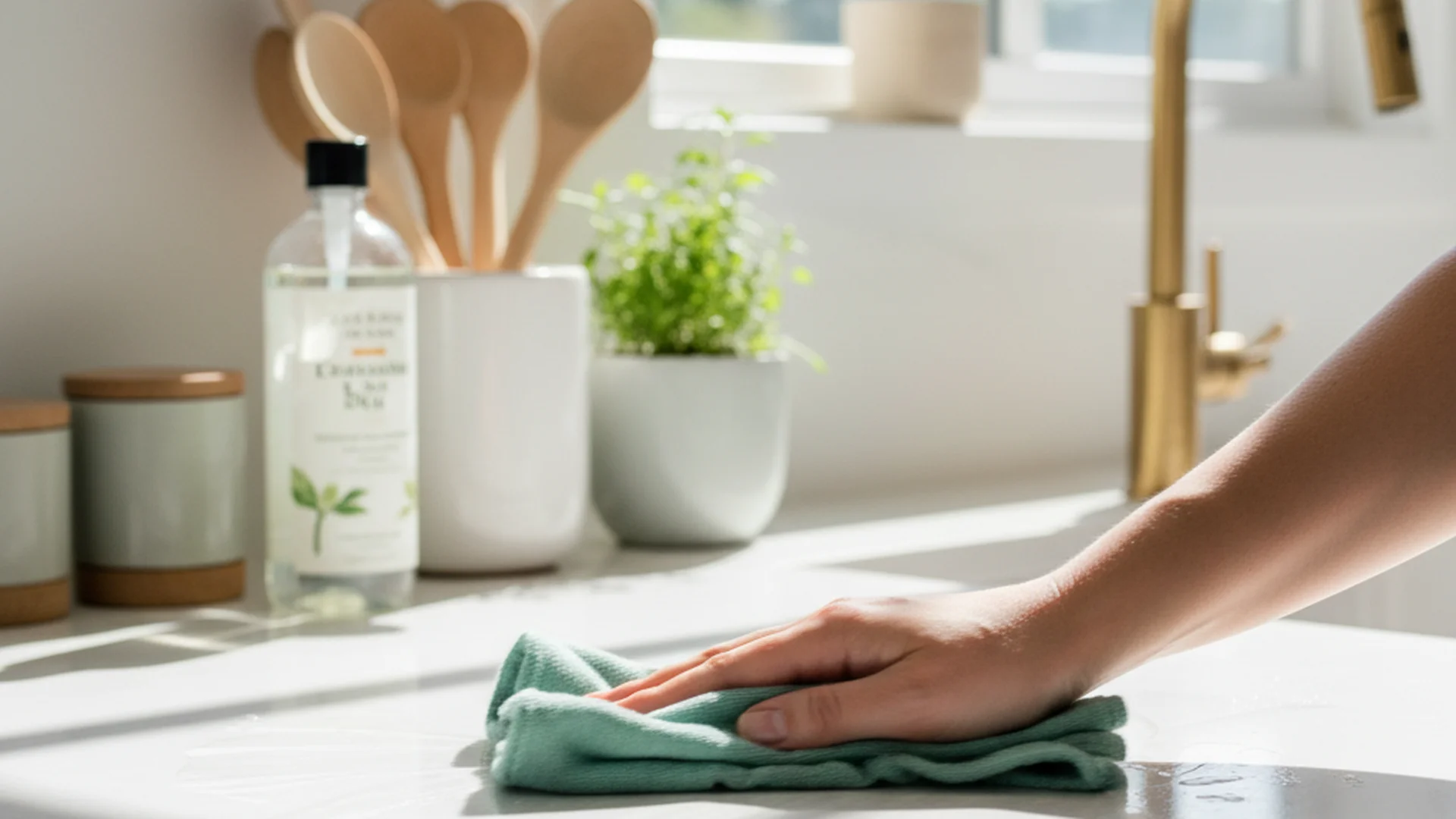
- The Big Wipe: Use your S-pattern to clear the counters.
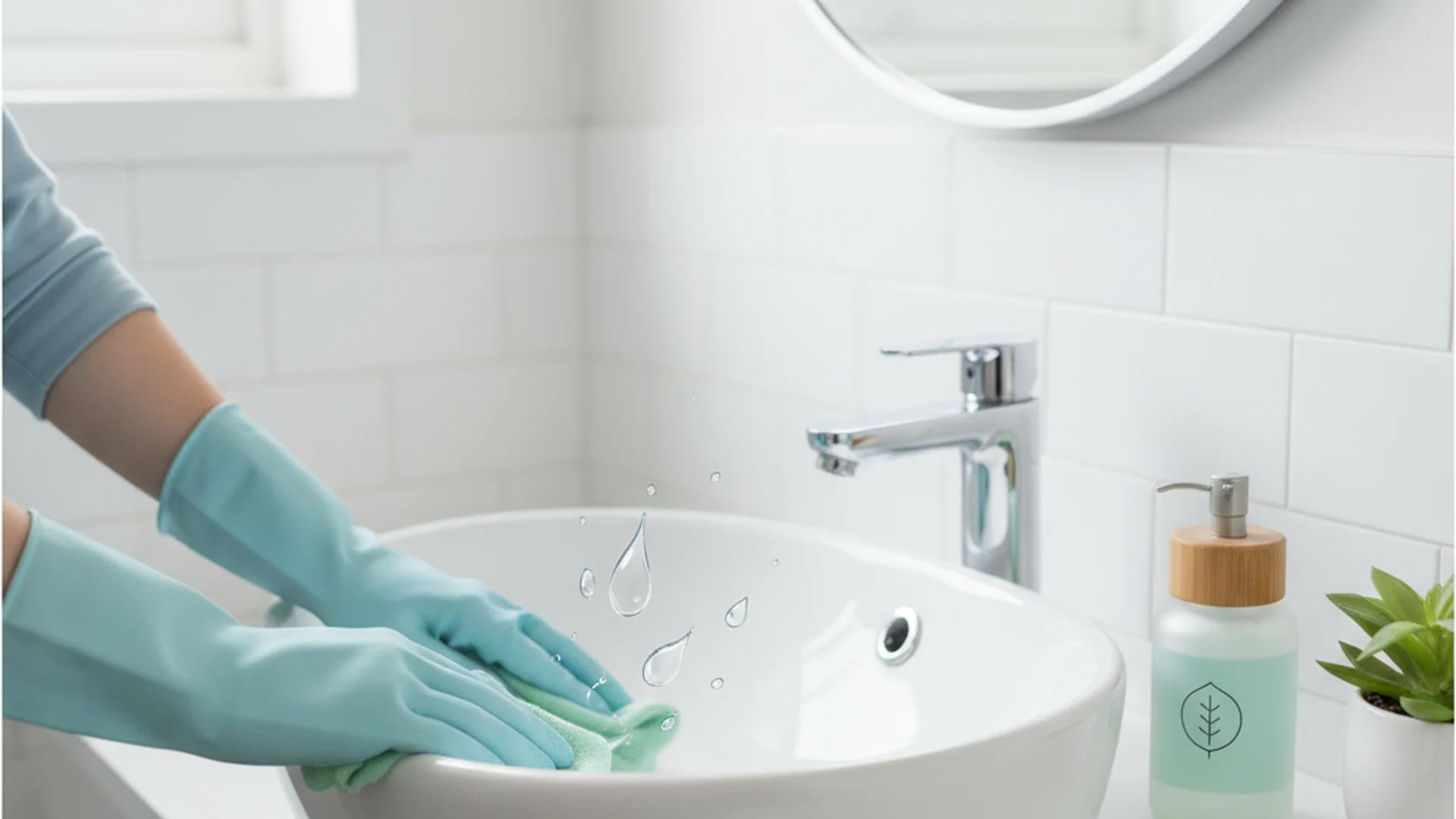
- The Sink Polish: Rinse the sink and dry the basin with a microfiber cloth.
- Floor Sweep: A quick 2-minute sweep or cordless vacuum of the main walkways.
Note: A "Quick Clean" is defined by an empty, dry basin. Even if the rest of the kitchen is imperfect, a clean sink signals to the brain that the job is done.
2025-2026 Trends: High-Tech and Eco-Fast Cleaning
The landscape of kitchen maintenance is evolving. In 2025, we’ve seen a massive surge in "Handheld Steamers." These tools allow for an "eco-fast" clean, sanitizing surfaces in seconds using only water. This is particularly useful for those who want to avoid chemical residues on food-prep surfaces.
Additionally, AI-driven scheduling apps like Tody or Sweepy are now common. These apps use household size and usage patterns to predict when your kitchen needs a "quick clean" versus a deeper intervention. Another major trend is the move toward refillable concentrates. Dissolvable cleaning pods reduce storage clutter and ensure you always have a fresh supply of high-potency cleaner on hand.
| Cleaning Tool | Best For | 2025 Trend Status |
|---|---|---|
| Handheld Steamer | Sanitizing without chemicals | High Growth |
| Microfiber Cloths | Dusting and S-pattern wiping | Essential Standard |
| Refillable Pods | Countertop degreasing | Sustainable Choice |
| Cordless Stick Vac | Rapid floor maintenance | Productivity Must-Have |
Real-World Examples of the Quick Clean in Action
Example 1: The "Morning Brew" Blitz
While Sarah’s coffee is brewing (approx. 4 minutes), she empties the dishwasher from the night before and wipes down the coffee station. This small window of time prevents "dishwasher backlog," which is the leading cause of sink clutter later in the day.
Example 2: The "Post-Dinner" Reset
After a heavy meal, Mark follows the quick kitchen clean checklist but focuses heavily on "dwell time." He sprays the greasy stove first, then clears the table. By the time the table is clear, the degreaser has done the hard work, allowing him to wipe the stove in a single pass.
Example 3: The "Pre-Guest" Polish
Expecting a friend in 10 minutes, Jennifer focuses on "visual weight." She hides the toaster in a cabinet, wipes the faucet until it shines, and lights a citrus candle. By focusing on high-visibility areas and scent, the kitchen feels "deep cleaned" even if the pantry is still disorganized.
Warning: Never mix cleaning products, specifically bleach and ammonia. This can create toxic chloramine gas. Always stick to one trusted cleaner per session.
The Science of "Dwell Time"
The most common mistake people make during a quick kitchen clean is the "spray and immediate wipe." Most household disinfectants require "dwell time"—the amount of time a product must remain wet on a surface to actually kill bacteria and viruses.
Usually, this is between 30 and 60 seconds. By spraying your surfaces at the start of your 15-minute timer and waiting until the end to wipe them down, you allow the chemicals (or steam) to break down organic matter and pathogens. This makes your cleaning more effective and physically easier, as you won't need to scrub nearly as hard.
Success: Letting your cleaner "dwell" for just 60 seconds can eliminate 99.9% of common kitchen bacteria, including E. coli and Salmonella.
Common Mistakes to Avoid
- Cleaning the Floor First: This is the most frequent error. If you sweep before you wipe the counters, you will inevitably knock crumbs onto your clean floor, forcing you to do the work twice.
- Using the Same Cloth Everywhere: Using the same cloth for the sink and then the fridge handle causes cross-contamination. Use color-coded microfibers instead (e.g., green for counters, blue for glass).
- Neglecting Touchpoints: You might have sparkling counters, but if your microwave handle or light switches are sticky, the kitchen isn't truly clean.
- Over-complicating the Process: A quick clean is about maintenance, not perfection. Don't start organizing the spice rack when you are on a 15-minute timer.
Frequently Asked Questions
How can I clean my kitchen in 10 minutes or less?
What is the best order to clean a kitchen?
What should be on a daily kitchen cleaning checklist?
How do I keep my kitchen clean while cooking?
What are the essential tools for a 15-minute kitchen blitz?
Conclusion
The quick kitchen clean is not about achieving laboratory-level sterility every single night. It is about removing the organic matter that allows bacteria to grow and clearing the visual clutter that causes mental stress. By committing to a 15-minute daily reset, you reclaim your time, protect your family’s health, and ensure that the heart of your home remains a place of inspiration rather than a source of anxiety.
Try the "15-minute blitz" tonight before bed. You’ll be amazed at how much lighter your morning feels when you walk into a kitchen that is ready for a new day.
Success: Consistently following a quick clean routine shrinks your weekend "deep cleaning" down to a fraction of what it used to be.
Cleaning that keeps score
Every task earns points, every streak multiplies them, and Premium adds a household leaderboard plus a monthly Dustagorgon to beat.
- Free forever
- 30 badges to earn
- Up to 6 in a household
No card needed. Set up your rooms in a couple of minutes.