In this article
What you’ll learn
- Clean by task rather than room-by-room to maintain momentum.
- Utilize "dwell time" to let cleaning products do the heavy lifting.
- Adopt the "Closing Shift" method for daily maintenance that prevents deep-clean burnout.
We have all been there: guests are arriving in an hour, or you have finally reached your breaking point with the clutter after a long work week. The central question is always the same: how to clean house fast without sacrificing quality? In 2025, the way we approach home maintenance has shifted from grueling "Saturday marathons" to high-efficiency, tech-driven bursts.
Most people notice a direct connection between a clean home and how they feel. A clean space isn't just about aesthetics; it’s about reclaiming your mental clarity and productivity. By using the right systems, you can transform your living space in a fraction of the time you used to spend.
The Psychology of Speed: Why Task-by-Task Wins
One of the biggest mistakes people make when trying to learn how to clean house fast is cleaning room-by-room. While it feels intuitive to finish the kitchen before moving to the living room, a task-by-task approach is far quicker.
When you clean room-by-room, you are constantly switching tools. You grab the glass cleaner for the kitchen window, then the degreaser for the stove, then the vacuum for the rug. This "mental reset" time adds up. By choosing one task—such as dusting—and performing it throughout the entire house, you stay in a flow state. You carry one set of tools and move quickly from one space to the next.
Tip: Use a cleaning caddy. Keeping all your essential sprays and cloths in one portable bin prevents unnecessary trips back and forth to the supply cabinet.
Expert Strategies for Maximum Efficiency
To achieve the fastest how to clean house fast results, you need to borrow techniques from professional cleaners. These methods prioritize "passive cleaning" and systematic movement.
The "One-Bag" Declutter
Before a single drop of cleaner touches a surface, you must clear the decks. Walk through your home with a large trash bag. Remove surface junk, expired mail, and "out of place" items. Removing the visual noise first makes the actual cleaning far faster because you aren't moving objects around to wipe surfaces.
Top-to-Bottom, Left-to-Right
This is the golden rule of professional cleaning. Always start at the highest point in a room (ceiling fans, vents, or the tops of bookshelves) and work your way down. Gravity will pull dust and debris onto the floor, which you will clean last. Work in a clockwise circle around each room to ensure you never miss a corner.
Harnessing "Dwell Time"
Most people spray a surface and immediately wipe it off. This is a waste of effort. To clean faster, apply your cleaners to "tough" areas—like toilets, showers, and greasy stove tops—and let them sit (dwell) for 5 to 10 minutes.
Success: Letting the product sit allows the chemicals to break down grime, meaning you can simply wipe it away rather than scrubbing for minutes on end.
Real-World Examples of Fast Cleaning
Example 1: The Last-Minute Guest Refresh Imagine your parents call to say they are 20 minutes away. Instead of panicking, you apply the "One-Bag" declutter to the common areas, wipe the bathroom mirror, and light a high-quality candle. By focusing only on high-traffic "sightlines," the house feels professionally cleaned in minutes.
Example 2: The Sunday Reset A busy professional uses the "20/10 Rule." They clean for 20 minutes of high-intensity activity followed by a 10-minute break. In three cycles, the house is reset for the week without the user feeling physically exhausted.
Example 3: Post-Dinner Cleanup By adopting the "Closing Shift" method, a family of four spends 15 minutes every night loading the dishwasher and wiping counters. Because the kitchen gets reset almost every night, this prevents "crusted-on" messes that would take hours to scrub later.
Modern Trends in 2025-2026
The cleaning landscape is evolving rapidly. We are moving away from harsh chemicals and toward smarter, more sustainable solutions.
AI and Automation
Modern robot vacuums now feature AI obstacle recognition. For example, 2026 models can identify a liquid spill versus a solid mess and adjust their mopping pressure in real-time. Integrating a "set-and-forget" robot for your floors can claw back the better part of an hour every week.
Probiotic and Microbiome-Friendly Cleaning
A major trend for 2025 is the shift toward "microbiome-friendly" cleaning. These products use live beneficial bacteria that continue to eat away at organic matter and odors for up to 72 hours after application. This means your surfaces stay cleaner for longer with less manual effort.
Note: Probiotic cleaners are excellent for households with pets, as they naturally break down pet dander and odors at the microscopic level.
Cleaning as "Self-Care"
Cleaning is no longer seen as a chore but as a sensory experience. Many are pairing their routine with "clean-with-me" playlists or using aromatherapy-based cleaners. This mindset shift reduces the "dread factor," making you more likely to maintain a fast cleaning schedule.
Common Mistakes to Avoid
Even when you are trying to learn how to clean house fast, certain shortcuts can actually slow you down or damage your home.
- Cleaning Windows on a Sunny Day: The sun dries the solution too quickly, leaving streaks that you'll have to clean again. Always wait for a cloudy day or evening.
- Using Too Much Product: Extra soap creates a sticky residue. This residue acts like a magnet for dust, meaning your "clean" surfaces will look dirty again within 48 hours.
- Spraying Directly on Furniture: This leads to "overspray" buildup on walls and can damage delicate electronics. Always spray your microfiber cloth first.
- Neglecting Your Tools: A dirty vacuum filter or a bacteria-laden sponge just redistributes grime.
Warning: Using the same cloth for the bathroom and the kitchen causes cross-contamination. Use color-coded microfiber cloths (e.g., blue for glass, red for bathrooms, green for kitchens) to stay safe.
The "Fastest How to Clean House Fast" Checklist
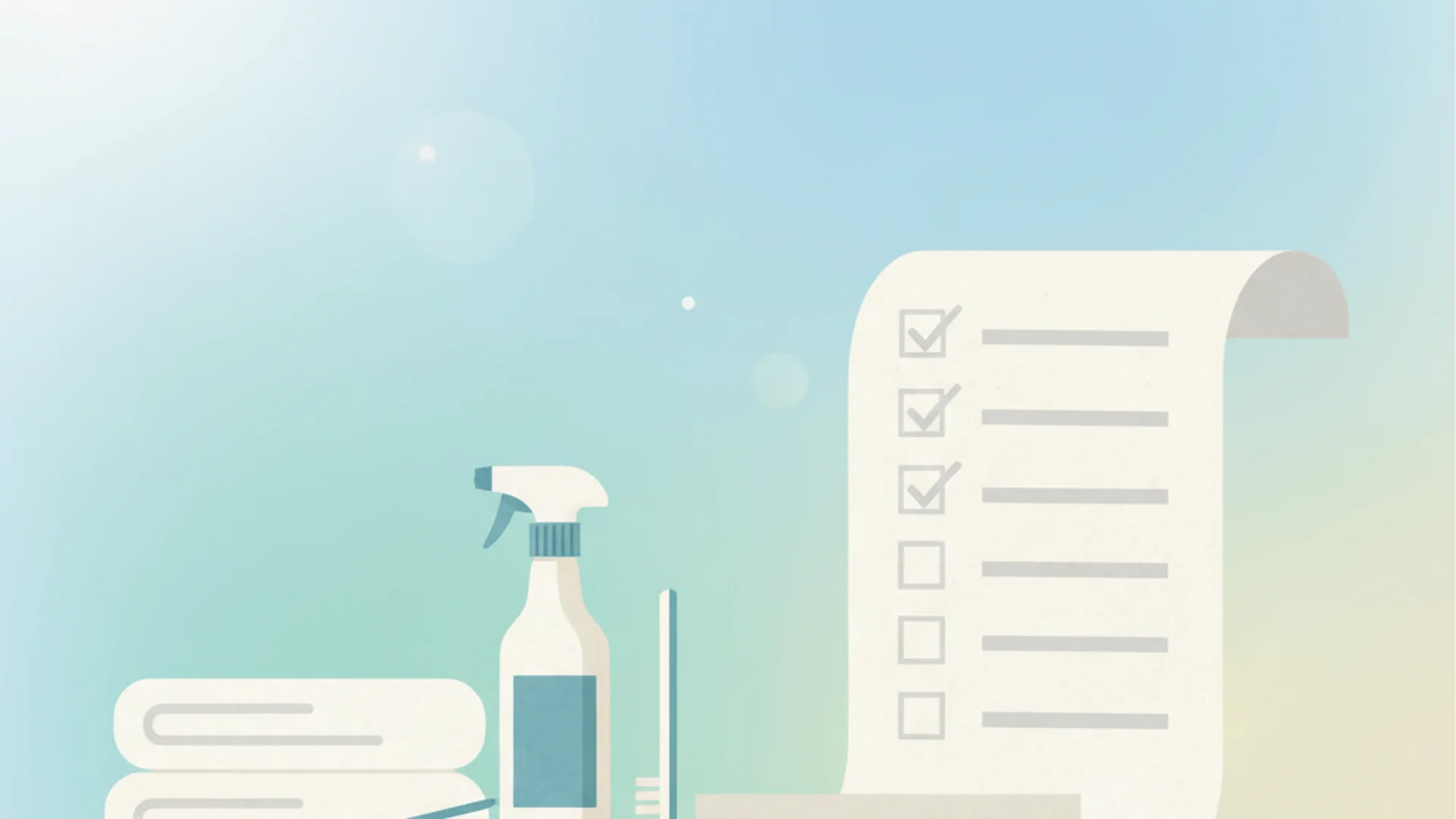
Use this how to clean house fast checklist to stay on track during your next speed-clean session.
- Clear the Decks (5 mins): Walk through with a trash bag. Toss mail, scraps, and clutter.
- The "Soak" Step (2 mins): Spray the shower, toilet, and kitchen counters. Let the cleaner dwell.
- Dust High (5 mins): Use a long-handled duster for ceiling fans and vents.
- Wipe Down (10 mins): Return to the surfaces you sprayed. Wipe them in a clockwise motion.
- The Glass Flash (3 mins): Quickly hit mirrors and TV screens with a dry microfiber or glass cleaner.
- Floor Finale (10 mins): Vacuum only the high-traffic areas and damp-mop the kitchen.
- Scent Finish (1 min): Light a candle or use a linen mist to signal to your brain that the job is done.
| Task | Estimated Time | Tool Needed |
|---|---|---|
| Decluttering | 5-10 Minutes | Trash Bag / Basket |
| Dusting | 10 Minutes | Microfiber Duster |
| Surface Wiping | 15 Minutes | All-Purpose Cleaner |
| Floors | 15 Minutes | Vacuum / Mop |
Frequently Asked Questions
Should I dust or vacuum first?
Is it faster to clean room-by-room or task-by-task?
Does vinegar actually disinfect?
How can I remove pet hair quickly?
Conclusion
Mastering how to clean house fast is about working smarter, not harder. By leveraging "dwell time," cleaning from top to bottom, and adopting the "Closing Shift" mindset, you can keep your home in a constant state of readiness. Remember that in 2025, tools like AI vacuums and probiotic cleaners are your best allies in maintaining a healthy, happy home with minimal effort.
Success: Consistent 15-minute daily resets are more effective than a 5-hour deep clean once a month. Start small, stay consistent, and enjoy your clean space!
Cleaning that keeps score
Every task earns points, every streak multiplies them, and Premium adds a household leaderboard plus a monthly Dustagorgon to beat.
- Free forever
- 30 badges to earn
- Up to 6 in a household
No card needed. Set up your rooms in a couple of minutes.