In this article
What you’ll learn
- Use the 'Blank Slate' rule by emptying the closet completely before organizing.
- Implement a three-zone system to prioritize frequently used items at eye level.
- Maximize vertical space and the back of doors to increase storage capacity by up to 20%.
Finding the motivation to tackle a cluttered space can be difficult, but learning how to organize utility closet areas is one of the most rewarding home improvement projects you can undertake. The utility closet is the powerhouse of the home; it holds the tools we use to maintain our sanctuary. Yet most people only ever reach for a small fraction of what is stored in their closets, with the rest being expired chemicals, broken tools, or "clutter creep."
As a professional cleaning consultant, I have seen how a disorganized closet leads to "lost time" syndrome. Hunting for misplaced items quietly eats up an enormous amount of time over a lifetime. By mastering the best way to organize utility closet spaces, you can save your household 10–15 minutes of daily frustration.
The Foundation of Utility Organization
Before you buy a single bin or shelf, you must understand the "Blank Slate" rule. It is the gold standard in professional organization. You cannot effectively organize a space you haven't seen empty. Emptying the closet allows you to clean the floor and walls—which often accumulate dust and chemical residue—and gives you an accurate view of the dimensions you are working with.
The Psychology of the Utility Space
This growth isn't just about aesthetics; it's about the necessity of maximizing smaller living footprints. When your utility closet is organized, your brain registers a sense of control over your environment. Conversely, a chaotic closet often leads to "buying duplicates," which wastes money and increases clutter.
Tip: Take a "before" photo. It helps you identify problem areas that your eyes might have become "blind" to over years of daily use.
Step-by-Step Categorization by Zone
The most efficient way to maintain a utility closet is through strategic zoning. Rather than shoving items wherever they fit, you should categorize tools based on the frequency of use and physical weight.
Zone 1: The Golden Zone (Eye Level)
This area, roughly between your hips and shoulders, should be reserved for items you reach for daily or weekly. This includes multi-purpose sprays, microfiber cloths, paper towels, and daily surface cleaners. By keeping these at eye level, you reduce the physical strain of bending or reaching.
Zone 2: The Heavy Lifting (Lower Shelves)
The bottom of your closet should be reserved for your heaviest or bulkiest items. This includes vacuum cleaners, floor mops, buckets, and gallon-sized cleaning refills. Storing heavy items low prevents shelf bowing and reduces the risk of injury when retrieving items.
Zone 3: The Archive (Top Shelves)
Items stored above head height should be those used seasonally or rarely. This includes specialty grout cleaners, backstock lightbulbs, or holiday-specific cleaning supplies.
| Zone | Height | Item Types |
|---|---|---|
| Zone 1 | 3ft - 5ft | Daily sprays, cloths, sponges |
| Zone 2 | Floor - 3ft | Vacuums, buckets, heavy refills |
| Zone 3 | 5ft - Ceiling | Seasonal items, lightbulb backstock |
Warning: Never store heavy gallon jugs on high shelves. A leak or a fall could cause significant damage or chemical burns.
Essential Storage Tools and Materials
Choosing the right materials is vital for a utility space. Unlike a bedroom closet, utility areas deal with moisture and potentially corrosive chemicals.
Why Material Choice Matters
Melamine and laminate systems currently dominate the market. This is because these materials are highly resistant to the chemical spills common in utility areas. While wood looks beautiful, it can absorb odors and stains from cleaning agents.
The "Big Three" Tools
If you are looking for specific organize utility closet ideas, focus on these three essentials:
- Clear Bins: Visibility is key. If you can't see it, you won't use it (or you'll buy a second one).
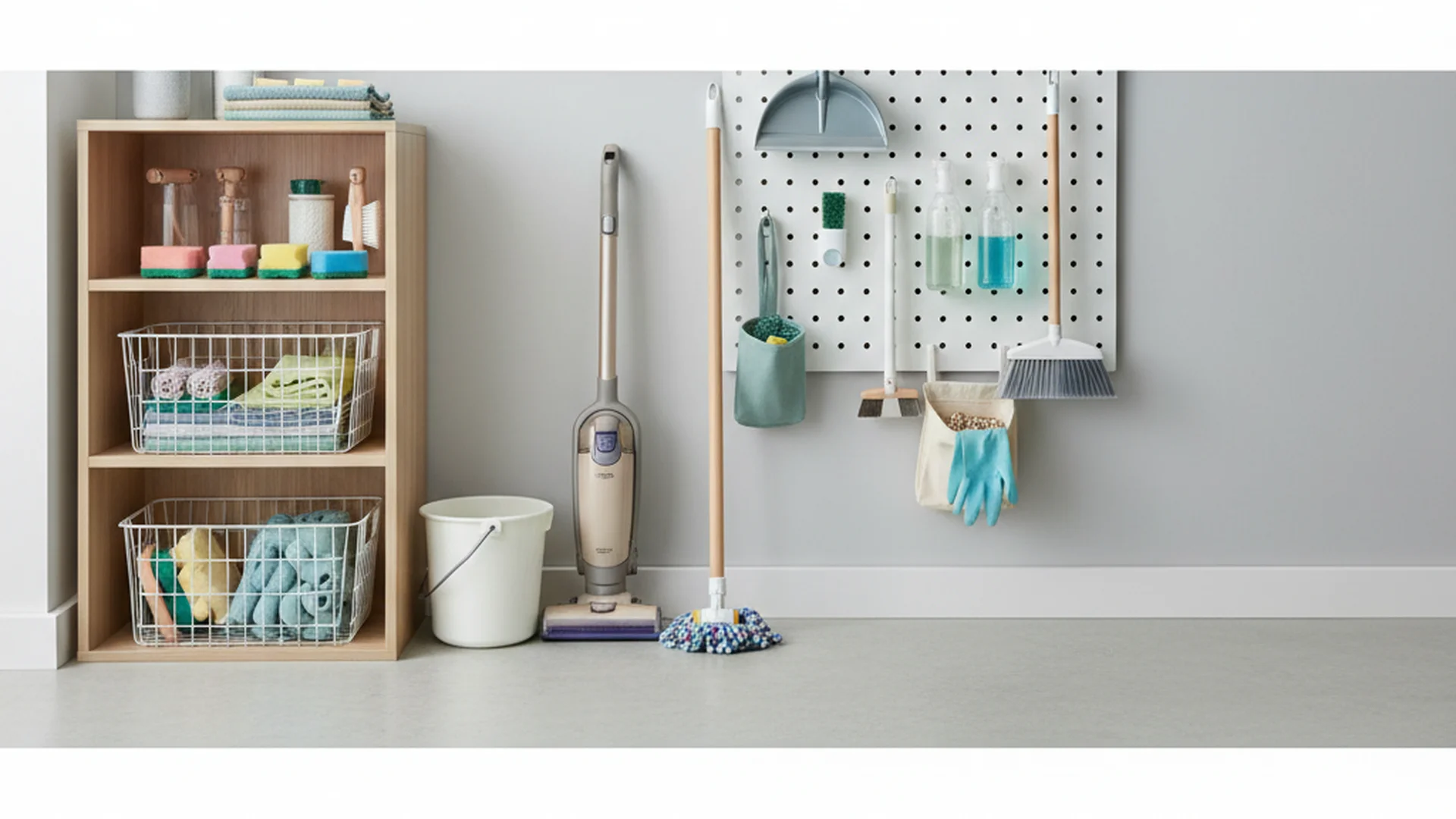
- Pegboards: Perfect for small tools like screwdrivers, brushes, or even dustpans.
- Over-the-Door Racks: These can turn 15-20 square feet of "invisible" space into a primary storage hub for brooms and mops.
Note: Adjustable track-based systems, such as Elfa or freedomRail, are highly recommended because your storage needs will change as you acquire new appliances.
Emerging Trends for 2025 and 2026
The world of home organization is evolving. We are moving away from the clinical, "all-white plastic" look of the early 2020s toward a more integrated, aesthetic approach.
Warm Minimalism and Natural Textures
The 2026 trend focuses on "Warm Minimalism." This involves using earthy-toned bins (colors like flax, putty, and mushroom) and natural textures like bamboo dividers. This makes the utility closet feel like a deliberate part of the home's design rather than a hidden mess.
The Command Center Convergence
Modern homeowners are increasingly merging utility closets with "mudroom" functions. We are seeing integrated pet washing stations and smart battery charging docks for cordless vacuums and power tools right inside the closet.
Smart Technology Integration
- AI Inventory Tracking: New apps allow you to scan a QR code on your bins to track when you are low on detergent or lightbulbs.
- Motion-Sensor Lighting: Standard LED strips are being replaced by "backlit" shelf designs that eliminate dark corners, ensuring no item is ever "lost" in the back.
- Ultra-Slim Appliances: The 2025 Dyson PencilVac, which is only 38mm wide, is specifically designed to fit into narrow gaps, turning previously "dead space" into functional storage.
Success: Integrating an eco-conscious "refill station" with glass dispensers can dramatically cut your plastic waste year on year while making your closet look professionally curated.
Real-World Organization Examples
Example 1: The Busy Family Hub
The Miller family had a utility closet that was a "catch-all" for soccer balls, bleach, and old mail. By installing an over-the-door organizer for cleaning sprays and a dedicated "Command Center" shelf for mail and pet leashes, they regained 10 minutes every morning during the school run.
Example 2: The Small Apartment Solution
In a 600-square-foot condo, Sarah used a "vertical-first" approach. She installed shelving all the way to the 9-foot ceiling. She used a slim rolling cart for her cleaning caddy, which could be tucked into a 6-inch gap next to her vacuum, proving that even the smallest spaces can be highly functional.
Example 3: The Sustainable Household
Mark and Elena focused on the "Eco-Refill" trend. They replaced staggered plastic bottles with uniform glass dispensers for laundry soap and floor cleaner. This not only looked cleaner but allowed them to buy in bulk, saving $200 a year on cleaning supplies.
Common Mistakes to Avoid
Even with the best intentions, many homeowners fall into these common traps:
Buying Bins First
This is the #1 mistake. Never buy organizers before you have decluttered and measured. You will almost certainly end up with bins that don't fit your shelves or, worse, bins meant to store items you should have thrown away.
Ignoring the Door
The back of the closet door is prime real estate. If you aren't using a hanging organizer for your mop, broom, or spray bottles, you are wasting the most accessible space in the room.
The "Deep Shelf" Trap
Shelves deeper than 15 inches are where items go to die. If you have deep shelving, use pull-out drawers or long, narrow bins to bring the items from the back to the front.
Storing Hazardous Mixes
A common and dangerous mistake is storing bleach near ammonia-based cleaners. If both were to leak, they could create toxic chloramine gas. Always store reactive chemicals in separate, sealed bins.
Warning: Never store food and cleaning chemicals in the same closet. Chemical vapors can be absorbed by food packaging, leading to cross-contamination.
Frequently Asked Questions
How often should I re-organize my utility closet?
What are the best materials for utility shelving?
How do I make a small utility closet feel bigger?
Is the "Caddy Method" actually effective?
Can I store my vacuum cleaner in the utility closet?
Conclusion
Organizing your utility closet is about more than just neatness; it’s about creating a functional system that supports your daily life. By applying the "Blank Slate" rule, utilizing smart zoning, and avoiding the "junk drawer" mentality, you can transform a chaotic catch-all into a streamlined command center. Remember to prioritize safety by separating chemicals and maximizing your vertical space to keep the floor clear.
Success: A well-organized utility closet noticeably reduces your weekly cleaning time, giving you more time to enjoy your home rather than just maintaining it.
Cleaning that keeps score
Every task earns points, every streak multiplies them, and Premium adds a household leaderboard plus a monthly Dustagorgon to beat.
- Free forever
- 30 badges to earn
- Up to 6 in a household
No card needed. Set up your rooms in a couple of minutes.