In this article
What you’ll learn
- Rebrand your "junk" drawer to a "utility" drawer to shift your organizational mindset.
- Use the "Empty & Dump" method for a psychological reset before organizing.
- Prioritize natural materials like bamboo for a 2026 "warm minimalism" aesthetic.
If you open a drawer in your kitchen right now and find a tangled mess of rubber bands, mystery keys, and half-used packs of birthday candles, you aren't alone. Almost every home has at least one junk drawer, and plenty of us are hiding three or more. While we often joke about these cluttered catch-alls, they actually serve a vital purpose. Most people reach into their junk drawer for something every single week.
The problem isn't that we have these items; it’s that we haven't learned how to organize junk drawer spaces to serve our daily lives. In 2025, the philosophy of home organization has shifted. We are moving away from the "perfect" TikTok aesthetic and toward "realistic utility." As a professional cleaning consultant, I’ve seen how a single messy drawer can become a source of "micro-stress" that impacts your entire day. By learning the best way organize junk drawer contents, you can reclaim the hours you currently lose hunting for misplaced items.
The Psychology of the Junk Drawer: Why It Matters
Before we dive into the "how," we need to understand the "why." Clutter isn't just a visual nuisance; it’s a mental weight. Plenty of homeowners find that cluttered drawers cause daily stress. When you can't find a pair of scissors when you're in a rush, you feel it immediately.
In 2025-2026, we are seeing a major trend toward Neuro-Inclusive Organization. This means creating systems that work for how your brain actually functions, rather than forcing yourself into a rigid, unsustainable box. Whether you are looking for organize junk drawer ideas for a busy family home or a minimalist apartment, the goal is to create "visual calm."
The 4-Step "Utility" Reset
To achieve a long-lasting result, you cannot simply move items around. You need a total reset. This process transforms the space from a "junk" pile into a "Command Center."
Step 1: The Empty and Dump Method
Remove every last thing from the drawer. Clear off a counter or table and dump everything out. Seeing the empty bottom of the drawer provides a psychological "reset." It allows you to see the space for its potential rather than its current mess.
Step 2: The Purge and the "I Might Need This" Trap
This is where most people fail. You must be ruthless. If you wouldn't bother cleaning an item if it got dirty, you should probably throw it away.
- Mystery Keys: If you haven't used that key in two years, and you don't know what it unlocks, it’s time to let it go.
- Old Tech: Cables for phones you no longer own or manuals for appliances are clutter.
- Expired Items: Coupons from 2023 and dried-out pens have no place in a functional drawer.
Tip: Most appliance manuals are available as PDFs online. Search the model number, save the PDF to a "Home Manuals" folder on your computer, and toss the paper version.
Step 3: Micro-Categorization
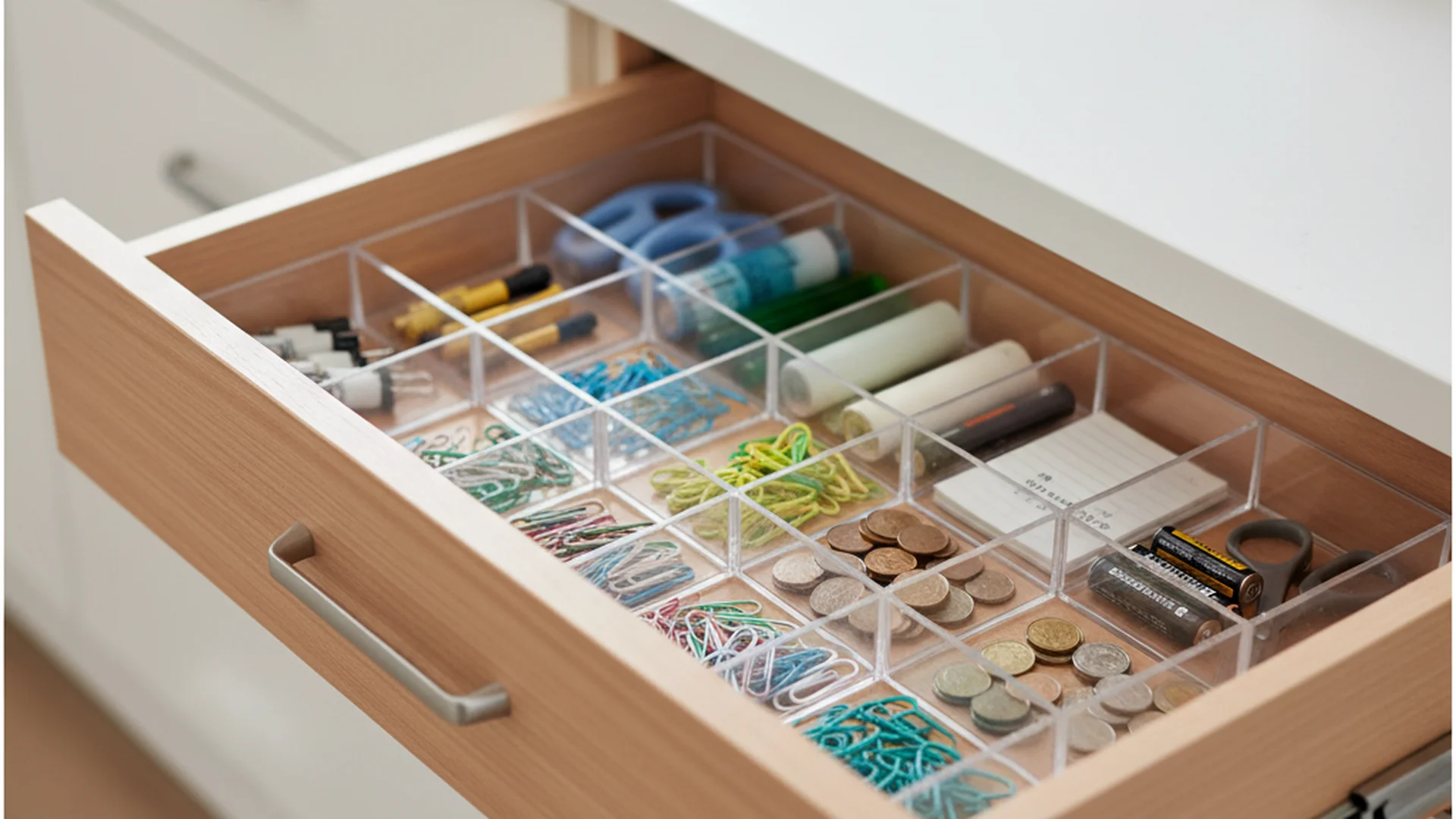
Group your "keep" items by action. Instead of a pile of stuff, create "zones."
- The Fixing Zone: Glue, a small screwdriver, and Command strips.
- The Writing Zone: Two working pens, one permanent marker, and a notepad.
- The Measuring Zone: A tape measure and a small ruler.
Step 4: Containerize and Zoned Loading
Once you have your categories, you need to prevent them from merging back into a single mess. Place the items you use most—like scissors or your favorite pen—at the very front of the drawer. Less-used items, like extra batteries or furniture pads, should go toward the back.
Warning: Never buy organizers before measuring your drawer and decluttering your items. Buying bins first often leads to "organizing" items that should have been trashed.
2026 Style Guide: Warm Minimalism vs. Sterile Plastic
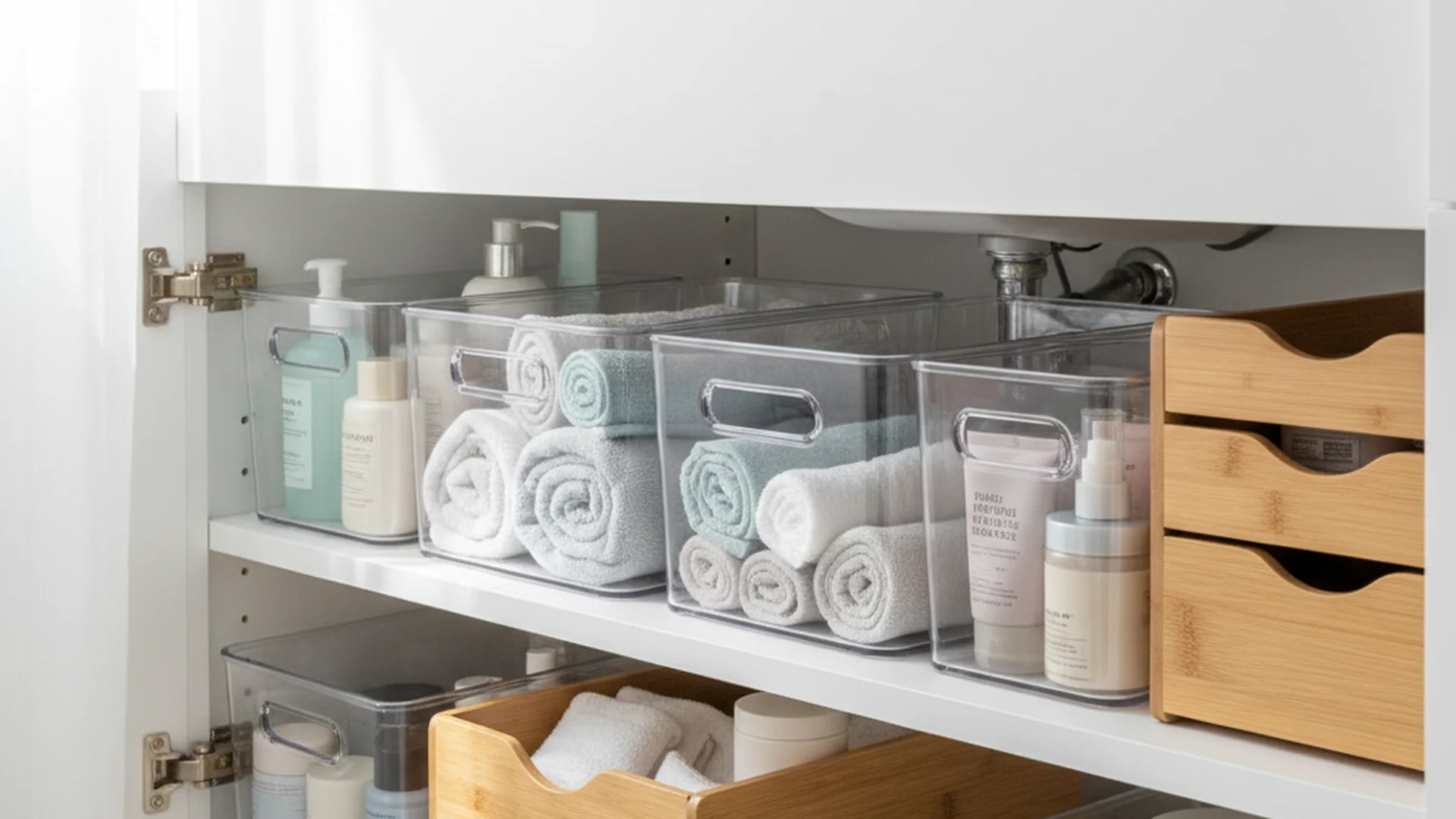
The trend for 2026 is Warm Minimalism. We are seeing a massive shift away from clear plastic and sterile white dividers. Instead, homeowners are opting for natural materials that feel "lived-in" and authentic.
| Material | Pros | Best For |
|---|---|---|
| Bamboo | Sustainable, warm aesthetic, durable | Kitchen utility drawers |
| Felt-Lined | Quiet, prevents sliding, luxury feel | Tech and delicate items |
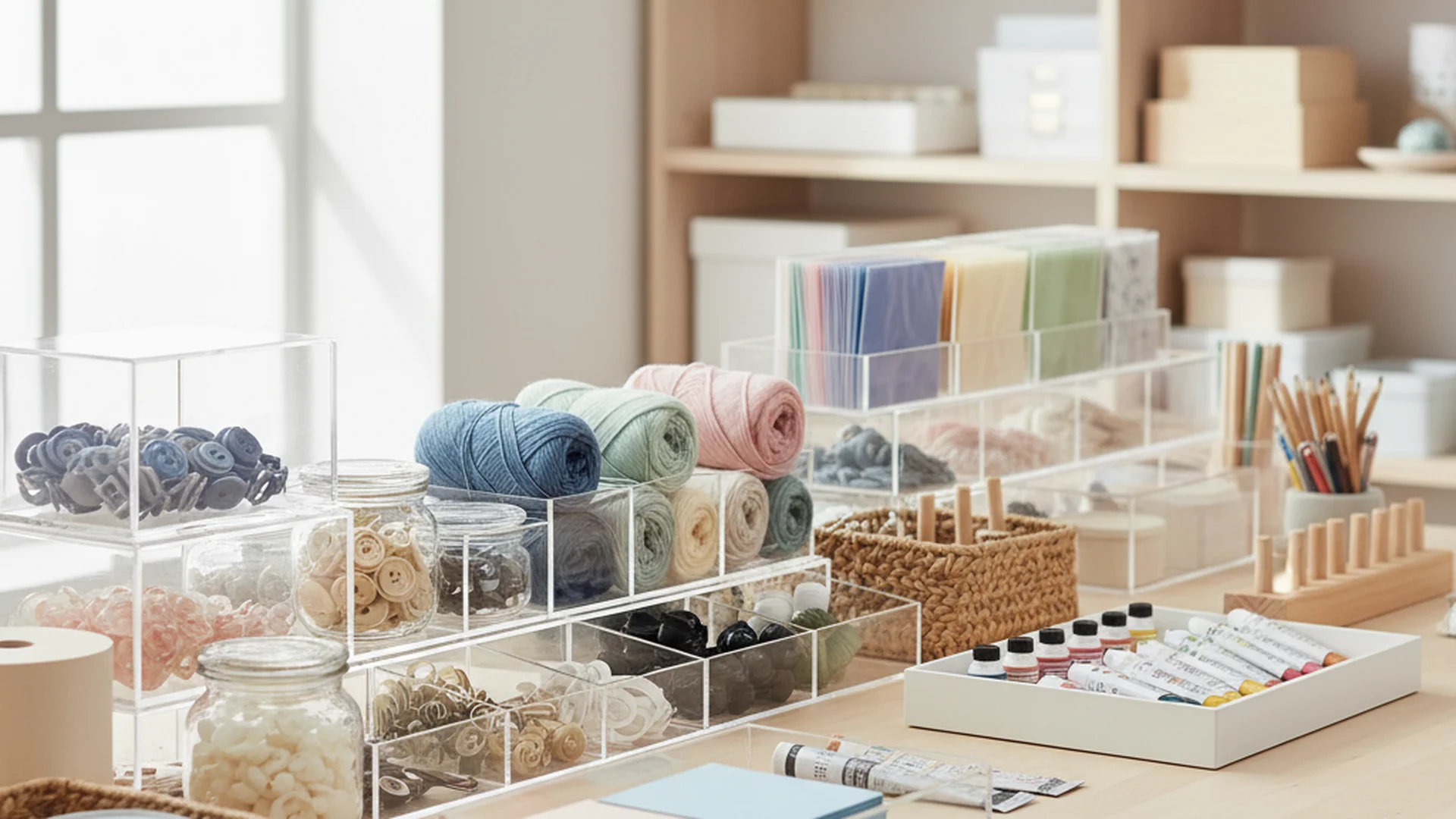
| Acrylic | Easy to clean, high visibility | Craft or junk drawers with small parts |
| Silicone | Non-slip, flexible, colorful | Heavy tools or kitchen gadgets |
By using bamboo dividers or textured liners, you create a space that feels intentional. This aesthetic shift helps maintain the organization; you are less likely to toss "junk" into a drawer that looks beautiful and well-curated.
Neuro-Inclusive Methods: Organizing for Every Brain
One of the most exciting shifts in 2025 is the move toward ADHD-friendly and neuro-inclusive organization. If traditional "tiny slots for every paperclip" methods feel overwhelming to you, try these:
The Sunday Butterfly Method
This is a "flow state" method where you tidy as you notice things throughout the day rather than following a rigid weekend schedule. If you open the drawer and see a dead battery, you deal with it then. It's about maintaining "micro-wins" rather than waiting for a total overhaul.
Macro-Organizing
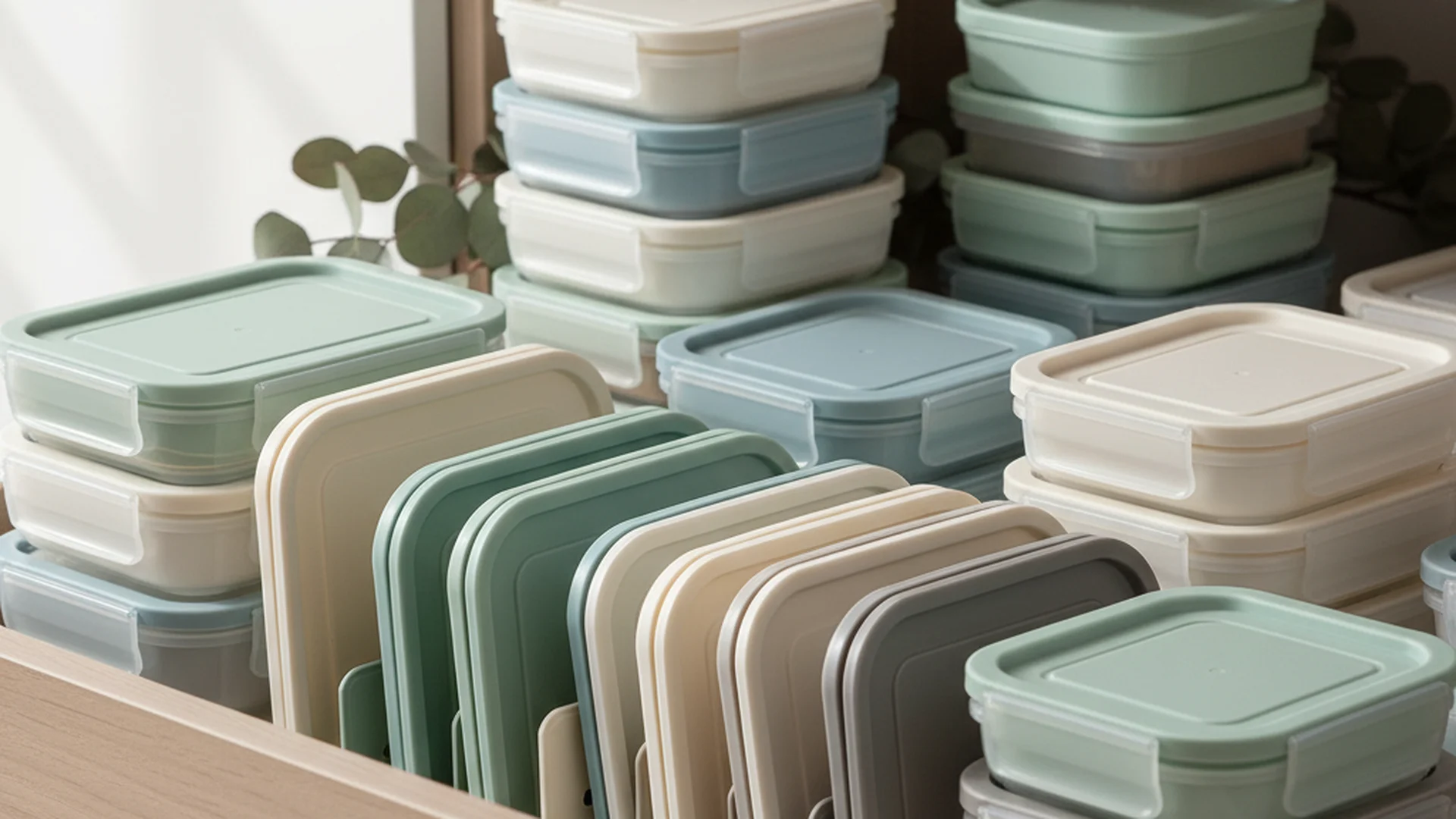
Instead of having ten small compartments, use three or four large bins. Label them "Stationery," "Tools," and "Misc." This makes it much easier to put things away quickly, which is often the biggest hurdle to staying organized.
Success: Using macro-organizing bins reduces the "barrier to entry" for cleaning, making it far more likely that you will sustain the organization for more than a month.
The 15-Minute Maintenance Plan
The best way organize junk drawer stability is through consistent, low-effort maintenance. You don't need a whole afternoon; you just need a "15-minute win."
- The Quarterly Sweep: Every three months, set a timer for 15 minutes.
- The "Houdini Hack": This 2025 viral trend involves using a small "temporary catch-all bin" inside the drawer. If you’re in a rush, put the item in the catch-all. During your 15-minute sweep, move those items to their permanent homes.
- Check the 75% Rule: If your drawer is more than 75% full, it's time to purge. A drawer needs "wiggle room" to remain functional.
Note: Use drawer liners with silicone "feet" or museum wax to prevent your organizer bins from shifting every time you pull the handle.
Common Mistakes to Avoid
Even with the best intentions, it's easy to fall back into old habits. Avoid these common pitfalls to keep your utility drawer pristine:
- The "Junk" Mindset: Words matter. If you call it a "junk drawer," you will treat it like a trash can. Rename it your "Utility Drawer" or "Command Center."
- Keeping Mystery Cables: We all have that one "braid" of cables. If you haven't used a cable in a year, and it doesn't fit your current phone or laptop, recycle it at a local e-waste center.
- Ignoring the Depth: Many people buy organizers that are too shallow, leaving wasted vertical space. Measure the height of your drawer before shopping for organize junk drawer ideas.
- Over-Organizing: Don't create a home for things you only have one of. If you have one random birthday candle, it doesn't need its own bin. Put it in a "Celebration" baggie or bin.
Frequently Asked Questions
What actually belongs in a junk drawer?
Should I get rid of my junk drawer entirely?
How often should I clean it out?
What is the best way to stop items from sliding?
Conclusion: From Chaos to Command Center
Organizing a junk drawer is about more than just finding your scissors; it’s about reducing the micro-stresses that clutter your daily life. By rebranding the space as a "Utility Drawer" and following the 2025 trends of warm minimalism and neuro-inclusive "macro-organizing," you create a home that supports you rather than drains you.
Remember, the goal isn't a museum-quality display—it's a functional, accessible space that allows you to find what you need in seconds. Start with your 15-minute win today, and enjoy the visual calm that follows.
Success: Homeowners who rebrand their junk drawer to a "Utility Drawer" tend to keep it organized far longer, because of the shift in value-based thinking.
Cleaning that keeps score
Every task earns points, every streak multiplies them, and Premium adds a household leaderboard plus a monthly Dustagorgon to beat.
- Free forever
- 30 badges to earn
- Up to 6 in a household
No card needed. Set up your rooms in a couple of minutes.