In this article
What you’ll learn
- Keep spices in a cool, dark, dry place to maintain 50% more potency.
- Organize by frequency of use or cuisine type rather than alphabetically.
- Use the "Spoon Only" method to prevent clumping and bacterial growth.
Cooking is often described as an art, but any home chef knows that the real secret lies in the science of flavor. However, that science quickly breaks down when you are rummaging through a cluttered cabinet, knocking over jars of paprika just to find the cumin while your onions burn on the stove. Learning how to organize spices is one of the most impactful kitchen upgrades you can make, transforming a chaotic meal prep into a seamless, professional experience. In this guide, we will explore the best way to organize spices using 2025-2026 industry standards and expert-led strategies.
The Science of Spice: Why Organization Matters
Before we dive into the "how," we must understand the "why." Spices are an investment. Yet, much of that investment is wasted due to poor storage.
Contrary to popular belief, spices don’t "spoil" in a way that makes you sick, but they do lose their chemical potency. According to data from The Spice House, whole spices like peppercorns and cinnamon sticks can last up to four years, but ground spices typically retain their peak flavor for only one to two years. Dried herbs are even more delicate, lasting only one to three years.
Warning: Storing spices near a stove or oven can reduce their shelf life by up to 50% due to constant temperature fluctuations and humidity.
Step 1: The Great Spice Purge
You cannot organize clutter. The first step in any organization project is a thorough audit of your current inventory.
The "Look and Sniff" Test
Don't rely solely on the "best by" date printed on the bottom of the jar. Use your senses. If a spice has lost its vibrant color—for instance, if your bright red paprika has turned a dull brown—it is likely past its prime. Next, rub a small amount of the spice between your fingers and smell it. If the aroma is weak or nonexistent, it won't add anything to your cooking.
Check for Moisture
During your audit, look for clumping. This is often a sign that moisture has entered the jar. If you see any signs of mold or a "brick-like" consistency, discard the jar immediately.
Tip: When you buy a new spice, use a permanent marker to write the "Opened On" date on the bottom of the jar. This is more accurate than the manufacturer's expiration date.
Step 2: Categorize for Your Workflow
The best way to organize spices isn't necessarily alphabetical. While an A-Z system looks great on paper, it often fails in the heat of cooking. Professional organizers now recommend organizing by "Workflow Categories."
Organize by Frequency of Use
Keep your "Daily Drivers" (Salt, Pepper, Garlic Powder, Onion Powder, Red Pepper Flakes) in the most accessible spot. These are the items you reach for in almost every savory dish.
Organize by Cuisine Type
Group spices that are often used together. This allows you to pull out a single bin or reach into one section for a specific meal. Common groupings include:
- Baking: Cinnamon, Nutmeg, Ginger, Cloves, Allspice.
- Mexican/Tex-Mex: Cumin, Chili Powder, Oregano, Cayenne.
- Italian: Basil, Thyme, Rosemary, Oregano.
- Grilling/Rubs: Smoked Paprika, Mustard Powder, Celery Salt.
Success: Categorizing by cuisine can save you up to 5 minutes per meal prep by eliminating the "search and rescue" mission for matching flavors.
Step 3: Choose the Right Storage Solution
In 2026, the market is full of innovative organize spices ideas that go far beyond the traditional spinning rack. Your choice should depend on your kitchen's layout and your cooking style.
| Solution | Best For | Visibility | Space Efficiency |
|---|---|---|---|
| Angled Drawer Inserts | Deep or wide drawers | Excellent | High |
| Magnetic Wall Racks | Small apartments/No cabinet space | High | Excellent |
| Pull-Out Tiers | Narrow, deep cabinets | Medium | High |
| Masala Dabbas | Daily essential spices | High | Medium |
The Rise of the Angled Drawer Insert
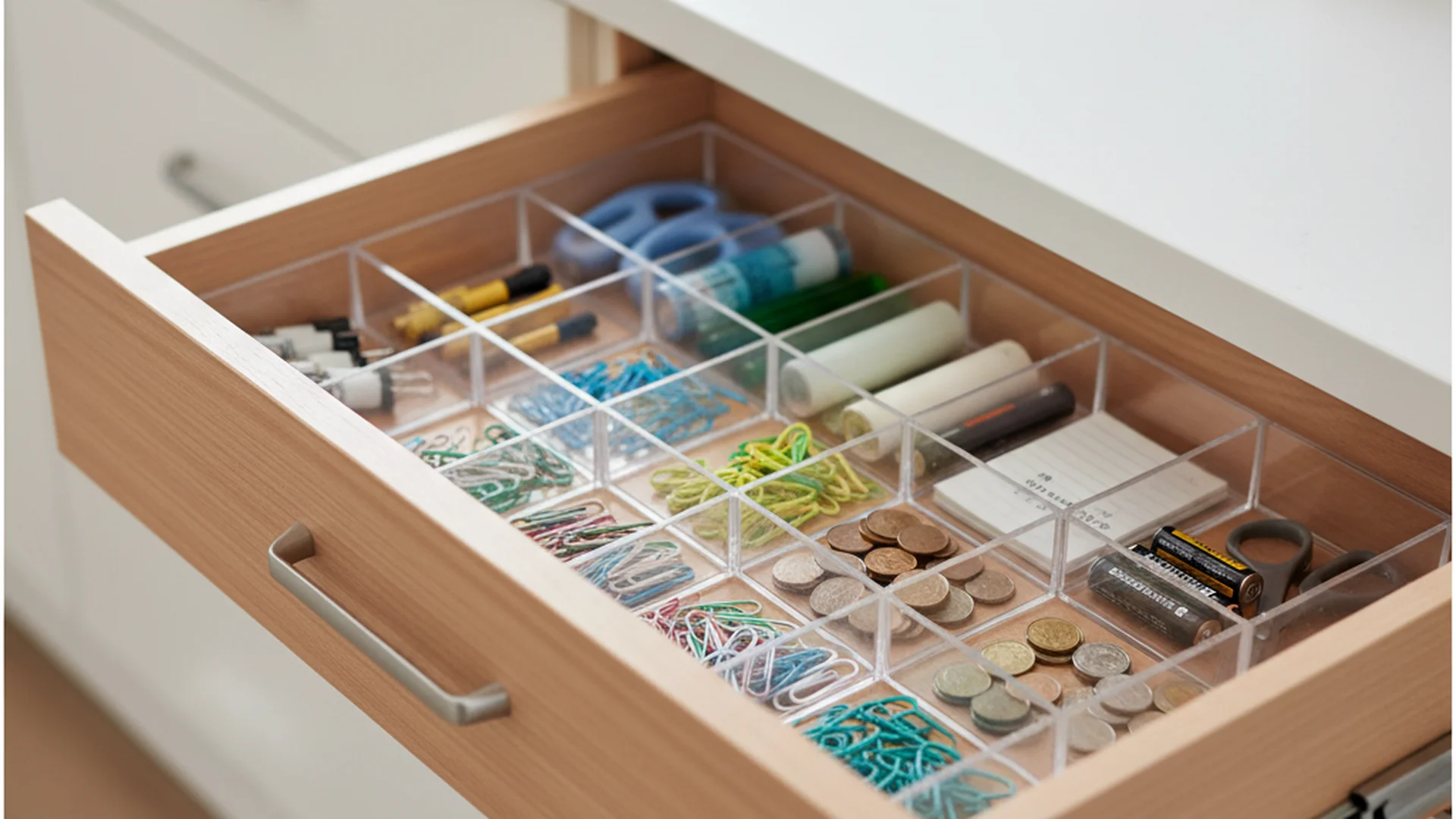
Products like the SpaceAid angled rack have become the gold standard. These inserts allow jars to lay at a 45-degree angle. This maximizes vertical space in a drawer while ensuring every label is visible at a glance. It also protects spices from their two greatest enemies: light and heat.
Magnetic Innovation
For those in small-space living, industrial-grade magnetic racks (such as HuggieGems) are trending. These attach to the side of the refrigerator, utilizing "dead space" and keeping spices at eye level without sacrificing precious cabinet or counter real estate.
The Masala Dabba Integration
A significant trend for 2025-2026 is the Western adoption of the Indian Masala Dabba. This is a circular stainless steel tin containing seven smaller canisters. By keeping your most-used spices in one lidded container, you can move them from the cabinet to the stove in one motion.
Note: If you choose a countertop solution, ensure it is not in direct sunlight, as UV rays break down the essential oils in spices rapidly.
Step 4: To Decant or Not to Decant?
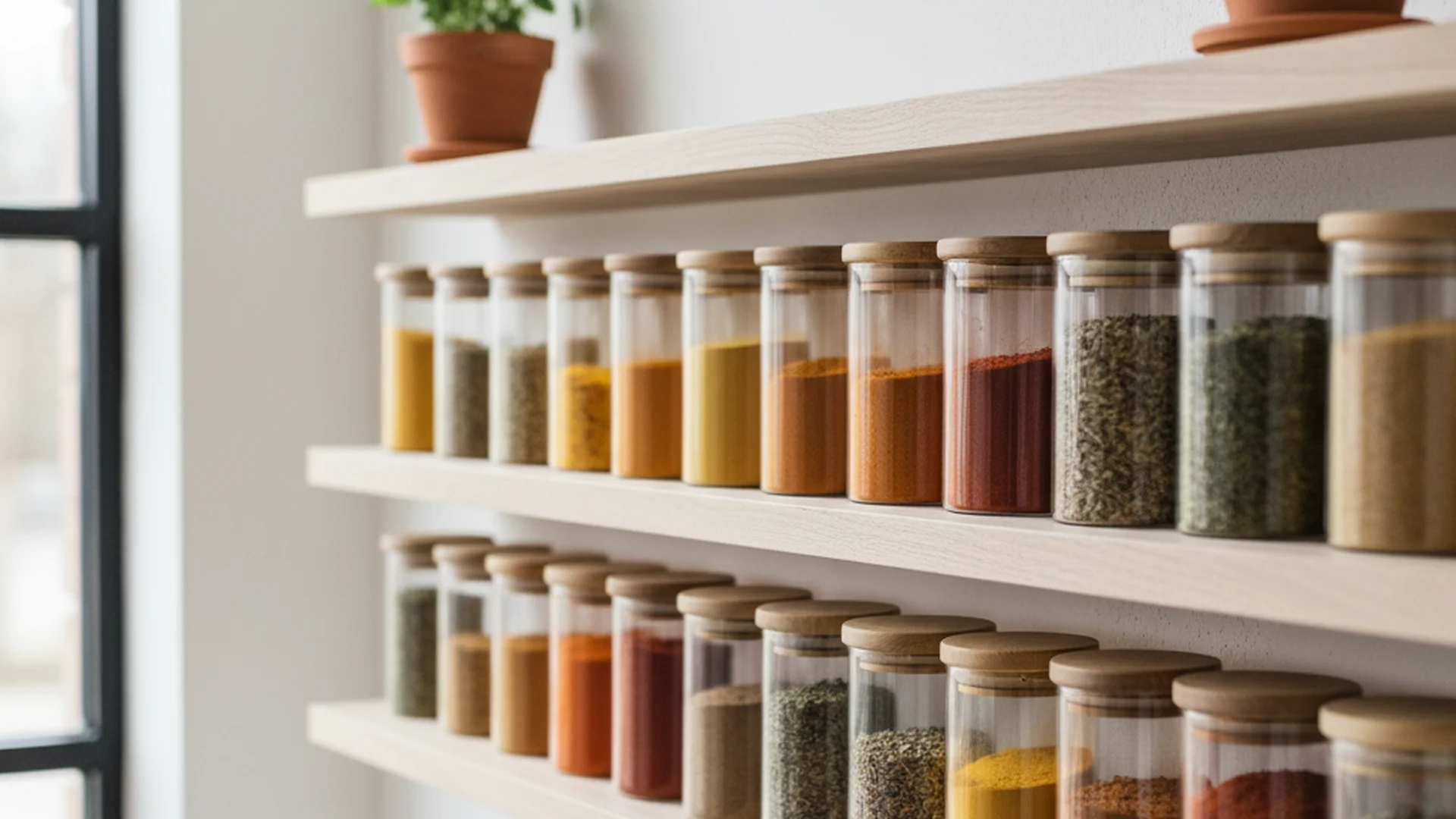
The "Aesthetic Trap" is a common mistake in home organization. This involves buying a 24-piece matching glass jar set and feeling obligated to fill every single one.
When Decanting Works
Decanting (moving spices from store packaging into uniform jars) is beneficial if:
- You buy in bulk: It allows you to store the excess "backstock" elsewhere and keep a manageable amount in your primary cooking area.
- Space is tight: Uniform jars stack and fit together much better than a mix of bags, tall tins, and plastic bottles.
- Sustainability is a priority: Buying spices in compostable pouches and refilling high-quality glass jars significantly reduces plastic waste.
When to Keep Original Packaging
If you only have 10 spices and they are already in similar containers, decanting might be a "wasteful and time-consuming" exercise. Focus on organization rather than just aesthetics.
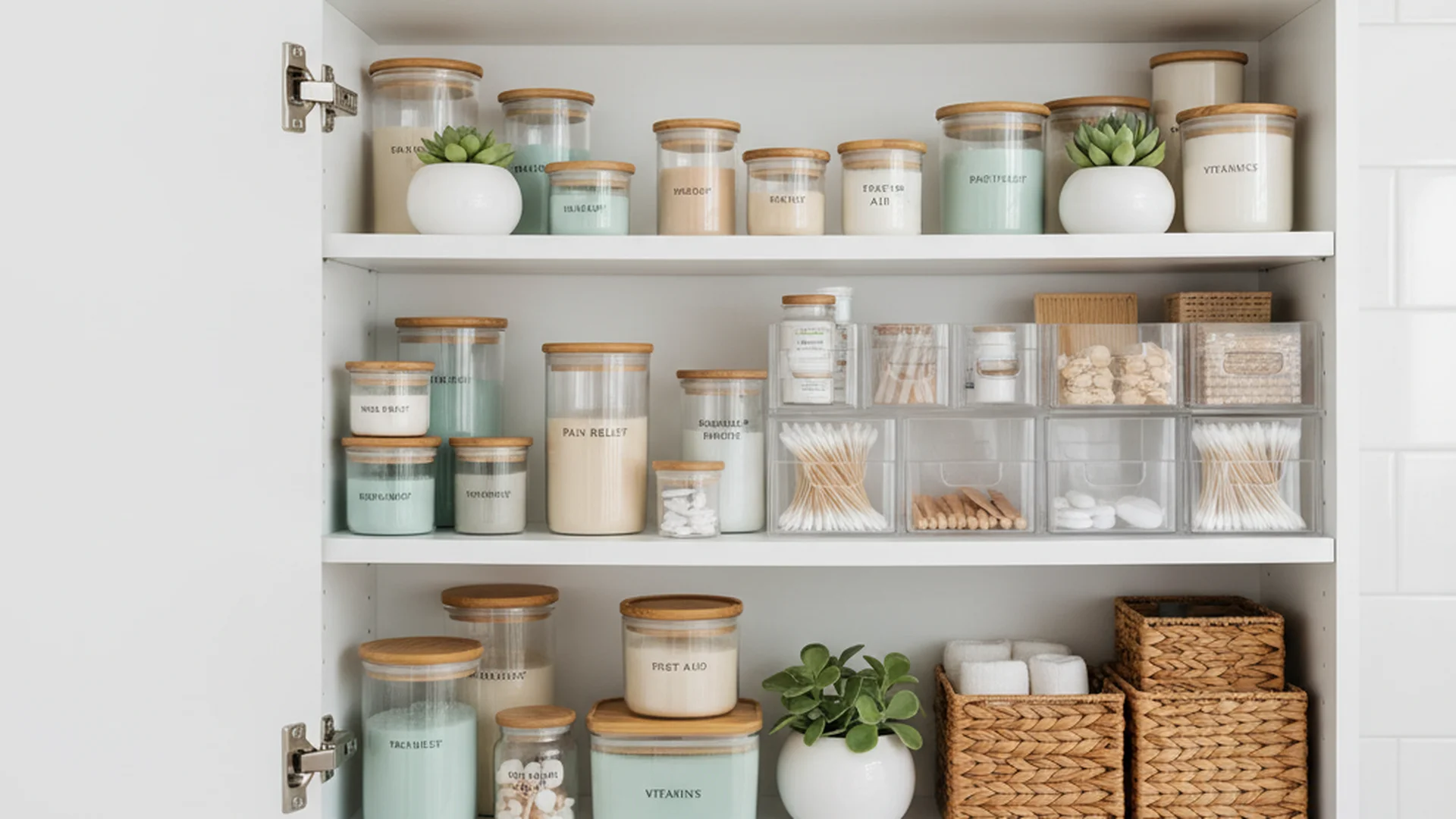
Tip: If you do decant, always use glass. Glass is non-porous and won't absorb the strong oils and odors of spices like plastic containers will.
Common Mistakes to Avoid
Even with the best tools, certain habits can ruin your spice collection.
1. Storing Above the Stove
Many kitchens have a cabinet directly above the microwave or range. This is the worst possible place for spices. The rising heat and grease from cooking will cause your spices to degrade and clump within months.
2. The "Steam Shake"
Never shake a spice jar directly over a steaming pot. The steam enters the jar, introducing moisture that leads to bacterial growth and hardening.
3. Using Wet Spoons
This seems obvious, but even a "mostly dry" spoon can introduce enough moisture to turn a jar of garlic powder into a solid brick. Always use a bone-dry measuring spoon.
4. Ignoring the Backstock
If you buy a large bag of cinnamon to refill your small jar, don't just shove the bag in the back of a dark cabinet. Use a "First In, First Out" (FIFO) system and store backstock in airtight containers to prevent it from going stale before you can use it.
Real-World Examples
Example 1: The Urban Apartment
The Problem: No cabinet space and very little counter room. The Solution: A magnetic rack on the side of the fridge for the top 12 spices, paired with a small "baking bin" stored on a high shelf that is only brought down when needed.
Example 2: The Avid Baker
The Problem: Dozens of small extract bottles and spice tins cluttering a deep pantry. The Solution: A tiered "stadium seating" riser. This allows the baker to see the labels on the back row without moving the front row, specifically grouped into a "Sweet" section and a "Savory" section.
Example 3: The Global Home Chef
The Problem: A collection of over 50 spices from various cultures. The Solution: A hybrid system. A Masala Dabba for daily Indian cooking, and two deep drawers with angled inserts—one for Mediterranean flavors and one for Asian/Fusion flavors.
Frequently Asked Questions
Should I store spices in the refrigerator?
Is it better to organize alphabetically or by use?
Can I keep spices on the countertop?
How do I label spices if I put them in a drawer?
Conclusion
Organizing your spices is about more than just a "Pinterest-worthy" pantry; it is about respecting your ingredients and your time. By following the "Cool, Dark, Dry" rule and choosing a storage system that matches your cooking habits—whether that’s an angled drawer insert or a traditional Masala Dabba—you ensure that every meal you cook is as flavorful as possible. Remember to conduct a "seasonal audit" every six months to toss out the old and make room for new, vibrant flavors.
Success: A well-organized spice rack reduces cooking stress, saves money on duplicate purchases, and ensures your food always tastes its best.
Cleaning that keeps score
Every task earns points, every streak multiplies them, and Premium adds a household leaderboard plus a monthly Dustagorgon to beat.
- Free forever
- 30 badges to earn
- Up to 6 in a household
No card needed. Set up your rooms in a couple of minutes.