In this article
What you’ll learn
- Utilize vertical storage to prevent damage and improve accessibility.
- Implement zone-based storage to keep cookware near its point of use.
- Prioritize an "edit" phase to declutter unused or damaged items before organizing.
For many homeowners, the sound of a kitchen cabinet opening is often followed by the dissonant clatter of sliding lids and tumbling metal. It is a common frustration that goes beyond simple aesthetics. Plenty of homeowners find that an organized kitchen noticeably reduces their daily stress levels. When you are struggling to find the right lid for your sauté pan, you aren't just losing time—you are losing the joy of cooking. Learning how to organize pots pans effectively is the foundation of a high-functioning home.
The stakes are higher than you might think. A lot of people waste real time searching for cookware in cluttered cabinets, which directly contributes to "cooking fatigue." If you have ever opted for takeout because the thought of digging through a "pan-alanche" felt too exhausting, you are not alone. As we look toward 2026, kitchen organization is no longer just a weekend chore; it is a top home improvement priority for many households.
Step 1: The Great "Edit" Phase
Before you spend a single dollar on bamboo dividers or magnetic racks, you must perform what professional organizers call "The Edit." You cannot organize clutter; you can only move it around. The best way organize pots pans always starts with a total purge.
Empty every single cabinet and drawer. Lay your cookware out on the countertop or kitchen table. This visual audit is often a wake-up call for homeowners who realize they own four identical 10-inch skillets but only use one.
What to Keep vs. What to Toss
Be ruthless during this phase. If a pan has a peeling non-stick surface, it isn't just difficult to clean—it is a health hazard. If a pot is warped and no longer sits flat on your burner, it won't cook food evenly. Finally, apply the 12-month rule: if you haven't used that specialized asparagus steamer or the 20-quart stock pot in the last year, it belongs in a donation bin or deep storage, not your prime cabinet space.
Tip: Non-stick pans that are scratched or flaking should be recycled immediately. Many high-end brands now offer "take-back" programs for old metal cookware.
Step 2: The Logic of Layout and Zoning
Once you have narrowed your collection down to the essentials, the next step is determining where they should live. The most efficient kitchens are designed around "Zone-Based Storage." This means storing items as close as possible to where they are actually used.
Point of Use Efficiency
Think about your cooking flow. Your everyday frying pans and saucepans should be located within an arm's reach of the stovetop. Conversely, heavy roasting pans or baking sheets that are only used for Sunday dinners or holiday hosting can be moved to "Plan B" locations, such as a pantry or a higher shelf.
Real-World Example: The "Daily Driver" Zone
Consider a client of mine who struggled with a cramped galley kitchen. By moving her heavy Dutch oven (used once a month) to the pantry and replacing that cabinet space with a vertical rack for her three "daily driver" pans, she reduced her meal prep time by nearly 10 minutes a day.
Note: Modern 2026 kitchen designs often include "sculleries" or prep pantries. If you have the space, these are perfect for storing large, infrequently used items like pressure cookers or air fryers.
The Three Best Ways to Organize Pots and Pans
Depending on your kitchen’s architecture, you will likely find success with one (or a combination) of these three professional approaches.
1. The Vertical "Library Style" Approach
If you have standard base cabinets with deep shelves, verticality is your best friend. Stacking pots on top of each other is the primary cause of scratches and user frustration. Instead, use vertical dividers to store pans and baking sheets like books on a shelf.
This "library style" allows you to pull out a single item without disturbing the rest of the collection. It is particularly effective for heavy items like cast iron skillets, which are difficult to lift out of a stack.
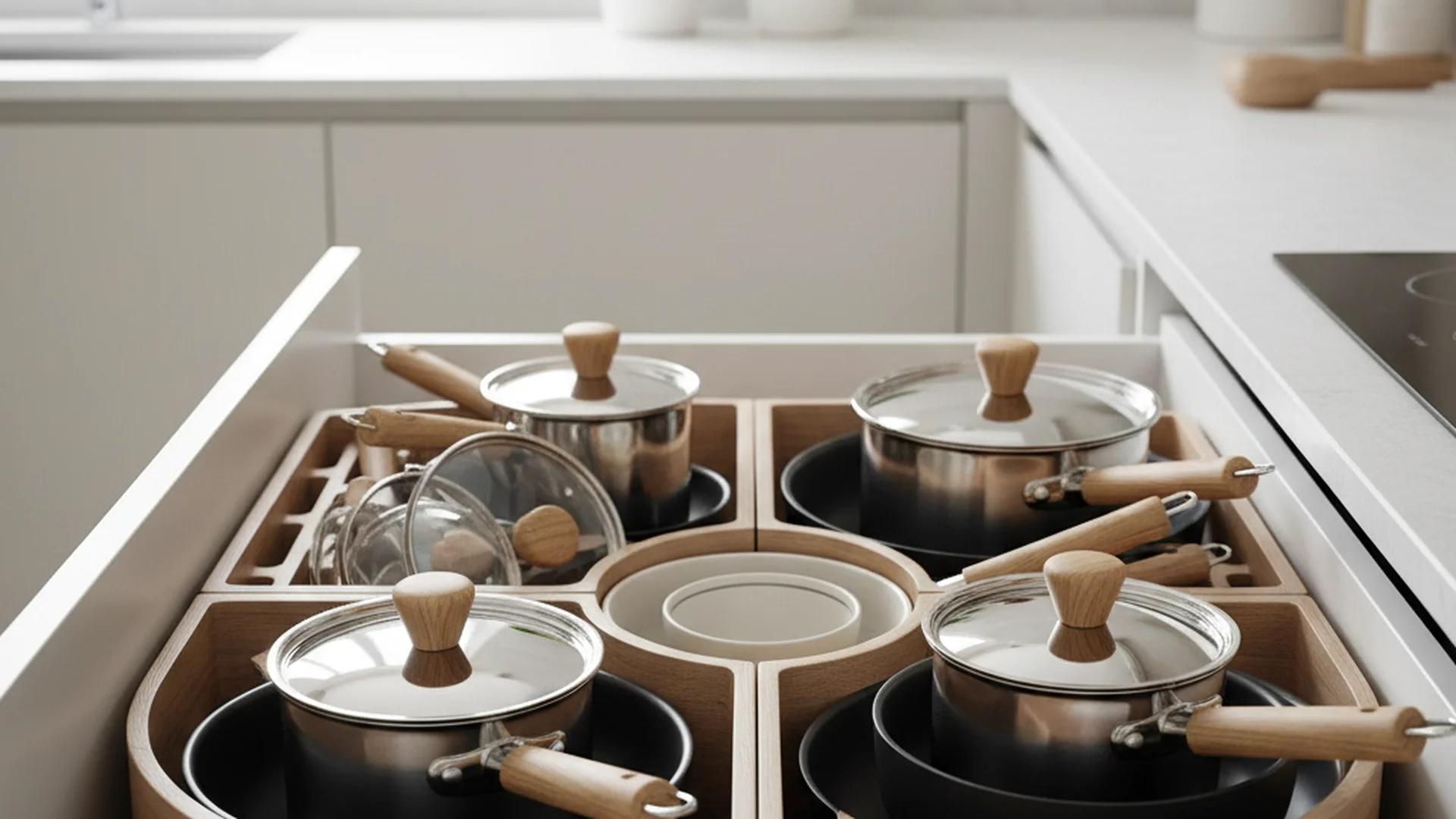
2. The Deep Drawer System
For those lucky enough to have wide, deep drawers, this is arguably the most ergonomic solution. Drawers allow you to see everything from a bird's-eye view.
| Feature | Cabinet Stacking | Deep Drawer System |
|---|---|---|
| Accessibility | Low (must reach back) | High (pulls to you) |
| Organization | Difficult | Easy with dividers |
| Visibility | Poor | Excellent |
| Ergonomics | May require kneeling | Stand-up access |
3. Hidden Pull-Outs and Glideware
If you are retrofitting older cabinets, "glideware" or pull-out wire racks are a game-changer. These systems attach to the top or bottom of your cabinet and allow you to slide the entire rack out into the light. Some systems even feature hooks where pots and pans hang vertically, mimicking a professional chef's kitchen without the visual clutter of a ceiling-mounted rack.
Success: Utilizing a pull-out rack prevents the "forgotten zone" at the back of deep cabinets where old pots go to die.
Mastering Lid Management
Lids are the primary culprits in kitchen chaos. They are awkward, they don't stack well, and they always seem to be missing their partners. To end the lid-avalanche forever, you must separate them from the pots.
- Door-Mounted Racks: Use the "dead space" on the back of your cabinet doors. Slim wire racks can hold four to five lids securely.
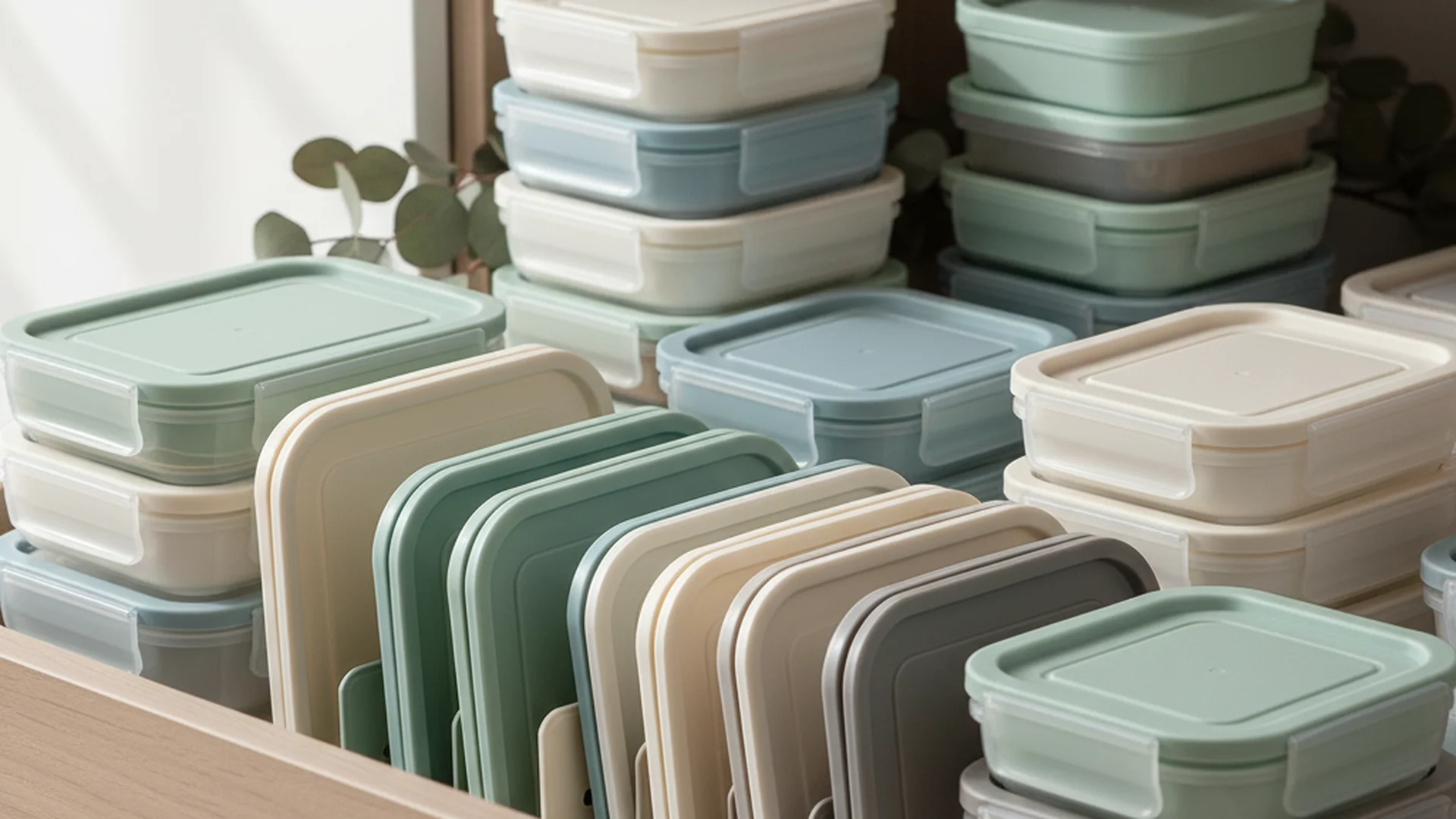
- The "File" Method: Use a small tension rod or a dedicated lid organizer inside a drawer to "file" lids vertically by size.
- Flip and Stack: If you absolutely must stack, place the lid upside down on its pot. This creates a flat surface for the next pot to sit on, though it still requires protection to prevent scratching.
Warning: Never store glass lids in a way where they can clatter against metal. Repeated micro-impacts can lead to "spontaneous" shattering later on due to heat stress.
2026 Trends: Sustainability and Innovation
The world of organization is shifting toward eco-friendly materials and smarter tech-adjacent designs. As we move into 2026, we are seeing a massive departure from cheap plastic organizers.
Eco-Friendly Materials
Sustainable kitchens are trending. Bamboo, water hyacinth, and recycled aluminum are the preferred materials for organizers today. These materials are not only better for the environment but are naturally antimicrobial and more durable than their plastic counterparts.
Magnetic Innovation
Brands like Caraway have popularized the use of magnetic modular racks. These organizers keep pan sets perfectly aligned and separated with zero effort. Magnetic strips are also being used on the sides of cabinets to hold lightweight lids or small saucepans, freeing up valuable shelf space.
Smart Induction Sets
With induction cooking becoming the standard in 2026, cookware is becoming heavier and flatter. Modern organizers are now being reinforced to handle the increased weight of high-density induction sets, ensuring that your shelves don't bow over time.
Common Mistakes to Avoid
Even with the best organize pots pans ideas, many homeowners fall into common traps that damage their cookware or create safety hazards.
- The "Oven Storage" Trap: Using your oven to store pans is a significant safety risk. Not only can it damage non-stick coatings through repeated pre-heating exposure, but it also creates a fire hazard if you forget they are inside.
- Ignoring the Toe Kick: The 4-inch space under your base cabinets is often wasted. In 2025, DIY "toe kick drawers" have become a popular way to store flat items like griddles, pizza stones, and lids.
- Storing Damp Cookware: Putting a pot away before it is 100% dry is a recipe for disaster. Trapped moisture leads to oxidation on stainless steel and can cause rust on cast iron and carbon steel in a matter of hours.
- Stacking Non-Stick: Even "metal-utensil safe" pans will chip if the bottom of one pan rubs against the cooking surface of another. Always use felt protectors or silicone mats if you must stack.
Real-World Example: The Cast Iron Crisis
A client once complained that her expensive cast iron skillet was "leaking" orange spots. Upon inspection, we realized she was storing it under the sink. The minor humidity from the plumbing was causing the seasoning to fail and rust to form. We moved her heavy pans to a reinforced lower drawer near the stove, and the problem vanished.
Frequently Asked Questions
Is it okay to stack my pots and pans?
How do I stop my lids from falling over?
Where should I store heavy cast iron?
Can I store pots and pans under the sink?
Conclusion
Reclaiming your kitchen starts with a single cabinet. By applying the "Edit" phase, utilizing verticality, and keeping up with 2026 trends like sustainable bamboo and magnetic modularity, you can transform a source of daily stress into a streamlined culinary sanctuary. Remember, the best way organize pots pans is the one that fits your specific cooking habits and kitchen layout.
Take the time to dry your cookware thoroughly, avoid the oven storage trap, and give your lids a home of their own. Your pans—and your sanity—will thank you.
Success: An organized kitchen doesn't just look better; it invites you to cook more often and live a healthier, more intentional life.
Cleaning that keeps score
Every task earns points, every streak multiplies them, and Premium adds a household leaderboard plus a monthly Dustagorgon to beat.
- Free forever
- 30 badges to earn
- Up to 6 in a household
No card needed. Set up your rooms in a couple of minutes.