In this article
What you’ll learn
- Minimalism is a mindset of owning less, while organization is a system for managing what you own.
- You cannot organize your way out of a clutter problem; decluttering must come first.
- 2025 trends favor "Warm Minimalism," combining intentionality with cozy, natural textures.
In an era of hyper-consumption and digital overwhelm, the quest for a peaceful home has never been more urgent. Many of us find ourselves standing in the middle of a crowded living room, wondering: is the solution to buy more matching bins, or to get rid of half the contents? When comparing minimalism vs organization, it is easy to assume they are the same thing. However, they represent two very different philosophies of space and time management.
Minimalism asks, "Do I really need this?" while organization asks, "Where does this go?" Understanding the nuance between these two can be the difference between a home that stays tidy and one that requires a constant, exhausting cycle of tidying. Whether you are looking for a mental health reset or simply trying to optimize your small urban apartment, choosing the right path—or the right combination of both—is essential for long-term success.
The Real Cost of Clutter in 2025
Before diving into the debate of which is better minimalism vs organization, it helps to look at what clutter actually costs you. The physical objects in our homes do more than just take up space; they consume our time, money, and mental energy. It is easy to waste a surprising amount of money every year simply by purchasing duplicate items or replacing things lost in the chaos of a disorganized home.
Furthermore, the impact on how you feel is real. A room full of "visual noise" keeps you quietly on alert, which is why a cluttered space can feel tiring before you have even done anything in it. The good news? Most people find they feel considerably less stressed after implementing either a minimalist mindset or a robust organizational system.
For those working from home, the stakes are even higher. A well-organized home office makes it far easier to concentrate and work through a task list, which is a reminder that your environment is a direct contributor to your professional output.
Defining the Terms: Mindset vs. System
To decide between minimalism and organization, we first need to define what each actually entails in a modern context.
What is Minimalism?
Minimalism is a philosophy of intentionality. In 2025, we have moved past the "stark white walls and one chair" aesthetic. Today’s minimalism, often called Warm Minimalism, focuses on keeping only what adds value to your life. It is about the reduction of possessions to the point where everything you own serves a purpose or brings genuine joy.
What is Organization?
Organization is the infrastructure of your home. It involves creating logical systems for retrieval and storage. You can be highly organized without being a minimalist; for example, a collector of vintage records might have a perfectly cataloged, alphabetized system. Organization doesn't necessarily require letting go of items—it requires managing them efficiently.
Note: Minimalism is about the quantity of items, while organization is about the quality of the system used to manage those items.
Minimalism vs. Organization: Which is Better for You?
When asking which is better minimalism vs organization, the answer depends entirely on your personal goals and your current living situation.
| Feature | Minimalism | Organization |
|---|---|---|
| Primary Goal | Owning less to live more | Knowing where everything is |
| Mental Impact | Reduced decision fatigue | Increased sense of control |
| Maintenance | High upfront effort, low daily upkeep | Low upfront effort, high daily upkeep |
| Space Needed | Minimal | Flexible |
| 2025 Trend | Warm textures, intentionality | AI-driven inventory, custom cabinetry |
The Case for Minimalism
If you suffer from "visual overwhelm" or feel that your home is a "second job," minimalism is likely the better starting point. By reducing the number of items you own, you automatically reduce the amount of cleaning, dusting, and organizing required. Minimalism is particularly effective for the many younger adults who are currently reducing their possessions to gain financial freedom and decrease their environmental footprint.
The Case for Organization
If you have hobbies that require specialized gear—such as cooking, crafting, or sports—minimalism might feel restrictive. In these cases, organization is the hero. Organization allows you to keep the things you love while ensuring they don't impede your daily life. For anyone living in compact urban housing, organization is often a survival skill rather than an aesthetic choice.
The "Target Bin Trap" and Other Best Practices
One of the biggest hurdles in home management is what is often called the "Target Bin Trap." This occurs when a person feels overwhelmed by clutter and immediately runs to a big-box store to buy beautiful acrylic bins, labels, and shelving units.
Warning: Never buy organizational supplies until you have finished the decluttering phase. Organizing items you don't need is just "organized hoarding."
1. The One-Year Rule
A staple of minimalist practice: if you haven't used an item in the last year and it holds no deep sentimental value, it is a candidate for removal. This is the most effective way to clear the "buffer" of items that take up 20% of your home's square footage but provide 0% of its utility.
2. Cognitive Zoning
Arrange your home based on mental activity. In 2025, we recommend using minimalist, low-stimuli zones for deep focus areas like home offices. Conversely, you can use more "maximalist" or sentimental organization for your living room or hobby nooks where creativity thrives.
3. Digital Minimalism
Organization in the modern age isn't just about closets. It is worth prioritizing "Digital Minimalism" too. This involves streamlining app notifications, purging cloud storage, and utilizing "inbox zero" strategies to reduce the daily cognitive load that physical items used to cause.
Real-World Examples: Minimalism and Organization in Action
Example 1: The Urban Professional
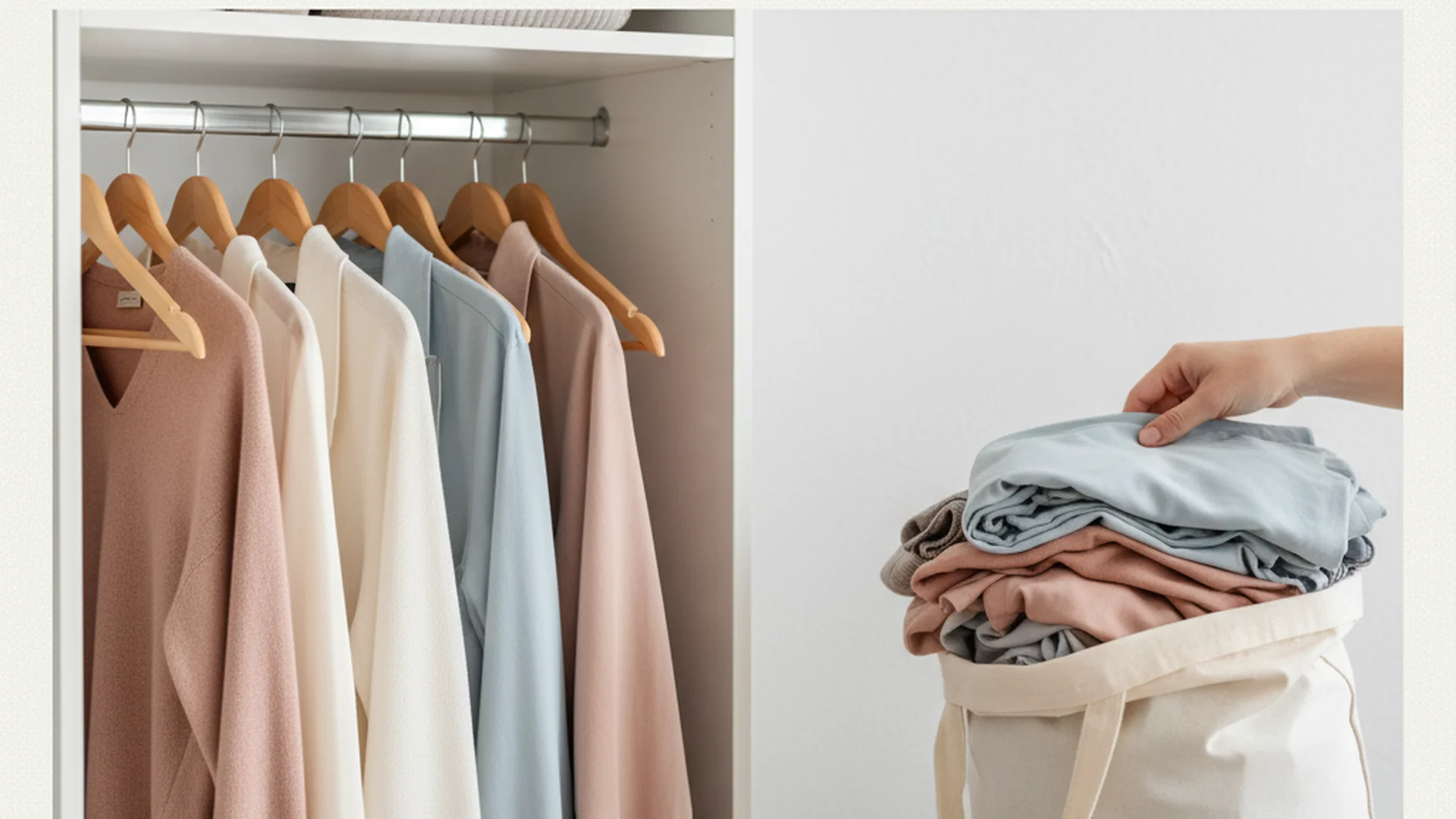
Sarah lives in a 600-square-foot apartment in Seattle. She felt constantly stressed until she adopted AI-driven inventory apps. By cataloging her pantry and wardrobe, she realized she owned three nearly identical black blazers. She sold two (Minimalism) and used a specialized hanging system for the remaining one (Organization).
Example 2: The Busy Family
The Miller family had a "junk room" that caused constant arguments. Instead of just buying more boxes, they spent a weekend decluttering 70% of the room's contents. They used a "circular approach" by donating items to local "Buy Nothing" groups. The remaining items were organized into labeled, transparent bins that even the children could use.
Example 3: The Hybrid Worker
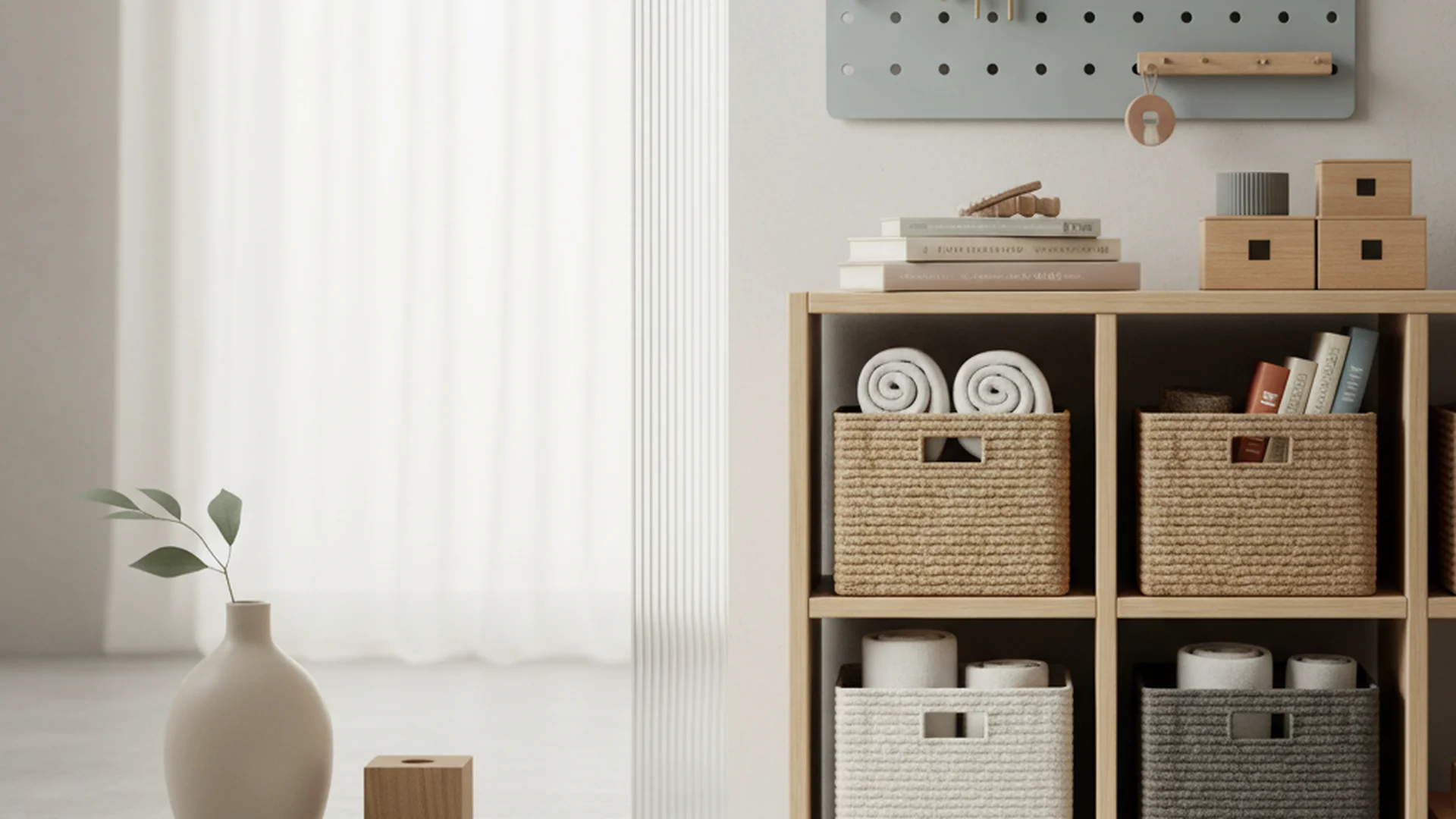
A home office was cluttered with paper and cables. By applying Warm Minimalism, the worker removed all non-essential decor and replaced plastic organizers with wood and natural fibers. The result was a noticeable jump in focus and a space that felt like a sanctuary rather than a cubicle.
2025–2026 Trends: The Future of Clutter-Free Living
The landscape of home management is shifting. We are moving away from the stark, sterile environments of the past and toward a more integrated approach.
- Warm Minimalism: This trend favors neutral palettes layered with wood, stone, and natural fibers. It makes minimalist spaces feel "cozy" rather than "empty."
- Virtual Organizing: With the rise of remote work, many professional organizing services have moved to a hybrid or virtual model. You can now get expert guidance via video call to set up your own bespoke systems.
- AI Inventory Management: New apps now use photo recognition to track what you own, helping you avoid buying a second one of something already sitting in a cupboard.
Success: Combining a minimalist decluttering session with high-tech organizational tools is the fastest way to achieve a "low-maintenance" home in 2025.
Common Mistakes to Avoid
- Forcing Minimalism on Family: "Decluttering by proxy" (throwing away other people's things) reliably leads to resentment. Model the benefits in your own space first.
- Thinking Minimalism is for the Wealthy: While some minimalist aesthetics are expensive, true minimalism is a budget-friendly lifestyle that saves money through reduced consumption.
- The "One-and-Done" Myth: Both minimalism and organization are ongoing lifestyles. Without a "one-in, one-out" rule, clutter will naturally re-accumulate over 6 to 12 months.
- Confusing "Cleaning" with "Organizing": You can have a clean house (hygienic) that is still a mess (disorganized). Focus on retrieval and efficiency, not just soap and water.
Frequently Asked Questions
Is it better to be a minimalist or just organized?
Can you be an organized hoarder?
Which helps more with anxiety?
How do I start if I’m overwhelmed?
Conclusion: Finding Your Balance
The debate of minimalism vs organization doesn't have a single winner. Instead, the most successful homes in 2025 utilize a "Minimalist-First" approach. By reducing your possessions to a level that reflects your true values, you make the task of organization effortless.
Remember, your home should be a tool that supports your life, not a museum you spend all your time maintaining. Start by letting go of the excess, and then build the systems that help you stay focused on what truly matters.
Success: True peace of mind comes when you stop managing your "stuff" and start living your life.
Cleaning that keeps score
Every task earns points, every streak multiplies them, and Premium adds a household leaderboard plus a monthly Dustagorgon to beat.
- Free forever
- 30 badges to earn
- Up to 6 in a household
No card needed. Set up your rooms in a couple of minutes.