In this article
What you’ll learn
- Most people wear only a small fraction of their wardrobe regularly.
- Decluttering must always precede buying new organization systems.
- 2025 trends focus on boutique-inspired lighting and natural woodgrains.
We have all been there: standing in front of a jam-packed wardrobe, staring at rows of hangers and stacks of sweaters, only to sigh and say, "I have nothing to wear." The irony of decluttering closet spaces is that the more items we accumulate, the harder it becomes to actually see the clothes we love. Most of us only ever reach for a small fraction of what we own, which means the rest is simply taking up valuable "real estate" in your home.
Whether you are looking for decluttering closet tips to simplify your morning routine or you need a comprehensive decluttering closet checklist to prepare for a home sale, this guide will walk you through the psychological, physical, and aesthetic steps to creating a "boutique sanctuary" in your own home.
The True Cost of a Cluttered Closet
Before we dive into the "how-to," it is important to understand the "why." Clutter is not just an aesthetic issue; it is a financial and emotional one. Add up the price tags still hanging in an average wardrobe and you are usually looking at hundreds or thousands of pounds of clothing that never gets worn.
Beyond the money, there is the time cost. Think of the sheer hours you have lost across your life hunting for misplaced items. When you optimize your closet, you aren't just cleaning a room—you are reclaiming your time and reducing daily decision fatigue. Furthermore, if you are planning to sell your home, buyers consistently prioritize closet space over attic or basement storage. A clean, organized closet is a major selling point in the 2025-2026 housing market.
The Internal Audit: Questions to Ask Before You Toss
The hardest part of decluttering closet spaces is the emotional attachment we have to our things. To push past the "just in case" mentality, run an internal audit on every single item you touch.
1. When was the last time I wore this?
The 12-month rule is the industry gold standard. If an entire cycle of seasons has passed and you haven't reached for that item, it is a prime candidate for the "Donate" pile.
2. Would I buy this today at full price?
This question helps identify "sunk cost" bias. We often keep things because we spent a lot of money on them, not because we actually like them. If you wouldn't spend the money on it today, it shouldn't be taking up space.
3. Does this fit my current body?
Only keep what fits now. Keeping "goal clothes" or "ideal body" items often creates "guilt clutter," leading to negative emotions every time you open your closet door.
4. Is this item worth the maintenance?
If a shirt has been sitting in a "to-be-repaired" pile for six months, or if you avoid a dress because it requires expensive dry cleaning, it is likely not serving your lifestyle.
Tip: If you are struggling with a "maybe" item, try it on immediately. Fit and comfort are the primary reasons we avoid certain clothes, but we often forget how they feel until they are on our bodies.
Professional Decluttering Methods for 2025
To make the process efficient, you need a system. These are the strategies that consistently work:
The "Reverse Hanger" Method
This is the ultimate low-effort way to track your habits. Turn all your hangers so the hook faces outward (toward you). When you wear an item and return it to the closet, turn the hanger the right way. After six months, any hanger still facing backward is an item you haven't used.
The Three-Pile Strategy
As you pull items out, immediately place them into one of three categories:
- Keep: Items that fit, are in good repair, and are worn regularly.
- Donate/Sell: Items in good condition that no longer serve you.
- Repair/Recycle: Items that need a tailor or are too worn for donation and should be sent to a textile recycler.
Warning: Avoid "organizing" before you declutter. Many people buy bins and baskets first, but you cannot organize your way out of having too much stuff. Decluttering must always come first.
Real-World Examples: Success Stories
Case Study 1: The "Just in Case" Trap
Sarah, a marketing executive, kept a rack of professional blazers from a job she left five years ago. She held onto them "just in case" she ever returned to a formal corporate environment. After realizing these items were taking up 30% of her closet, she donated them to a local charity that provides interview attire for women. The result? She finally had room for the casual, high-quality knits she actually wears to her current remote job.
Case Study 2: The Aesthetic Overhaul
Mark had a "Pinterest-perfect" closet with color-coded shirts, but he could never find his gym clothes. He realized he was organizing for aesthetics rather than function. By switching to a category-based system (grouping all workout gear, all work shirts, etc.) and adding motion-activated LED strips—a major 2025 trend—his morning routine dropped from 15 minutes to five.
Case Study 3: The Small Space Luxury
Elena lived in a studio apartment with a tiny reach-in closet. Instead of fighting the space, she used the "Seasonal Swap" method. She stored her off-season coats in airtight vacuum bags under her bed. This gave her current wardrobe "breathing room," making her small closet feel like a high-end boutique rather than a storage locker.
2025-2026 Closet Trends: From Storage to Sanctuary
Closet design is evolving. We are moving away from purely utilitarian white wire shelving and toward "boutique sanctuaries."
| Trend Feature | Old Style (2020-2023) | New Trend (2025-2026) |
|---|---|---|
| Color Palette | All-white minimalism | Earthy taupes, mushroom, walnut |
| Lighting | Single overhead bulb | Motion-activated LED strips |
| Materials | Plastic and wire | Natural woodgrains and velvet |
| Technology | Manual sorting | 3D design and AR planning |
The shift toward nature-inspired aesthetics means more people are opting for warm wood finishes and matte gold hardware. Additionally, sustainable disposal (or circular fashion) has become the standard. Rather than dumping bags at a landfill, homeowners are using platforms like Trashie or local consignment shops to ensure their clothes get a second life.
Note: Motion-activated lighting is no longer a luxury; it is becoming a baseline expectation for functional closet design. It helps you see colors accurately and find items in the back corners.
Common Mistakes to Avoid
- Keeping "Sentimental" Items in Prime Space: Your high school letterman jacket or your wedding dress shouldn't be taking up prime hanging space. Move these to long-term storage or a memory box.
- Overstuffing Shelves: Aim for 20-30% "white space" on your shelves. If you have to move three things to reach one, your system is broken.
- Letting Donations Stagnate: We’ve all had those bags sitting by the front door for weeks. To succeed, put the donation bags in your car trunk the moment you finish your decluttering session.
- Buying the Wrong Hangers: Mismatched plastic and wire hangers take up significantly more room and can damage fabric. Switching to slim velvet hangers can save 30% more space instantly.
The Complete Decluttering Closet Checklist
Use this step-by-step decluttering closet checklist to ensure you don't miss a beat during your session.
Phase 1: Preparation
- Set a Timer: Dedicate 2-4 hours. Don't try to do the whole house at once.
- Clear Workspace: Clear off your bed or a section of the floor to serve as your sorting station.
- Gather Supplies: Have boxes for "Donate," "Sell," and "Trash/Recycle" ready.
Phase 2: The Sort
- Category by Category: Pull out one category at a time (e.g., all shoes, then all pants).
- The Feel Test: Touch every item. If it doesn't make you feel confident, put it in the "Go" pile.
- Try it On: If you haven't worn it in 6 months, try it on to check fit and comfort.
Phase 3: The Rebuild
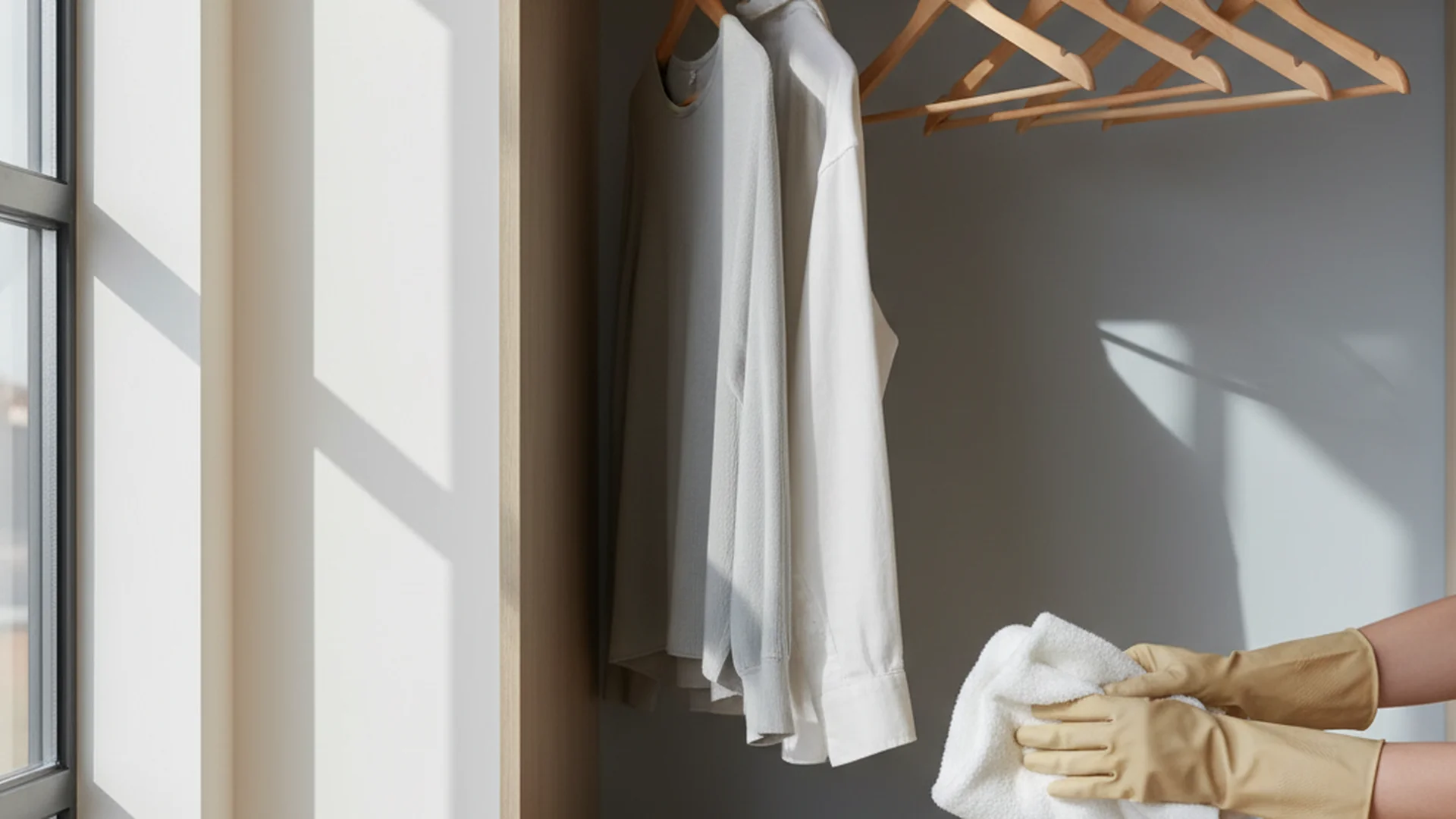
- Clean the Space: Wipe down shelves and vacuum the closet floor while it’s empty.
- Upgrade Hangers: Replace old hangers with slim velvet versions.
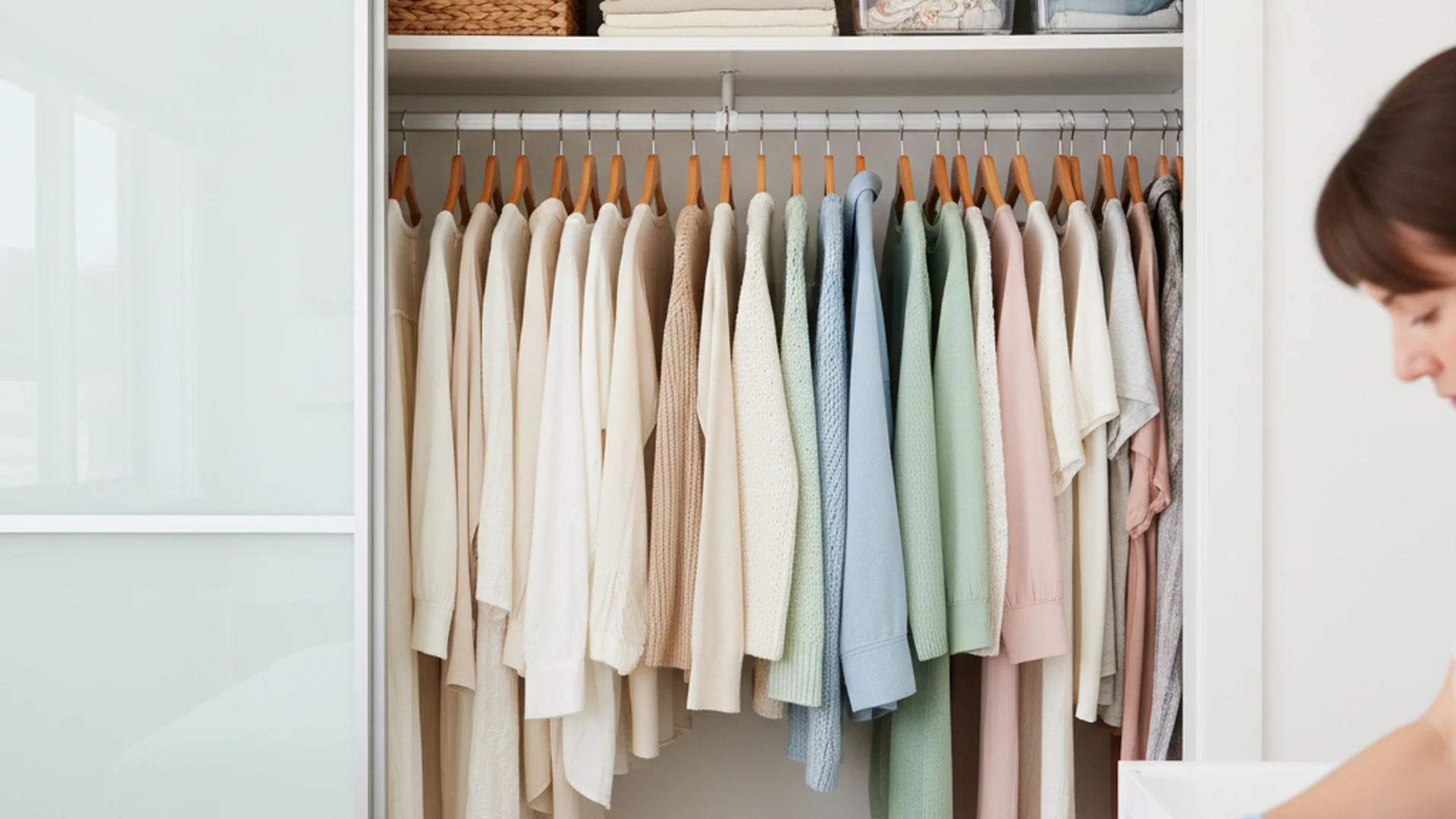
- Organize by Type and Color: Group like-items together, then sub-sort by color to make finding things easier.
- Add Lighting: If your closet is dark, stick some battery-operated LED puck lights on the ceiling or under shelves.
Success: Completing this checklist will not only clean your closet but also provide a "reset" for your personal style and daily habits.
Frequently Asked Questions
How often should I declutter my closet?
What should I do with expensive items I no longer wear?
Is it better to fold or hang clothes?
How do I stop the clutter from coming back?
Conclusion
Decluttering your closet is about more than just making room for new clothes; it is about curating a space that reflects who you are today. By moving away from "just in case" items and embracing the 2025 trends of functional luxury and nature-inspired design, you can transform a source of daily stress into a source of daily joy. Remember, a functional closet shouldn't be packed to the brim—it should have room to breathe, just like you.
Cleaning that keeps score
Every task earns points, every streak multiplies them, and Premium adds a household leaderboard plus a monthly Dustagorgon to beat.
- Free forever
- 30 badges to earn
- Up to 6 in a household
No card needed. Set up your rooms in a couple of minutes.