In this article
What you’ll learn
- Prioritize the memory over the physical object through "Conscious Curation."
- Save sentimental items for the end of your project to build decision-making muscles.
- Use high-quality photography and digital storytelling to honor history without keeping bulk.
If you have ever found yourself staring at a box of old greeting cards, a set of dusty china, or your grandmother’s vintage sewing machine with a mix of love and heavy obligation, you are not alone. Decluttering sentimental items is widely considered the most difficult stage of home organization. It is rarely a physical task; it is an emotional journey through our past, our relationships, and our identity.
As we move into 2026, the philosophy surrounding our belongings is shifting. We are moving away from the "one-size-fits-all" minimalism that dominated the last decade and moving toward Conscious Curation. This method doesn't ask you to get rid of everything; instead, it asks you to prioritize the memory over the object, ensuring that the things you keep truly reflect the person you are today and the legacy you wish to leave behind.
The True Cost of Clutter in 2026
Before we dive into the "how-to," it is essential to understand why this process feels so overwhelming. Our homes have become archives of "just in case" and "I feel guilty." The crisis of domestic density shows up in three ways:
- The Overwhelm Factor: Most people feel overwhelmed by the amount of clutter in their homes.
- The Sheer Volume: The modern household holds a staggering number of individual items.
- The Storage Burden: Plenty of households rent a storage unit, often paying a substantial monthly fee to house items they do not use, simply because they feel too guilty to discard them.
Beyond the financial cost, there is a physiological one. Living in a cluttered environment keeps cortisol—the stress hormone—elevated. Successful decluttering brings those levels back down, which noticeably improves mental well-being and focus.
Note: Decluttering is not about "throwing away your past." It is about making room for your future.
Practical Decluttering Sentimental Items Tips
When you are ready to begin, the "how" matters just as much as the "why." These decluttering sentimental items tips will help you navigate the emotional waves without getting pulled under.
The "Last in Line" Rule
One of the most common mistakes is starting with the attic or the trunk of old photos. Always save sentimental items for the very end of a larger decluttering project. Decision-making is a muscle; if you haven't practiced on "easy wins" like expired spices or old bathroom towels, you will experience "decision fatigue" within minutes of opening a baby box. Build your momentum first.
The Memory Box Strategy
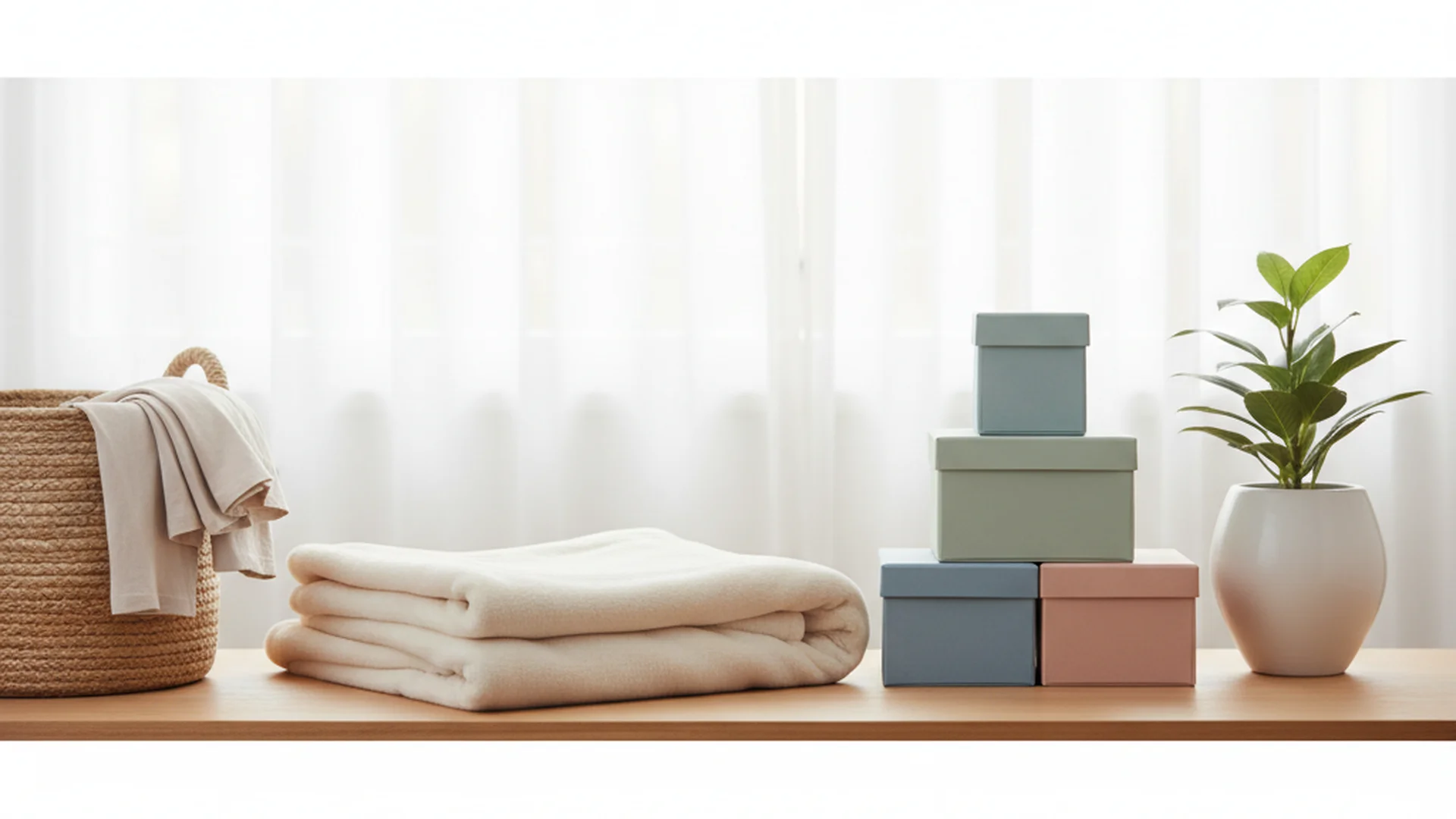
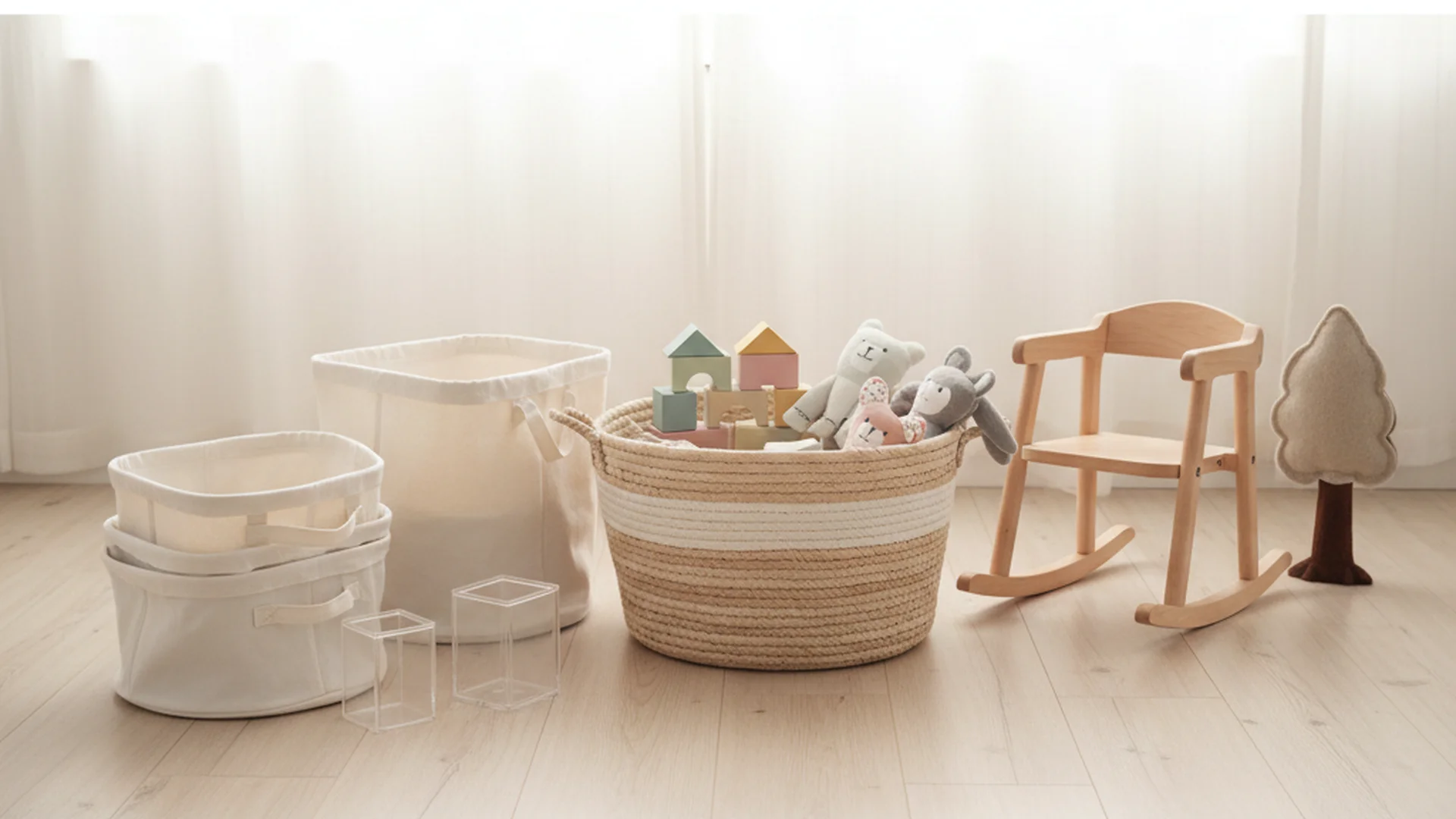
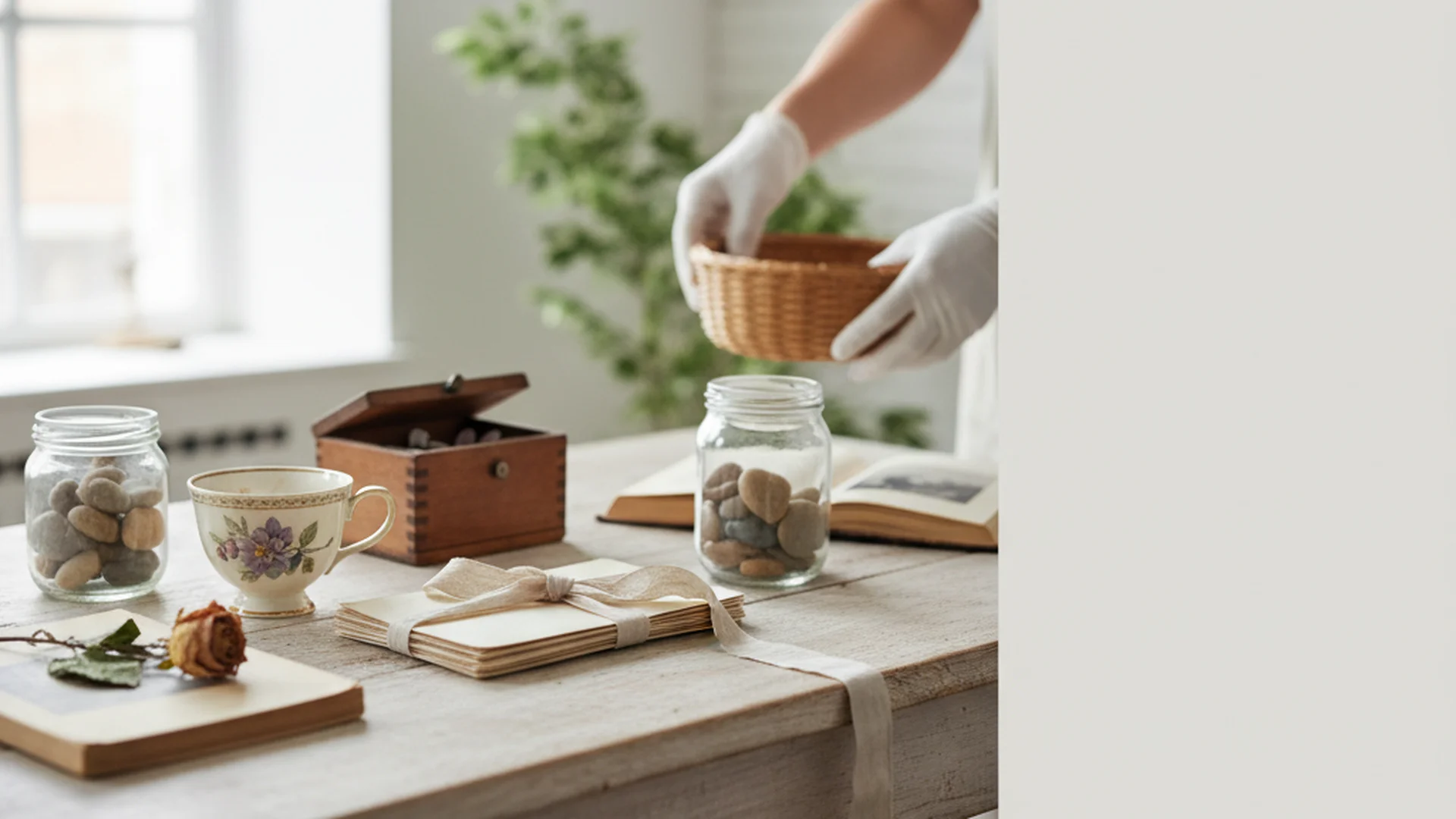
Instead of having sentimental items scattered throughout the house, designate one or two beautifully designed "keepsake boxes" per person. This creates a physical boundary. If the box is full, and you want to add something new, something else must come out. This forces you to rank your memories and keep only the "best of the best."
The "Photo First" Method
If you are struggling to let go of a physical object—perhaps a sports trophy or an old piece of furniture that doesn't fit your style—take a high-quality photo of it. A visual reminder is usually enough to satisfy the brain's need to "keep the memory" without needing the physical space. In 2026, many people are creating digital "legacy albums" where they pair these photos with a short written memory.
The 10-Minute Reset
Sentimental piles can be exhausting. Set a timer for 10 minutes. When it goes off, you are allowed to stop. This prevents emotional fatigue and makes the task feel manageable. You’ll be surprised how much progress you can make in several small bursts rather than one grueling weekend.
Tip: If you find yourself crying or feeling paralyzed, step away. The goal is progress, not perfection.
Real-World Examples of Conscious Curation
To understand how these concepts work in practice, let's look at three common scenarios and how the "Conscious Curation" approach resolves them.
Example 1: The Inherited Estate
Scenario: Sarah inherited her mother’s entire collection of 1970s dinnerware. She doesn't like the pattern, but feels she must keep it to "honor" her mother. The Conscious Curation Solution: Using the "Museum Curator" approach, Sarah selects one beautiful serving platter to hang on her kitchen wall and one teacup to use for her morning coffee. She sells or donates the rest, knowing that the essence of her mother is captured in the pieces she actually sees and uses daily, rather than in 40 plates stored in a dark box.
Example 2: The Baby Clothes Dilemma
Scenario: Mark and Elena have three bins of baby clothes. Their youngest child is now ten. They feel a deep emotional attachment to every onesie. The Conscious Curation Solution: They select five of the most iconic outfits (the coming-home outfit, the first birthday shirt, etc.) and have them sewn into a small, high-quality "memory quilt." They use the "Sustainable Death Cleaning" trend to find a specialized textile recycler for the rest, ensuring the fabric is reused rather than sent to a landfill.
Example 3: The Gift Guilt
Scenario: David received an expensive, bulky espresso machine from his brother three years ago. David prefers pour-over coffee, but the machine sits on his counter taking up space because it was a gift. The Conscious Curation Solution: David realizes that the "act of giving" was the transaction of love. He calls his brother, mentions how much he appreciated the gesture, and then gifts the machine to a friend who will actually use it. The guilt is replaced by the joy of knowing the item is being utilized.
Success: By separating the person from the object, you can release the item while keeping the love.
2026 Trends: AI and Legacy Technology
The landscape of organization is changing. New technologies are making it easier to preserve history without the physical burden.
- AI-Assisted Sorting: A major 2026 trend involves using AI to create "decision trees." Users upload photos of items and ask the AI to help them categorize things based on their personal values and space constraints. AI can help provide an objective "second opinion" when you are too close to the items to be impartial.
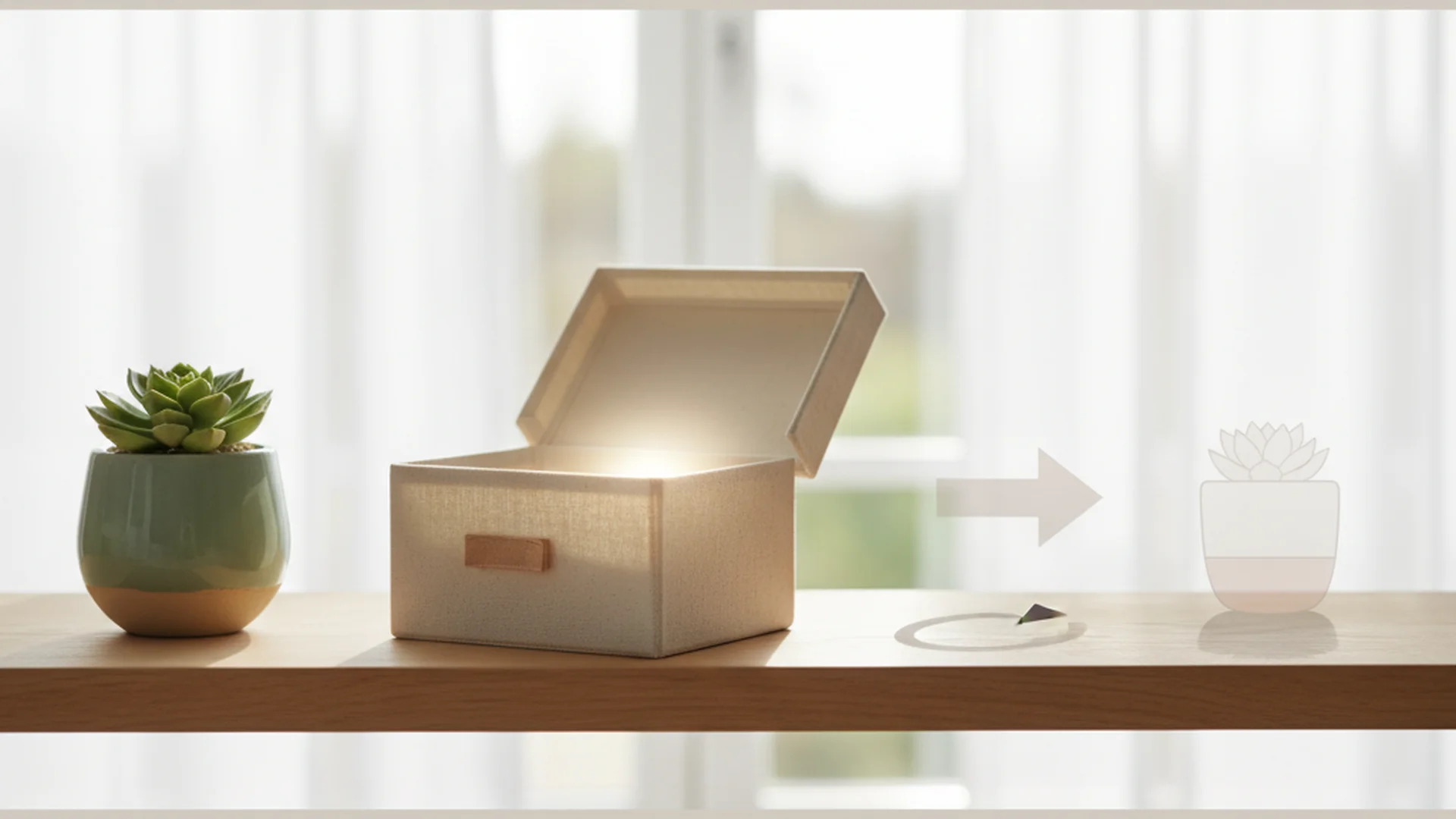
- Legacy Tech & Storytelling: Apps now allow you to attach a small QR code to the bottom of a kept item. When scanned, it links to a video of you explaining the history of that item. This ensures the story is passed down to your children, not just the stuff.
- Climate-Conscious Decluttering: More people are focusing on finding specialized homes for sentimental items. Whether it’s donating vintage tools to a community workshop or finding a museum for a rare heirloom, the focus is on "circularity" rather than disposal.
| Strategy | Best For | 2026 Tool Recommendation |
|---|---|---|
| Digitization | Letters, Photos, Children's Art | High-speed scanners or Legacy Apps |
| Repurposing | Textiles, Baby Clothes | Memory Quilt Services |
| Curating | Estate Items, Heirlooms | "Museum Curator" Display Case |
| Selling | Expensive "Sunk Cost" Items | AI-driven resale marketplaces |
Common Mistakes to Avoid
Even with the best intentions, it is easy to fall into traps that stall your progress. Be mindful of these common pitfalls:
- The "Sunk Cost Fallacy": Many people hold onto items because they were expensive. Keeping it does not "honor" the money spent—the money is already gone. Keeping the item only "costs" you your mental peace and physical space.
- Buying Bins First: One of the most common mistakes is purchasing "pretty storage" before decluttering. You cannot organize clutter; you must remove the excess first.
- Decluttering for Others: Never try to declutter a partner's or child's sentimental items without their consent. This leads to "clutter trauma," often causing the person to hold onto things even tighter out of fear.
- The "Just in Case" Trap: Keeping sentimental items because you might "pass them on" one day. Many children in 2026 do not want their parents' physical clutter; they prefer a few select, high-quality heirlooms and digital memories.
Warning: Be wary of "digital hoarding." Only digitize items you actually want to look at again. A hard drive full of thousands of uncurated photos can be just as overwhelming as a physical basement full of boxes.
Your Decluttering Sentimental Items Checklist
Use this checklist to stay on track during your session.
- Prep: Set up a "Safe Zone" (a clean table or area) where you feel in control.
- Sort: Use the "Three-Pile Method": Keep, Let Go, and "Not Sure."
- Limit: Cap the "Not Sure" pile at 10 items. Revisit them after 24 hours.
- Honor: For items you let go of, take a photo or write a one-sentence memory in a journal.
- Distribute: Have a plan for where items go immediately. Put donations in the trunk of your car the same day.
- Verify: Ask family members: "Do you truly want this physical item, or would you prefer a photo and the story behind it?"
Frequently Asked Questions
How do I deal with the guilt of getting rid of a gift?
Where should I start if I'm overwhelmed?
What if I'm clearing out a late loved one's estate?
Should I digitize everything?
Conclusion
Decluttering sentimental items is a profound act of self-care. It allows you to stop living in a museum of your past and start living in a home that supports your present. By embracing Conscious Curation, you aren't losing your history; you are finally giving your most precious memories the space they deserve to shine.
Success: When you surround yourself only with things that truly matter, your home becomes a sanctuary rather than a storage unit.
Cleaning that keeps score
Every task earns points, every streak multiplies them, and Premium adds a household leaderboard plus a monthly Dustagorgon to beat.
- Free forever
- 30 badges to earn
- Up to 6 in a household
No card needed. Set up your rooms in a couple of minutes.