In this article
What you’ll learn
- Start with a 'Trash First' approach to see immediate progress
- Implement a six-zone organization system for maximum efficiency
- Use vertical storage and uniform bins to reclaim floor space
Decluttering your garage is no longer just a simple weekend chore; in 2025, it has evolved into a strategic home optimization mission. As our homes become multi-functional hubs for work, fitness, and hobbies, the garage has become the final frontier of reclaimed square footage. However, the path to a clean garage is often blocked by years of accumulated "just in case" items and forgotten projects. If you are one of the many homeowners who can’t fit a single car into their two-car garage, it is time to embrace a systematic approach to decluttering garage spaces.
The State of the American Garage
For most households, the garage is the single most cluttered area of the entire home. Given the sheer number of individual items a home accumulates, the garage ends up acting as the "junk hub" where things go to be forgotten. This leads to a massive loss in efficiency—days of your life vanish into hunting for misplaced items. In the garage, this usually manifests as "redundant purchases," such as buying a new cordless drill simply because the old one is buried under a mountain of cardboard boxes.
Note: A well-organized garage is a genuine source of pride for the people who own one, and it remains a top feature for potential home buyers in the 2025 real estate market.
Phase 1: The Pre-Purge Strategy
Before you buy a single plastic bin or install a shelf, you must have a plan. The biggest mistake homeowners make is purchasing storage solutions before they know what they are actually storing.
The "Trash First" Approach
Start with the "Trash First" method. Instead of sorting through sentimental items or complex tools, walk through the garage with a heavy-duty trash bag and a breakdown knife. Dispose of obvious garbage: empty cardboard boxes, broken plastic toys, dried-up paint cans, and scraps of lumber that are too small to be useful.
Tip: Clearing out visible trash provides immediate visual progress and clears the floor space necessary for the more intensive sorting phases.
The 20/20 Rule for Budget Decluttering
If you are struggling to let go of items due to their perceived value, apply the 20/20 rule. If an item costs less than $20 to replace and you can buy it in less than 20 minutes from a local store, let it go. This is particularly effective for duplicate hand tools, rusted gardening supplies, or old cleaning chemicals.
Phase 2: The Essential Decluttering Garage Checklist
To achieve a professional-level result, follow this decluttering garage checklist to ensure no corner is left untouched.
The Three-Pile Sort
Every single item in your garage must pass through a categorization process. Create three distinct areas on your driveway or lawn:
- Keep: Items used within the last 12 months that serve a specific purpose.
- Donate/Sell: Items in good condition that you no longer use (e.g., old bikes, outgrown sports gear).
- Discard: Items that are broken, expired, or hazardous.
Inventory Audit
- Seasonal Decorations: Consolidate into uniform bins.
- Tools: Group by type (power tools, hand tools, automotive).
- Sports Gear: Check for expiration dates on helmets and safety gear.
- Garden Supplies: Dispose of any chemicals that have separated or expired.
Warning: Never mix old chemicals or pesticides in the same bag. Consult your local municipality for "Hazardous Waste Drop-off" days for paint, oil, and batteries.
Phase 3: Zone-Based Organization
Once the clutter is gone, you need a system to prevent it from returning. The gold standard for 2025 is the Six-Zone System.
Zone 1: The Transition Zone
Located near the door leading into the house, this area handles the daily "coming and going." Install hooks for jackets, a bench for shoe removal, and a small station for bags or umbrellas.
Zone 2: Everyday Essentials
This zone is for items you grab daily or weekly, such as trash bins, pet food, or frequently used pantry overflow. Keep these at chest height for easy access.
Zone 3: Long-Term Storage
The highest shelves and deepest corners are reserved for items you only need once or twice a year. This includes holiday decorations and seasonal camping gear.
Zone 4: Large Items
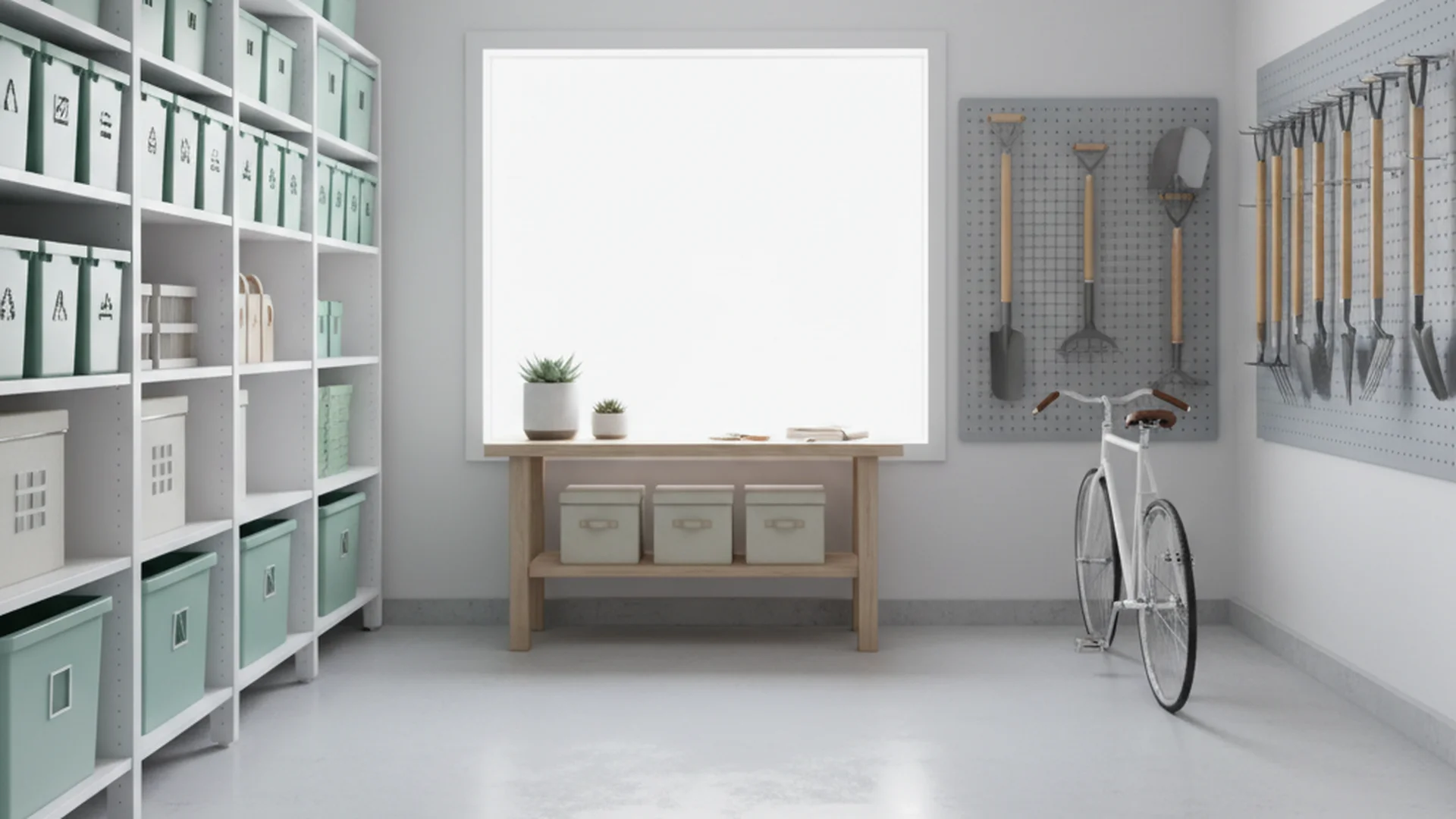
Wall-mounted racks or heavy-duty floor space should be dedicated to mowers, ladders, and bicycles.
Zone 5: Workshop and Hobby
This is your dedicated workspace. Whether it’s a woodworking bench or a craft station, keep all related tools within arm's reach of this central hub.
Zone 6: Outdoor and Garden
Keep fertilizers, rakes, and shovels near the garage door leading to the yard to prevent tracking dirt through the entire space.
Success: Dividing your garage into zones ensures that every item has a "home," making it significantly easier to maintain the space long-term.
Real-World Example: The "Hybrid Garage" Transformation
Example 1: The Commuter’s Transition. A family in Seattle found they were spending 15 minutes every morning just finding shoes and backpacks in their cluttered garage. By implementing Zone 1 (Transition Zone) with a custom slatwall, they reclaimed that time and reduced morning stress.
Example 2: The Weekend Warrior. A homeowner in Austin used the "Vertical-First" rule to lift his kayak and mountain bikes onto motorized ceiling racks. This cleared enough floor space to install a Level 2 EV charger and park his new electric vehicle inside for the first time in five years.
Example 3: The Office Pod. With the rise of remote work, a homeowner in Chicago used modular, insulated wall panels to create a "room-within-a-room" in her garage. By decluttering the surrounding area first, she created a professional, temperature-controlled office that increased her home's value.
Storage Solutions and 2026 Trends
The technology surrounding garage storage is shifting rapidly. Here is what is trending for the 2025–2026 season:
| Storage Type | Best Use Case | 2026 Trend |
|---|---|---|
| Slatwalls | Hand tools & bikes | Bamboo & Recycled Plastics |
| Overhead Racks | Seasonal bins | Motorized Smartphone Lifts |
| Clear Totes | Smaller categories | RFID Inventory Tracking |
| Cabinets | Messy/Visual clutter | Opaque Matte Finishes |
The Vertical-First Rule
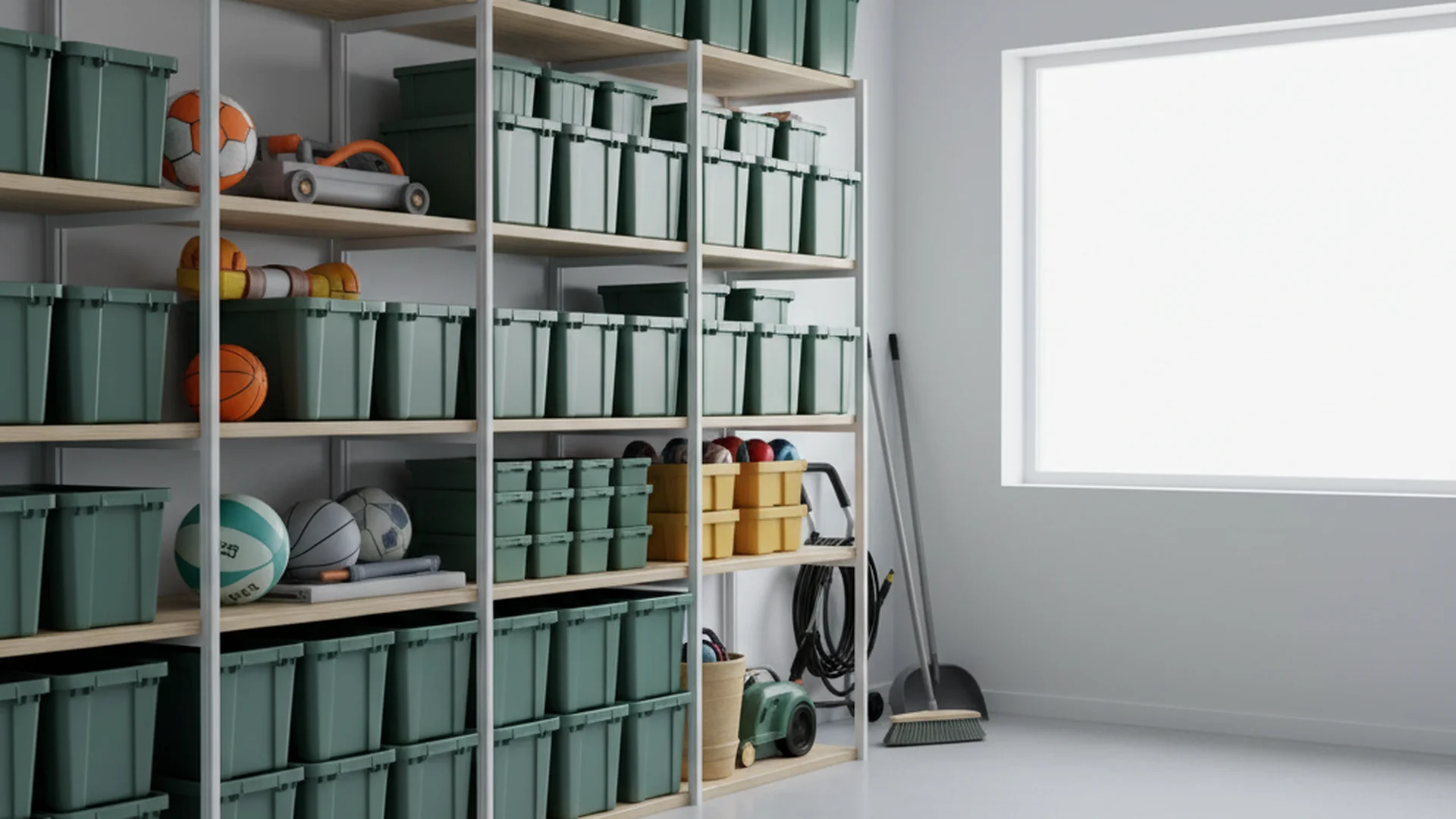
Real estate on your garage floor is the most valuable property in your home. Use pegboards for small tools and overhead racks for bulky items like ladders. By keeping the floor clear, you make cleaning easier and ensure you can actually park your car.
Uniformity in Bins
Stop using old cardboard boxes. They attract pests like silverfish and absorb moisture, which leads to mold. Switch to clear, stackable plastic totes. Using uniform sizes prevents "bin leaning" and makes your storage much more stable.
Note: 2026 is seeing a surge in RFID-enabled tool cabinets that track your inventory and notify your phone if a tool hasn't been returned to its slot.
What You Should NEVER Store in a Garage
Because garages are usually not climate-controlled, they are hostile environments for certain items. Move these indoors immediately:
- Electronics: Humidity can corrode internal components.
- Photographs and Documents: Temperature fluctuations cause curling and fading.
- Food (including Pet Food): Attracts rodents and pests regardless of how well it is sealed.
- Clothing: Fabric absorbs garage odors and provides nesting material for mice.
Warning: Homeowners often forget to check weight limits for ceiling joists when installing overhead racks. Professional installation is highly recommended for heavy machinery.
Common Mistakes to Avoid
- Buying Bins Before Purging: This is the #1 mistake. You will inevitably buy the wrong sizes or too many containers. Purge first, measure second.
- Ignoring the Floor Coating: Basic epoxy is outdated. The 2026 standard is polyaspartic floor coatings, which cure in one day and resist "hot tire pick-up" and road salt.
- The "Someday" Mindset: This is the primary driver of clutter. If you haven't used an item in a full cycle of four seasons, you are unlikely to need it "someday."
- Neglecting the "Visual Clean": Even an organized garage can look chaotic if everything is visible. Use a mix of clear bins (for finding things) and opaque cabinets (to hide messy tools) to balance aesthetics.
Frequently Asked Questions
Where do I even start with a disaster garage?
How do I dispose of old paint and motor oil?
Is it worth it to insulate my garage?
How do I keep spiders and pests out of my storage bins?
Conclusion
Successfully decluttering garage spaces requires a shift in mindset from "storage locker" to "functional room." By utilizing the three-pile sort, implementing a six-zone organization system, and embracing the vertical-first rule, you can transform the most cluttered area of your home into a source of pride and efficiency. Whether you are preparing for an EV-ready layout or simply want to park your car inside again, the effort you put into decluttering today will pay dividends in home value and reduced daily stress for years to come.
Success: Following this structured approach will strip a large chunk out of your future housework and reclaim days of time previously lost to searching for misplaced items.
Cleaning that keeps score
Every task earns points, every streak multiplies them, and Premium adds a household leaderboard plus a monthly Dustagorgon to beat.
- Free forever
- 30 badges to earn
- Up to 6 in a household
No card needed. Set up your rooms in a couple of minutes.