In this article
What you’ll learn
- Mastering the 3-second fold cuts your active laundry labor dramatically.
- Batching items by category creates a rhythmic flow that increases speed.
- Proper folding techniques help your clothes last noticeably longer.
Laundry is a universal constant, but for many, it feels like an endless cycle of labor. Add up the hours you spend each year on sorting, washing, and—most significantly—folding, and it amounts to days of your life. If you are tired of losing your weekends to mountains of fabric, learning how to fold clothes quickly is the most effective way to reclaim your time.
As we move into 2026, the intersection of traditional methods and new technology is changing how we manage our wardrobes. Whether you are a busy parent or a professional looking to optimize your routine, mastering speed-folding isn't just about saving minutes; it's about reducing "folding fatigue" and maintaining a clutter-free home.
Why Speed and Technique Matter
While washing and drying are largely automated processes, folding remains one of the last manual hurdles in the modern home. On average, folding and putting away a single load of laundry takes between 15 and 20 minutes. For a household managing six loads a week, that totals over 1.5 hours of active labor.
However, speed isn't the only benefit. How you fold also affects the longevity of your wardrobe. Proper folding keeps garments in service far longer by preventing fiber over-stretching. When we "ball" our socks or shove T-shirts into cramped drawers, we stress the elastic and create permanent creases that require damaging heat to remove.
Success: Transitioning from a standard "retail fold" (4–6 seconds) to a "3-second fold" can save you over 10 minutes per laundry day.
Top Techniques to Fold Clothes Quickly
To truly master the art of speed, you need to move beyond the basic "fold-in-half" method. Here are the most efficient techniques used by professional organizers in 2025.
The Famous "3-Second Fold" (Pinch-and-Pull)
This is the gold standard for T-shirts. Also known as the Japanese pinch method, it allows you to fold a shirt in one fluid motion.
- Lay the shirt flat with the front facing up.
- Imagine a line running across the middle of the shirt and another running vertically from the shoulder to the hem.
- Pinch the shoulder (Point A) and the intersection of the two lines (Point B).
- Cross your hand from Point A down to the bottom hem (Point C) while still holding Point B.
- Uncross your hands and lift the shirt; it will naturally fall into a perfect fold.
- Tuck the remaining sleeve under as you lay it down.
File-Folding (The KonMari Method)
While many ask, "Is file-folding actually faster than stacking?", the answer is nuanced. While the initial fold takes a second longer, it saves significant time daily. Because you can see every item at once in your drawer, you eliminate the "rummage time" that typically messes up stacks and requires you to re-fold clothes later.
The Ranger Roll for Space Saving
If you are dealing with a small apartment or packing for a trip, the Ranger Roll is unbeatable. This method compresses items to 50% of their original size and "locks" the fold so it cannot unravel.
Tip: Use the Ranger Roll for gym clothes and towels to maximize shelf space and keep items organized during transit.
Expert Strategies for Maximum Efficiency
Speed is as much about your environment and workflow as it is about your hand movements. As a professional cleaning consultant, I recommend the following "pro-hacks" to streamline your process.
The "Warm-Fold" Rule
Never let your clothes sit in the dryer or a basket overnight. Aim to fold clothes within 5 minutes of the dryer buzzer. When fibers are warm, they are more pliable. This means wrinkles haven't "set" yet. By folding immediately, you effectively eliminate the need for ironing, which is the ultimate time-saver.
The "Shake and Smooth" Technique
Before laying any item on your folding surface, give it a brisk "snap" in the air. This mechanical action aligns the seams and flattens the fabric instantly. It’s a 1-second step that prevents you from having to spend 10 seconds smoothing out wrinkles by hand on the table.
Batching by Category
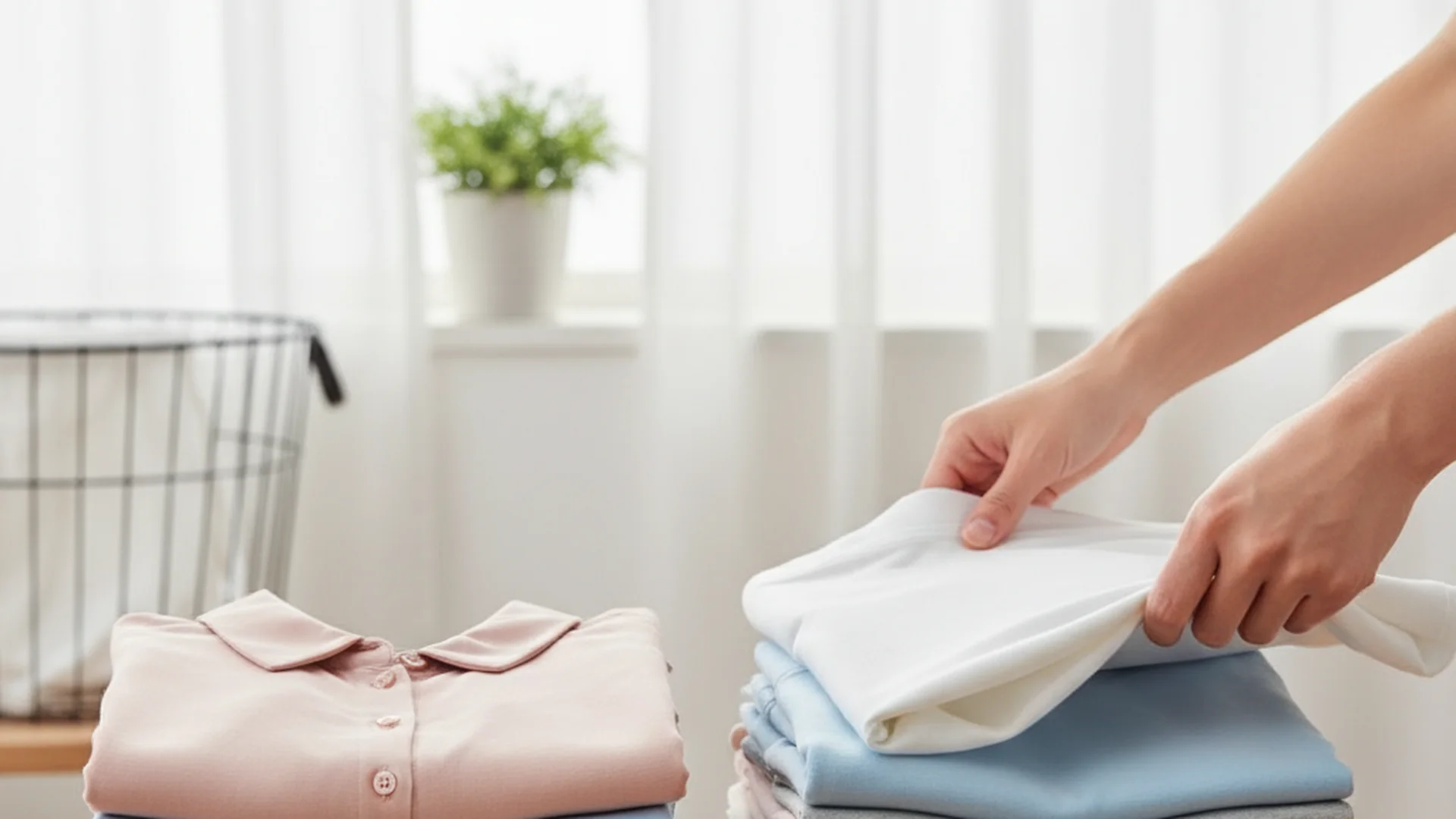
One of the biggest mistakes people make is folding items as they come out of the basket—a shirt, then a sock, then a towel. This forces your brain to "reset" its muscle memory with every item. Instead, sort the basket into piles by item type first. Folding ten T-shirts in a row allows your hands to enter a "rhythmic flow," significantly increasing your speed.
Note: A waist-high, flat surface like a kitchen island or a dedicated folding table is the best surface for fast folding. Folding on a bed often leads to back strain and slower movement.
| Method | Time Per Item | Best For |
|---|---|---|
| 3-Second Fold | 3 Seconds | T-Shirts, Polos |
| Retail Fold | 6 Seconds | Sweaters, Long Sleeves |
| File Fold | 8 Seconds | Underwear, Drawers |
| Ranger Roll | 12 Seconds | Travel, Activewear |
Real-World Examples of Efficiency
To see how these tips apply to daily life, consider these three common scenarios:
- The Sunday Night Scramble: Instead of facing three loads of mixed laundry while watching TV, use the "Batching" method. Sort everything into "Tops," "Bottoms," and "Linens." By focusing on one category at a time, you can clear a mountain of laundry in under 30 minutes.
- The Toddler Drawer: Parents of young children often find drawers in a state of chaos. By using the KonMari file-folding method for onesies and small leggings, you can see every outfit at a glance, preventing the "drawer dig" that happens during early morning diaper changes.
- The Weekend Getaway: When packing a carry-on, use the Ranger Roll for your t-shirts and jeans. Not only does this fold clothes quickly, but it also ensures that even if TSA searches your bag, your clothes remain tightly packed and wrinkle-free.
2025–2026 Trends: The Future of Folding
We are currently witnessing a massive shift in laundry management.
- AI-Powered Assistants: 2025 saw the launch of domestic robots like LG’s CLOiD humanoid assistant, which uses "Affectionate Intelligence" to identify fabric types—differentiating between a delicate silk blouse and a rugged denim jean—to apply the correct fold pattern automatically.
- Smart Closets: High-end 2026 closet systems now include "steam-folding" zones. You hang a damp-ish shirt in a specific slot, and the closet dries, steams, and folds it into a designated bin.
- Laundry-as-a-Service (LaaS): For those who truly value their time above all else, professional "Wash & Fold" subscriptions are peaking. Remote workers are increasingly outsourcing the entire process to local providers who use professional-grade folding boards for boutique-level results.
Warning: Never fold clothes that are "almost dry." Moisture trapped in folds leads to mildew and a "musty" smell that requires a full re-wash.
Common Mistakes to Avoid
Even if you learn how to fold clothes quickly, these common errors can undo your hard work:
- The "Sock Ball" Myth: Rolling socks into a ball stretches the elastic at the top, ruining them over time. Instead, lay them flat and fold them in half or thirds.
- Over-Compressing Drawers: If you have to push down on your clothes to close a drawer, you are undoing your folding work. Compressed fibers wrinkle faster. Aim to keep drawers at 80% capacity to allow the fabric to breathe.
- The "One-Size-Fits-All" Fold: Folding a child’s shirt the same way as an adult's XXL shirt wastes space. Use the "guide-item" method: fold everything to match the depth of your specific drawer or shelf.
Frequently Asked Questions
Should I fold T-shirts or hang them?
How do I build the habit of folding immediately?
Are folding boards actually worth it?
Is it better to fold or roll clothes for storage?
Conclusion
Mastering how to fold clothes quickly is a life skill that pays dividends every single week. By moving away from the "laundry mountain" approach and adopting professional techniques like the 3-second fold and category batching, you can transform a dreaded chore into a quick, rhythmic routine. Not only will you save hours every year, but your clothes will look better and last longer.
Remember, the goal isn't just speed—it's consistency. Start by mastering one technique this week, and soon you'll find that the endless laundry drain is a thing of the past.
Success: By implementing the "Warm-Fold" rule and the "3-Second Fold," you can cut your active laundry labor dramatically starting today.
Cleaning that keeps score
Every task earns points, every streak multiplies them, and Premium adds a household leaderboard plus a monthly Dustagorgon to beat.
- Free forever
- 30 badges to earn
- Up to 6 in a household
No card needed. Set up your rooms in a couple of minutes.