In this article
What you’ll learn
- Focus on total ownership (CPE) rather than just execution.
- Implement a 'Minimum Standard of Care' to prevent weaponized incompetence.
- Leverage 2026 AI tools to manage the mental load and scheduling.
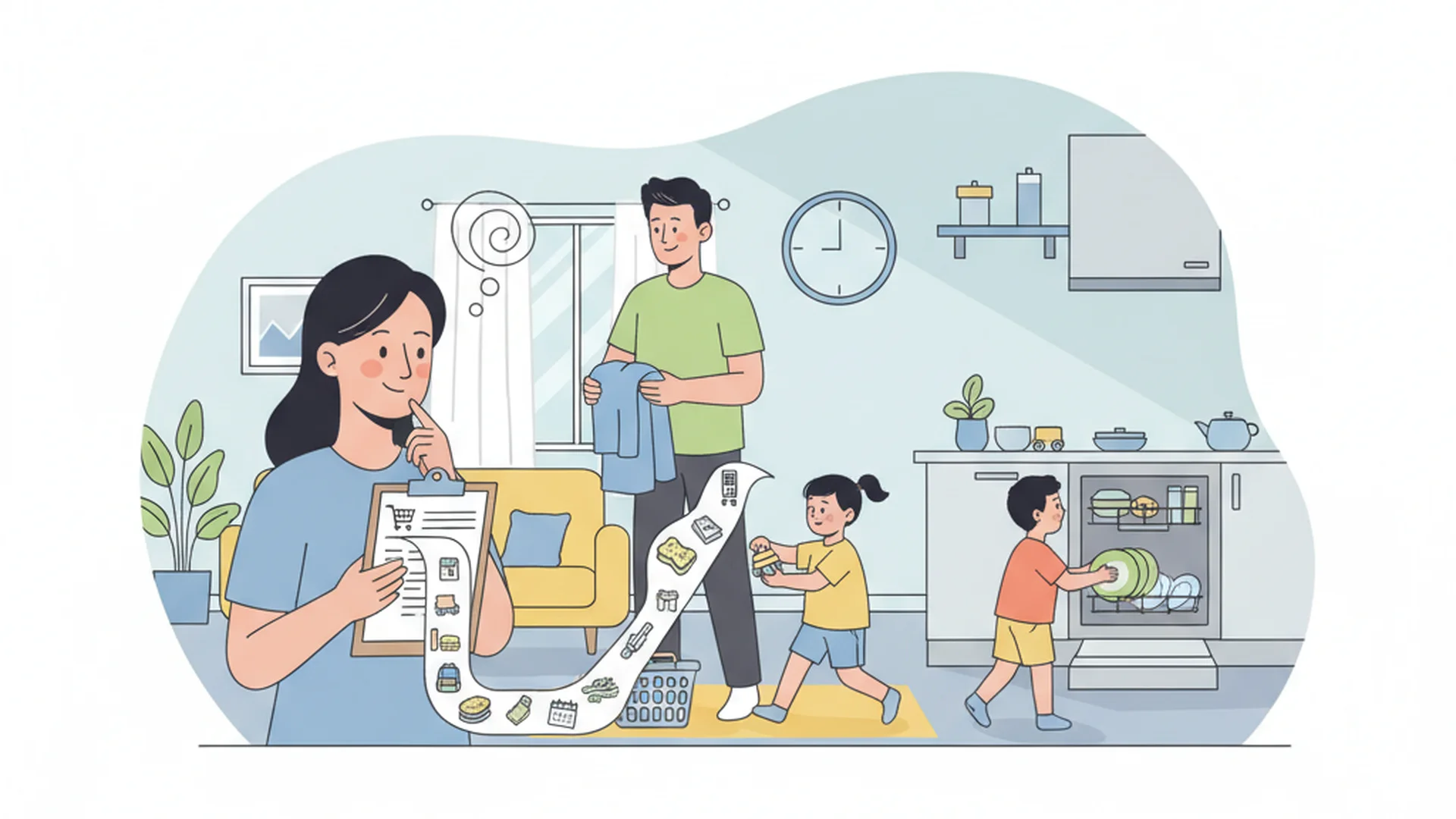
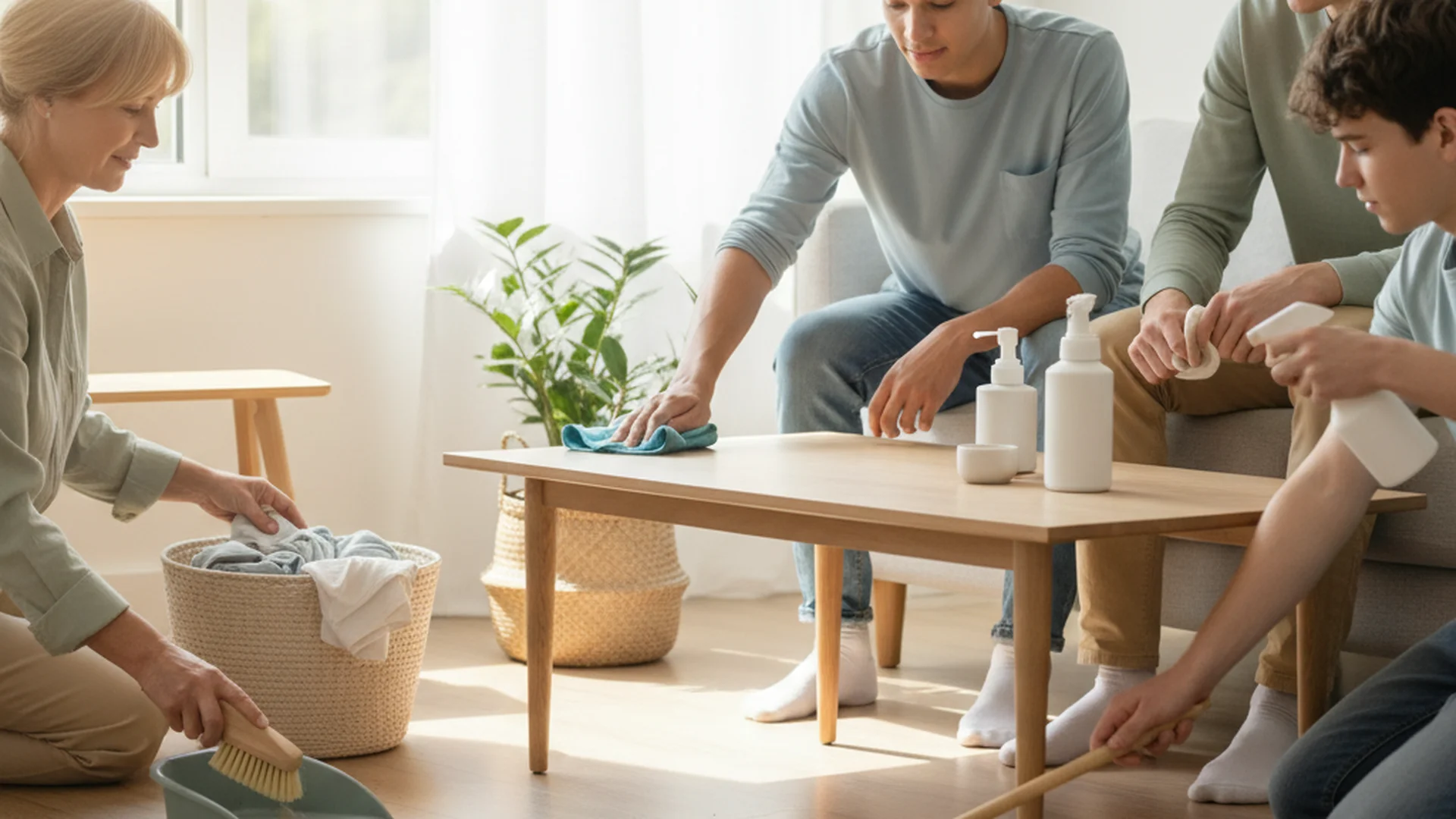
It’s 2025, and while we were promised flying cars and total leisure, many couples find themselves still arguing over whose turn it is to empty the dishwasher. Achieving a fair division household chores strategy remains one of the most significant hurdles for modern relationships. Despite shifts in workplace culture, the "chore war" persists because most households are still operating on outdated 20th-century models of "helping" rather than 21st-century models of equitable ownership.
In this guide, we will explore how modern couples are winning the battle for balance by using AI, "Fair Play" tactics, and a redefined approach to what 50/50 actually looks like in a high-tech, fast-paced world.
The Current Landscape of Household Labor
To understand why managing fair division household chores is so difficult, look at how the work actually falls. As we move through 2025, the "Remote Work Penalty" has become a familiar phenomenon. While working from home was supposed to offer flexibility, it has inadvertently increased the domestic burden on women.
Women still shoulder the larger share of housework in most homes. The gap widens in remote work environments, where a woman working from her kitchen table tends to absorb far more of the daily domestic load than a man in an identical professional setting.
Furthermore, the "Mental Load"—the invisible work of anticipating, planning, and researching—remains heavily skewed. Even in households where the physical labor is split, one partner often remains the "Project Manager," leading to burnout and resentment.
Note: Total labor parity is closer than ever when combining paid and unpaid hours, but the type of labor remains the sticking point. Men often take on "episodic" tasks (mowing the lawn, fixing a leak), while women handle "daily" tasks (dishes, laundry), which are more relentless and less visible.
Moving Beyond "Help": The CPE Model
The most important of all fair division household chores tips is to stop using the word "help." When you ask a partner to "help" with the laundry, you are reinforcing the idea that the laundry is your responsibility and they are simply a volunteer.
To fix this, use the CPE Model, popularized by the Fair Play method. CPE stands for:
- Conception: Recognizing that a task needs to be done (e.g., "The kids need new shoes for school").
- Planning: Doing the research and logistics (e.g., Finding the right size, checking the budget, and locating a store).
- Execution: The actual act of completing the task (e.g., Going to the store or ordering the shoes online).
Real-World Example: The Laundry Ownership
Instead of one partner asking the other to "put the clothes in the dryer," one partner takes full ownership of the laundry "card." They conceive when it needs to happen, plan the loads, and execute the washing, drying, and putting away. This removes the need for the other partner to manage them, effectively clearing that task from their mental load.
Tip: Start by assigning three "cards" or tasks to each person that they own from start to finish. Do not interfere with how your partner manages their owned tasks!
Establishing a Minimum Standard of Care (MSOC)
A common point of friction is the "quality" of work. This often leads to "Weaponized Incompetence"—where one partner performs a task poorly (like leaving food on "clean" dishes) so they won't be asked to do it again—or "Managerial Gatekeeping," where one partner hovers and criticizes the other’s methods.
To solve this, couples must agree on a Minimum Standard of Care (MSOC).
| Task | Minimum Standard of Care (MSOC) |
|---|---|
| Kitchen Cleanup | Counters wiped, dishes in dishwasher, sink scrubbed, trash taken out if full. |
| Laundry | Clean clothes folded or hung, items returned to the correct room. |
| Bathroom | Toilet cleaned, mirror wiped, floor swept, towels replaced. |
| Grocery Shopping | Inventory checked first, list followed, items put away upon return. |
Warning: Without a defined MSOC, "done" becomes a subjective term that leads to endless arguments. Agree on the standard before the task is performed.
2026 Trends: AI and the Automated Household
We are entering the "Invisible Cleaning" era. In 2025 and 2026, technology is finally stepping up to handle the mental load that previously plagued families.
AI as a Household Manager
Generative AI tools are now being used to sync family calendars and automate meal planning. Instead of spending hours wondering "what's for dinner," AI can scan your digital pantry, look at your family's evening schedule, and suggest a 20-minute recipe that uses what you already have.
Autonomous Hardware
The 2025 Samsung Bespoke AI Laundry Hub and the latest Roborock floor systems have moved toward "full autonomy." These devices now self-fill detergent, identify floor types, and even recognize clutter on the floor, reducing the need for "human supervision." This shifts the "Execution" phase of many chores to the machines, leaving humans only to handle the "Conception" phase.
Success: Utilizing automated grocery delivery and AI-driven meal planners lifts hours of weekly "mental load" off whoever usually carries it.
Common Mistakes to Avoid
In the journey toward managing fair division household chores, many well-meaning couples fall into the same traps.
1. Scorekeeping (Tit-for-Tat)
Strictly tracking every minute spent on chores usually backfires. If you spent 10 minutes more on the bathroom than your partner spent on the dishes, it doesn't mean you "won." Focus instead on "Unicorn Space"—ensuring both partners have equal amounts of uninterrupted free time to pursue personal interests or rest.
2. Managerial Gatekeeping
If you have assigned a task to your partner, you must let them do it their way. If they fold the towels into squares instead of rolls, let it go. If you step in to "fix" it, you are telling them they aren't competent, which discourages them from taking ownership in the future.
3. Neglecting Appreciation
Because chores are "expected," we often forget to say thank you. However, expressing gratitude for mundane tasks—like taking out the trash or clearing the table—goes a long way toward stopping either partner from feeling overworked and undervalued.
Warning: Avoid "Weaponized Incompetence" at all costs. If you genuinely don't know how to do something, watch a tutorial or ask for a one-time demonstration. Pretending to be bad at a chore is a form of emotional manipulation.
Real-World Case Studies
Example 1: The Multi-Generational Matrix
As of 2025, more households include adult children or elderly parents. The "Miller" family uses a "Community Matrix" where chores aren't just split between partners, but across three generations. The grandparents handle "Conception" (meal planning and grocery lists), the parents handle "Execution" (heavy cleaning and shopping), and the adult children handle "Digital Logistics" (managing the AI home hub and scheduling maintenance).
Example 2: The High-Efficiency "Logistics Hub"
A 2026 trend in home design is the "Logistics Hub." The "Rodriguez" family remodeled their mudroom into a high-efficiency zone where laundry, pet care, and charging stations are centralized. By reducing the physical "friction" of moving between rooms to complete chores, they cut a sizeable chunk off their daily cleaning time.
Frequently Asked Questions
Is a 50/50 split even realistic?
What is the "Mental Load" and why am I so tired?
How do I ask my partner for help without nagging?
How do we handle "Weaponized Incompetence"?
Conclusion
Fair division of household labor in 2026 isn't about counting minutes; it's about respecting each other's time and mental capacity. By moving to a model of full ownership (CPE), setting clear standards (MSOC), and embracing the latest in AI and automated home technology, you can move away from the "manager/volunteer" dynamic and into a true partnership.
The goal isn't just a clean house—it's a relationship where both people feel seen, valued, and rested.
Success: Implementing a "State of the Union" meeting every Sunday for just 15 minutes heads off most mid-week logistical meltdowns.
Cleaning that keeps score
Every task earns points, every streak multiplies them, and Premium adds a household leaderboard plus a monthly Dustagorgon to beat.
- Free forever
- 30 badges to earn
- Up to 6 in a household
No card needed. Set up your rooms in a couple of minutes.