In this article
What you’ll learn
- Clear definitions of 'clean' prevent most roommate conflicts
- The 24-hour rule is the gold standard for shared kitchen spaces
- AI-managed tools like Tody and Sweepy are replacing traditional chore wheels
Moving in with a new friend or colleague is an exciting milestone, but it often comes with a hidden challenge that can sour even the best relationships: the "Cleaning Talk." Whether you are a self-proclaimed neat freak or a casual "it can wait" type of person, establishing roommate cleaning expectations early on is essential for a peaceful home. In 2026, shared living has become more complex, yet more technologically integrated, offering new ways to solve the age-old battle of the dirty dishes.
Why the "Cleaning Talk" Matters More Than Rent
While everyone remembers to discuss the rent and the security deposit, many overlook the daily logistics of grime. Cleaning habits are the primary catalyst for domestic friction, and for a great many roommates they are the single biggest source of disagreement. This surpasses noise levels and guest policies by a significant margin.
The reality is that "clean" is a subjective term. To one person, a clean kitchen means the counters are wiped and the floor is mopped; to another, it simply means the sink isn't overflowing. Without explicit roommate cleaning expectations tips, these varying standards inevitably lead to resentment.
Note: Most conflicts don't arise from a roommate being "lazy," but rather from a fundamental mismatch in definitions of what constitutes a finished task.
The Foundation: Defining Your Standard of Clean
One of the biggest mistakes roommates make is relying on the "Common Sense Fallacy." This is the assumption that everyone was raised with the same hygiene standards and will naturally notice the same messes you do.
The "Standard of Clean" Calibration
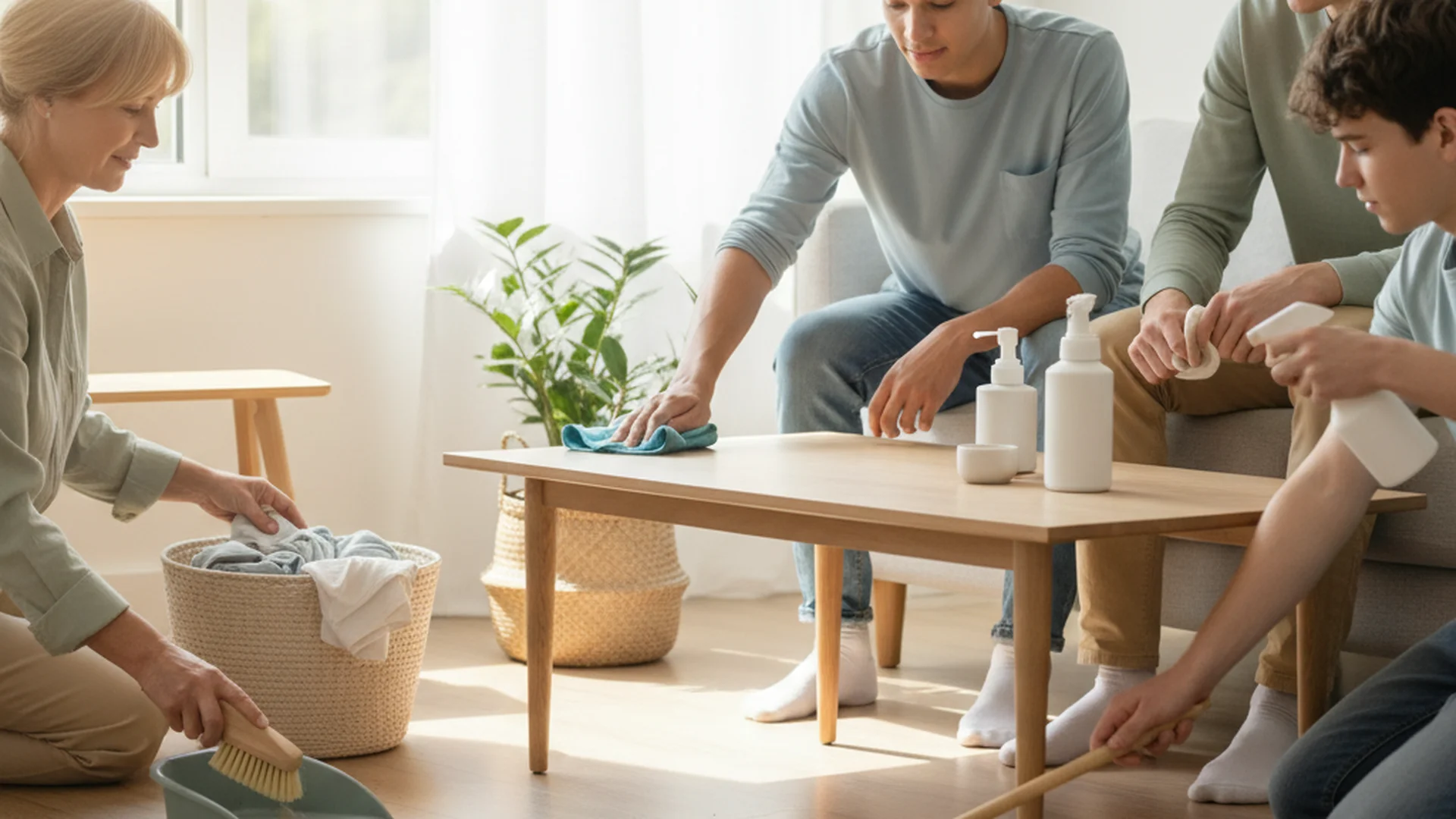
A far better approach is a "Calibration Clean" when you first move in together. Instead of just talking about chores, perform the first deep clean of the apartment as a group. This allows everyone to visually demonstrate their expectations.
Example 1: The Bathroom Baseline During a calibration clean, Sarah might show her roommates that she expects the base of the toilet and the light switches to be wiped down during the weekly cleaning, not just the bowl and the mirror. By seeing the physical standard, the other roommates no longer have to guess what "cleaning the bathroom" actually entails.
The 24-Hour Rule
A widely recommended best practice for managing roommate cleaning expectations is the 24-Hour Rule. This policy dictates that any communal mess—be it dishes in the sink, a spill on the stove, or a pile of mail on the dining table—must be cleared within 24 hours. For a lot of renters, dishes left sitting longer than that are an outright deal-breaker.
| Task Type | Expectation | Timeframe |
|---|---|---|
| Kitchen Dishes | Rinsed and in dishwasher/rack | 24 Hours Max |
| Trash Removal | Taken out when 90% full | Immediate |
| Common Area Spills | Wiped and sanitized | Immediate |
| Bathroom Deep Clean | Scrubbed surfaces/floors | Once Weekly |
Tip: If someone knows they will be too busy to meet the 24-hour deadline (e.g., during finals week or a big work project), they should communicate that ahead of time to avoid being seen as disrespectful.
Tech-Forward Solutions for 2026
The traditional chore wheel pinned to a refrigerator is becoming a relic of the past. In 2025 and 2026, roommate households are increasingly turning to technology to ensure an equitable distribution of labor.
AI-Managed Chore Distribution
Apps like Tody and Sweepy have revolutionized how we handle chores. Instead of a rigid calendar, these tools use AI to rotate tasks based on "difficulty points." This ensures that one person isn't stuck with the "easy" task of taking out the trash every week while another is consistently scrubbing the shower.
The Rise of the Cleaning Subscription
In urban centers, a significant trend is the "Professional Cleaning" utility fee. A growing number of roommate households now treat a monthly professional cleaning service as a non-negotiable utility, similar to internet or electricity. This "outsourcing of conflict" allows roommates to enjoy a deep-cleaned home without the interpersonal stress of tracking who did what.
Success: Households that automate their cleaning—either through apps or by hiring professionals—tend to be far happier with their living arrangements.
Navigating the "Mental Load"
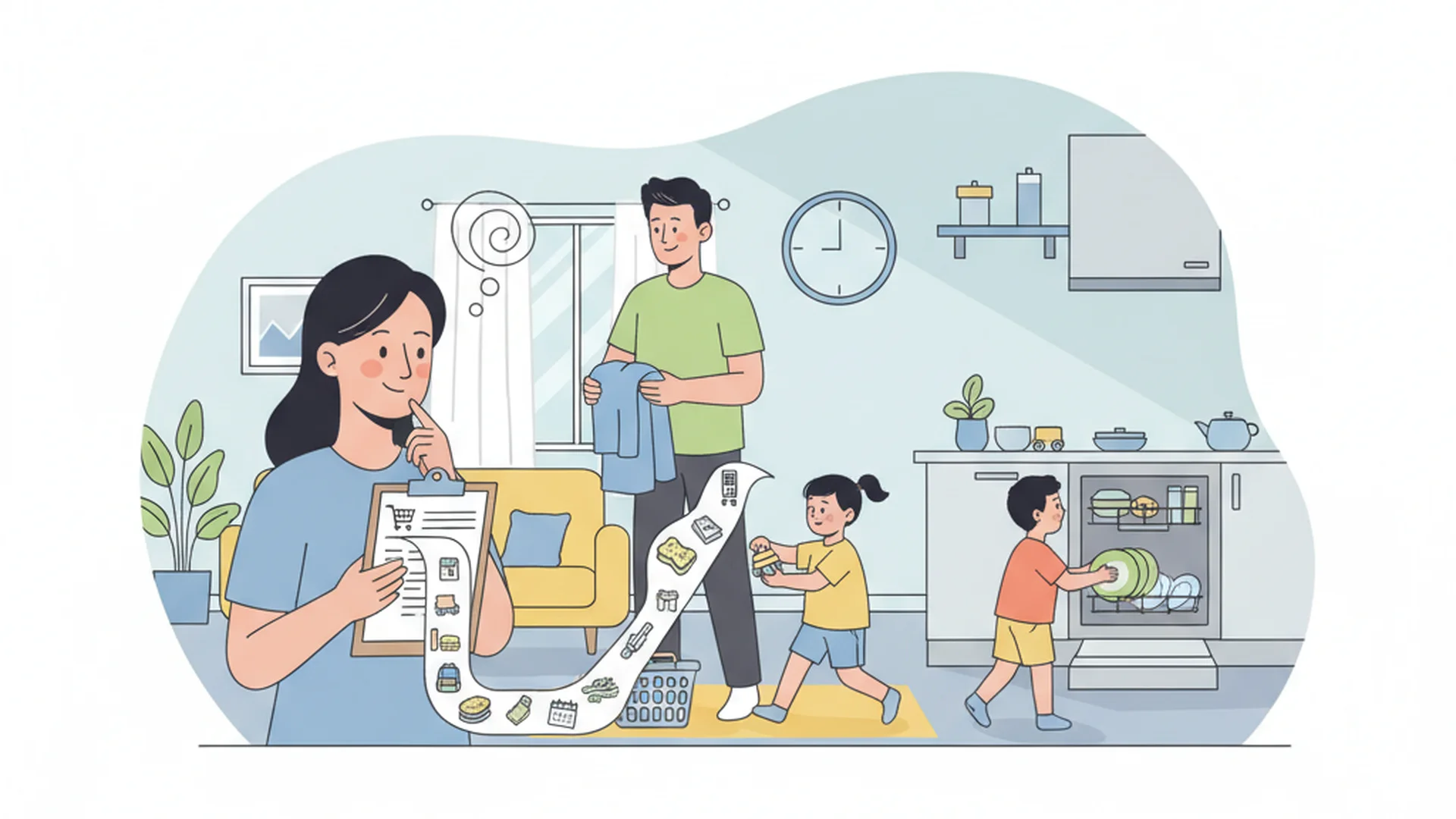
There is a growing issue in shared living that rarely gets named: the Mental Load Gap. In most households, one person ends up taking on the "managerial role"—the person who notices when the toilet paper is low, remembers when the trash day is, or tracks whose turn it is to buy dish soap.
Distributed Inventory Management
True equity isn't just about doing the physical work; it’s about the cognitive work. To manage this, use a shared digital list (like a shared iPhone Note or Any.do) for household supplies.
Example 2: The "Buy It When You Use It" Rule In a high-functioning roommate household, the person who uses the last of the trash bags or notices the soap is low is responsible for adding it to the shared digital list immediately. This prevents the "managerial" roommate from having to do a constant inventory check of the house.
Warning: Ignoring the mental load is one of the fastest ways to build resentment. If you "do what you’re asked" but never take the initiative to notice what needs to be done, you are still placing a burden on your roommates.
Communication Scripts for Awkward Moments
Knowing how to address a lapse in cleaning without sounding "parental" or "mean" is a vital skill. Use these scripts to keep the conversation neutral and focused on the shared agreement rather than personal character.
Scenario: The dishes have been sitting for two days.
- The Script: "Hey [Name], I noticed the kitchen is getting a bit crowded with dishes. According to our 24-hour rule, could you get those cleared up by tonight so I can prep dinner?"
- Why it works: It references the pre-established "rule" rather than a personal grievance.
Scenario: A roommate consistently misses their weekend deep clean.
- The Script: "I've noticed the bathroom rotation has been a bit off lately. Is the current schedule still working for you, or do we need to look into an app or a professional service to help out?"
- Why it works: It offers a solution-oriented approach rather than a blame-oriented one.
Common Mistakes to Avoid
Even with the best intentions, roommate dynamics can falter. Avoid these common pitfalls to keep your home environment healthy.
- Passive-Aggressive Notes: Leaving a sticky note on a dirty pan is the quickest way to shut down productive communication. If there is an issue, send a direct text or bring it up in person.
- The "I Pay More Rent" Excuse: A common misconception is that a roommate who pays for a larger bedroom or a private balcony should clean less in common areas. Unless explicitly written into a contract, financial contributions do not buy an exemption from household hygiene.
- "Power Cleaning" Alone: Cleaning loudly while your roommate is relaxing on the couch might feel satisfying in the moment, but it’s a form of non-verbal aggression. Instead, suggest a "Power Hour."
Example 3: The "Power Hour" Once a week, set a timer for 60 minutes, put on a shared playlist or a podcast, and have everyone clean together. This "body doubling" technique makes the work go faster and eliminates the feeling of being the only one working.
Tip: Use a dedicated Slack channel or a specific group chat for "House Logistics Only" to keep cleaning requests separate from your social chats.
Frequently Asked Questions
How do I tell my roommate they aren't cleaning enough without being mean?
What is a reasonable standard for "clean" in common areas?
Should we use a chore wheel or an app?
Is it fair to ask a roommate to pay more if they never clean?
How do we handle deep cleaning vs. daily tidying?
Conclusion
Success in a shared living environment isn't about finding a roommate who is your "cleaning twin." It's about building a culture of mutual respect through clear roommate cleaning expectations. By defining your standards, utilizing modern tools like AI chore apps, and addressing the mental load, you can transform your home from a source of stress into a sanctuary.
Success: When everyone understands their role and the definitions of "clean," the home becomes a place of relaxation rather than a site of constant negotiation.
Cleaning that keeps score
Every task earns points, every streak multiplies them, and Premium adds a household leaderboard plus a monthly Dustagorgon to beat.
- Free forever
- 30 badges to earn
- Up to 6 in a household
No card needed. Set up your rooms in a couple of minutes.