In this article
What you’ll learn
- Communication and clear definitions of "clean" prevent most roommate conflicts.
- Using a "Strengths Model" is often more effective than rigid weekly rotations.
- Modern tools like AI scheduling and gamification apps reduce chore procrastination.
Living with roommates can be an incredible way to save money and build lifelong friendships, but it also comes with a notorious hurdle: the chore chart. If you’ve ever felt the sting of a passive-aggressive text about the "mountain of dishes" or wondered why you’re the only one who ever buys toilet paper, you aren’t alone. Learning how to split chores roommates often struggle with is more than just a cleaning hack—it is a vital strategy for maintaining a harmonious, adult living environment.
In 2025 and 2026, the way we manage our homes is shifting. With the rise of smart home tech and a greater focus on mental well-being, the old-school paper chore wheel is being replaced by more sophisticated systems. Whether you are moving in with your best friend or a complete stranger, establishing a plan early is the difference between a peaceful sanctuary and a household filled with resentment.
The Reality of Roommate Conflict in 2025
It isn't hard to see why roommate relationships often sour. A huge number of shared households struggle with dividing chores fairly, and the friction isn't just about general mess: the bathroom is very often named as the single biggest source of cleaning-related tension.
Perhaps most damaging is the "Silence over Solutions" trend. Plenty of roommates stay quiet about cleaning grievances just to "preserve the peace." While this might work for a week or two, it almost always leads to long-term resentment and "cleaning burnout."
Note: A clean living environment isn't just about aesthetics. Many people find they concentrate better and feel healthier when the shared spaces they live in are under control.
Step 1: Define Your Standards Early
One of the biggest mistakes roommates make is assuming everyone has the same definition of "clean." To one person, a clean kitchen means the dishes are in the dishwasher. To another, it means the counters are bleached, the sink is scrubbed, and the microwave has been wiped down.
Before you even pick up a broom, sit down and discuss expectations. This is where you address "thresholds." A common pitfall is the Threshold Fallacy, where the person with the lowest tolerance for mess ends up doing all the work. This creates a parent-child dynamic that is toxic for roommate relationships.
Real-World Example: The "Soaking" Debate
Imagine Roommate A believes dishes should be washed immediately after use. Roommate B believes dishes should "soak" for 24 hours. Without a defined rule, Roommate A will end up doing Roommate B's dishes out of frustration, leading to a blow-up three months later. By setting a "no soaking overnight" rule in a written agreement, the conflict is resolved before it begins.
Step 2: Choose Your Management Model
When it comes to managing split chores roommates usually fall into one of two camps: The Strengths Model or The Rotation Model.
The Strengths Model
This model focuses on personal preference. If one roommate finds vacuuming therapeutic but hates touching old food, and the other loves organizing the fridge but hates the vacuum's noise, a permanent swap makes sense. This reduces "chore fatigue" because people are doing tasks they mind the least.
The Rotation Model
For the tasks that everyone hates—typically the bathroom and the floors—rotation is the fairest method. Switch these tasks weekly or monthly so that no single person is stuck scrubbing the shower for an entire year.
| Chore Type | Frequency | Best Management Method |
|---|---|---|
| Dishes/Counters | Daily | Individual Responsibility |
| Trash/Recycling | Twice Weekly | Strengths Model |
| Bathroom Scrubbing | Weekly | Rotation |
| Deep Fridge Clean | Monthly | Team Effort |
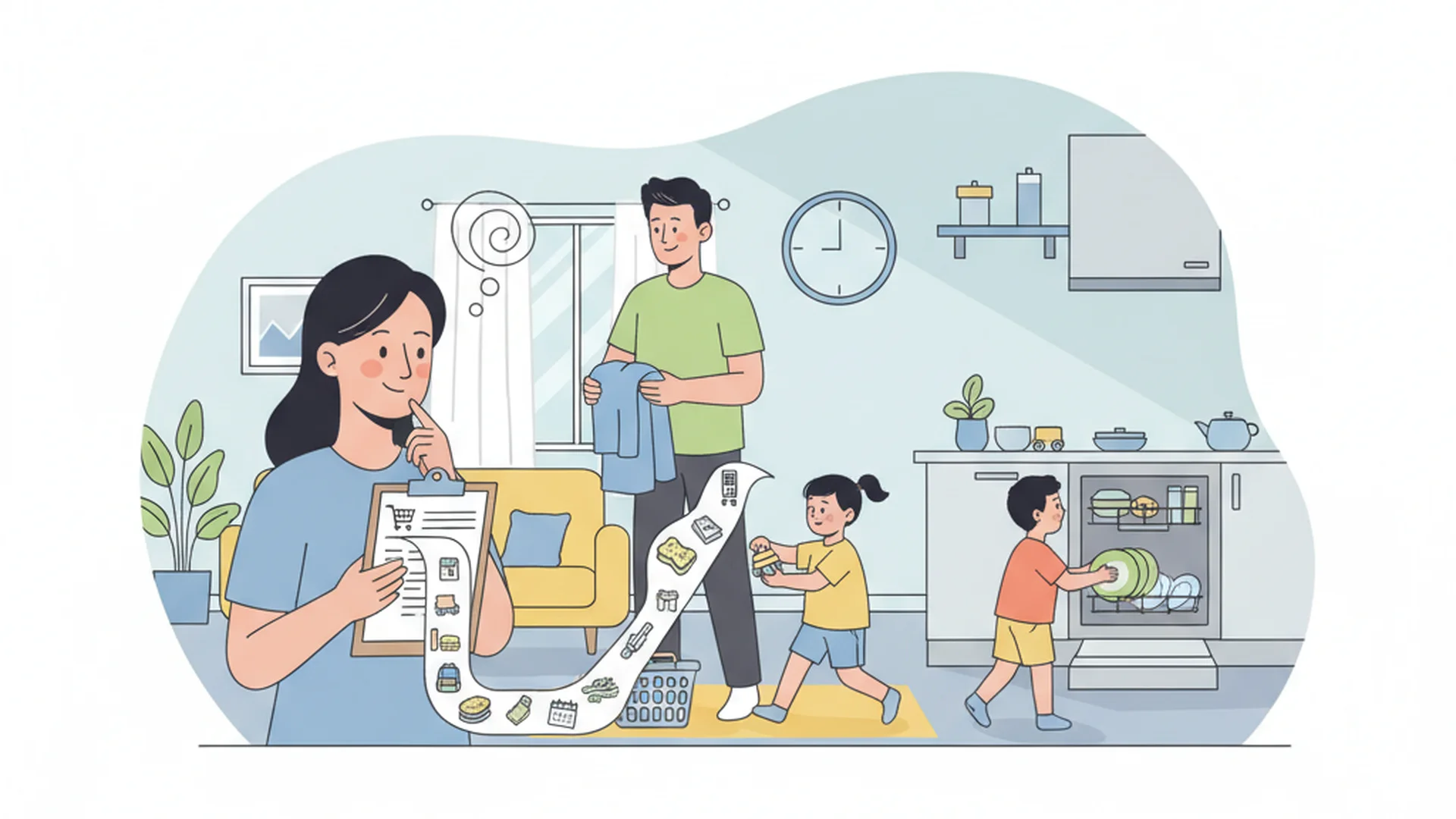
Tip: Use a "Master List" to categorize tasks by frequency. Seeing the sheer volume of work required to run a home often helps "slackers" realize how much they’ve been missing.
Step 3: Embrace the 2026 Tech Trends
We are living in an era where AI can do more than just write emails; it can manage your home. Managing split chores roommates effectively in 2026 involves using tools that take the "nagging" out of the equation.
AI-Powered Scheduling
Apps like Tody or Sweepy now use algorithms to estimate how long a chore takes based on your household size. They send automated reminders, so you don't have to be the one to tell your roommate the trash is overflowing.
Gamification
If your household is competitive, try Habitica or OurHome. These apps turn cleaning into a Role-Playing Game (RPG). You earn points for cleaning the stovetop, which you can eventually trade for household rewards, like the others buying you a pizza or getting to pick the movie for Friday night.
Success: Gamifying chores is a genuinely effective way to cut down on procrastination. It is easy to spend longer dreading a two-hour cleaning task than the task itself would take, and turning it into a game short-circuits that.
Step 4: The Rise of "Practical Luxury"
A major trend for 2025–2026 is the normalization of outsourcing. For Gen Z and Millennial roommates, the cost of a professional deep clean is increasingly seen as a "relationship tax."
If the bathroom remains a point of contention, many households are now splitting the cost of a monthly professional cleaner. With rates averaging $25–$75 per hour, a three-person household might only pay $30 each per month to have the "high-friction" areas professionally handled. This eliminates the #1 cause of roommate fights entirely.
Warning: Even if you hire a professional, you still need a daily maintenance plan. A professional cleaner won't do your daily dishes or pick up your dirty laundry.
Common Mistakes to Avoid
- The Gender Default: Never assume a female roommate will handle the "meticulous" tasks like dusting or bathroom detail. Split tasks by time and physical intensity instead.
- Passive-Aggressive Post-Its: Notes on the fridge or "shaming" photos in the group chat rarely work. They trigger defensiveness rather than helpfulness.
- Ignoring Life Events: Rigidity kills relationships. If your roommate is in the middle of finals week or a massive project at work, offer them a "chore pass."
- The "Guest" Factor: If a significant other is staying over more than three nights a week, they are no longer just a guest. It is reasonable to ask that they either pitch in on chores or contribute to the cleaning fund.
Real-World Example: The "Partner" Pivot
In one Chicago apartment, a roommate’s boyfriend began staying over five nights a week. The dishes doubled, but the cleaning effort didn't. The roommates sat down and agreed that since the guest was using the common spaces frequently, he would take over the "Trash and Recycling" duties in exchange for his stay. This turned a potential eviction-level conflict into a helpful arrangement.
Frequently Asked Questions
Is it fair to split chores equally if we have different work schedules?
What do I do if my roommate is a "slacker"?
Should we include cleaning in our roommate agreement?
How do we handle "deep cleaning" tasks like baseboards or ovens?
Conclusion: Clean Home, Happy Life
Effectively learning how to split chores roommates can manage is about more than just a sparkling floor; it’s about mutual respect. By defining your standards early, utilizing modern AI tools, and being willing to adapt to each other’s life schedules, you can transform your shared house into a true home.
Remember, the goal isn't perfection—it's equity. When everyone feels the division of labor is fair, the underlying tension disappears, leaving more room for the fun parts of living together.
Success: Households that put a formal roommate agreement in place tend to be happier with the arrangement, and far more likely to renew the lease together.
Cleaning that keeps score
Every task earns points, every streak multiplies them, and Premium adds a household leaderboard plus a monthly Dustagorgon to beat.
- Free forever
- 30 badges to earn
- Up to 6 in a household
No card needed. Set up your rooms in a couple of minutes.