In this article
What you’ll learn
- Focus on equity and "shared ownership" rather than just 50/50 division.
- Use the "Soft Start-Up" technique to avoid triggering defensiveness.
- Establish a "Minimum Standard of Care" to prevent micromanagement.
Conversing with a partner about household responsibilities is one of the most common friction points in modern relationships. Whether you are newlyweds or have been together for decades, talking about chores partner dynamics often feels like walking through a minefield. However, how couples navigate these talks tends to matter more for the relationship than the actual division of labor itself.
In this guide, we will explore how to transition from a cycle of nagging to a system of partnership, ensuring both parties feel valued, heard, and—most importantly—not overwhelmed by the "mental load" of running a home.
The Current State of Domestic Labor
Before diving into how to fix the communication gap, it is important to understand the landscape. Despite shifting societal norms, the "labor gap" remains a persistent reality. Women are still more likely than men to do household work on any given day, and they tend to spend longer on it when they do.
While half an hour a day might seem small, it adds up to a significant disparity over a year. In many households the "life admin" and chores a woman carries amount to something close to a second full-time job.
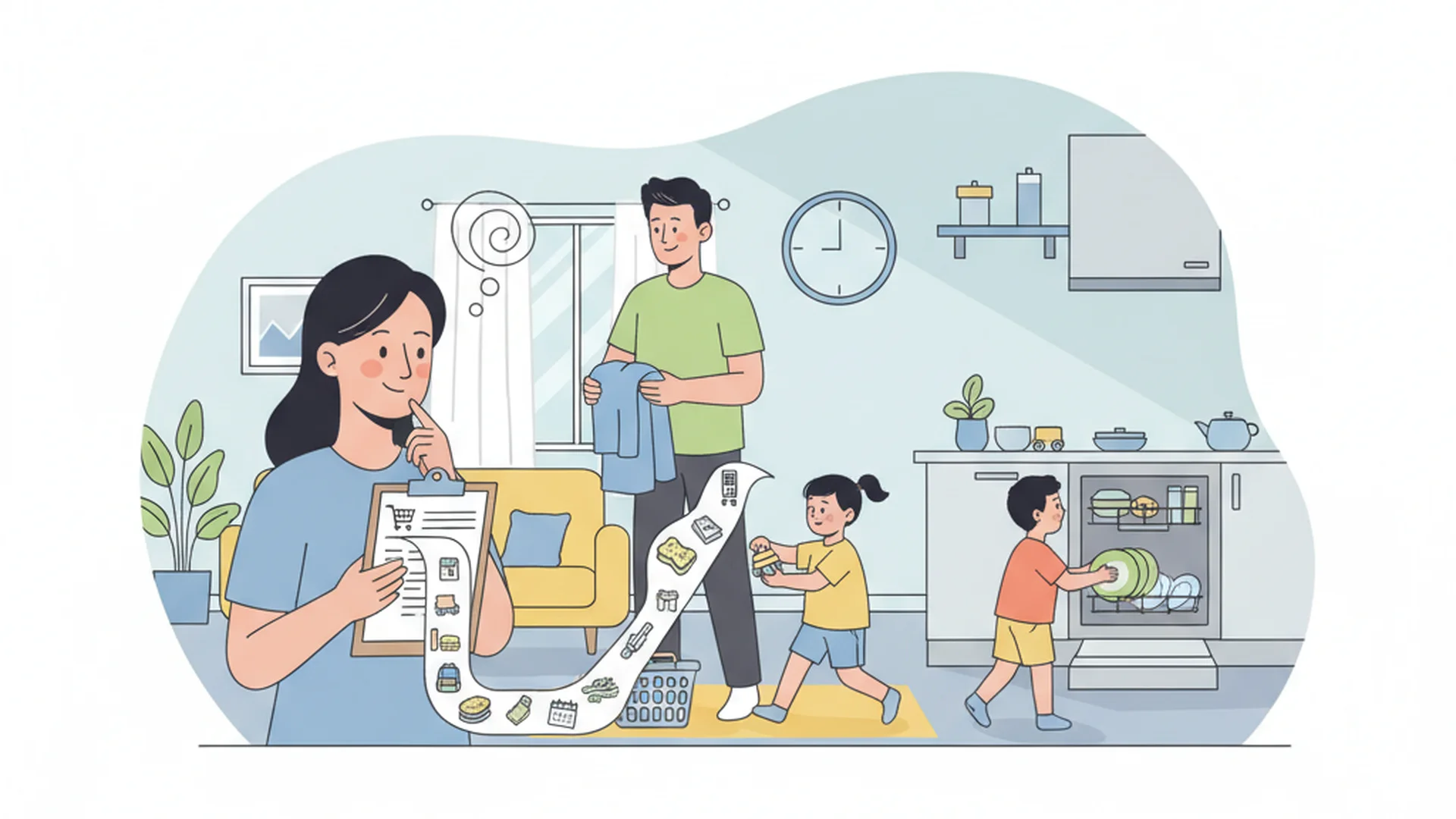
Note: The "Mental Load" is often the invisible weight that causes the most burnout. The tasks that require planning, remembering and scheduling still land disproportionately on mothers.
Transitioning from Equality to Equity
When managing talking about chores partner expectations, many couples strive for a perfect 50/50 split. However, the modern trend for 2025 and 2026 is moving toward equity rather than strict equality.
Equality means everyone does exactly the same amount, regardless of circumstances. Equity means splitting labor based on capacity, interest, and fairness. For example, if one partner works a 60-hour week and the other works 30, a 50/50 chore split may actually be inequitable. The goal is to ensure that both partners have roughly the same amount of "free time" at the end of the day.
The "All Time is Created Equal" Principle
A core tenet of modern relationship coaching is that regardless of who earns more money, both partners’ free time is equally valuable. This prevents the "I pay the bills, so I don't do dishes" argument, which is a leading cause of resentment in long-term partnerships.
Mastering the Conversation: Talking About Chores Partner Tips
The most successful couples don’t wait for a "chore explosion" to discuss the house. They use proactive communication techniques. Here are the best talking about chores partner tips to keep the conversation productive.
1. The "Soft Start-Up"
The way a conversation begins usually determines how it ends. Instead of leading with a criticism (e.g., "You never do the laundry"), use a "Soft Start-Up."
- The Formula: "I feel [emotion] about [situation] and I need [action]."
- Example: "I feel overwhelmed when the kitchen is messy after dinner, and I need us to figure out a plan for who handles the dishes each night."
Tip: Always discuss chores when you are both calm, fed, and relaxed. Never bring up a grievance while one of you is already stressed or "elbow-deep in scrub water."
2. Define the "Minimum Standard of Care" (MSC)
One of the biggest reasons couples argue is that they have different definitions of "clean." To one person, a clean bathroom means the mirror is streak-free; to another, it just means the toilet was flushed.
Sit down and agree on an MSC for every room. If you agree that "clean kitchen" means counters wiped and dishes in the dishwasher, you eliminate the need for micromanagement later.
3. Use the CPE Method (Conception, Planning, Execution)
Popularized by Eve Rodsky’s Fair Play Method, this involves moving away from "to-do lists" and toward "systemic ownership."
- Conception: Noticing the laundry basket is full.
- Planning: Knowing which detergent to use and when the machine is free.
- Execution: Washing, drying, folding, and putting away.
If a partner only does the "Execution" (waiting to be told to move the clothes to the dryer), they aren't actually sharing the load—they are just "helping."
Success: True equity is reached when a partner "owns" a task from start to finish without needing a reminder.
Common Mistakes to Avoid
When you are talking about chores partner issues, it is easy to fall into old habits. Avoid these common pitfalls to keep your relationship healthy:
| Mistake | Why it Fails | The Correction |
|---|---|---|
| Asking for "Help" | Implies one person is the "owner" and the other is a volunteer. | Use "shared responsibility" or "our home." |
| Weaponized Incompetence | Doing a task poorly so you won't be asked again. | Commit to learning the "Minimum Standard of Care." |
| Scorekeeping | Keeping a "tit-for-tat" tally of every small act. | Focus on overall fairness and shared goals. |
| Micromanaging | Criticizing how a partner folds or cleans. | If the MSC is met, let go of the specific "how." |
Warning: "Scorekeeping" curdles into contempt, and contempt is corrosive to any relationship. Focus on the team, not the tally.
Using Technology to Reduce the Mental Load
In 2025 and 2026, couples are increasingly turning to AI and automation to manage their homes. This takes the "Project Manager" role off of one partner's shoulders.
- AI-Assisted Management: Apps like Ohai or Sweepy can automate meal planning and grocery lists.
- Specialized Chore Apps: Using a shared app ensures that the "Conception" and "Planning" phases are visible to both partners at all times.
- Shared Calendars: Use digital calendars to track "Life Admin" like vet appointments, school plays, and home maintenance.
Real-World Examples of Chore Communication
Example 1: The Remote Work Reality
Scenario: Both partners work from home, but the woman finds herself doing the lion's share of the housework. The Conversation: "Since we are both home during the day, I’ve noticed I’m the one doing the mid-day tidying. I’d like to set a 15-minute 'reset' time at 12:00 PM where we both spend time on house tasks so it doesn't fall on me after work."
Example 2: Dealing with Weaponized Incompetence
Scenario: A partner says, "I don't do the laundry because I always shrink your shirts." The Conversation: "I understand you're worried about ruining the clothes. Let's spend 10 minutes looking at the labels together today so you feel confident handling this task on your own moving forward."
Example 3: The Weekly "State of the Union"
Scenario: A couple feels like they are constantly "on-the-fly" nagging. The Conversation: Every Sunday night, they spend 15 minutes reviewing the upcoming week. "Who is cooking Tuesday? Who has the energy for the deep clean this weekend?" This prevents mid-week friction.
Frequently Asked Questions
How do I bring up chores without sounding like I’m nagging?
What is the "mental load" and how do I explain it to my partner?
Is a 50/50 split even possible or realistic?
How do I deal with "weaponized incompetence"?
Why do I feel like I'm "managing" my partner instead of being a teammate?
Conclusion
Successfully talking about chores partner dynamics isn't about creating a perfect spreadsheet; it's about fostering a culture of mutual respect and appreciation. By moving away from "helping" and toward "ownership," and by utilizing modern tools to manage the mental load, you can transform your home from a source of stress into a sanctuary of partnership.
Success: Couples who communicate effectively about domestic labor report higher relationship satisfaction and more quality time together.
Cleaning that keeps score
Every task earns points, every streak multiplies them, and Premium adds a household leaderboard plus a monthly Dustagorgon to beat.
- Free forever
- 30 badges to earn
- Up to 6 in a household
No card needed. Set up your rooms in a couple of minutes.