In this article
What you’ll learn
- Focus on equitable free time rather than a strict 50/50 task split.
- Ownership of a task includes conception, planning, and execution (CPE).
- Use modern AI tools to reduce the cognitive burden of the mental load.
In the modern era, the concept of the home has evolved from a mere dwelling into a multifunctional hub for work, wellness, and connection. However, as our lives become more integrated, the challenge of shared household responsibilities remains a primary source of friction for many couples and families. While we have made strides toward social equality, the "chores gap" persists, often leading to burnout and resentment. Navigating these waters requires more than just a chore chart; it requires a fundamental shift in how we perceive partnership and domestic labor.
The Current State of Household Labor (2024–2025)
As we move through 2025, there is still a persistent disparity in how domestic labor is handled. Women continue to spend far more time on daily chores than men do. This gap is even more pronounced in remote-working households, where women often shoulder the vast majority of the housework despite both partners being physically present in the home.
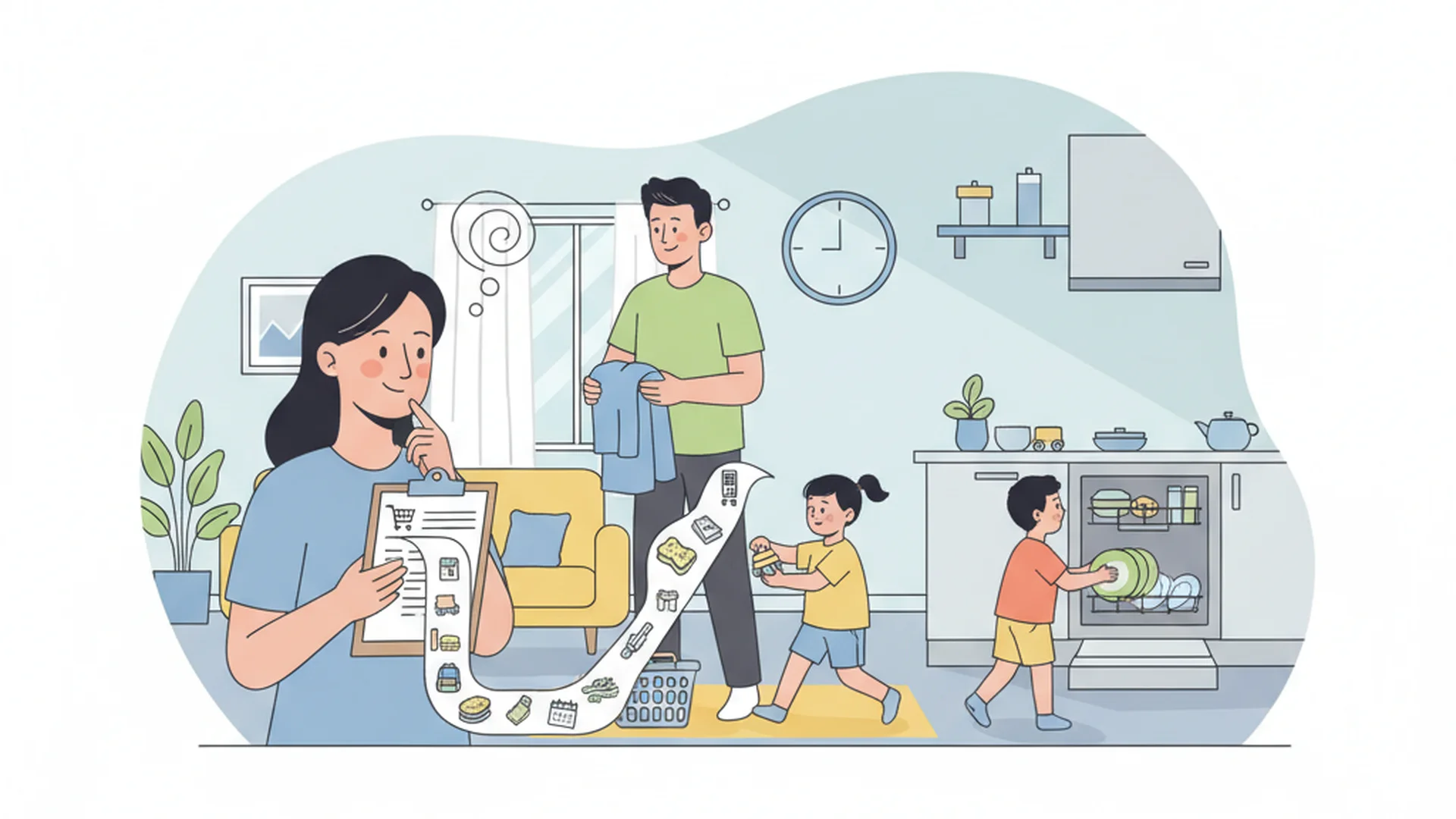
The issue isn't just about who picks up the laundry or washes the dishes; it is about the "mental load." In most households, mothers take on the lion's share of the cognitive labor—the invisible work of anticipating needs, scheduling appointments, and planning meals. When one partner carries the majority of this weight, it leads to a phenomenon recently termed "quiet cracking," where the internal pressure of home management causes significant mental health declines.
Note: Perception plays a huge role in conflict. It is very common for one partner to believe the work is split evenly while the other feels they are doing almost everything. Bridging this perception gap is the first step toward a balanced home.
Managing Shared Household Responsibilities: The Ownership Model
One of the most effective shared household responsibilities tips is to move away from the "helper" mentality. When one partner asks the other to "help," it implies that the home is the primary responsibility of only one person. Instead, successful households are moving toward an ownership model.
Conception, Planning, and Execution (CPE)
True ownership means handling a task from start to finish. This is broken down into three phases:
- Conception: Noticing that the dog needs a vet appointment or that the pantry is low on staples.
- Planning: Researching the best time for the appointment or creating the grocery list.
- Execution: Actually driving the dog to the vet or going to the store.
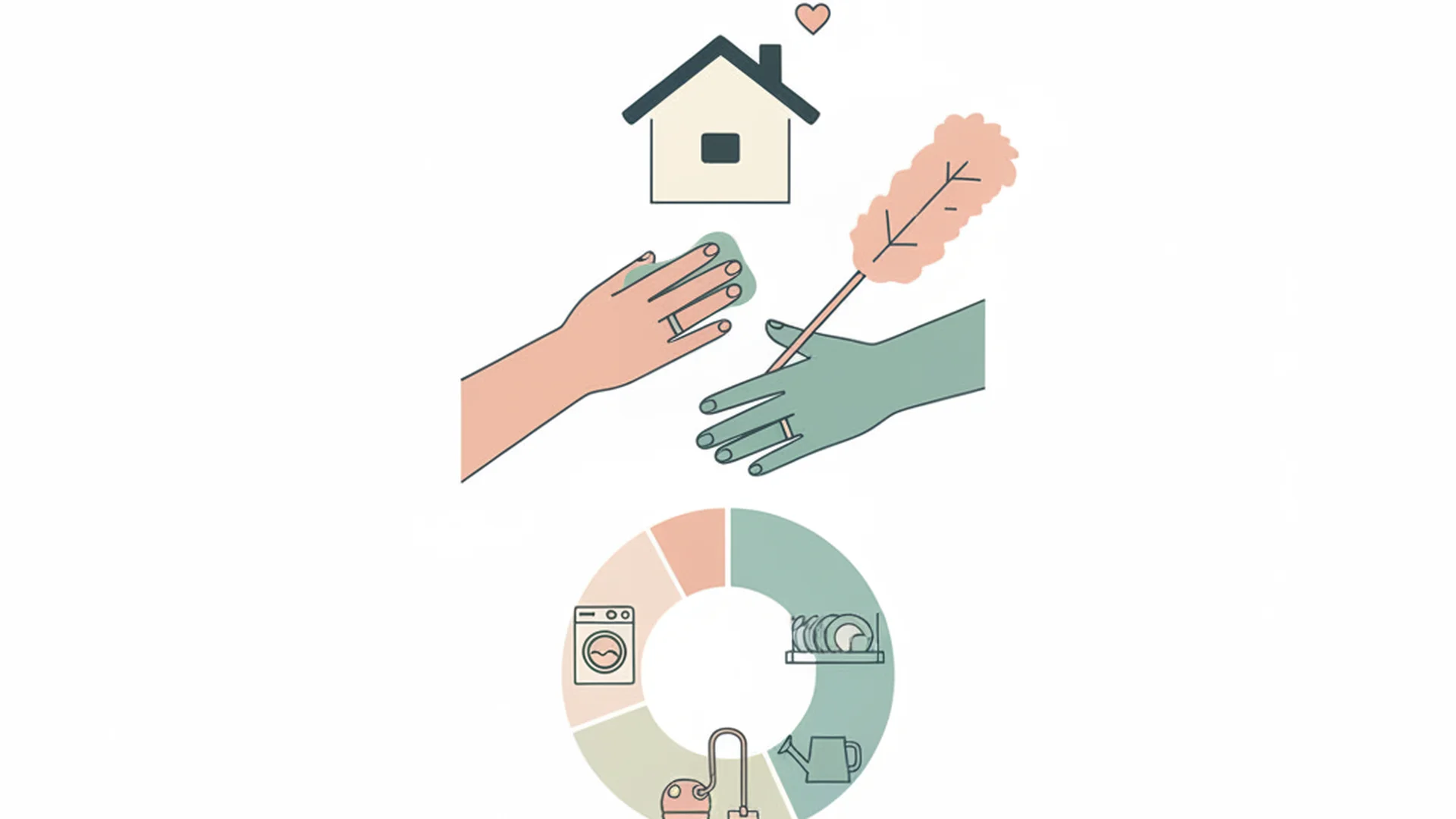
If one partner only handles the execution, the other is still burdened with the mental load of the first two stages. By assigning full ownership of a domain—such as "Laundry" or "Pet Care"—the mental load is distributed more fairly.
| Task Category | Owner | Minimum Standard of Care (MSC) |
|---|---|---|
| Kitchen | Partner A | Counters wiped, dishwasher run, floor swept nightly |
| Laundry | Partner B | Washed, dried, folded, and put away by Sunday |
| Grocery/Meals | Partner A | Weekly meal plan set, fridge stocked by Monday |
Tip: Define your "Minimum Standard of Care" (MSC) early. Discuss what "clean" actually looks like to avoid "weaponized incompetence"—the act of doing a task poorly so you aren't asked to do it again.
Real-World Examples of Equitable Sharing
Example 1: The Remote-Work Rebalance
Sarah and Mark both work from home. Initially, Sarah found herself cleaning the kitchen during her coffee breaks while Mark focused solely on work. They rebalanced by implementing "equitable free time." Instead of counting tasks, they looked at their schedules. Since Mark had a shorter commute (even if virtual) and fewer late-night meetings, he took over the 4:00 PM to 6:00 PM block of household management, allowing Sarah to finish her workday without the "second shift" hovering over her.
Example 2: The Family Round Robin
The Garcia family uses a "Round Robin" system with their two teenagers. Every Sunday, they list the week’s chores. Members take turns picking tasks they prefer. One child might choose lawn care because they enjoy being outside, while the other chooses vacuuming because they can wear headphones. This agency increases the likelihood of tasks being completed without nagging.
Example 3: The AI-Integrated Home
In 2025, the Lee family began using Agentic AI to manage their home. They use a custom digital assistant to monitor their shared calendar and automatically generate a weekly meal plan based on expiring ingredients in their smart fridge. This technology has taken most of the heat out of their "mental load" debates, because the AI handles the planning phase and leaves the humans to focus only on execution.
Future Trends: 2026 and Beyond
Looking toward 2026, the industry is shifting toward "Wellness-Centric Cleaning." Managing your home is no longer seen as a chore but as a vital component of mental health and self-care.
- AI as a Digital Home Manager: Expect to see more autonomous systems that don't just remind you to do a task but actually schedule the service for you, such as HVAC maintenance or grocery delivery.
- Multifunctional Magic: 2026 home trends emphasize tools that reduce manual labor, such as AI-driven vacuum-mops that detect soil levels and self-clean, minimizing the physical effort required to maintain a high standard of cleanliness.
- Community Parenting: To combat "quiet cracking," more neighborhoods are forming "nesting parties" or communal chore groups to share the burden of deep cleaning or yard work.
Common Mistakes to Avoid
When managing shared household responsibilities, many couples fall into predictable traps. Avoiding these can save your relationship from unnecessary strain.
- The 50/50 Trap: Trying to split every single task exactly down the middle is a recipe for score-keeping and resentment. Aim for equitable leisure time instead. If both partners have two hours of relaxation at the end of the day, the split is working.
- Assuming Gender Norms: Don't fall into the trap of "blue jobs" (yard work, repairs) and "pink jobs" (cleaning, cooking) by default. Assign tasks based on skill, interest, and schedule availability.
- The "Asking for Help" Fallacy: As mentioned, avoid the language of "helping." You aren't helping your partner; you are participating in the management of your shared life.
- Neglecting Gratitude: Just because a chore is "routine" doesn't mean it shouldn't be acknowledged. Couples who thank each other for the mundane tasks—like taking out the trash—tend to feel much closer.
Warning: Weaponized incompetence is a major trust-killer. If you consistently "forget" how to use the washing machine or leave streaks on the windows so your partner "does it right," you are creating a cycle of resentment that is difficult to break.
Frequently Asked Questions
How do we divide chores if one person works longer hours?
What is "mental load," and why does it matter?
How do I handle a partner who has "mess blindness"?
Is it fair to ask children to do chores?
How do we bring up an imbalance without it turning into a fight?
Conclusion
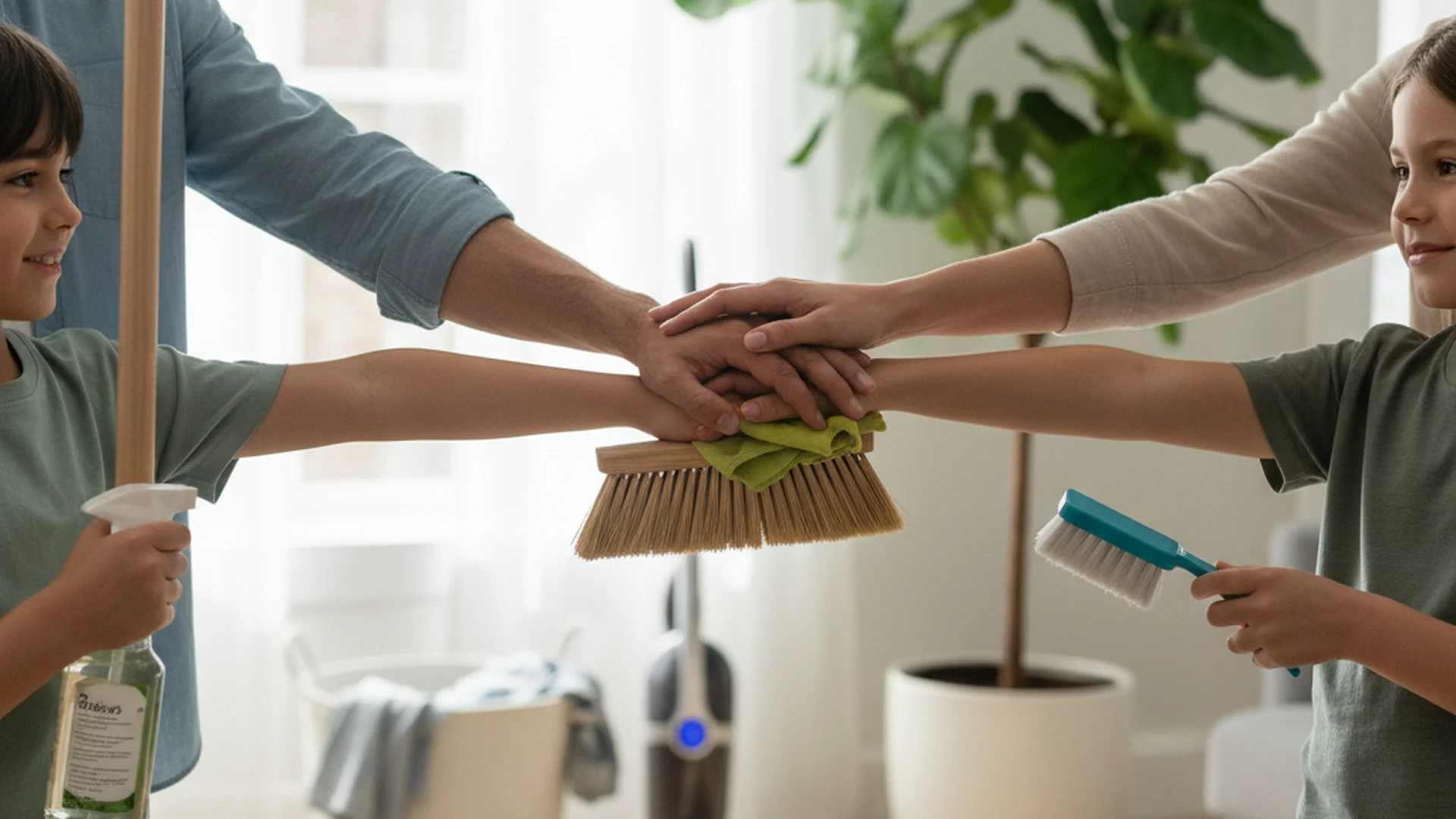
Sharing household responsibilities in 2025 is about more than just a clean house; it is about creating a sustainable partnership based on mutual respect and visibility. By making the invisible labor visible, leveraging AI technology, and shifting to an ownership model, you can transform your home from a source of stress into a sanctuary of support. Remember, the goal isn't a perfect 50/50 split of tasks—it's a 100/100 split of commitment to the home.
Success: Couples who successfully manage their shared responsibilities report not only less conflict but also higher levels of relationship satisfaction and overall mental well-being.
Cleaning that keeps score
Every task earns points, every streak multiplies them, and Premium adds a household leaderboard plus a monthly Dustagorgon to beat.
- Free forever
- 30 badges to earn
- Up to 6 in a household
No card needed. Set up your rooms in a couple of minutes.