In this article
What you’ll learn
- Communication about cleaning standards is more important than the schedule itself.
- Rotating "unloved" tasks prevents burnout and long-term resentment.
- Modern AI tools and gamification are changing how roommates track accountability in 2026.
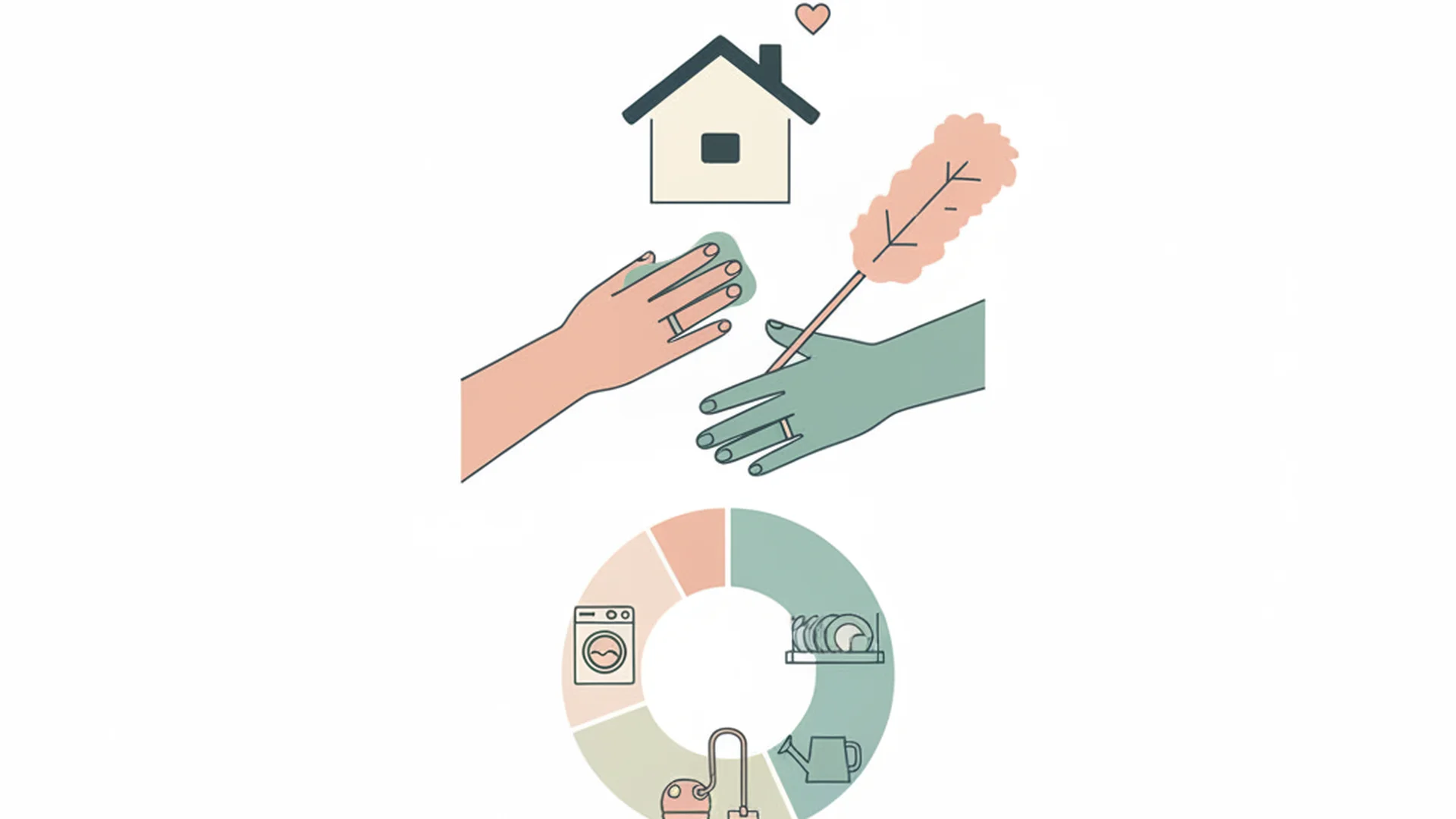
Living with roommates is often a financial necessity or a great way to build community, but it comes with a notorious set of challenges. Chief among them? The dreaded question of who is going to clean the bathroom. For many, the lack of a clear roommate chore schedule is the primary driver of household tension. Almost everyone who shares a home ends up arguing about chores at some point, and an unfair division of labor is one of the biggest stressors in a shared house.
Whether you are moving in with your best friends or strangers from the internet, establishing a system for managing roommate chore schedule expectations early on is the difference between a peaceful home and a passive-aggressive war zone. In this guide, we will dive into the expert strategies for 2025 and 2026 to help you navigate shared responsibilities with ease.
The Psychology of Shared Cleaning
Before we look at the logistics of a chart, we have to address why cleaning causes so much friction. A "Silent Struggle" is happening in most apartments: plenty of roommates stay quiet about their cleaning grievances to "preserve the peace." Unfortunately, this silence doesn't mean the problem is gone; it leads to long-term resentment and eventual "blowups" over something as small as a misplaced fork.
Cleaning habits are the #1 roommate pet peeve, ranking well above noise complaints or financial disagreements. To combat this, we have to move away from the "group project" mindset. In school, a group project often resulted in one person doing all the work while others coasted. Without a specific schedule, the "Bystander Effect" takes over in your living room. If everyone is responsible for the trash, then effectively, no one is.
Step-by-Step: Building Your Co-Living Contract
To create a schedule that sticks, you need more than just a piece of paper on the fridge. You need a "Co-Living Contract" approach.
1. Define "Clean" First
One person’s "clean enough" is another’s "biohazard." You cannot hold someone accountable for a standard they don't understand. Hold a house meeting and get specific.
Tip: Don't just say "clean the kitchen." Define it as: "Dishes washed and put away, counters wiped with disinfectant, and the sink cleared of food debris."
2. Categorize by Frequency
Not all chores are created equal. Dividing them by frequency helps prevent the "Procrastination Gap," where roommates spend three hours dreading a task that only takes twenty minutes.
| Frequency | Tasks Included | Responsibility Type |
|---|---|---|
| Daily | Dishes, Counter Wiping, Trash | Individual/Immediate |
| Weekly | Vacuuming, Bathrooms, Mopping | Assigned Rotation |
| Monthly | Fridge Clean-out, Baseboards | Deep Clean Day |
3. Play to Individual Strengths
In any household, people have different "chore triggers." Some people find vacuuming therapeutic but can't stand the sight of a dirty toilet.
Success: Letting a roommate "own" a task they don't mind (like being the permanent "Floor Manager") increases completion rates and overall household happiness.
Modern Trends in Chore Management (2025–2026)
The way we manage homes is shifting. We are no longer limited to paper charts and magnets.
AI-Driven Home Management
As we move through 2026, AI integrations are becoming standard. Apps like Tody, OurHome, and ChoreBuster now use smart scheduling to predict when a bin is likely full or a floor needs mopping based on the number of residents and their typical habits. These apps take the "bossy" element out of the equation because the notification comes from the software, not a roommate.
Gamification 2.0
Digital chore charts now offer "reward points" that roommates can trade for real-world perks.
- Example 1: The Reward System. If a roommate completes all their tasks on time for a month, they might get to choose the Friday night movie or get a "pass" on the next shared grocery run.
The Rise of Formalized Agreements
Due to the "silver roommate" trend and more homeowners renting out rooms to combat inflation, chore schedules are becoming more formal. They are increasingly included as addendums to lease agreements to ensure legal and social clarity from day one.
Note: If you are moving into a managed co-living space, check if professional cleaning services for communal areas are included in your rent. This is a growing trend that removes the #1 source of conflict: the bathroom.
Managing the Human Element
Even the best roommate chore schedule tips can't account for "real life." A rigid schedule often fails because it doesn't bend.
Handling "Hell Weeks"
Everyone has them—finals week, a major work project, or a family emergency. A successful schedule should include a "swap" policy.
- Example 2: The Swap Policy. "I can't do the bathroom this Sunday because of my exam, but I'll trade you and do the floors for the next two weeks."
The Mental Load
One of the biggest mistakes in managing roommate chore schedule duties is ignoring the "mental load." This is the effort required to notice when supplies are low.
Warning: Never leave the management of supplies unassigned. Someone needs to be responsible for noticing when dish soap, trash bags, or toilet paper are running low.
Common Mistakes to Avoid
-
The "I’ll Just Do It Myself" Trap: This breeds resentment. If a roommate fails a task, talk to them instead of "revenge-cleaning."
-
Vague Task Descriptions: "Clean the bathroom" is too broad. Does that include the shower curtain? The mirror? The floor behind the toilet? Be specific.
-
Passive-Aggressive Reminders: Leaving sticky notes or "loudly" cleaning at 7 AM is a recipe for disaster. Use a group chat or a visible whiteboard instead.
-
The Procrastination Gap: Don't wait until the house is a mess to clean. Establishing a "Sunday 8 PM" deadline for weekly chores keeps the home maintainable.
-
Example 3: The Pizza Penalty. One house of four roommates established a rule: if your weekly chore isn't done by the Sunday deadline without a prior "swap" request, you contribute $10 to a "Pizza Fund" for the next house dinner.
Frequently Asked Questions
How do I bring up a chore schedule without sounding bossy?
What is the fairest way to divide chores if one roommate is never home?
Should we rotate chores or have fixed responsibilities?
What do I do if a roommate keeps "forgetting" their tasks?
How do we handle deep cleaning vs. daily tidying?
Conclusion
A roommate chore schedule isn't about control; it's about creating a home where everyone feels respected and relaxed. By defining standards, utilizing modern tools like AI apps, and maintaining open lines of communication, you can eliminate the #1 source of roommate conflict. Remember, the goal is a clean home and a healthy relationship with the people you live with.
Success: Implementing a clear, agreed-upon schedule takes a huge amount of stress out of the house and leads to longer, more successful co-living arrangements.
Cleaning that keeps score
Every task earns points, every streak multiplies them, and Premium adds a household leaderboard plus a monthly Dustagorgon to beat.
- Free forever
- 30 badges to earn
- Up to 6 in a household
No card needed. Set up your rooms in a couple of minutes.