In this article
What you’ll learn
- Follow the Top-to-Bottom method to prevent re-cleaning surfaces.
- Deep cleaning significantly improves indoor air quality and cognitive function.
- Modern trends emphasize probiotic cleaners and UV-C sanitation for 2025.
The living room is the undisputed heart of the home—a sanctuary for relaxation, a hub for entertainment, and a gallery for our most cherished memories. However, because it is the most utilized space, it often bears the brunt of daily wear, tear, and microscopic accumulation. Learning how to deep clean your living room is about more than just aesthetics; it is a fundamental pillar of home maintenance that impacts your physical health and mental clarity.
Most of us are accustomed to the "surface swish"—a quick fluff of the pillows and a pass with the vacuum. But beneath the cushions and atop the ceiling fans, a different story unfolds. From dust mites to volatile organic compounds (VOCs), the invisible environment of your living space plays a critical role in your daily performance. In this guide, we will break down the professional-grade techniques required to transform your living room into a pristine, health-optimizing environment.
The Science Behind the Deep Clean
Before we dive into the "how," we must understand the "why." We spend the overwhelming majority of our time indoors, where pollutant concentrations routinely run well above outdoor levels. Your living room carpet and upholstery act as massive filters, trapping everything from outdoor pollen to the skin flakes every one of us sheds daily.
This accumulation isn't just "dirt." It is a biological ecosystem. Those skin flakes feed millions of dust mites, a primary trigger for the millions of people living with asthma. Furthermore, improving indoor air by lowering VOCs and increasing ventilation gives your thinking a marked lift. When you deep clean, you aren't just tidying; you are upgrading your brain's operating environment.
Note: Deep cleaning is now framed as an essential health practice rather than a chore, and most people say their mental health improves in a clean home.
Phase 1: Preparation and Task Stacking
Efficiency is the hallmark of a Domestic Efficiency Specialist. To prevent burnout, you must prepare your environment and utilize "task stacking"—the process of letting passive cleaning tasks run while you perform active ones.
Declutter and Clear the Decks
You cannot clean what you cannot see. Begin by removing everything that doesn't permanently belong in the living room.
- The "Three-Box" Method: Use three bins for "Relocate," "Donate," and "Discard."
- Surface Clearing: Remove books from coffee tables, clear the mantle, and take down any small decorative items.
Task Stacking for Success
Start your machinery early. This is the secret to finishing a 6-hour job in 4 hours.
- Laundry: Strip the "softs." Throw blankets, pillow covers, and washable curtains should go into the washing machine immediately.
- Dishwasher: If you have glass light globes or ceramic decor, many are dishwasher safe (check labels first).
- Air Purification: Turn your HVAC fan to "On" or set your air purifier to its highest setting to capture the dust you are about to kick up.
Tip: Always check the care labels on throw pillows. Many high-end covers require air-drying to prevent shrinking.
Phase 2: The Top-to-Bottom Strategy
The most common mistake homeowners make is cleaning the floors first. If you vacuum first and then dust the ceiling fan, gravity will ensure you have to vacuum a second time. We use the Clockwise Top-to-Bottom method.
1. Ceilings, Corners, and Fans
Start at the highest point. Use a long-handled duster or a microfiber cloth attached to a broom to clear cobwebs from the corners where the walls meet the ceiling.
- The Pillowcase Trick: For ceiling fans, slide an old pillowcase over each blade. Pull it back to trap all the heavy dust inside the bag rather than letting it fall onto your hair or the sofa.
2. Walls and Art
Walls are often ignored but hold significant amounts of dust and scuff marks.
- Dusting: Use a dry microfiber mop to "sweep" the walls.
- Spot Cleaning: Use a damp cloth with a drop of mild dish soap for scuffs.
- Frames: Dust the tops of picture frames and use a dedicated glass cleaner for the fronts.
Warning: Never spray cleaner directly onto a picture frame. The liquid can seep behind the glass and ruin the artwork or photograph. Spray the cloth instead.
3. Windows and Treatments
Windows are the "eyes" of the room.
- The Tracks: This is the hallmark of a true deep clean. Use a vacuum crevice tool to remove loose debris, then use a cotton swab dipped in white vinegar to clean the tight tracks.
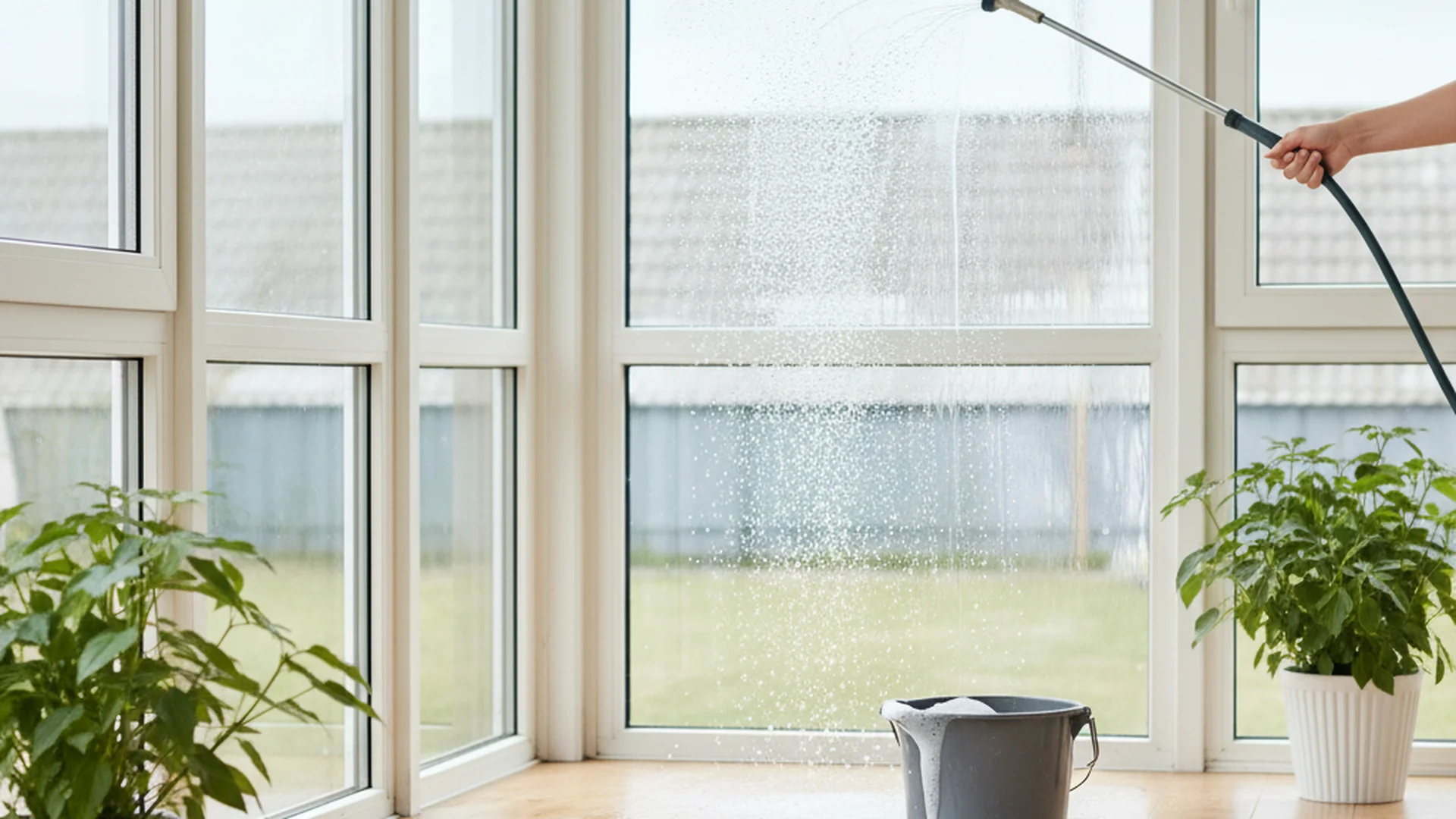
- The Glass: Use the "Z-motion" (moving in a Z-shape from top to bottom) to ensure no streaks are left behind.
- Blinds: Close the blinds flat and wipe down, then rotate them and wipe the other side.
Phase 3: The Upholstery and Electronics
The living room's "high-touch" zones are where germs and allergens congregate.
The "Couch Abyss"
Remove all cushions. You will likely find a collection of crumbs, coins, and perhaps a lost remote.
- Vacuuming: Use the upholstery attachment to vacuum the base of the sofa.
- Steam Cleaning: If your fabric allows (check for code "W" or "WS"), use a portable steam cleaner to lift deep-seated oils and odors.
Electronics and Sanitation
The TV and its peripherals are dust magnets, while remotes are germ hotspots.
- TV Screens: Use a dry, clean microfiber cloth. Modern screens have delicate coatings that can be stripped by window cleaners or alcohol.
- Remotes: Use a 70% isopropyl alcohol wipe to sanitize buttons.
- Game Controllers: These often have skin oil buildup in the seams; use a wooden toothpick to gently clear the crevices.
Success: Utilizing a UV-C sanitation wand on your electronics can kill 99.9% of bacteria without the risk of moisture damage to delicate circuits.
Phase 4: Finishing with the Floors
Only when the air has settled and the upper surfaces are dry should you move to the floor.
Moving the Heavyweights
A surface vacuum doesn't count as a deep clean. You must move the sofa, the armchairs, and the entertainment center.
- The Edge Tool: Use the crevice tool to clean the gap where the carpet meets the baseboards. This is where "dust bunnies" go to breed.
- Hardwood/Tile: Mop with a dedicated cleaner. Avoid over-saturating wood floors, as moisture can cause warping.
Note: For 2025, many homeowners are switching to AI-driven robotic vacuums for daily maintenance, but these still cannot replace the manual furniture-moving required for a seasonal deep clean.
2025–2026 Trends in Living Room Care
The world of cleaning is evolving rapidly. As we move into 2026, several key trends are changing how we maintain our living spaces:
- Probiotic Cleaning: Products containing live beneficial bacteria are the latest "Green 2.0" trend. These bacteria stay on the surface, eating organic matter (like skin cells) for up to 72 hours after you finish cleaning.
- Cleaning as Self-Care: Rather than viewing deep cleaning as a "marathon," try "habit-stacking." For example, deep cleaning one window every time you water your plants.
- Concentrates and Tablets: To reduce plastic waste, consumers are moving toward dissolvable cleaning tablets. These are often ECOCERT-certified and just as effective as traditional bottled sprays.
Living Room Deep Cleaning Checklist
| Task Area | Action Required | Recommended Tool |
|---|---|---|
| Ceiling Fans | Dust blades and motor | Pillowcase / Microfiber |
| Window Tracks | Scrub and wipe | Vinegar / Cotton Swabs |
| Sofa Base | Vacuum "Abyss" | Crevice Attachment |
| Remote Controls | Sanitize buttons | 70% Alcohol Wipe |
| Baseboards | Wipe and polish | Damp Microfiber / Wood Soap |
| Area Rugs | Beating/Deep Vacuum | HEPA Vacuum / Rug Beater |
Real-World Examples
Example 1: The Pet Owner’s Strategy
Sarah has two Golden Retrievers. For her, a "deep clean living room" session involves an extra step: de-furring. Before vacuuming, she uses a rubber squeegee on her area rugs to pull up "pet felt"—hair that has become woven into the fibers and which most vacuums miss. This reduces dander levels by 40% compared to vacuuming alone.
Example 2: The Work-From-Home Professional
Mike uses his living room as a part-time office. His deep clean focuses heavily on VOC reduction. He prioritizes cleaning his electronics and using a HEPA-filter vacuum to ensure the air he breathes for 8 hours a day is free of fine particulates, which he finds helps his focus and reduces afternoon headaches.
Example 3: The Minimalist Apartment
Aisha lives in a 600-square-foot space. Her deep clean is fast but frequent. She uses multipurpose probiotic sprays to ensure her small living area stays "microbiologically active," preventing the stale "city smell" that can accumulate in small, poorly ventilated apartments.
Common Mistakes to Avoid
- Cleaning Floors First: As established, this leads to double work. Always work from the ceiling down.
- Overusing Product: Using too much soap or detergent leaves a sticky residue. This residue acts like a magnet, attracting more dust and dirt faster than a clean surface would. "Less is more."
- Cross-Contamination: Using the same cloth for the bathroom and then the living room coffee table is a major hygiene error. Use color-coded microfiber cloths (e.g., green for the living room, blue for glass).
- Ignoring Hidden Spots: The tops of door frames, the back of the TV, and the light bulbs themselves are often forgotten. Dust on a hot light bulb can actually create a "burnt dust" smell that permeates the room.
Frequently Asked Questions
How often should I deep clean my living room?
Is vinegar really an all-purpose cleaner?
Do I need to clean my curtains and blinds?
Where do I start in a room that feels overwhelming?
Conclusion
Deep cleaning your living room is an investment in your home’s longevity and your family’s health. By following the top-to-bottom method, utilizing modern probiotic cleaners, and avoiding the trap of over-cleaning floors first, you create a space that is not only visually stunning but biologically healthy.
As David Chen, I always remind my clients: a clean home is a functional home. When the dust is gone and the air is clear, your living room finally becomes the sanctuary it was meant to be.
Success: By implementing this systematic approach, you can reduce household allergens by up to 90% and significantly boost your daily mood and productivity.
Cleaning that keeps score
Every task earns points, every streak multiplies them, and Premium adds a household leaderboard plus a monthly Dustagorgon to beat.
- Free forever
- 30 badges to earn
- Up to 6 in a household
No card needed. Set up your rooms in a couple of minutes.