In this article
What you’ll learn
- Implement a top-down cleaning method to maximize efficiency and air quality.
- Deep clean every 3-6 months to limit your exposure to indoor pollutants.
- Use HEPA filtration and natural sanitizers to avoid harmful VOCs and allergens.
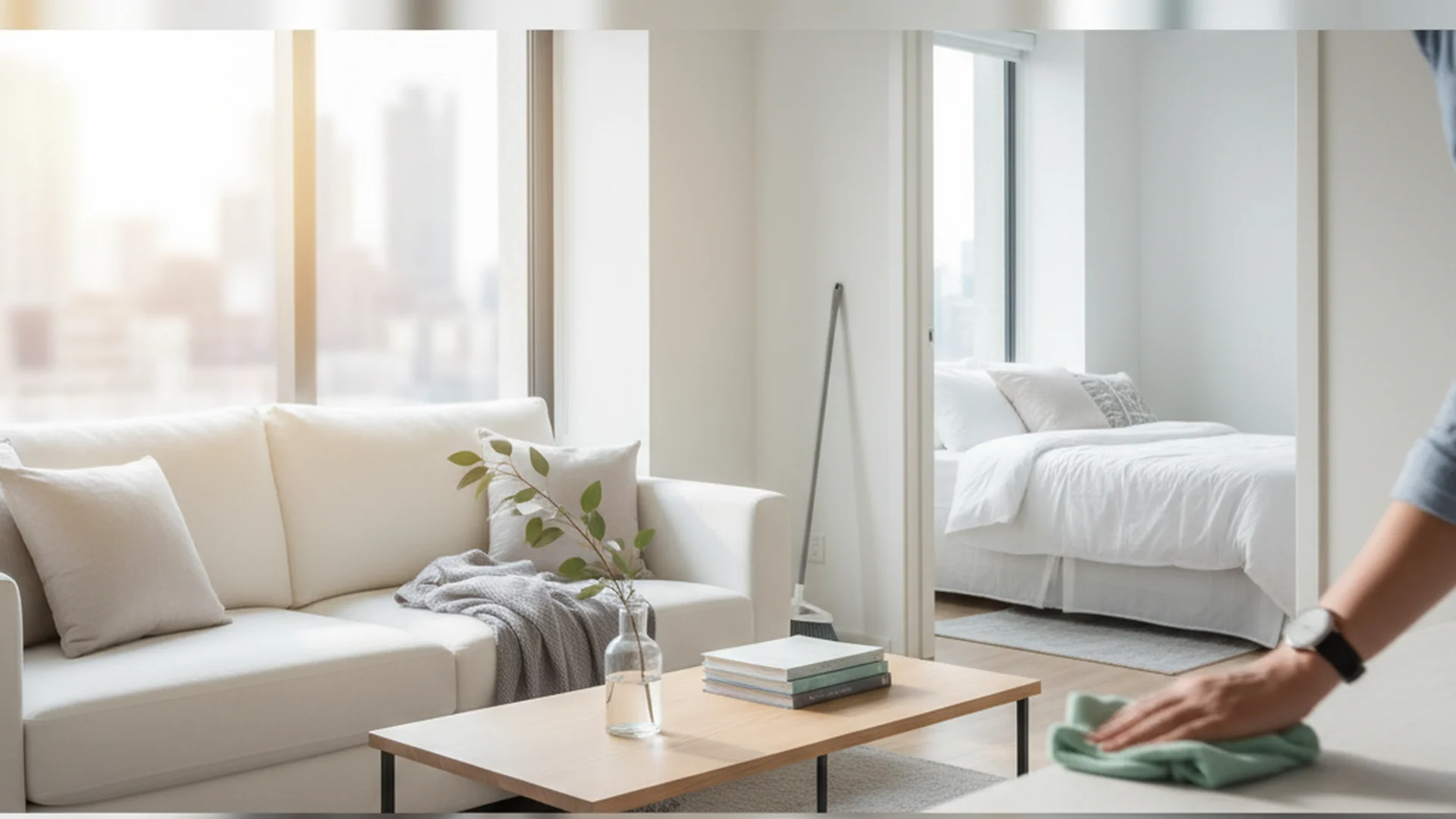
Your master bedroom is more than just a place to sleep; it is your personal "indoor air bubble." As a professional cleaning consultant, I often see homeowners focus their deep-cleaning efforts on kitchens and bathrooms, while the room where they spend a third of their lives remains a sanctuary for dust mites and allergens. Executing a master bedroom deep clean is not just about aesthetics—it is a critical health intervention. Since we spend the overwhelming majority of our lives indoors, the air quality in your sleeping quarters matters enormously—and it is often considerably more polluted than the air outside.
The Science of the "Indoor Air Bubble"
There is a growing "air distrust" trend among homeowners, with more and more people paying close attention to indoor air quality (IAQ). In the master bedroom, this is particularly relevant because dust mites, pet dander, and PM2.5 particles thrive in the soft surfaces and hidden corners of our sleeping spaces.
Long-term exposure to these particles is linked to "brain fog" and respiratory disorders. Plenty of people also cite unpleasant odors—musty or chemical scents—as a major dealbreaker for comfort. A true deep clean addresses these invisible threats, moving beyond surface-level tidying to create a scientifically cleaner environment.
Note: Real cleanliness has no scent. If your room smells like "ocean breeze" or "lemon forest" due to synthetic sprays, you are likely breathing in volatile organic compounds (VOCs) that lower air quality.
The Ultimate Master Bedroom Deep Clean Checklist
To achieve professional-grade results, you must follow a structured master bedroom deep clean checklist. This ensures no corner is overlooked and prevents the redistribution of dust.
1. The Top-Down Dusting Method
Gravity is your biggest enemy or your best friend during a deep clean. Always start at the highest point of the room. If you clean the floors first, you will simply cover them in dust again when you reach for the ceiling fan.
- Ceiling Fans and Vents: Use the "Pillowcase Hack." Slide an old pillowcase over each fan blade and pull it back to trap dust inside the bag. This prevents dust from raining down on your mattress.
- Crown Molding and Corners: Use a microfiber duster with an extendable pole to remove cobwebs and "ghost dust."
- Light Fixtures: Remove globes and wash them in warm, soapy water. Ensure bulbs are cool before wiping them with a dry cloth.
Tip: Use a 50/50 water-vinegar solution for glass fixtures to achieve a streak-free shine without harsh chemicals.
2. Window Treatments and Walls
Walls are often-overlooked dust traps. Dust clinging to vertical surfaces contributes a surprising amount to the overall particulate matter in a room.
- Curtains: Either steam clean them while hanging or take them down for a professional laundering.
- Blinds: Wipe each slat with a damp microfiber cloth. For heavy buildup, a mixture of warm water and a drop of dish soap works best.
- Baseboards and Walls: Use a damp cloth to wipe down baseboards. For walls, focus on the areas behind furniture where dust bunnies congregate.
3. The Bed: Mattress and Linens
Your mattress is the heart of the bedroom, and it requires specialized care.
- Strip the Bed: Wash all bedding, including duvet covers, pillow protectors, and mattress protectors, in the hottest water setting recommended by the manufacturer.
- The Mattress Reset: Sprinkle the entire surface of the mattress with baking soda. Let it sit for at least one hour to absorb odors and moisture.
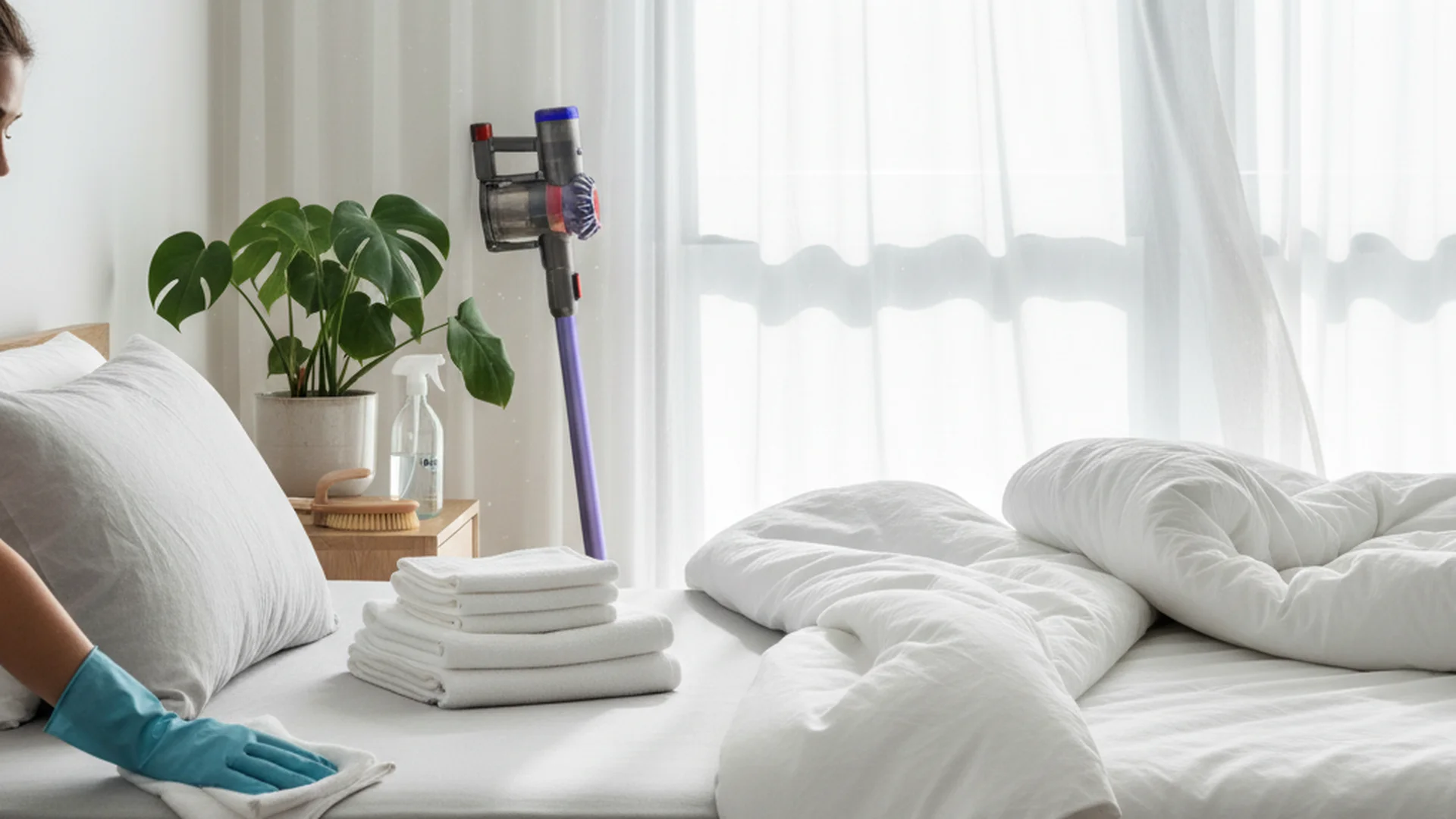
- HEPA Vacuuming: Vacuum the mattress thoroughly using a HEPA-filter attachment. This ensures microscopic allergens aren't just blown back into the air.
Warning: Never saturate a mattress with liquid cleaners. Moisture trapped inside can lead to internal mold growth, which is nearly impossible to remove.
4. Furniture and High-Touch Points
In a master bedroom, certain areas are touched dozens of times a day but rarely sanitized.
- High-Touch Surfaces: Use a natural sanitizer on light switches, door handles, bedside lamps, and remote controls.
- Behind and Under Furniture: Move the bedside tables and the dresser. You will likely find a significant accumulation of dust and debris that recirculates every time your HVAC system kicks on.
| Surface Category | Recommended Cleaner | Tool |
|---|---|---|
| Hardwood/Veneer | Damp microfiber | Microfiber cloth |
| Glass/Mirrors | Vinegar & Water | Squeegee/Cloth |
| Upholstery | UV-C Wand/Vacuum | HEPA Vacuum |
| Electronics | 70% Isopropyl Alcohol | Lint-free cloth |
Modern Trends in Bedroom Maintenance
The industry is shifting from "chores" to "wellness." In 2026, we are seeing a massive surge in the integration of technology and self-care into the cleaning routine.
AI-Integrated Cleaning and IAQ Monitoring
High-end robot vacuums now use AI-driven mapping to identify "high-debris" zones. These devices can be scheduled to deep clean while you are at work, ensuring the floors are maintained daily. Additionally, IoT air quality sensors can now trigger air purifiers automatically when they detect rising dust levels during your manual deep-cleaning process.
UV-C Sanitization
Portable UV-C light tools are no longer just for hospitals. They are being used at home to kill bacteria and viruses on non-washable surfaces like upholstered headboards. If you have a fabric headboard, a UV-C wand is a non-toxic way to ensure it remains hygienic.
Habit Stacking for Wellness
The trend of "habit stacking"—listening to a 20-minute wellness podcast or an educational audiobook while deep cleaning—has turned a tedious task into a mental health break. Deep cleaning is increasingly viewed as a form of "environmental self-care."
Common Mistakes to Avoid
Even with the best intentions, certain cleaning habits can do more harm than good.
- Using Too Much Product: A common misconception is that more soap equals more clean. In reality, excess product leaves a sticky residue on carpets and upholstery that attracts dirt faster.
- Neglecting the "Invisible" Areas: Don't forget to clean the air vents or the space behind the bed. These are the primary breeding grounds for dust bunnies.
- Relying on Seasonal Cleaning: Deep cleaning shouldn't just be for spring. Different seasons bring different threats—wildfire smoke in the summer, pollen in the spring, and mold in the winter. A quarterly schedule is the modern gold standard.
- Ignoring Pillows: Many people forget that pillows accumulate sweat, oils, and dust mites. While some are machine washable, it is worth replacing pillows every 1–2 years for optimal hygiene.
Success: Completing a deep clean can noticeably improve your sleep quality by reducing nighttime allergies and respiratory irritation.
Frequently Asked Questions
How often should I deep clean my master bedroom?
Can I clean my mattress myself?
Where do I start when cleaning a bedroom?
Are pillows machine washable?
What is the best way to clean a ceiling fan?
Conclusion
A master bedroom deep clean is an investment in your long-term health and sleep quality. By moving away from synthetic fragrances and focusing on high-efficiency tools like HEPA vacuums and microfiber, you create a sanctuary that is truly clean. Remember to work from the top down, pay attention to the invisible dust traps behind furniture, and embrace modern technology like IAQ monitors to maintain your results. When your environment is clean, your mind and body can finally rest.
Success: By following this checklist, you’ve reduced your exposure to indoor pollutants and created a healthier "air bubble" for your nightly rest.
Cleaning that keeps score
Every task earns points, every streak multiplies them, and Premium adds a household leaderboard plus a monthly Dustagorgon to beat.
- Free forever
- 30 badges to earn
- Up to 6 in a household
No card needed. Set up your rooms in a couple of minutes.